Paul's Heart

Life As A Dad, And A Survivor

Archive for the category “Bullying”

Paul’s Heart Milestone – 100,000 Views!
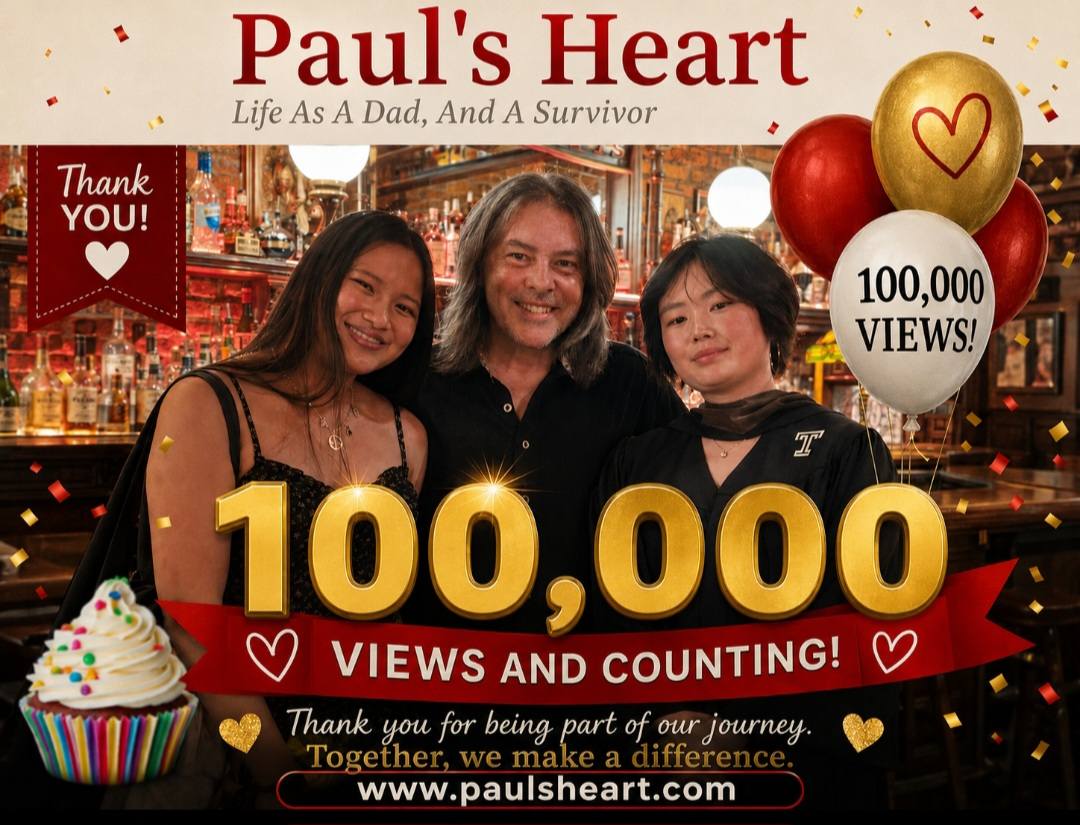

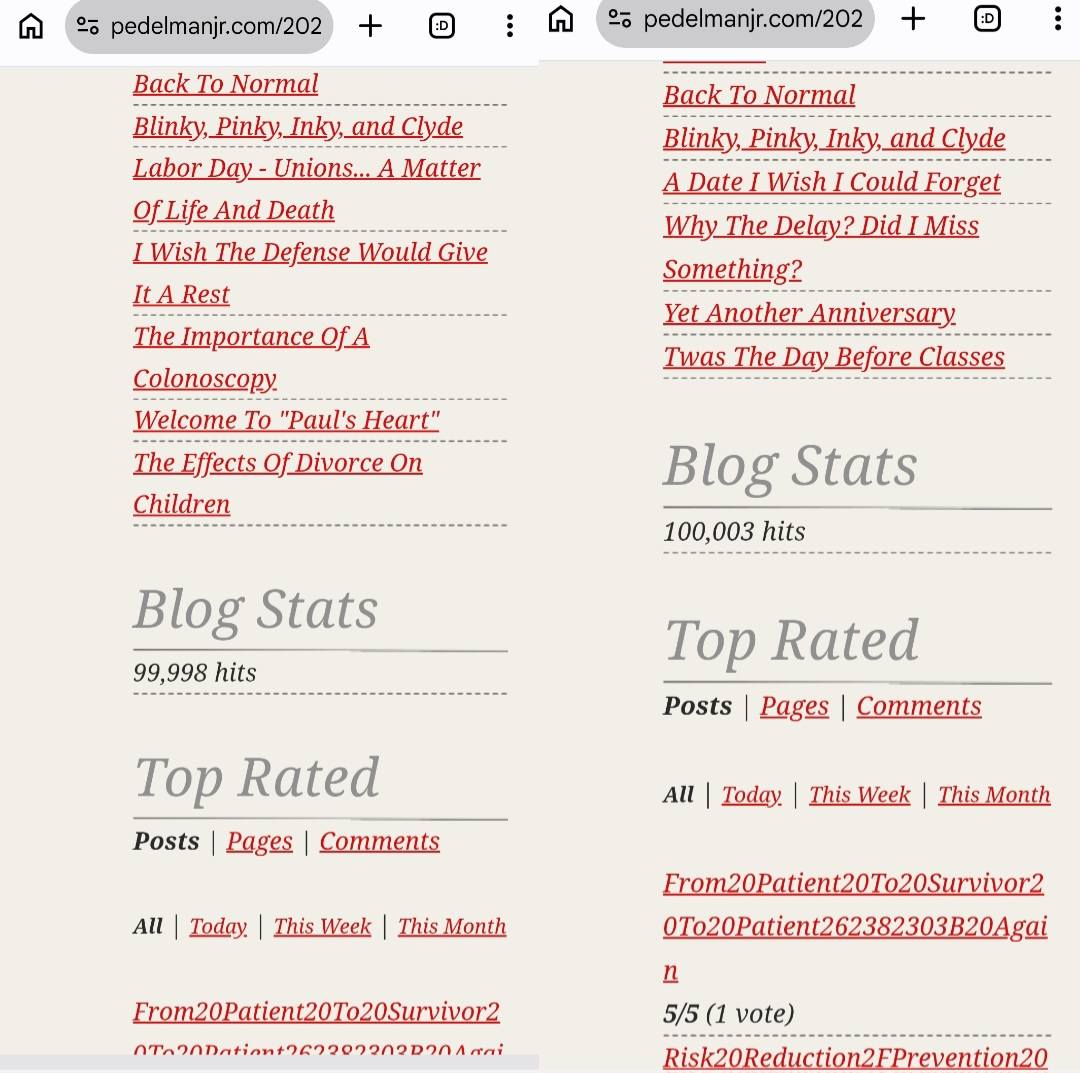
It certainly took long enough, definitely longer than I thought it would, and then last night, as I realized it was going to happen real soon, it took even longer. I was taking screenshots of the counter, for just before, and then when 100,000 was hit. But as most things in life, not having control, my counter went cuckoo as multiple visits registered at the same time.
Though I am a 37 year cancer survivor of Hodgkin’s Lymphoma, I did not start the concept of Paul’s Heart until thirteen years ago, five years after I became aware of the complicated health issues I had and was developing due to the treatments of my cancer back in 1988 at the age of 22, just out of college.

I have always enjoyed writing. I actually have kept school assignments from elementary, junior high school, and high school. I always got good grades. In junior high school, I began writing song lyrics (though very tacky and cheesy) and poems, but it was documentary and testimonial pieces I enjoyed writing most. In college, I experienced my first bad and quite rude critique, and the way I handled it was definitely wrong. My professor not only handed me my first “F” (I had never had less than an “A” on any writing assignment), but my professor also wrote in big RED letters, “you don’t have the intelligence to get past a comic strip page.” And with that, I dropped out of her class. I was devastated. I felt I was a good writer. It was one thing to get a bad grade, after all, grading a paper is subjective, but the insult definitely crushed me. And I stopped writing, for a long time.

But it was during my later years of survivorship, my passion and my need for writing returned. As a patient and survivor advocate, I often encourage people to put their feelings and experiences down in writing. There is a catharsis, a releasing of pent-up emotions, stress, or trauma, resulting in a feeling of relief, renewal, or emotional cleansing that comes when you let those feelings leave your body. This is especially good if you have an aversion to speaking to a therapist, which I can tell you, is also a good option.

In 2013, I created Paul’s Heart originally with the web address http://www.pedelmanjr.com , later adding http://www.paulsheart.com . I have published 1323 posts over those years, averaging about 8 posts a month, sometimes a lot more, sometimes a lot less. I still have 285 sitting in a cue to finish, stalled by writer’s block or distracted by other topics that came up in the meantime, now sitting in their own purgatory. I have 48 pages, short stories also published on this site, as well as links to other resources. I have allowed comments to my posts, well, except for a few trolls (their comments are actually saved should I ever decided to approve them). I avoid only two topics by choice if it can be avoided, politics and religion, unless there is a tie to cancer, health care, and survivorship.

It definitely took a lot long to hit this milestone than I thought. At least in the beginning, average views to the page were around 20, and depending on the topic, there would be hundreds of views. It had been my hope, that in spite of Hodgkin’s Lymphoma being considered a rare cancer, Paul’s Heart would hopefully finally get Hodgkin’s on the conversation map. I am a small fish, not like the American Cancer Society or the Leukemia Lymphoma Society, but unlike them, I am solely focusing on Hodgkin’s and long term survivorship. Little ol’ me, not famous, not rich, and without the help of anyone famous who had also recently dealt with Hodgkin’s who had an opportunity to draw attention to the cancer we shared (Michael C. Hall “Dexter”, Martin Fry – lead singer of 80’s band ABC, comedian Dick Gregory, actor DJ Quals, literal “Survivor” Ethan Zohn, Pittsburgh Penguin hockey great Mario Lemieux, Kansas City Chiefs Eric Berry, and though he has passed, Microsoft founder Paul Allen), though in fairness, as anyone who has dealt with cancer, nobody wants to stay in the cancer world once they are done with treatment and in remission. I am an anomoly. For me, it is my way of giving back for the efforts of those who saved me.

So yes, I am doing this one post at a time, one person at a time. I am also doing this organically. This count was done with the efforts of those who follow or read Paul’s Heart, and then share it. Word only gets out, when it gets passed around. Not once did I ever pay to publicize any of my stories here. 100,000 views is a legit and honest effort!

I have also expanded Paul’s Heart with 2 Facebook pages, both titled Paul’s Heart, I am on Youtube at @paulsheart, and have a Paul’s Heart page on Tiktok at @paulsheart2022 where I rank in the top 10% of creators with the similar follower counts.

I have been doing peer to peer counseling with patients and survivors nearly my entire survivorship. I have given countless survivorship speeches and interviews on cancer survivorship, though still waiting for that one big opportunity with major media, but I realize the big ones don’t care about publicizing happy stories. And then of course, I got to publish so many projects, newsletters and book anthologies for other organizations (like Memorial Sloan Kettering Cancer Center). I even got to have one of my stories performed by broadway actors, that was way cool (see the link on this page “My Dad Was Just Like Me”). And then finally, my biggest effort, publishing my own book, called “Paul’s Heart – Life As A Dad And A 35-Year Cancer Survivor,” available on Amazon. And I have four more book projects started and undoubtedly will either need to do another book on my survivorship as I have lived even longer, or at least do a second edition. I am also working on doing an audible version of the book. One other thing I would like to do, is create a podcast.
I have tried to balance my topics here not just with things related to cancer and survivorship, but with all things, life after cancer, a life that definitely was no longer like what I was doing before cancer. I have shared stories of other survivors, and memorialized those who have passed. I have dealt with everything from relationships (married twice, divorced twice), to employment issues, and even dabbled in local politics as a school board candidate (an interesting experience). But perhaps the biggest thing that I got to share here, was my experiences with parenthood. The BEST THING hands down about my 37 year cancer survivorship is being the Dad of two of the most wonderful, intelligent, beautiful, kind, empathetic, all around, best daughters a Dad could ever hope for. They were not there when I dealt with my cancer, but they have witnessed the last 18 years of my difficult survivorship with all the health issues that I face. Only in recent years do they understand the gravity how serious some of these issues are, because now as adults, they are included in all of my appointments. There is no one that matters more to me than my daughters and each and every moment I get to spend and witness with them. This unconditional love has been the bond that has kept us together, and going, and keeps me going wanting so many more years of time with them, to see what else they accomplish.

Today is a big day for Paul’s Heart. It is a compilation of so many things that have come together, hopefully achieving what I set out to do when I was told I was in remission, making a difference, wanting to inspire others facing cancer and survivorship, even if one at a time.

And though I am sure that old battleax of a professor is no longer in this time and place, whereever she is, I am hoping she can see the two finger salute I am giving her. Her words did not stop me forever and I am quite proud to have done what I have. And finally, my daughters have their legacy of their Dad to be immortalized forever, right at their fingertips.

A Date I Wish I Could Forget


May 20th was an innocent date enough, and with my divorce, I should no longer had to remember that date. It was the day of my first marriage.

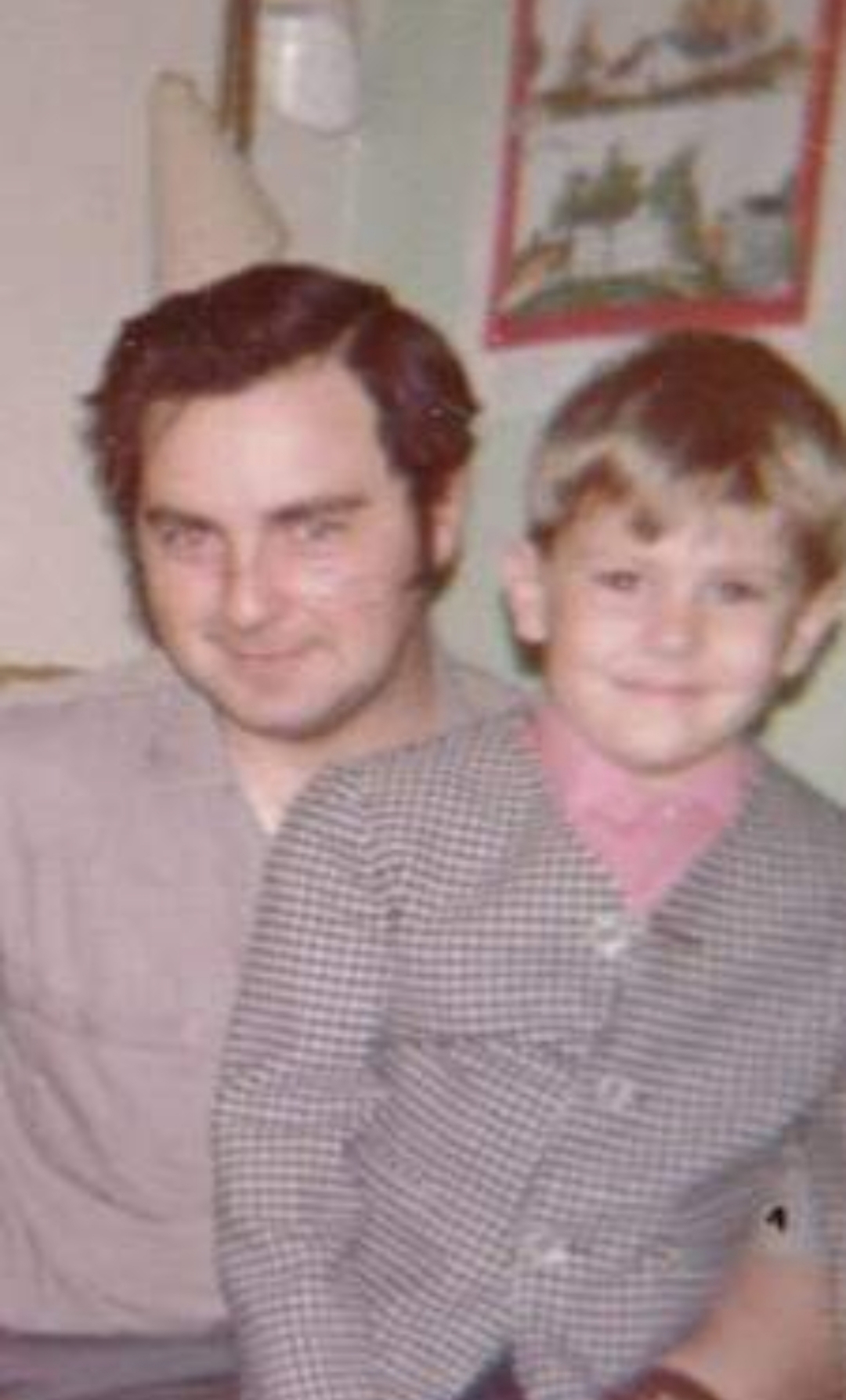
Twenty-five years later, this date would never allow me to forget. My father passed away at the age of 70 from lung cancer, the fifth member of my family to die from cancer.

While the diagnosis did not come as a shock for someone who smoked since his early teens, doctors had held out a hopeful prognosis, and then they didn’t.

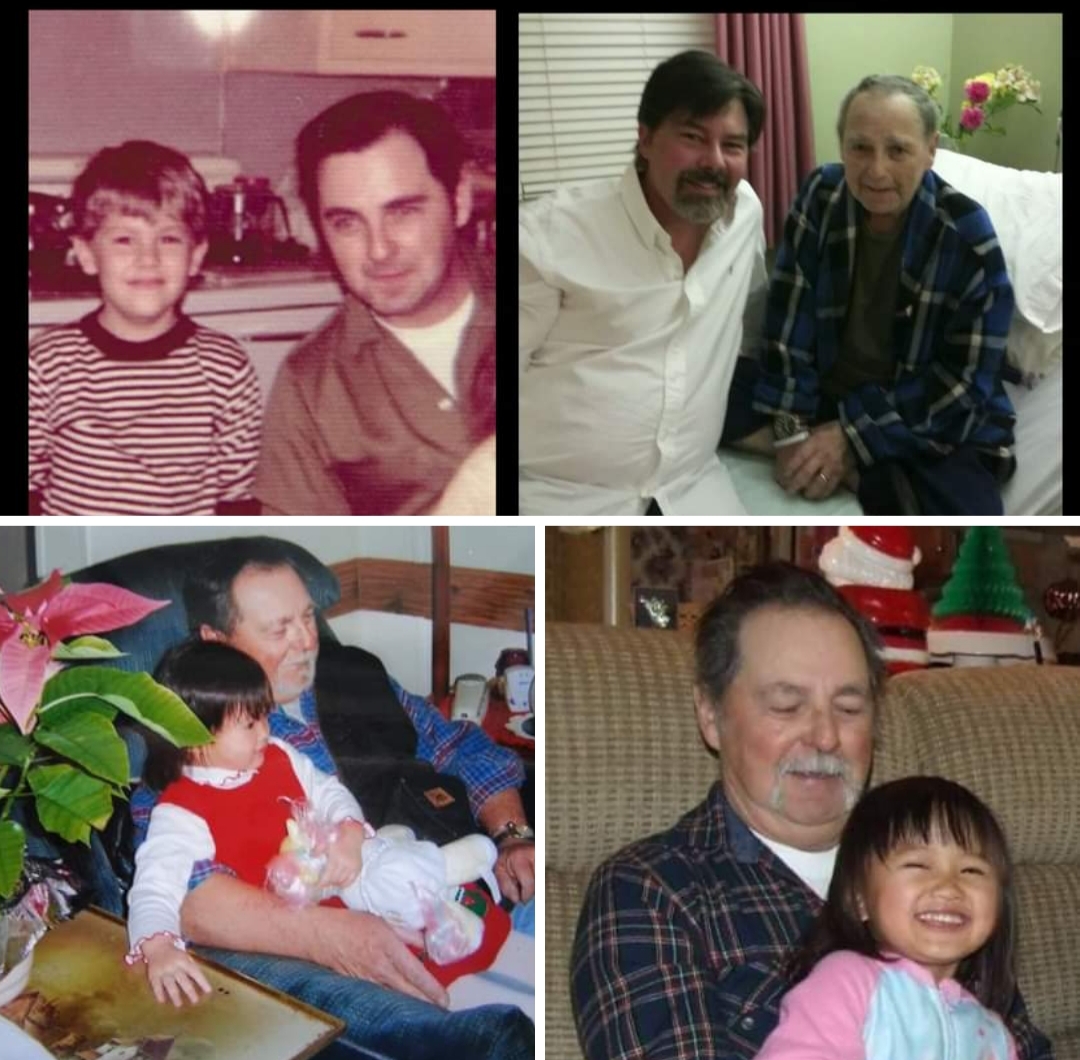
My father’s and my relationship was complicated. My parents divorced when I was three, and we went through the typical divorce custody bullshit, which strained the relationship between he and I, most of my childhood, often alienated from him. As an adult, it was during a medical crisis with my stepmother, that opened a door between my Dad and I making amends, or at least trying to build something else between each other.

And for a while, my father took advantage on the lease of our new relationship that had developed. He loved his granddaughters so much, that I assured him was important to me, more so than the childhood we missed.

Then came the time that my father and I talked about my cancer experience, and why he had not been there for me. But now, with his own battle with cancer, he had asked me to be his medical proxy, that my experience in the world of cancer as both an advocate and a survivor, would be immeasurable support. He would trust me to listen, hear, and support decisions that he would face. He would also ask that I honor and support his wishes of his living directive.

Before I go any further, I need to explain a difficult defense mechanism that I have, and I get a lot of criticism for it, the ability to turn my emotions off, enabling me to make decisions, no matter how difficult, regardless if I agree or not, but what is best, balanced with what is wanted and needed. Also, during this time, I was going through my second divorce, trying to balance time with my daughters, and deal with my own health issues which didn’t stop just because I was taking care of my dad.

In the beginning, in spite of the word cancer, my father was staged at 1, the best possible scenario especially for a cancer. Surgery to remove half of the lung with the tumor was successful, though did have a complication in the form of two strokes, but the cancer supposedly was gone. Yep, spoiler alert, “supposedly”, it wasn’t. Preventative chemo was recommended for any periforal cells (cells that were around the cancer tumor) that may have remained, which I agreed to. He got through 4 rounds, not unscathed, but he did it, and his PET scan confirmed he was still good.

Then came the recommendation for preventative radiation treatments. I actually advised my father against it, though not for the reason that eventually developed. I was concerned that my father, who had already had a major heart attack, and with my medical history with my heart and radiation, would not do well with radiation in the area where the tumor was located, right next to his heart. My father went with the doctor’s recommendation, which of course made sense to trust his doctor with this, but something happened with remaining some remaining cancer cells, and my dad went from being stage 1 to terminal. It was devastating to us, and worse, my dad would never stop saying, “I wish I had listened to you,” making reference to my objection to the radiation therapy.

The five months that remained with my father, could not have been any more stressful for me. I want to say it was heartbreaking, but as I mentioned, that defense mechanism was locked in. I was fighting with relatives constantly who were questioning my advocacy for my dad, decisions that were being made, and why more was not being done, not fighting for at least a clinical trial, trying to convince them he would never be eligible. Worse, they made it feel like I did not care. No one knew more than me, that my dad was going to die. All of the things I was dealing with, my divorce, my job, my health, my daughters, and now having to fend of selfish relatives who just did not understand what was happening, nor what my father wanted, just piled on top of everything.

Cancer cells spreading to his brain made it worse as thoughts and conversations with him and anyone produced more conflict and confusion between clarity and delusion, and most of the time it was impossible to tell the difference. The attacks on me became greater and more personal, even to the point as I tried to protect my father, I was actually thrown out of the care facility trying to protect my dad’s privacy from those wanting to interfere with his care.

Again, trying to balance everything I was dealing with, still, I spent most nights at the nursing home with my Dad (this actually came up in court as I was accused of abandonment, when it was clearly known I was by my Dad’s death bed as log-in records at the facility proved), wake up, go to work, see my daughters after school, and go back to the facility. My attorney had kept me updated on my divorce process, which clearly, dealing with my Dad, kept me from paying attention to what ultimately was going to impact me and my daughters for years to come. His warnings were clear, my ex and her attorney were coming for blood and I needed to do more than what I was currently able to do, either because of my father or my health.

Two weeks before he would pass away, the call came from hospice, my father’s vitals were fading. He would likely pass within days. As I mentioned, I was under the gun with the divorce, and the advice from my attorney what I was going to need to do to please the court was only going to be accomplished one way. My employer, after years of fighting against me and my health, had finally made the determination to “help” me, and could no longer accomodate my health issue restrictions, and were going to put me out on long term disability. While that in itself was not a problem, as it would have left me still with a decent income, it was the strategy of the other side, to go after more than what they were entitled to, and allow the system of appeals to reverse and correct the original order that was given. The problem was, the judge would expect the order to be followed until appeal, and the order was clearly not affordable, and would put me out of favor and in jeopardy almost immediately with the court, which was what they wanted. Combine that with the acts of harrassment I faced from certain family members. And oh yes, my father was dying, possibly any day.

I had to make the decision that was best for me and my survival at this point. I knew I could not afford the order in its current form so I had to look for “new” employment as my employer was no longer keeping me active other than disability. I could not find anything in state, so I began to look outside the state, and I did find opportunities. Also, a side benefit, it would provide some distance between those harrassing me.

Again, I was expecting my father to pass at any moment according to hospice. In the meantime, I found it difficult for me to get any new job out of state without living there. So I had to estimate when I would be able to travel, wanting to stay by my father’s side, his fate imminent. I made the decision that I would travel in two weeks for what was a hopeful and potential interview and eventual hire.

When it comes to hospice, and let me tell you they are wonderful people, there is no exact science as to “when” that moment will finally come. Though I was told it would likely come soon. My father would frequently utter “I gotta go,” causing me to grab his urinal for him, to let him go to the bathroom, oddly he wouldn’t. And then he would lay back down. This went on many days and past a week. I would eventually learn, he was trying to “go.”

Hospice urged everyone to have their final and encouraging words with my Dad, as if to let him know it was okay now, go, be free of the pain. We will be fine. For some of us, it was also about forgiveness.

Remember that defense mechanism? It was working overtime. I knew my Dad was going to die. But between the divorce, my imminent plans, my health, and the combative family, I still was not allowed or able to feel anything at this moment. I could only watch as everyone else expressed their grief and loss, and all I could do was “what was expected of me.”

My final words to my father, were the night before he passed. I told him that I forgave him for everything, what he felt he failed in my childhood, not being there for me during my cancer. I encourged him to go to his parents and siblings, all who had long since passed. I asked him to watch over his two granddaughters, we still had some rough stuff we were going to be going through with the divorce, and of course, to watch over me with my health.

It was what happened next that prompted me to write one of my most special pieces I have ever written, a tribute to my Dad, that would eventually be published and performed.

The night would pass, my father was still hanging on. I looked at the clock on the wall, knowing I had a train to catch for my job interview that would be pivotal to the divorce court. There was no opportunity to be two places at the same time. I could not miss that train. I said goodbye for the final time to my father, and said “I love you.” I so wanted to be there until the end. I had done all I could for him, and as he wished. I wanted to be there. But I also knew, that my Dad would have wanted me on that train, himself having gone through the family court system, knowing the fight I was about to have. And then I left for the station, a four hour drive away.

It was 4:35pm, the train had just pulled away from the station and a text came across my phone. “Dad has died.” That was it. No other conversation, just three words. No emotion, no ability to grieve, as now I had to focus on family court, and what needed to get done. I wanted to be angry at the situation, but I would lose my focus if I did.

I returned home three weeks later, for that eventual court hearing, which went as I expected, against me. But my real purpose, was to finally pay respects to my father in a memorial service, that same weekend, Father’s Day, and yes, spend the rest of the time with my daughters. And then it was back on the train to return to my issues with the court, now heading for appeal.

It has been twelve years since my Dad passed now. And I still miss him. It is surreal, I am now only ten years younger than when my Dad passed, and unfortunately, longevity is not something my paternal side of the family is known for, and I have all these strikes healthwise against me.

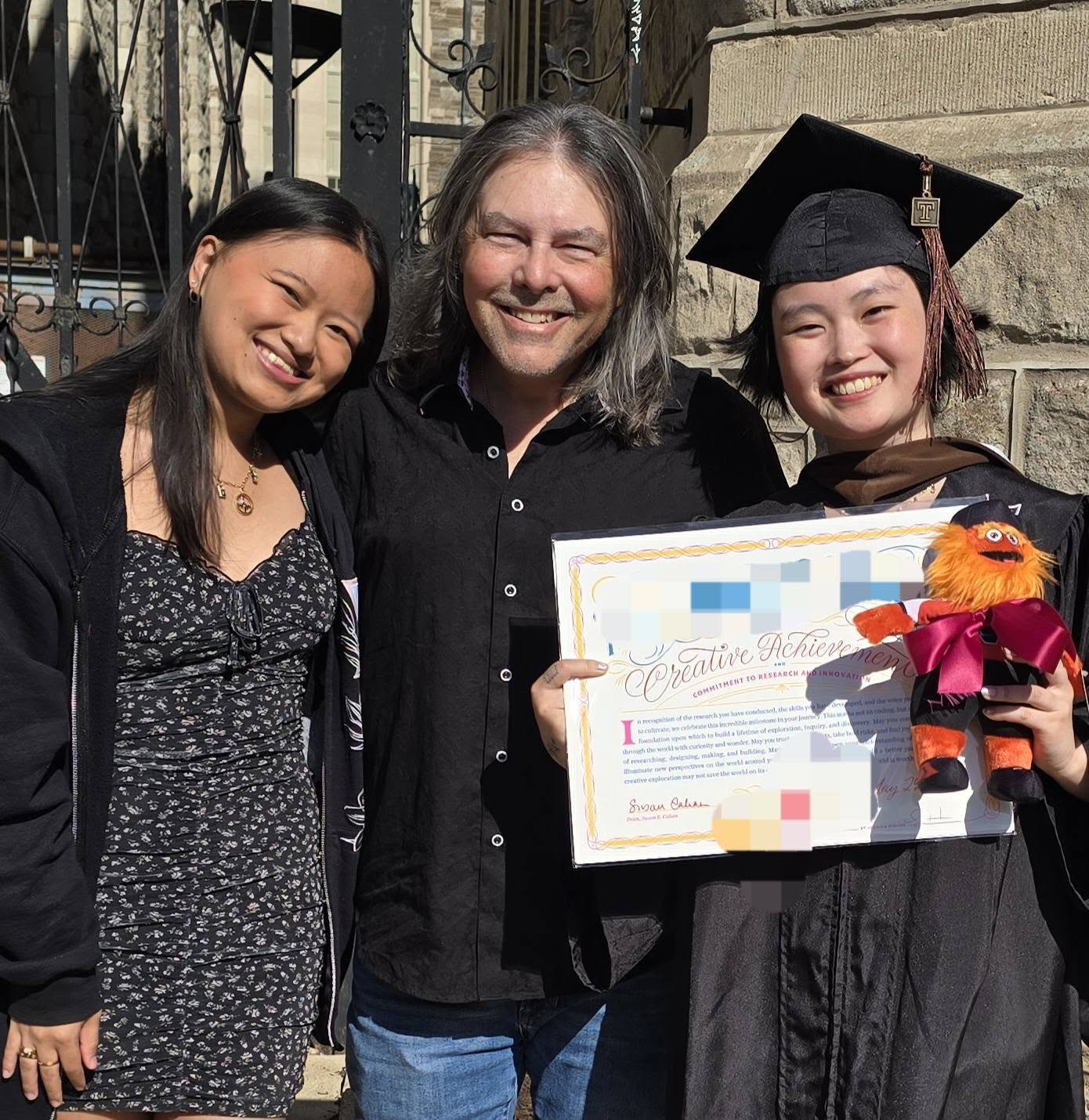
But it is what I have been able to keep, continue to build, and witness, that I hope my Father was able to see that not only have I continued to survive health wise, but I made it through the family court process, the relationships with my daughters are stronger than they have ever been. As a 37 year cancer survivor, the odds were against me enough to even see this day, a college graduation, there was no way I would let anything else stand in my way.

I miss you Dad. But man do I hope you are proud of me, and proud of your granddaughters.

Medical Gaslighting And The Struggle With Hypochondria


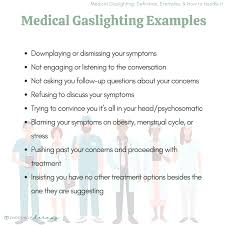
There are a couple of parameters, expectations, and definitions I need to begin with this post. And I will go right for it. Medical gaslighting occurs when healthcare professionals dismiss, minimize, or invalidate a patient’s symptoms and concerns. Hypochondria is an emotional condition characterized by an excessive, persistent, and unfounded fear of having or developing a serious medical illness. Now that I have set the definitions you can understand where I am coming from.

(image courtesy of Choosing Therapy)

I have been blessed most of my life, with not just having the proper care for everything I deal with, but for having the right doctors. My personality helps as well, in that my doctors know that I do not reach out to them, unless something is definitely wrong. My primary care doctor of nearly forty years normally only saw me once a year for a seasonal allergy shot, so when I showed up one day with huge “blisters”, itching and painful, even the administrators knew it was something serious.

But in recent years, and perhaps not so recent, something has been happening to medical care in the United States, and it has not been good. It is bad enough that costs of both the health care and insurance continue to climb, a la “profit over patients”. It is unthinkable that access to doctors, lack of availability often unable to schedule an appointment in less than a year is now the norm. Insurance companies now determine what care you can have, often based on AI. And then there is the hierarchy of care, something I know I struggle with, unable to see a doctor, you can see any one of their underlings, a physical assistant, a registered nurse, a certified nurse, a nurse practitioner, and more, all who have less experience than the one you need to see, the doctor. They give responsibilities to these lower levels of care (as well as less pay) to justify their value of the appointment, but clearly, if you have something seriously wrong, you need the best care available, not follow the time consuming steps to reach the pinnacle, the doctor.

For those deeply entrenched in the medical world, albeit unwillingly, there is a phenomenon making medical care even worse when it happens, medical gaslighting. Gaslighting is a form of psychological and emotional abuse where a manipulator distorts the truth to make someone question their own memory, perception, or sanity. In fact, this was made into a 1944 movie, titled “Gaslight” starring Ingred Bergman and Angela Lansberry. It is a black and white movie (for you kids that was before color films came along), that actually is still kind of stressful to watch. But at the end of the movie, you totally get what gaslighting is. So how does it apply in the world of medicine? The answer should be, “it shouldn’t”.

Imagine you are a patient dealing with a chronic illness or a disease such as cancer. In dealing with any medical situation, that you are so far away from feeling healed or recovered, it is not uncommon for us to let our caregivers know when we are dealing with potential side effects or are not feeling well. Instead, the patient is made to feel that how they are feeling is “all in their head.” The medical person does not seem interested in pursuing the patient’s concern, not asking follow-up questions, or worse, deflecting away from the problem. This is medical gaslighting. I need to be clear, I have never experienced this myself as a patient, but I have seen it first hand as a caregiver. And it is horrifying to watch. Worse, it delays the actual diagnosis, leads to inadequate treatment, the biggest concern, the patient develops a loss of trust in the health care system, and the provider.

“It’s all in your head.” “You’re just looking for attention.” “You’re just hormonal.” “It just comes with getting older.” “You’re overreacting.”

Because if the medical caregiver is successful with their approach, the patient walks away not only not treated properly, but feeling an excessive anxious condition, called hypochondria, having a fear that something is wrong despite little or no supporting medical evidence. But there is a huge difference between having a fear that something is wrong, and knowing something is wrong. And if a patient is being gaslit medically, and the patient knows full well something is wrong, feeling like they are a hypochondriac, incorrectly, can be a fatal response.

I am willing to admit, especially as a long term cancer survivor, not everyone in the medical world knows about us, and the many health issues we face. Until a couple of decades ago, we were barely recognized because we weren’t expected to live this long to develop these late effects, which of course were not researched. But if you are dealing with as caregiver who lacks that knowledge, and instead blames the patient, that is medical gaslighting.

This is not to say that hypochondria is not real. It most certainly is, but when it is created in a patient because someone trusted for necessary medical attention does not have either the necessary skill or education, and then treats the patient as if their situation is not real, that is a real problem.

I am very open about my medical history. I have a list of diagnosis a page long. I could not imagine, as I am dealing with yet a new symptom (as I wrote in my last post), being told that “it was nothing” or “in my head.” Those who have cared for me know that I struggle with recognizing symptoms as it is, but just because I have frequent flyer miles in the medical community, blow me off with a symptom once, and I will ignore them everytime they come up. And that could be a fatal judgement.

My advocacy is always for the patient and survivor who deal with these weird anomolies, you know, the kind you would see in the old tv series “House.” Just because the patient doesn’t meet the metrics for age for the symptoms, or happens to have a lot of stuff wrong with them, especially through no fault of their own (like the treatments used to save my life from cancer and the late effects they have caused later in life), trust me, while I respect and appreciate every minute I get with my medical team, neither of us want to be in that exam room. But for now, I know I have care providers that will not gaslight me. The same cannot be said for many of my fellow survivors.

All is not hopeless, there are things that can be done if you are being gaslit. It is unfortunate as you likely have enough on your plate, that you need to advocate even harder to be taken seriously. It always helps to have a “caregiver” or second set of ears at your appointment, because as a patient, there is always the risk you won’t hear everything you need, but instead that caregiver will now be a witness as well as an advocate. Document everything either in writing, or recording with your cell phone (you do need to let them know you are recording, and state that it is only to remember details of the appointment). Seek a second opinion, no doctor should ever be offended or upset by this step. Best case, nothing found, and that is good. Worse case, something does get diagnosed. Request documentation, for the doctor or provider to note in your chart the refusal to run a certain test or treat. Doing so may force them to reconsider.

It is easy to take medical gaslighting personally, and you should, but the ire should be directed appropriately to the corporate ways and procedures dictated and insurance guidelines that are now directing our medical care. I do not believe for one minute that any provider from nurse to doctor is malicious or manipulative. Unfortunately, they simply may not have a choice.

I want to be clear, I do not know all the ins and outs of how medical practices and specialties work. And I have been blessed as I said, to not have providers blow me off or dismiss me. But I am now experiencing the difficulties of seeing the level of care I need, instead to have only available lower levels of providers, who I want to be clear I have so much respect for. But in the end, I am getting charged the same as if I were seeing the doctors, and the insurance companies are still seeing profits, hand over fist, rather, profits over patients. But that is another post.

As always, I welcome comments on my posts. I know I have several doctors who follow me. If I have said anything inaccurate, please correct me and I can edit my post. If you feel there is anything that should be added, I can do that.

Post Navigation