
Medical Gaslighting And The Struggle With Hypochondria
There are a couple of parameters, expectations, and definitions I need to begin with this post. And I will go right for it. Medical gaslighting occurs when healthcare professionals dismiss, minimize, or invalidate a patient’s symptoms and concerns. Hypochondria is an emotional condition characterized by an excessive, persistent, and unfounded fear of having or developing a serious medical illness. Now that I have set the definitions you can understand where I am coming from.
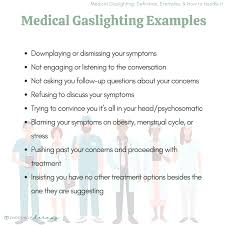
(image courtesy of Choosing Therapy)
I have been blessed most of my life, with not just having the proper care for everything I deal with, but for having the right doctors. My personality helps as well, in that my doctors know that I do not reach out to them, unless something is definitely wrong. My primary care doctor of nearly forty years normally only saw me once a year for a seasonal allergy shot, so when I showed up one day with huge “blisters”, itching and painful, even the administrators knew it was something serious.
But in recent years, and perhaps not so recent, something has been happening to medical care in the United States, and it has not been good. It is bad enough that costs of both the health care and insurance continue to climb, a la “profit over patients”. It is unthinkable that access to doctors, lack of availability often unable to schedule an appointment in less than a year is now the norm. Insurance companies now determine what care you can have, often based on AI. And then there is the hierarchy of care, something I know I struggle with, unable to see a doctor, you can see any one of their underlings, a physical assistant, a registered nurse, a certified nurse, a nurse practitioner, and more, all who have less experience than the one you need to see, the doctor. They give responsibilities to these lower levels of care (as well as less pay) to justify their value of the appointment, but clearly, if you have something seriously wrong, you need the best care available, not follow the time consuming steps to reach the pinnacle, the doctor.
For those deeply entrenched in the medical world, albeit unwillingly, there is a phenomenon making medical care even worse when it happens, medical gaslighting. Gaslighting is a form of psychological and emotional abuse where a manipulator distorts the truth to make someone question their own memory, perception, or sanity. In fact, this was made into a 1944 movie, titled “Gaslight” starring Ingred Bergman and Angela Lansberry. It is a black and white movie (for you kids that was before color films came along), that actually is still kind of stressful to watch. But at the end of the movie, you totally get what gaslighting is. So how does it apply in the world of medicine? The answer should be, “it shouldn’t”.
Imagine you are a patient dealing with a chronic illness or a disease such as cancer. In dealing with any medical situation, that you are so far away from feeling healed or recovered, it is not uncommon for us to let our caregivers know when we are dealing with potential side effects or are not feeling well. Instead, the patient is made to feel that how they are feeling is “all in their head.” The medical person does not seem interested in pursuing the patient’s concern, not asking follow-up questions, or worse, deflecting away from the problem. This is medical gaslighting. I need to be clear, I have never experienced this myself as a patient, but I have seen it first hand as a caregiver. And it is horrifying to watch. Worse, it delays the actual diagnosis, leads to inadequate treatment, the biggest concern, the patient develops a loss of trust in the health care system, and the provider.
“It’s all in your head.” “You’re just looking for attention.” “You’re just hormonal.” “It just comes with getting older.” “You’re overreacting.”
Because if the medical caregiver is successful with their approach, the patient walks away not only not treated properly, but feeling an excessive anxious condition, called hypochondria, having a fear that something is wrong despite little or no supporting medical evidence. But there is a huge difference between having a fear that something is wrong, and knowing something is wrong. And if a patient is being gaslit medically, and the patient knows full well something is wrong, feeling like they are a hypochondriac, incorrectly, can be a fatal response.
I am willing to admit, especially as a long term cancer survivor, not everyone in the medical world knows about us, and the many health issues we face. Until a couple of decades ago, we were barely recognized because we weren’t expected to live this long to develop these late effects, which of course were not researched. But if you are dealing with as caregiver who lacks that knowledge, and instead blames the patient, that is medical gaslighting.
This is not to say that hypochondria is not real. It most certainly is, but when it is created in a patient because someone trusted for necessary medical attention does not have either the necessary skill or education, and then treats the patient as if their situation is not real, that is a real problem.
I am very open about my medical history. I have a list of diagnosis a page long. I could not imagine, as I am dealing with yet a new symptom (as I wrote in my last post), being told that “it was nothing” or “in my head.” Those who have cared for me know that I struggle with recognizing symptoms as it is, but just because I have frequent flyer miles in the medical community, blow me off with a symptom once, and I will ignore them everytime they come up. And that could be a fatal judgement.
My advocacy is always for the patient and survivor who deal with these weird anomolies, you know, the kind you would see in the old tv series “House.” Just because the patient doesn’t meet the metrics for age for the symptoms, or happens to have a lot of stuff wrong with them, especially through no fault of their own (like the treatments used to save my life from cancer and the late effects they have caused later in life), trust me, while I respect and appreciate every minute I get with my medical team, neither of us want to be in that exam room. But for now, I know I have care providers that will not gaslight me. The same cannot be said for many of my fellow survivors.
All is not hopeless, there are things that can be done if you are being gaslit. It is unfortunate as you likely have enough on your plate, that you need to advocate even harder to be taken seriously. It always helps to have a “caregiver” or second set of ears at your appointment, because as a patient, there is always the risk you won’t hear everything you need, but instead that caregiver will now be a witness as well as an advocate. Document everything either in writing, or recording with your cell phone (you do need to let them know you are recording, and state that it is only to remember details of the appointment). Seek a second opinion, no doctor should ever be offended or upset by this step. Best case, nothing found, and that is good. Worse case, something does get diagnosed. Request documentation, for the doctor or provider to note in your chart the refusal to run a certain test or treat. Doing so may force them to reconsider.
It is easy to take medical gaslighting personally, and you should, but the ire should be directed appropriately to the corporate ways and procedures dictated and insurance guidelines that are now directing our medical care. I do not believe for one minute that any provider from nurse to doctor is malicious or manipulative. Unfortunately, they simply may not have a choice.
I want to be clear, I do not know all the ins and outs of how medical practices and specialties work. And I have been blessed as I said, to not have providers blow me off or dismiss me. But I am now experiencing the difficulties of seeing the level of care I need, instead to have only available lower levels of providers, who I want to be clear I have so much respect for. But in the end, I am getting charged the same as if I were seeing the doctors, and the insurance companies are still seeing profits, hand over fist, rather, profits over patients. But that is another post.
As always, I welcome comments on my posts. I know I have several doctors who follow me. If I have said anything inaccurate, please correct me and I can edit my post. If you feel there is anything that should be added, I can do that.

