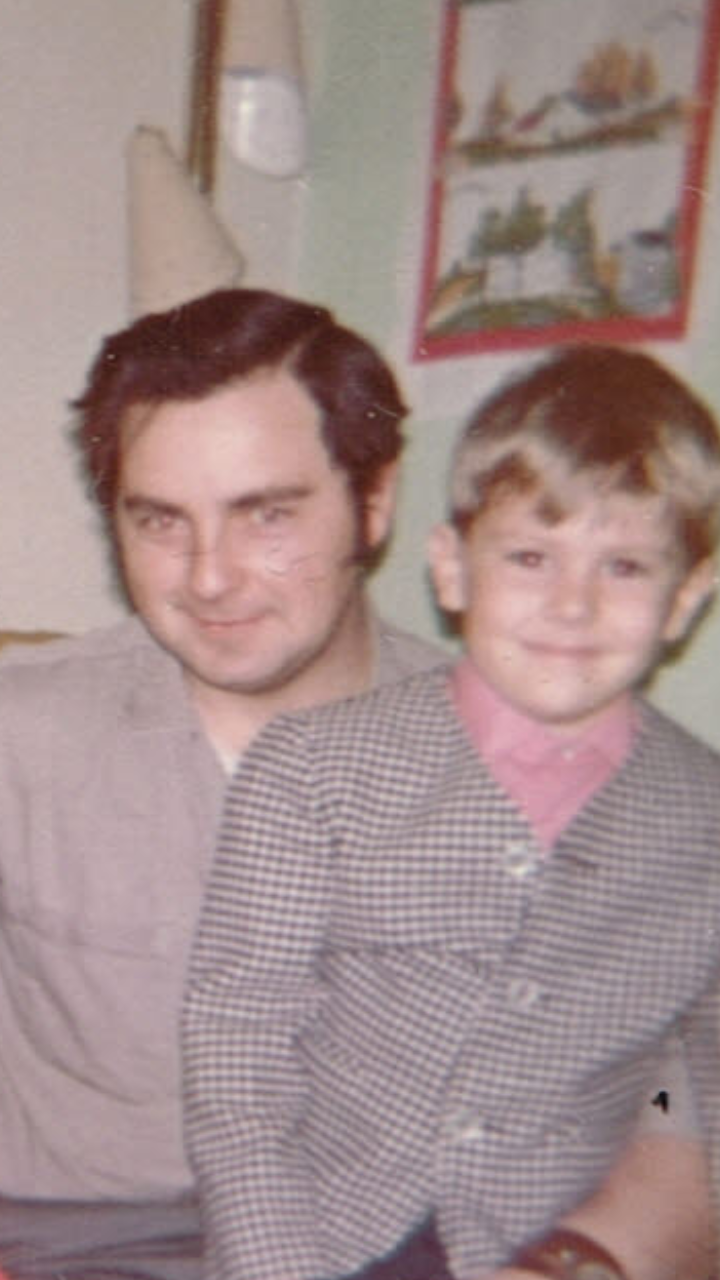
Children Of Divorce
This post is not about my own personal situation, nor will it discuss any details about my personal situation. Examples listed in this post are just that, examples, which hope to bring awareness and understanding to a difficult situation that many families deal with.

No one is more aware of the emotional impact on children, from the divorce process itself, than someone who once was a child of a divorced family. Of course, there are the cynics who will refer to divorce statistics to reinforce and coerce potential suitors of the potential marital future of any suitor. And then of course, there are those who offer unsolicited judgment in the form of criticism as the only form of support. A former psych major in college, I can tell you that books, opinions, and statistics pale in comparison and meaning when actually dealing with a child caught in the middle of a divorce.
People need to understand, that using statistics as a way to sway or pressure someone to somehow prove everyone wrong by staying in a bad relationship, or by insinuating that the children have been through enough trauma in their life (for whatever reason), that it should be better for them to continue life in a home of constant stress and turmoil, than go through the divorce process. Quite the contrary. To continue to subject children to the typical hostile environment of a bad relationship, married or not, is child abuse. FLAT OUT CHILD ABUSE if you continue to leave your children in that environment.
It is much better to have the differences between parents separated, to be dealt with between the parents, than to put the children at risk of being emotional collateral damage. As Dr. Phil states, “it is better for a child to be from a broken home than to live in one.” Children have amazing hearing when they want to. They also want to be able to have unrestricted and unsuspect conversations with both parents. Children are not pawns.
Statistically, yes, I am now second generation divorced. I proved the statistics correct. But more powerful than the statistic is that I know what it is like to be a child of a divorced family, and experience means multitudes more than any information provided by books. I know what my daughters are feeling right now. I also know and understand what my parents had to deal with. This should be a good thing and help in protecting the children and keeping the emotional scarring to a minimum.
But there are so many in the world, who have not had any experience with a divorce, other than receiving or observing input provided by bias family members and friends who may or may not have gone through a divorce. For many, opinions and recommended by nothing more than “bandwagon jumpers”, totally unaware of the complete history of the relationship, and rely solely on, “stick it to him/her.”
Again, I am not referencing my own situation. I will not discuss those details. This post is about providing awareness. Awareness that I am indeed trying to practice what I preach, but to also let others know, who are in the process of a divorce, the children’s well-being need to be considered first and foremost. Would the children actually be better off if the parents did not get divorced? How to protect the children from comments not only from within the four walls of their home, but also from mean-spirited playmates?
The potential dangers are of serious concern. And regardless of my experience as a child of divorce, that does not necessarily mean that I can prevent these things from happening to my children. But rather, by being aware of them, I know the potential things to keep an eye out for signs. I refuse to be a parent who claims “I didn’t know”. So I would like to share with those of you, dealing with divorce and custody things that I have learned or experienced when children are involved.
For most children, having both parents in the home (not being insensitive to those who were brought into family with only one parent), having both mom and dad is all that they have ever known. Even when the time has come that both parents do separate activities and rarely spend time together as a family, holding hands, kissing, simply cohabitating in the house, the children still see both parents at the same time. Regardless of the problems, “mom and dad” are still together. And it is important to make sure that no child ever feels as if they are to blame for the divorce. And this feeling will develop if not careful to watch conversations around the child.
But when the two parents decide to separate and divorce, it does not take long for a child to figure out that one parent will no longer then be living in the house. The relationship between mom and dad does not change ironically, because they have been acting in this manner for a long time. But now the children recognize it. Unless the children are shown that they will not have to prove loyalty to one parent or another, it will not take long until the children are drawn into the process itself.
My main intent when I left home was to make sure that my daughters understood two things. Their mom was always going to be their mom, and I was always going to be their dad. And we made it as positive an experience as I could, that our children would learn that they had two places to call home.
But children, while very intuitive and adaptable, are also capable of making their own opinions, and when you mix children who are about to enter puberty, or are already teenagers, divorce and custody can get very complicated.
As children get older, they already gain independence. And children who struggle with divorce, have a tendency to grow even more independent. And that could be understood. Parents will be taking attention away from their children to deal with the divorce, and children soon learn to rely more on themselves for even the simplest of things. But there is a reason why we do not let 8 year olds drive cars or legally permit 15 year olds consume alcohol, because they are not capable of making grown up decision. Yet that is exactly what happens to a child who escalates this independence if not followed closely enough.
Suddenly, those that the children spend the majority of their time with, and not the custodial parent, are the ones who will make lasting impressions as well as enable the hurting child to erroneously make horrific and sometimes tragic decisions. And it is amazing nonetheless to hear a parent proclaim that they had no idea, when a child’s school grades suffer, bad habits like smoking and underage and unprotected sex occur, and possibly worse, such as issues with legal incidents.
Things to be concerned about and watch for? Depression, anxiety, smoking and drug use, and sexual activity. To assume “not my child,” all but seals the deal that they will face those behaviors and activities.
I once kidded with my former spouse, when we first adopted our oldest, that she would constantly come to me first, when picked up from daycare. After all, my ex was the soft and cushy parent, where as I was known as the strict one. I explained that it was the security and dependability that she always got when she came to me. Whereas with a softer parent, decisions are made on emotions, which are neither reliable or dependable. So it should come as no surprise if either of my daughters should some how now describe me as being unreliable or dependable, because I am no longer with them 100% of the time. Which is why, I spend each and every day talking to them through Facetime so that daily, they are reminded that am still a major part of their lives.
It is important that a child knows, that love will never be lost between the parent and the child. And that is difficult, because their only examples of true love are now in the process of divorce and separation. And if it can happen to their parents, who is to say it will not happen between parent and child? Emotional reactions will be determined most likely by their age. Younger children may have a tendency to regress in behavior while older children may lash out in anger or other harmful behaviors.
Parents have to understand, in dealing with children and divorce, although “grieving” is most often affiliated with death, grieving is actually associated with any kind of loss, and that includes the loss of the family as a unit. Children are not adults, but they will grieve just as adults. The important thing to remember is to pay attention to the children even more so than when you did as a family unit. There is nothing worse than hearing a parent say “I wish I had known” or “I never saw it coming.”
As a child of divorce, I have just told you.