Paul's Heart

Life As A Dad, And A Survivor

Archive for the category “Education”

The Difference Between Knowing And Understanding


Knowing2

“I know what you are feeling.”

“I know what you are going through.”

“I know what it is like.”

A simple statement capable of setting of an emotional shitstorm of a reaction.  Of course the expression is meant to show someone care and empathy, but instead the result is usually inciting anger and resentment from the recipient.

“You have no idea what I am feeling!”

“You have no idea what I am going through!”

“You have no idea what it is like!”

Understanding

No one, other than the individual involved can have any concept of what is going on can ever have any knowledge of what is happening at that particular time.  We can only see what we see, hear what we hear.  And the rest is up to perception.

illusion

Of course, we mean well when we try to extend out a hand, especially to someone who is going through a difficult time in their life.  But the misunderstandings that are created all because of the misuse of a simple phrase, “I know…” can leave hurt and devastation, often insurmountable to overcome.

Knowing1

But when we put a little more thought into our well-intended outreach, we show those that we are trying to support, not that we personally know their angst, but we let them know that we understand the problems that they are facing.  I will never be able to know what it is like to have been adopted and being the parent of two adopted children does not give me the ability to know their life experiences.  All that I can do is offer them understanding.

Even in an area that I consider myself well-versed in, the world of cancer, I will never claim to know what another cancer patient is going through because each person going through their own cancer struggle, is unique to their experience.  When I write stories, I never claim to know what every other cancer survivor experiences, even those who have battled the cancer that I dealt with, Hodgkin’s Lyphoma.  Every case is unique.

Phaedrus_zpscc398f5f

And the same goes when it comes to marriage.  I will never claim to know everything about marriage.  I cannot.  My first two marriages, and there will be no more, have only revealed that I entered into both with false expectations that did not seem like a big deal at the time.  But for the most part, I have left the dissolution of both of my marriages between myself and my exes private and between just the two of us.  No one will never know everything that I have been dealing with.

Why is it such a big deal to recognize a difference between “knowing” and “understanding?”  Because “knowing” is personal.  The only one who can truly “know” what is happening, or how it feels, is the one that is experiencing the event.  It is extremely personal and regardless if it is a happy event or tragedy, it is something that only the person experiencing the event can know what it is like.

When a person going through any event, good or bad, reaches out, they are looking for understanding from others.  It is not necessary for someone to hear how bad someone else’s experience was, when the one seeking support is looking for a way to deal with and get through such an event.  A person struggling is not looking to be told to be appreciative that their situation is not as bad as someone else’s situation.  Most often, all that is being sought, is just the ability to vent to someone who will understand what they are going through.

Understanding does not require the tongue to move.  Understanding provides support that is being sought.  “Knowing” implies that the recipient should expect a certain sequence of events which may or may never happen.  And if those events might cause even more trauma than what is currently being experienced, that is not support.  Expression of “knowing” is a form of narcissism.  And the person seeking support usually does not need any more issues placed upon them.

I am far from being a politically correct person, nor do I have a desire to be one, but this is one particular situation that I will agree that it is important to differentiate the difference between “knowing” what someone is going through, and “understanding” what someone is going through.  When someone reaches out, they are not looking to be made to feel worse, they just want to know that someone understands.

I am an adoptive parent.  I have no idea what it is like to be adopted.  I have an understanding of what my children have gone through, and what to expect.  But only each of my daughters will know themselves, and it will only be each of their own experiences.  And their experiences will be different from even the other children that they were adopted with.  They will only know their own experience, but will be able to understand what their travel mates have gone through, as well as anyone else that they meet.

I am a cancer survivor.  I know only what it took for me to get to this point in my life.  But I have an understanding of the struggles that others face from the disease itself, and the many societal issues that come from that battle.  My survival guilt will be different from others.  Everyone’s cancer experience is unique, even when it is the same cancer, same typing, same treatment, same side effects, and so on, the experience will still be unique.  I will never know what someone else is going through, or has gone through when it comes to cancer, but I will be able to understand.

I am an adult child of divorce (ACOD – great movie by the way dealing with issues of children having grown up in a split home).  My experience of having been a child of divorced parents will be different than what my children will experience.  I cannot know what they are going through, but I can definitely understand.

I am a father in the middle of his second divorce.  I do know that the proceedings of my second divorce are far different from my first divorce.  I know what led up to me filing for both.  But only one of my former spouses had any exposure to the procedure of divorce and that was through a sibling’s divorce.  The circumstances that led to both are not unique, one being children, the other money.  And while divorce is not something anyone plans to expect when getting married, is to divorce, the process itself for both, must be kept between the two individuals.  And that will be the difference between my two divorces.  If you look at both of my divorces processes they both began with an act between both of us.  The problem was between both the husband and the wife.  And when dealing with a divorce, it is when outsiders are allowed input, especially those who have no interest or business being involved in the process, and also have no idea the aftermath that occurs with a bitterly-directed revenge-guided divorce, that the whole reason for the divorce ends up not even being dealt with.  Only the two individuals who are involved will ever truly “know” what led to the divorce and how the divorce should end.

Do you understand?

Hair Today, Gone Yesterday


I had just gotten out of the shower, and had dried my hair, when I realized something.  My hair has gotten long again.  And I have missed it.

Screenshot_2015-01-20-22-59-50

I know, this seems like a weird way to begin a post.  So please, just humor me.  Back 15 years ago, I let someone influence me into cutting my then shoulder-length hair.  I resisted, and for good reason.  But it was too important to my significant other that I not have hair like a “three musketeer” or “Joe Dirt.”

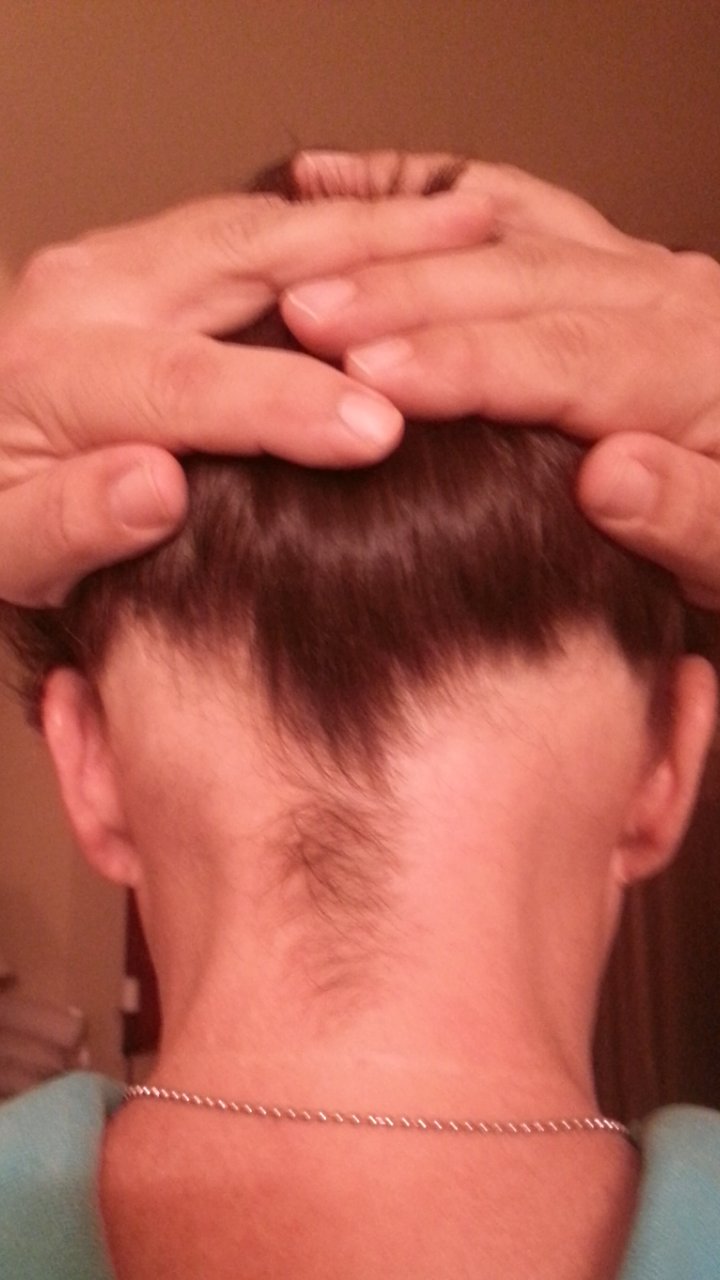
But I had my reason for keeping my hair long.  As you can see, I have quite a bit of a wave in the back, and to be honest, my head of hair is quite thick for my ripe age of 49 (AND HARDLY ANY GRAY!!!).  But with that wave came my dilemma.  The wave would pull my hair up, into a bit of a tighter wave, exposing my skull underneath.

Screenshot_2015-01-20-22-59-39

I know what you are thinking… WTH???

I kept my hair long following my cancer treatments to keep this exposed area covered so as not to raise any uncomfortable questions.  Now I do want to preface this before I make the next comments.  This occurred from treatments back in 1989/1990 when side effects were much more severe.  I lost all of my hair from chemotherapy treatments.

Prior to that, I only lost hair in the areas treated by radiation therapy.  These areas would include my chest, armpits, jawline, sadly, not my nose hairs.  Because of the amount of radiation used back in those days, the hair loss was permanent.  The hair grew back on the majority of my scalp once the chemo was done.  But as you can see, I have what I refer to as my “skunk tail”, a little strip of hair down the lower portion of the back of my skull, with bald patches on both sides.  That strip is courtesy of protection to take care of damaging my spinal chord.  I also have a little tuft of hair in the middle of my chest, where they tried to protect my heart.

I joked with a friend the other day about the cold weather up north.  This is my first Winter season down in Florida and not dealing with the cold.  He lacks quite a bit of hair, okay, all of it, part by choice, the other by heredity.  And like many of my follicly-challenged friends, they seem to be younger than me.  Don’t hate the player, hate the game.

He had been complaining about cool rain hitting his scalp.  I recall that as well.  Not having hair to stop the rain, at least giving the drops a chance to warm up a little before hitting the scalp.  But one thing was clearly worse, a snow flake hitting the old chrome dome for the first time.  I have had frozen slushies and ice cream and have eaten them fast enough which did not cause the pain of brain freeze like that first snow flake.  I did not wear any wig, but for certain I wore hats following that trauma.

Hair loss is probably the number one concern of most cancer patients.  It sounds odd, that with the other major side effect of treatments is often nausea, more patients are more concerned with losing their hair.  Especially with women.  And with advancements in nausea management, hair loss seems to be the only remaining side effect medicine is unable to prevent during cancer treatments for drugs that currently affect the hair.

There are only photos of me before my treatments, and after my treatments, none during them.  Of all the things I was dealing with during my treatments, it was my appearance that bothered me most.  I do not know if it was for my own benefit or for everyone else.  But there is not one picture of me during my treatments.

A dear friend of mine is now currently dealing with one of the cruelest of fates.

Screenshot_2015-01-20-23-44-44

I have known Jennifer for most of my cancer survivorship.  We met through an internet support group for Hodgkin’s patients.  Her ex-husband had been undergoing treatments and was having difficulties following his treatments.  But Jennifer was his caregiver during and following his treatments.  From a caregiver standpoint, Jennifer was one of the best, doing everything she could from comforting to monitoring, and at times, making the decisions.  She did what she had to as together they had a young daughter to also raise.

If I had my way, no one would get cancer.  But even more so, anyone having had the experience of being a caregiver to someone with cancer, should give that person a pass from ever having to deal with cancer again.  Caregivers have their own issues to deal with, which can actually be as traumatic as those dealing with the cancer itself.

But the reality is that I cannot wish someone not to get cancer.

Late last year, Jennifer was diagnosed with cancer.  She is currently in the middle of her treatments and as far as I am concerned, she is doing great both physically and emotionally.  I know Jennifer is tough.  She did great as a single mother raising her daughter.  And having been a caregiver to someone with cancer, she did have an edge on how to get through this awful journey.  That does not necessarily make it any easier.

Screenshot_2015-01-20-23-44-23

I will never forget when I saw the first picture that Jennifer posted with her new hairdo.  Honestly I would never have even paid attention to it, had she not actually stated that she had her hair cut short to prepare for the hairloss.  I saw Jennifer wearing a hat and that was it.  Even though I knew the battle that she was facing, she still looked the same to me, and her courage and optimism still showed in her picture.

Jennifer had a plan to deal with her hairloss and it was working for her.  A recent picture that she posted however, is what prompted me to include her in this post.

Screenshot_2015-01-20-23-44-07

Yes, Jennifer’s hair is now gone.  But guess what is not gone?  You can see it simply by looking at the other two pictures of her, and combine them with the way that I described her character.  It is what you have inside you, not what you have on top.  I know that is of little consolation from someone who has lost their hair to treatments, but as someone who has experienced it, I do get to make that statement.

Jennifer, I cannot wait to see your post stating that you are in remission.  I believe in my heart that if anyone can do it, you can and will do it.  You have unbelievable strength and courage and remarkable support from both your husband and your daughter.  I will look forward to seeing the new hair you will have.

The hair may be gone today, but today turns into yesterday.

“Hey, Why The Long Face?”


A horse walks into a bar.  The bartender approaches the customer for his order and asks, “hey, why the long face?”

a-horse-cant-stand-that-old-joke-anymore-horse-long-face-jok-demotivational-posters-1306795814

It is an old joke, but for the purposes of this post, a great example of how something so obvious can be further from what is actually the case.  It happens a lot to us as humans as well.

Years ago, following shortly after my heart surgery, a comment was made to me, that I needed to cheer up.  And I remember that initial comment very well.  Because all things considered that I was going through at the time, I was actually in a pretty good mood.  But my co-worker who was making the erroneous judgment of my mood, was actually reacting to a physical observation.

Unbeknownst to me, I had developed a habit of walking with my head down, as if sulking, or perhaps sad or depressed.  And it had been so common for me to be seen this way, that friends and co-workers had grown concerned.  I do not know how long this had been going on, but it appeared that I finally got attention for it.  I lifted my head up, and looked at my coworker and told him that I was fine.  He told me that he was getting so concerned about me, because I had been walking with my head down for so long.

About the same time, I became a patient at Memorial Sloan Kettering Cancer Center in their “survivorship clinic” studying long term cancer survivors for late effects, and how to manage them.  The first two doctors remarked almost immediately upon my physical appearance once I had removed my shirt.  Both had confirmed that I had lost a major amount of muscle mass from my upper body area, the same area that had been subjected to an ungodly amount of radiation to treat me for my Hodgkin’s Lymphoma.  So, not only did the radiation cause the need for my heart surgery, but it had also caused damage to my physical being.

The good thing about being seen at a long term survivor clinic that specializes in the care of those of us who have survived their cancer for as long as we have, and unfortunately developed severe, permanent, non-reversing conditions, is that at least we would at least learn how to manage the side effects, and the pain and discomforts that come with them.

For the purposes, I am only going to touch on one of these physical issues from the radiation damage, also known as Radiation Fibrosis Syndrome.  Dr. Michael Stubblefield (one of my physicians at MSKCC) discusses this medical condition in great detail on the web site:

http://www.cancerforward.org

“Dr. Stubblefield explains in his article, “Any tissue within the radiation field can be affected including nerves, muscles, blood vessels, bones, tendons, ligaments, heart or lungs. The clinical manifestations (i.e., signs and symptoms) that result from RF are called radiation fibrosis syndrome (RFS). RF can occur a few weeks or months after radiation treatment and continues for the duration of a cancer survivor’s life. The patient and their doctor may not notice RFS until years after treatment. Unfortunately, there is no way to stop the progressive RF that results from radiation treatment.”

In all my years exercising, I never noticed the physical difference with my body following my cancer treatments.  But once it was pointed out to me, I could see it very clearly.  Any exercise you do, works out a specific group of muscles.  This is why you are supposed to a do well-rounded routine of exercises so that you concentrate on all groups of muscles.  But when you have lost muscle mass, and you exercise only the groups of muscle that you have left, the visibility is obvious.  I am missing half of my pectoral muscles (making it look like I only have the lower half of each breast), the majority of both of my deltoids are gone, and my trapezius muscles are non-existent.  So that is just the upper torso muscle damage.

When you get to my neck, I have lost the majority of the lateral (rear) muscles of my neck from radiation deterioration, and have some anterior (front) muscle loss.  While not textbook by definition, because I still have muscle in the front of my neck, the effect is still the same, my head was drooping, or dropping.

Many of us “older” Hodgkin’s patients have a visual description of our radiated neck area, referred to as “Hodgkin’s Neck” because with no muscle mass of the neck, the neck of a Hodgkin’s survivor may have a “pencil neck” appearance.  And it is very obvious.  Those who have this amount of loss are probably more susceptible to the “drooping head” simply by not having the strength to support the weight of the skull.

In my case, the front muscles of my neck actually pull my head forward, having no resistance from the lack of lateral muscles.  Hence, my head hung low constantly, unaware of why.  But it was not because of my mood, there was an actual physical cause.  Combine this issue, with the fact that I was dealing with my surgically repaired chest muscles following my open heart surgery, which were now also pulling my both of my shoulders forward.

dropped head 1

This is where Dr. Stubblefield came in.  Where every other doctor outside of the MSKCC network that I was being seen by, only Dr. Stubblefield recognized what needed to be done.  I would have two choices, either something referred to as a “headmaster collar,”

dropped head 2

or physical therapy.  Dr. Stubblefield was allowing me to make my decision.

As Dr. Stubblefield stated further in his Cancerforward.org article:

“Physical therapy is highly individualized to the patient and involves normalizing body balance by stretching tight structures, strengthening weakened muscles, and retraining the body’s sensory organs to re-establish coordination. For instance, in the case of HL patients with dropped head syndrome and severe neck pain, functional deficits are not just a simple matter of the patient not having enough strength and endurance to lift their head. Invariably their chest wall and pectoral girdle are tight and bound down with their shoulders forward which puts their neck in a flexed position. All of this must be released which is where advanced myofascial techniques come into play. Their core muscles must also be strengthened and conditioned as they are almost always very weak. The fibrosis restricts the flow of lymph fluid throughout their chest and thorax creating a barrier that must be mobilized if the proprioceptors (sensory organs that provide position sensation) are to function effectively. Without properly functioning proprioceptors, the patient cannot even tell that their head is upright without their eyes open making them more prone to fatigue.”

Finally, not only has the condition been given a name, but also a firm definition and description, as well as a plan to manage the condition.  I chose physical therapy, and actually, went through several courses of physical therapy for not only my neck, but for the rest of the physical issues that I deal with.  I know very well the exercises that I must do, to keep from reversing back to my drooping head, not willing to say that it will come back.

dropped head 3

But all of the exercises in the world, cannot help, if a patient is not given the time to complete them.  There are a lot of exercises to be done, and they take time.  Finding a balance while trying to earning a living, raising a family, taking care of a household, and then finding time to complete physical therapy needs, after being clearly exhausted and fatigued, mean that the odds of the drooping head returning, are quite realistic.

Speaking on the behalf of not just Hodgkin’s Lymphoma patients and survivors, but all cancer patients and survivors, our bodies have gone through, or go through so much trauma, not just from the cancer itself, but also from the treatments.  Our bodies are changed forever.  It is so important to make sure that the doctors that care for us, not only recognize our issues, not only accept our issues as real, but give us the care and direction that we need, so that we can manage our lives to the fullest potential.


Post Navigation