Paul's Heart

Life As A Dad, And A Survivor

Tweens And Elections

1461702194353 1461702205570

Though my daughters were old enough to remember my two local school board campaigns, they were too young to really care what that all would mean, or politics in general.  They knew that I was away a lot, talking to a lot of people about how I wanted to represent students and the residents of our school district.  And that was all that mattered.  They were shielded from nearly all of the negative stuff that comes out during election season.  And since those elections, politics have not been brought up.

Until Monday night.  A phone call from my youngest daughter mentioned that a robo-call had come from the school district, but that she was unaware what the message was about.  I told her that it was most likely because on Tuesday, Pennsylvania was holding its primary election, and since the district decided as usual to make up a snow day (kids always celebrate getting the day off for snow, not really understanding they will make the day up later – it does not matter to them), the district was probably calling to explain to parents the special procedures in place to make sure the children were safe, while adults would enter the school to cast their votes.  I had always been against this, but the district assured that everything would be alright, sectioning off the gym, allowing voters access to the building through one door going straight to the gym.

Of course, the children are inconvenienced during their school day, access to the gym, entrance and exit procedures different, and, even though elementary age, having to deal with conversations about candidates.

And so with that, I had my first official political conversation with my daughters, at their request.  There are certain things as they have grown up, that I have insisted upon, things that I have encouraged, and things that I have left up to them to decide.  I made sure that they learned good eating habits.  I taught them that respect, honesty, and loyalty are three of the most important values they can have and give.

But when the conversation turned to individual candidates, my preferences, and the chatter among their friends, though they are way to young to vote yet, I want them to know just how important the process will be to them in the future, and as they learn about our election system, to pay attention.

I know how I am perceived, and wrongly so.  I do not believe in the whole “you are either a conservative or a liberal” thing.  I want to vote for someone who will represent the things that I consider important.  I want to vote for someone that is not going to try and cram their ideals and morals down my throat.  There are some things that I accept from both major parties, but there are a lot I detest in both parties as well.  This election cycle is going to go down in history as one of the most bizarre and embarrassing elections.  And it was difficult to explain to my children that what they were witnessing in politics is something none of us have ever seen before, and then explain all the efforts do not follow the will of the majority of voters.

First we talked about the primary process itself.  In Pennsylvania, it is very confusing as it is, because only those committed to the two major parties are allowed to vote, ignoring anyone registered as “independent.”  I was asked why they cannot vote.  And of course the follow up, “then why don’t they just sign up for one of the two parties?”

But it is more complicated today.  Because they have heard about the front runner of one party, and how the political party is doing everything they can to prevent that candidate from being the nominee, including bully tactics as seen on playgrounds (ganging up).  And the other party is no different with the popularity of one candidate simply being ignored, and a delegate system being advertised repeatedly to discourage voting for a particular candidate.  And then finally, to explain to my daughters, that even after the primary elections are over, the two parties are prepared to ignore the will of the voters.

Thought we did talk about some of the issues of each candidate that they asked about, I did not discuss who I will vote for with my daughters.  And when they are old enough to vote, I will not ask them who they will vote for.  Along with eating right, behaving properly, they have to make the decision on the candidate that will best represent what they expect from a government.  And unlike our leaders, if they grow up more left or right, or even meet in the middle, I will at least respect them for wanting to be informed, and getting out to vote.

30,000 And Counting


1461632329246

I woke up to a surprise this morning.  It should not have caught me off guard as I knew it was coming.  But there is something surreal about actually having achieved this number.

Paul’s Heart hit over 30,000 views last night following the last post, “When A Door Opens…”.

I sit here humbled.

I started Paul’s Heart with the goal of trying to reach cancer survivors to supply information and advocate for care.  Eventually I included issues concerning my life as a survivor and the many issues I face including health, financial, and relationship.  I discussed the many challenges of parenthood from a survivor’s perspective.  And now, I must also include facing divorce for the second time.

But here are the numbers since I started Paul’s Heart:

5 publications in Memorial Sloan Kettering Cancer Center annual Anthology

1 live performance from the above mentioned anthology

several newsletter articles published for Memorial Sloan Kettering Cancer Center

too many cancer survivor speeches to count

565 posts on Paul’s Heart with another 300 drafts started

40 pages (most popular posts saved as a page for convenience)

2 books in the beginning stages

But perhaps the biggest and most important numbers are as follows:

26 years cancer free of Hodgkin’s Lymphoma

2 beautiful adopted little girls that at one time I thought parenthood was impossible

1459800853696

To all of my readers and followers, I am far from finished.  Thank you for reading.  Thank you for your encouragement.  Thank you for your support.

Paul

When A Door Opens…


I was diagnosed and treated for Hodgkin’s Lymphoma from 1988 through 1990.  Being a rare form of cancer, Hodgkin’s Disease, as it was called back then, was relatively unknown, or discussed.  This was especially true when compared to lung, breast, or colon cancers.

Other than “The Terry Fox Story”, or the more recognizable “Brian’s Song”, I had never really seen any movies or television shows dealing with cancer.  Which is what caught my attention one late evening during a “midnight” movie on a syndicated station.

Fire

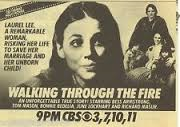
“Walking Through The Fire” had originally aired on network television, but was now syndicated.  The movie starred Bess Armstrong as a woman who was diagnosed with Hodgkin’s Disease.  But she was also pregnant, and treating the cancer put the pregnancy at risk, and without treatment, she would die.  It was a star studded cast for that time period (Richard Masur, Swoosie Kurtz, Bonnie Bedelia, June Lockhart), so I was looking forward to how the Hodgkin’s experience would be portrayed, compared to my real life experience.

Besides it being a midnight movie on television and I was tired, I could not get passed a scene in the movie that involved a diagnostic procedure that any Hodgkin’s survivor from the 1980’s and earlier was most likely subjected to, the staging laparotomy.  Without going into the gory details, this was a surgical procedure, that involved a cut from the abdomen to the chest.  This procedure involved removal of the spleen and other biopsies, definitely not something you would just bounce back from.  But Hollywood and its magic could do what medicine could not, manage pain and recovery instantly.

Over the next many decades, there would be several television shows dealing with Hodgkin’s either in their story line, or behind the camera.  As usual, Hodgkin’s did not get any kind of spotlight, which nearly all of us having dealt with Hodgkin’s, constantly hold our breaths for that one moment that will finally get the attention we need.

One of my favorite medical television shows was “House” with Hugh Laurie.  He played a head doctor, who got assigned all kinds of difficult cases, which involved partly medicine, but also crime scene instincts.  Of course my hope was that one case that would come in, would deal with late effects from cancer treatments such as radiation or chemotherapies.  The issues that many of us face, often go undiagnosed because symptoms do not sync with our age, our appearance, and often times our health history.

Some long term cancer survivors are only recently getting the care they need because of a few pioneers who realized that we were living beyond the five year mark, and also realized that we just might be developing long term issues that were never expected because we were not supposed to live that long.  But the fact is, WE DO!!!

I should not have been shocked then, when once again, television would use another series, mention the word lymphoma, and then walk away from the episode feeling disappointed.  Even more so, because this time, the patient not only had lymphoma, but was being treated for his late developing side effects.

Fire1

I have never seen the television show “Heartbeat” before, not even previews.  But when the feed came across Facebook, that a television show was actually going to tackle long term cancer effects, I could not help but be cautiously curious.

The premise of the show is similar to one of my favorites, “House.”  Both are unique doctors with personality quirks and personal issues they must deal with.  So again, I am thinking, this is going to be a doctor that is going to show the efforts that it takes to properly diagnose someone who does not know they are dealing with late effects from cancer treatments.

During the first ten minutes of the show, I came to the conclusion I was going to be disappointed.  The dialogue of other storylines in this episode were stupid and no different than other “TV hospital story lines.”  Then we finally get to meet the patient.

Sal Merrick has lymphoma as a teenager.  He was treated with radiation therapy.  The show does not mention if there was also chemotherapy, but radiation alone can cause enough damage with late effects, so we will just go with the assumption that radiation is all that he had.  After all, he has had this doctor caring for him for a long time, so those details were not relevant to viewers, only those of us who have been there and done that.

The doctor and her gaggle of students are making their rounds to Mr. Merrick, and following the introduction, the doctor mentions “late cardiovascular complications from radiotherapy.”  One student as if hit by an adrenaline rush starts blurting out “congestive heart failure… pericardial disease…” and then he is interrupted by the doctor who then allows the patient to explain what is being dealt with.

On one hand, I am glad to see that late effects are now being covered in med school.  The doctor gives Merrick the opportunity to explain to everyone what he is dealing with.  This is unfortunately an all to familiar experience as many of us survivors, end up educating our caregivers.  The difference being, those of us who are lucky or fortunate to have doctors with open minds and willing to be our advocate.

Merrick explains that he has “mitral valve regurgitation”, a common issue, with radiation therapy wreaking havoc on the heart and cardiovascular system.  There are many other issues possible for us, the other valves, scarring, etc., but Merrick fortunately was only dealing with a mitral valve problem.  And like most of us, we know the risks of the procedures we face, and the ramifications if those risks are not addressed.

Merrick had multiple surgeries, which of course resulted in a lot of scar tissue, with scarring being enough of a concern by itself.  But, due to the radiation damage, organ tissue is extremely fragile, and bleeding out is a major concern.  Typically, heart surgery on one of us, is done through the breast bone, open heart surgery.  That also has its share of risks from bleeding out and infections.  But of course, the show does not address that.  To Merrick’s credit, he had excellent knowledge of what he has been dealing with, and kept excellent records, as many of us do.

Open heart surgery is one of the scariest experiences someone can have in their life.  There is the humongous and permanent scar on the chest, not to mention the long recovery, and the lifetime of fear of “what’s next?”

Technology has advanced in open heart surgery, now many surgeries being done by robot, the DaVinci Robot to be exact, allows heart valve surgery to now be done without going through the breast bone, but through the side of the rib cage.  This provides a much quicker recovery, and definitely less destructive to the body.

The only thing is, those of us who have had radiation therapy, we are not normally acceptable candidates for the robot due to all the scarring and potential bleed out issues.

Then, leading up to the surgery, this is where my stomach turned.  Merrick’s doctor had never performed the robotic surgery for the mitral valve.  He would be the first for her.  And then, in dramatic fashion, as she practices with the simulator, she repeatedly kills her patient with maneuver mistakes.  There is a back story with the doctor’s sister having died from lymphoma five years earlier.  The patient decides that he wants someone else to perform the surgery.  When it is decided that his original doctor is to perform the surgery, she has to find a hospital nearby where she is currently located, to perform the surgery via telecom to the robot from another hospital’s surgery suite.  All the while, she has her child with her as they were about to attend a school conference.  The doctor performs the surgery, of course causing a tear of the heart leading to bleeding, but then saves the day.  And is then arrested by the police, with her son, for trespassing.

Merrick did survive, but then again, nothing post op had been discussed, and that is a major issue.  Many survivors have passed away, surviving from the surgery itself, only to suffer a setback due to unsuspected infections.

Bottom line, Hollywood and NBC, you blew it.  You had the chance to make a major difference for millions of patients.  But then again, given the quality of the show, and the ratings, the episode will probably not reach that many to make a difference anyway.

Post Navigation