Paul's Heart

Life As A Dad, And A Survivor

Archive for the category “Side Effects”

Describe The Feeling


One of the statements that always frustrates me when I hear it, is “I know how you feel.”  No, you do not ever know how I feel because you have not personally experienced what I have felt, thought admittedly, you may have an understanding, perhaps because of having had a similar experience.  So, gasp, at the risk of being “politically correct”, gulp, something I am not very good at to begin with, yikes, perhaps instead of stating “I know how you feel,” if you feel a need to respond, simply say, “I understand how you must be feeling.”  It lets us know that you have heard us express what we may be dealing with.

There is a pretty good chance that if someone is expressing something that appears painful, physically or emotionally, that person is either trying to relieve some of the angst or negativity, or is reaching out for help.  And though it may seem harmless, to say “I know how you feel,” and perhaps you may be trying to say “I hear you”, that is not how it will come across to the person seeking someone to just recognize that the individual is not alone.  What that person hears, is that you also have your own problem, and there is a good chance that now guilt will be added to the other’s issue, or perhaps if it is someone who has the personality of taking more on their shoulders than they should, they will add that to their issue as well, because friends do not turn away friends, especially when in need.

Okay, so I got off topic with the title, but I could not help writing the first two paragraphs, whenever I hear people discuss how they are feeling, or what something feels like, and I always hear the same thing, “I know how you feel.”

So, the other day, I was asked, what did it feel like to get diagnosed with cancer?  To get diagnosed with a major heart issue?  To find out that the price of my survival has been more physical ailments caused from the severity and toxicity of my treatments decades ago?
punch

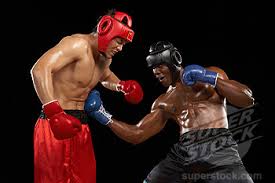
Yeah, like that.  Like having the wind knocked out of me.  At the time of my cancer diagnosis, I was six months away from getting married (the first time), had a great job.  Things were looking great.  And just like that, it all changed.  When it came to my heart issue, again, everything was going great, my daughters were growing rapidly, the house was in good shape (and so was the economy until a few months later).  And just like that, it all changed.  As for the other issues I am dealing with, they have not presented themselves yet to the point, that I am left with that “punch in the gut” “knocked the wind out of me” feeling.

But just as fighters get pumped for their big fight, something they have looked forward to doing, so it is with events in our personal lives.  But eventually you have to get into the ring.  Sometimes you just get hit with jabs.  Sure, they sting, but not often do they have the impact that a good punch to the rib cage will cause gasping for air, like wondering “what just happened?”  And very quickly you need to regain your focus before you end up taking another severe shot.  Very much so, once being given a difficult diagnosis.  It is so important to regain that focus.

There is a lot of information that will follow that “punch in the gut.”  And unless you have someone else with you to help gather the information, you are the only one in that ring.  You have to defend yourself and get on the offensive.

I have people who have given me news of diagnosis, getting divorced, deaths of loved ones.  And while I have a strategy for getting through these events, some work, some do not, it is not a “fitsall”.  But neither are the feelings that I had when experiencing these things.  But what I do have, is an understanding of what someone may be going through.

“I understand how you are feeling,” may just open the door for the other person to reach out for help or support, that if originally told “I know how you are feeling,” the person may just shut down feeling you have your own burdens and then not wanting to burden you with anymore.

And just for the record… I have taken a punch to the rib cage knocking the wind out of me.  Emotionally for me with my diagnosis, it left me with the same feeling, just mentally, instead of physically.
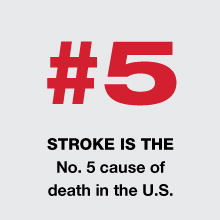
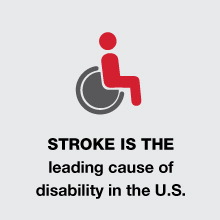
National Stroke Month


stroke5

I am not sure what the other leading causes of death are, but I am certain that auto accidents, heart attacks, and cancer have to be in the top five.

stroke4

Timing is everything when it comes to dealing with someone who has had a stroke.  Effects from the stroke can be minimal or severe, short term or permanent.

So what exactly is a stroke?  There are a few main types.  The first is called an ischemic stroke, which for simplest terms, is a blood clot in an artery going to the brain.  It can be caused by fatty substances building up a blockage, or even due to an injury.  Another is called a hemorrhagic stroke, which yes, that means bleeding out.  A common cause of this is a blowout of a blood vessel, called an aneurysm.  Finally, there is the TIA, the transient ischemic attack.  Often times this is not considered a “stroke” per se, but rather a “pre stroke.”  If you have one of these, chances are likely that a stroke is more common to occur.

The truth is, without awareness, you may never realize if someone is having a stroke, and just consider a situation odd.  But having had one relative die of a stroke, another suffer a stroke, my awareness of my father having a stroke following surgery for lung cancer led to a discovery that was definitely unexpected.

My father had just has part of his lung removed for cancer.  The surgery went as anticipated, but his recovery took longer.  He would not wake up.  When he was finally alert, they brought him to his room.  But after the first 48 hours, he was expected to resume normal behaviors such as eating and drinking.  Instead, clearly  my dad was confused.  Both my brother and I witnessed several odd circumstances such as my father claiming to need his glasses to eat, he could not see the food and coffee placed in front of him.  I knew my father wore glasses, but not every moment.  He was not blind, and definitely did not need glasses to see things directly in front of him.

But when a certain food item was placed in front of him, a conversation started that would probably save his life.  A particular food item sparked my dad’s appetite, a mozzarella stick that I purchased down in the hospital cafeteria.  Yes, I know, an odd food choice served by a hospital, but I was glad to have it, trying to get him to eat.  He took a bite and then offered the following compliment, “this is good… how did they make it so soft?”  I thought my dad was just goofing around, though he normally does not have that type of humor.  I told him, “Dad, it’s a mozzarella stick.”  And then he sternly responded, “NO, it’s a carrot stick.”  We exchanged back and forth a couple of times, but clearly my dad was not joking.  My brother and I looked at each other and knew something was wrong.

The sad thing is, a doctor was just in to see my father, and pretty much pronounced him, “recovering well.”  But following that conversation with my dad, I dragged the doctor back in, and then a neurologist was called in, and yes, after further testing, my father had not only suffered a stroke, but two of them.  And more effects from the stroke would be discovered.

stroke1

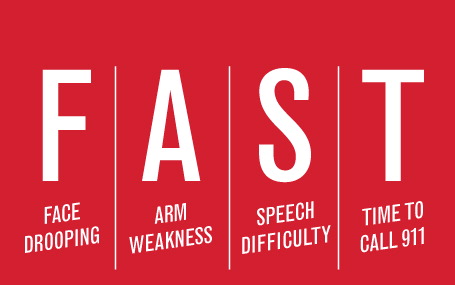
A family member is the best opportunity for a quick response to someone having a stroke.  We know how our loved ones act, speak, walk, and go about daily activities.  And just because they do something odd, does not mean that they have suffered a stroke, it could have just been a moment.  But being aware of the following expression, might just make a difference to someone you know and/or love:

stroke2

The clip art on this post, were all taken from the American Heart Association and American Stroke Association web sites.  But one word, FAST, says it all.  Fast not only describes the symptoms and response needed, but also tells you how quickly you need to react.

You can make a difference.

Thank A Survivor


The following is a speech that I just gave at a local Relay For Life event where I was being recognized as their 2015 Honorary Cancer Survivor.  I want to thank fellow survivors who helped me prepare this speech with their input and feelings that they felt should be expressed to current patients and survivors.

11140338_1023832694308529_457527836403710987_n


I think we will all agree that 25 years of surviving cancer is a pretty big deal. But what you may find hard to believe, up until I hit this particular anniversary, I have never given myself credit for surviving cancer this long.

You see, I battle an issue called “survivor’s guilt.” Yes, that means exactly what it says. I have walked through these 25 years wondering why I have gotten to survive my cancer, while so many either do not, or face recurrences or new cancers. Do not mistake my gratitude, I have a lot to be grateful for, including two beautiful young daughters. But having gone through cancer in a time period when survival was based on a “five year survival rate” plan, I have wondered ever since “why me?”

Tonight, I finally give myself a break. And instead I ask myself, “why not me?”

It has been a long time coming to get to this realization, and it is because of our Naples Relay For Life Survivor Committee Chairwoman, Olyvia Eldridge, that I wrote this particular speech this evening. Olyvia, by showing this survivor what has been done for him, I realize that being a survivor is not just about being a visible statistic to other cancer patients and survivors. Being a survivor means supporting other patients and survivors.

So tonight, I want to draw your attention to the hundreds of cancer survivors here this evening, and by survivors, that also includes patients either just diagnosed or going through treatment. Now with a show of hands, how many have survived cancer since at least 2005?

Take a good look around you. No, take a long and lasting look. With the theme of this year’s Relay being “Wish Upon A Cure,” I have but one wish tonight. And even if you are not spending the entire night with us, you can make my wish tonight come true.

The Relay For Life is about raising funds to not only find cures for cancers, but to find better and safer treatments and follow up care. And while your role in this process is so very important, as is the scientists who look for those cures, it is the long term survivors like those of us here this evening that I would like you all to just take a few moments, and not only tell them that one day you hope to be a survivor like them, but to thank them for the care and treatments that are available to you today.

Our treatments just a couple of decades ago, were quite harsh. And as we have survived all these years later, medicine has realized something very important. That while every cancer patient just wants to be done with cancer with that final treatment, to survive cancer long term, you are not the only one who needs to take care of yourself, but doctors have recognized a need to follow patients for the rest of our lives, even for the slightest of late developing side effects, so that years after having beaten cancer, you no longer face the possibilities like myself and so many others have had to face.  Because of those of who have survived cancer for so long, protocols have been written, and rewritten, and rewritten, and doctors have expanded their medical orientation from cure to now what is going to be the quality of life for a patient in 10, 25, 50 years and beyond. Because of us, doctors will now take better care of you, following your treatment for cancer. Screenings for certain issues occur annually or longer if possible, but issues are dealt with sooner than later. And as any cancer patient knows all too well, the sooner and quicker dealt with, the better. And because we are now followed up more closely, and yes, for the rest of our lives, we actually have an advantage over the average healthy person because issues are discovered before they become symptomatic.

If you spend time with one of us this evening, getting to know what it has been like for us to live post-cancer, without the care that you will now be getting, and to understand just how important this new protocol is to you, and believe that you too, will someday be a long term cancer survivor like myself, and so many others.

This is the legacy my generations of survivors have left behind. And I have faith that you will further build upon that foundation and with the help of advances in drug and immunological research, we will all someday hear those words, “you are in remission.”

I began my life as a survivor 25 years ago. I began my support as a survivor and caregiver 25 years ago. I began my advocacy for cancer patients and survivors 7 years ago, when it became known to me, that long term survivors were having health issues that were not being followed up properly. And I became a patient advocate a little over a year ago, when a dear friend lost his life, for the lack of a simple protocol during cancer treatments with a drug known to have the potential for serious side effects.

Tonight, my team, “Michael’s March”, in memory of Michael Scheidemann will walk this year’s Relay. Each hour, I personally, will walk and dedicate an hour to a cancer patient or survivor who has had an impact on my survivorship, and will write their name on the front of this t-shirt. And I invite each and every one of you, to follow me throughout the night, and write your name on the shirt as well.

In closing, as I always do, I offer these words to you…

“As I go down the road of remission, I will keep looking in my rear view mirror to make sure that you are still following me. And if you are not on that highway, hurry up. Because once you get on that road, it’s a great ride.”

Post Navigation