
Paul's Heart

Life As A Dad, And A Survivor

Archive for the category “Animals”

Questions And Answers


Every so often, follower of “Paul’s Heart” reach out to me with questions.  I want to take this opportunity right now to answer those questions.

How do you decide your topics?

I am a very impulsive writer in most cases.  With the exception of planned projects, such as short stories I have had published in Visible Ink, various news publications, the majority of posts/stories come from ideas that personally concern me, such as cancer, survivorship, adoption, health care, divorce, and such.  An idea might pop into my head, and within hours, I “lose” that urgency to write, and it falls into a cue which currently holds over 500 prompts.

Are there things I will not write about?

I do not believe in censorship, so I would say that I can and would write about anything if I was asked.  As a rule, when it comes to “Paul’s Heart”, I generally do not discuss my opinions when it comes to religion and politics because those things are private to me, and I do not want that to interfere with the purpose of this blog, to help and support those experiencing similar life struggles as myself.  If I do write about a controversial subject, such as health care, I will do my best to research and present facts.  But I have found, that writing about politics or religion, often cause more harm to relationships, and what I want this blog to achieve.

Do you prefer to write fiction or non-fiction?

I am told that I do not give myself enough credit for my writings.  I have had several assistants editing many of my pieces, all with different approaches for me.  I do not consider myself to have a vivid imagination, yet my writing coaches have a way of drawing out that talent from me.  I do prefer to write biographical type pieces, as many of my followers look to “Paul’s Heart” for inspiration.  I have written about many others on this blog and the experiences that they have gone through, so the stories are not just about me.

I have taken what I have learned from my writing coaches, and encourage my children to write in a similar fashion, by giving them simple prompts to provoke their imagination.

I do enjoy writing editorial pieces also.

Do you make time to write?

I recall the person who asked me this question.  Their claim was that between all of the doctor appointments, work, taking care of their family, this person felt that they had no time to write, in spite of their desire to do so.

I do try to set aside time to write, at least once a week, if not more.  It does not always work out that way, because I also have a tendency to get “stuck” not able to put thoughts together to write a piece, perhaps I do not like the finished project, or I just even give up on that particular piece.  But unless I have a deadline to meet, I write when I write.

In further discussion with this person, it turned out that they spent on average three hours on a train, commuting to and from work.  I mentioned that if they were interested in writing, this time period on the train would be ideal to gather thoughts, to see if there would be anything that they might like to discuss on paper.  Time on the train is a perfect and often quiet time to reflect.

Is writing therapeutic for you?

In one word, absolutely.  I am a person who internalizes… a lot.  I have many emotional struggles as a cancer survivor, one of which is survivor’s guilt.  And that is exactly what it says.  I also deal with PTSD and anxiety in relation to my survivorship.  I do have someone that I speak with, but when I do not have that option available, yes, writing is just one of the things I enjoy to help me relax, along with my other method, music.

Whether you publish something, or just document a thought in some sort of diary, releasing a thought that is of great concern to you through writing is indeed therapeutic.  Keeping concerns inside is not good.  And all too often, we do not have someone that we can just readily talk to, or may not even be good at listening.  We can express our thoughts, reflect on them, and then decide if it is necessary to share with others, or is it good enough that “I” recognize that expressing myself as I had done, that is all that needs to be done.  Yes, it is very therapeutic.

Can I share my story on your blog?

As long as it pertains to cancer, survivorship, adoption, or divorce, I am more than happy to share others stories of survivorship and inspiration.  You can send your story to me at pedelmanjr@yahoo.com .

As always, I am so thankful for everyone who reads and follows “Paul’s Heart”.  As I mentioned earlier, I have a lot of stories in cue to get to.  I think I am caught up on questions.
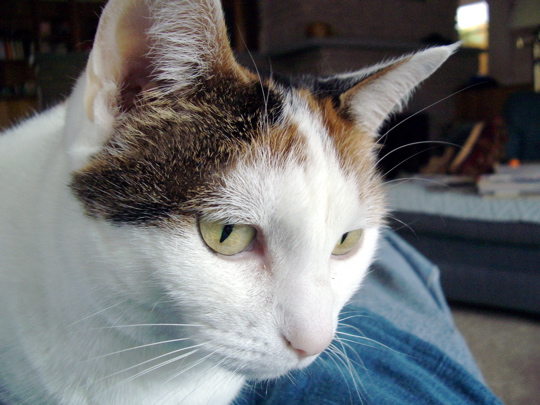
Chemo Cat


chemo-cat

*** author’s note***  Each year, I compose two stories to be submitted to Visible Ink, a writing program through Memorial Sloan Kettering.  The stories are published in an annual anthology consisting of other stories as told by other cancer patients and survivors from MSKCC.  Each other in general gets one story published per year.  I will post the other story when the book is published, but for now, here is the story that was 2nd place for me.

Emotional support comes in all forms when faced with a serious illness like cancer. When it comes to humans, that support has its flaws. People can be moody. Some can be “two-faced”. Co-workers often express jealousy as if the cancer patient is receiving favors for their battle with life. Family members may find themselves distancing from their loved one.

Animals on the other hand, offer unconditional support. Many times, fur friends may be aware that you are not feeling well, long before you do. It is this type of companionship that led to the concept of “therapy pets.”

Even on our worst days, when we come home from a long day, a dog more likely than not, will approach you excitedly with tail wagging, not even an accusational glare as to where you had been that entire time. And cats also, will snuggle up to you if they so choose.

Shortly after I had been diagnosed with Hodgkin’s Lymphoma, besides selecting my medical care and direction, I made the decision that “pet therapy” would be a part of my cure. I lived in an apartment. Dogs were not allowed, but for a $25 fee, I could have a cat. I went to the local animal shelter, adopted “Pebbles,” a white female calico.

During the initial days of my diagnosis, she spent a lot of time on my lap, as I tried to gather my thoughts about the next days.

But it was not until I returned from my honeymoon, that new disease had been discovered, I would have to undergo chemotherapy. My wife went with me for the first chemo appointment. It was a 25 minute ride, which ended up being a critical detail to keep in mind. This was the amount of time that I had, to get home, get up three flights of stairs, race to the toilet, when nausea would finally make its presence known. That first day, I did not make it. My wife had driven too slow. There were too many traffic lights.

For the next fifteen treatments, I would be on my own. Knowing that nausea would hit me while driving, I ignored speed limit signs, accelerated at yellow traffic signals. Each appointment, I was consistent in getting to my apartment building, racing up the stairs, opening my apartment door, zoom past Pebbles, flip the seat of the toilet up, my body did the rest. After the first wretch, each time, I would glance over to the left, and there was Pebbles, just sitting in the doorway, watching me. She did not greet me as she normally would have on any other day, rubbing against my legs as I stood in the doorway. Pebbles knew my current situation was not normal.

Approximately a half an hour later, after I was certain that my nausea had ended, I had definitely hoped so because I was exhausted, I stood up, closed the toilet lid, washed my hands, my face, and brushed my teeth. I crawled into my bed, and passed out. I would wake up several hours later, upon my wife entering the apartment. Each time that I awoke, I looked over to my wife’s pillow, there was Pebbles, curled up and asleep also, clearly had been watching me when I crawled up into bed. My “chemo cat”, as I often referred to her from that point on, had actually been watching over me, keeping me company until my wife had come home from work.

Decades later, I would have several more pets, as I was challenged once again with severe health issues, pets were there for me every time. My biggest fear however was following heart surgery, with a freshly repaired breast bone, being greeted by my 100-pound Golden Retriever. It was not uncommon for him to stand up on his hind legs to greet me. This time, as if he sensed my fragility, simply sat right by my side, waiting for me to pet him. That is where he would stay as I recovered at home.

Today it is very common to see pets in chemotherapy suites and hospitals. The emotional healing power of pet therapy has been proven to lift the spirits of people who are ill or hospitalized. In two recent hospitalizations that I experienced, I had numerous visits from furry friends. After missing my own fur friend at home, my spirits were definitely lifted.

When my father went through his own battle with lung cancer, the very first day of treatment, he was greeted by a Goldendoodle, who simply rested his head on my dad’s lap. This was just one of the new changes in the atmosphere of a chemotherapy suite, which definitely has an impact on the psyche when dealing with such a difficult time period.

Sometimes, The Best Advocate Is Yourself


imagesP2SPLE8S

Advocate ad as defined in the image, “one who pleads the cause of another.”

In my life, I have taken on many advocacy roles, and the list almost grows daily.  From health, I advocate for patients with their care, and their rights in the work place and in the rest of the world.  This started around the time that I was diagnosed with Hodgkin’s Lymphoma, and the first hurdle that I had to jump in my care.  I considered it unacceptable, and knew that if it was happening to me, it was happening to others.  Buy my advocacy in health did not stop with the world of cancer, but has expanded to cardiac, long term survivors of cancer, geriatric care, and simply, the right to receive medical care when it is needed.

With having two daughters adopted from China, I became an advocate for families seeking and dealing with adoption issues, not just internationally, but domestically as well.  Because of having children, I took an interest in public education and fighting to make sure my daughters got the best education possible and supporting those trusted to educate my daughters.  Which of course led to my first and only political run, for local office, school board.  And of course I began paying more attention to politics on the larger level.  But to be honest, the lessons I learned at the local level leave me feeling hopeless at the higher levels.

Getting back to children, well, not just children, I have always been an advocate fighting bullying in any environment.  Sadly, society still does not recognize by ignoring the bullying in schools, those bullies grow up to be adult bullies.  There are plenty of programs to deal with this, but unless they are used or enforced, they are paper tigers.

And then there is Parental Alienation.  This is the blatant act of causing mental and emotional harm to a child, by interfering with the relationship between a child and another parent, usually through divorce.  Talking negatively in front of a child or even as “matter of fact”, causing the child to miss opportunities to spend time with a parent, manipulating the child to develop a negative concept of the other parent, are just some of the examples of Parental Alienation.  And I will not beat around the bush with this, PA is child abuse.  Children have the right to love their parents.

But there is more to being an advocate than just having a cause to fight for.  There is more than just defending someone who just does not know where to start to find the answers to start their fight.  Perhaps, they just do not have the strength to express their needs.  Sometimes we have to be that voice.  And in many cases, it is as easy as just showing someone “where” to begin, or even guide them along their course.

There are also times, when even the slightest effort, without realizing it, you can become an advocate.  Just being there for someone, as an “ear”, makes you an advocate because you are showing someone, who may feel alone, that you care.  And that act alone makes more of a difference than doing nothing at all.

No matter the cause I advocate for, it has made me who I am.  And it helps me to deal with the many things that I face.  I have no quit in me when I know that something, or someone is completely wrong.  And I have paid a price over the years with employers, friends, and family because of my decision not to pick battles.  Even the smallest issue to me, if you let enough of them go, it leads to a big issue.  And I have learned, if you are dealing with the smaller issues alone, when you face the bigger ones, you will still be alone, and that fight is even more difficult, because the other side is not alone.

You will never be taken more serious, when you, yourself, advocate for yourself.  After all, you know more about your particular situation than anyone else.  Sure, the help of another advocate is great, but your own words will be the loudest and get your heard.

Post Navigation
