
Comparing Apples To Watermelons
I need to offer a disclaimer for this post. I will be talking about radiation exposure used in treating cancer. And here will be the important distinction. The radiation exposure I am referring to is that what was used on cancer patients used prior to the turn of the century, which unknown to cancer patients back then, was not only dangerous, but carried with it, the potential risks for late developing side effects. Fortunately, today’s radiation uses less dosages, and often more precisely delivered to spare wider exposure to the damage done by older therapies, hence hopefully more safely. But if you are someone going through radiation treatment right now, what you are about to read, affects those who came before you, decades ago, before we were told of the dangers and risks. Now, everyone knows.
I have often written about my exposure to radiation therapy for my Hodgkin’s Lymphoma, for which I am grateful, giving me 37 years of survivorship, combined with my chemotherapy, and I have no regrets. The amount of radiation I was exposed to, 4000 rads within 30 days, scattered field upper mantle, just think of my entire upper body to my lower jaw. To put this in perspective, in the US, the annual limit for radiation workers is generally 5 rads for many types of radiation exposure. Look at that again, people who work with radiation are regularly limited to 5 rads of radiation per year. I was hit with 4,000 rads. So, doing the math, if radiation was your career, whether taking dental x-rays or working in a power plant, for someone 60 years old, the “lifetime” limit of exposure would be around 210 rads. I recieved 4,000 rads. Read this paragraph a second time if you need it to sink in.
Now that those numbers have sunk in, when it comes to cancer treatments, the exposure limits are treated differently because of the success of treating many cancers, including Hodgkin’s Lymphoma. So there is no strict lifetime limit. For those like me, treated in the 1980’s and before, Hodgkin’s patients were normally treated with 3500-4500 rads, again, I was treated with 4000.
So how bad exactly is this exposure? 100 rads (or 1 Gray) of whole body exposure can cause radiation sickness. 400-500 rads (4-5 Gray) of “whole body exposure” is potentially fatal. I recieved 4000 rads (40 Gray), my only saving grace, that my entire body did not recieve that amount, just my entire chest area and jaw.
While I live with this knowledge, and my late side effect health issues, it is when I share this conversation with those who understand radiation or work with it, and I see their reactions, I get it, I know they understand me, what I have gone through, and what I am now dealing with, their shock and their tears aside, I am still alive.
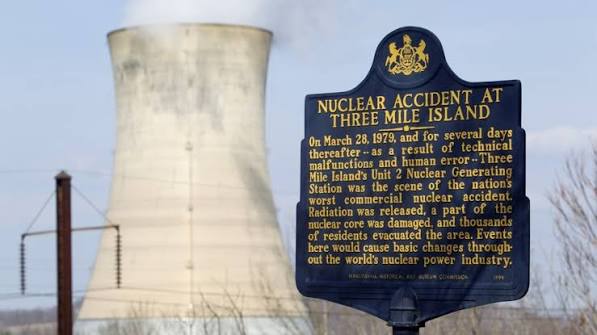
(photo courtesy of AIP.ORG)
I used to compare my radiation exposure to the accident at Three Mile Island Nuclear Power Plant in Pennsylvania in 1979. I was thirteen at the time, and lived about an hour away. I remember the panic and the conversations of needing to purchase large amounts of iodine in preparation for a nuclear core meltdown. Without getting lost in all the math weeds, I’ve done the math for you, the average radiation released within 10 miles of the power plant at that time was 0.1 rads. I was treated with 4000 rads. It is no lie or understatement when I say, my exposure was worse than what happened at Three Mile Island.
Recently, I have come across many articles referring to the fact that it was believed that while refusing treatment for Hodgkin’s would likely result in death, the risk from radiation poisoning, possibly during treatment, could also result in death (hematology.org). What it came down to was, you could die with the treatment, or you will die without it. The risk of death without was greater than the risk with.
The frustrating thing is what did my doctor know at the time, because this risk definitely was not explained to me. And I do believe it was known at the time, the potential risks, as you will see shortly in this post. I was never told I could die from my treatment. I was just told of some skin burning, and the possibility of pericarditis, and inflammation of the heart. Now if you follow Paul’s Heart, you know they missed the heart issues by a mile. But my question remains, what exactly did my doctor know back in 1988? Not that it would have changed my decision, it was not a matter of will die no matter what, but the treatment could cause my death.
Fast forward nearly forty years, and several nuclear disasters later, Chernobyl and Fukushima most notably, it was a documentary on Chernobyl that has severely triggered me.
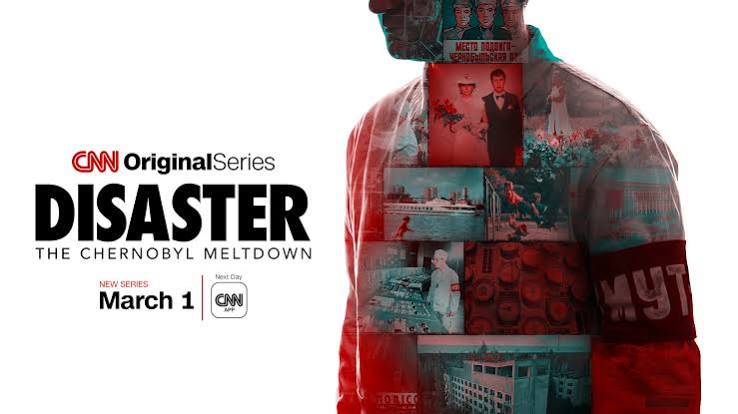
(photo courtesy of CNN Press Room)
I am a history nerd and I love documentaries. And I am always especially concerned for all the survivors when it comes to radiation accidents, especially with my medical history. Now I am not going to review the whole series (four parts), but there is amazing footage from before, during, and after the meltdown of the core reactor. Most heartbreaking, are the images, the videos, and interviews from those exposed either environmentally, or as a plant worker, or volunteer, yes, volunteer.
There are images of people within weeks of exposure with obvious signs of radiation poisoning, from skin burns, hair loss, nausea. There were the workers who were killed instantly by the explosion. And then there was the coverup by Russia, which held Ukraine as part of the Soviet Union at the time. And the last thing the USSR was going to do, was take any kind of accountability.
It is what the survivors tell, and the interviews done at the time, that are just shocking, as they knew the risks, some even taking pride in their patriotic duty to respond. Again, I am not going to go into the whole documentary, but this part was just numbing. So because Chernobyl is going to remain radioactive for likely 20 to 24 thousand of years, the town of Pripyat, populartion of 50,000, remains evacuated, with the core still considered dangerous, the solution was to “bury” the reactor, in what they call a “sarcophagus”.
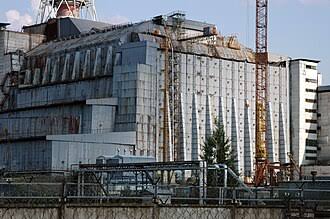
(photo courtesy of Wikipedia)
Yes, they would literally bury the reactor in a tomb. It was an amazing endeavor. But this was only going to be a temporary solution. 50 years temporary, which we are approaching now. But with Ukraine now independent, it faced the unthinkable, when Russia launched at missle at the sarcophagus piercing a whole, potentially causing the risk of radioactive release again.

(photo courtesy of BBC)
This is the newer and improved encasing of the reactor, let’s hope it lasts. Again, they know it is not permanent, and will definitely need to be dealt with again. I want to talk about an unusual group of “heroes”, and I put that in quotes because these were volunteers, inspired by only their patriotism to the USSR, knowing they faced death in what they were being asked to do, and they were happy to do it. They were called the “liquidators.” An odd name.
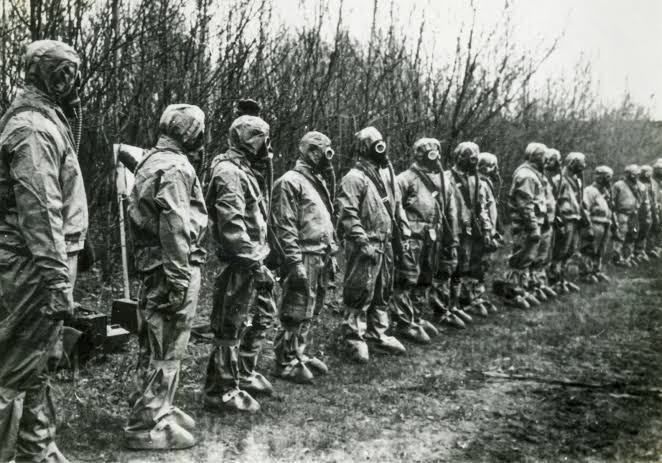
(photo courtesy of Smithsonian Magazine)
These liquidators, approximately 600,000 of them; firefighters, miners, medics, engineers, were tasked with putting out fires, burying radioactive equipment, and building the sarcophagus. Much of the “protective” gear they wore was improvised, and their time spent on their assingments was limited to minutes to minimize exposure, often unsuccessfully. The USSR in true communist propoganda fashion, reported only 31 deaths, when in reality it was thousands, and so many more thousands dealing with the late effects of the radiation exposure. No duh! You really have to see the videos of these workers in action to appreciate what they did, that literally saved our planet.
My very simple takeaway is this. In 1986, just two years before I would be treated with radiation for my Hodgkin’s, when the accident occurred, science and the USSR KNEW that radiation in that amount was deadly. Medicine already knew the limits of exposure. And again, I am back to “what did my doctors really know?” Again, I would have still opted for the treatment had they told me the actual risk, but the point was, they were not honest and up front with me about it. Not only that, they did not prepare me for the possibility and eventualities of the cumulative and progressive issues from that radiation exposure. I had to learn and discover everything on my own, often from other fellow Hodgkin’s survivors who have suffered the same issues, and then stumble across a doctor who I was lucky enough to understand what I have been exposed to.
There are several tragedies, one that there are so many Hodgkin’s survivors from the 80’s and beyond, totally unaware of the likely causes of their cardiac and other issues, are actually related to their treatments, but also unaware of the risks of treating those issues without the association of connecting their treatments to their ailments.
Another tragedy being that even if aware of the connection between treatments and ailments, the lack of access to qualified care, or worse, the interference of insurance with denials and pre authorizations for a phenomenon not covered widely in medical texts.
And then there are those like me, aware of and have access to the necessary medical care. For many, it is still not enough. The body can only handle so much trauma. Even if doctors “manage” the late side effects, sometimes it is the spontaneous and unpredicted events, like a virus or accident, the body just does not have enough left in the tank to go anymore. And then there is the risk of the need for additional exposure to radiation for anything from x-rays and CT scans, to God forbid, additional treatment, which I believe I am no longer eligible for should I develop another cancer.
Back when I was being treated, I was often accused of undervaluing the toxicity and the danger of the treatments I was put through. And part of that was because of the way everything was explained to me, ummm, or not explained to me. Sure, I had it in my head, I was going to get through my treatments, and I was going to reach remission. And while I am grateful for these 37 years of survivorship, looking back, at least the last eighteen years, it has not been easy. And perhaps now, I can acknowledge just how dangerous the treatments were that I went through. Maybe it wasn’t so easy after all.

