Paul's Heart

Life As A Dad, And A Survivor

Archive for the category “The Heart”

My Biggest Fault – I Cannot Grieve


Something happened when I was twelve years old.  It had an dire impact on me, changing my life forever, and how things affected my life.  Combined with future events in my life, this “defense mechanism” that appeared, was then complicated with PTSD (Post Traumatic Stress Disorder) and what is commonly referred to in the cancer community, “survivor guilt.” For those that know me, have seen the late effects of this issue, and for those that have only seen the effect of those events, are often left to shake their heads in wonder.

I have no emotions.  Well, not exactly none.  But when it comes to crisis and tragedy, I show nothing.  I cannot explain why.  And I know it is not healthy.  While from an emotional standpoint, it is clearly not healthy, situations that I have been involved with, not dealing with emotions allow me to process things more clearly, logical if you will.

That winter, I had just turned 12 years old.  And just days later, in between the Christmas and New Year’s holidays, I would lose three close relatives.  It is hard enough for a child to deal with the death of one relative.  But three in less than five days, with subsequent funerals, were definitely overwhelming for me.  And no one could see it.  From that point on, “death” was just something that happened.  We move on.  I do recall crying at the first funeral, confusion during the second.  But by the third funeral, I felt nothing anymore.  This defense mechanism was firmly in place.

I will say that this defense mechanism has been pivotal however in certain situations of my life.  But by the same token, the price my health has paid, both emotional and physical, has been high.  Relationships.  Stress.  Guilt.  Physiology.  I am riddled with scars.

When I was diagnosed with Hodgkin’s Lymphoma, that very defense mechanism left me no room to believe nothing less, than I would be cured.  Any negative possibility.  The barbaric testing and treatments would not deter me.  I was not scared.  I was not sad.  Sure, I dealt with some initial anger at first, until the mechanism kicked in, reminding me that I needed to be focused, to get through this.

Years later, one of the most influencial people in my life passed away, following her diagnosis with a second cancer to have dealt with.  With no emotion, I concentrated on getting my grandmother all of the help she could get, because I believed just as the first cancer she dealt with, we needed to stay focused on what needed to be done.  Unfortunately, she knew something I did not, and that was by design.  Her cancer was terminal.

The thing about my grandmother, she taught me, “take care of others before yourself.  Do not be selfish.  Be selfless.”  The day before she died, I actually visited with her.  Something was not right.  She did not have her focus as I had seen other days before.  She did not talk about what was on her mind, other than she was to start chemo in two days.  She had even gotten her hair cut short to prepare for the eventual hair loss.  The next day,  I got a phone call that she had been taken to the hospital, for fluid in her lungs.  I knew this was not a good thing, and I urged her that I would be on my way.  However, she knew that I was working with a group of children in our church youth group.  She knew what I was doing was important to the children, and important to me.  And this made her feel good.  She told me, my place was there, and she would be fine.

And so, I went through the day, figuring I would just go straight to the hospital after the event.  Instead, a phone call came to the church, answered by one of my assistants.  She was in tears as she handed me the phone.  I do not even remember the conversation.  I know that my grandmother had died.

That mechanism was now working very hard to squash the grief of the greatest loss I had experienced in my life.  I hung up the phone.  Walked passed my assistant, who I remember telling me, that she would handle everything.  Yet, I ended up back with the children, and at the conclusion of the event, went to the hospital.

This issue that I have, would become an even stronger force, as friends and relatives came to the funeral.  Sure, I heard all kinds of wonderful stories about how wonderful she was, and what myself and her other grandchildren meant to her.  Not one emotion.  Instead I was focused on how I was going to get on in my life without the person I considered my “moral compass.”

Several years later, this issue would be recognized again, but this time for the good.  My first wife had been in a head on car collision.  Of course I was attending another youth event that I was running.  But this time, my advisors insisted I leave.  I arrived at the hospital to hear everything that was going to be done to save my wife.  After talking to the doctors, my attention turned to “what’s next?”  I had to contact my employer, her employer.  I had to get to what was left of the car and see if I could get her belongings.  But when I saw the car, my focus was even stronger.  I pulled out my camera and not only took pictures of the car, but then travelled to the accident scene and took more pictures.  It was good I did.  The driver that hit my wife, was uninsured.  And those photos would be used in court.  Of course there was nothing but focus on my wife’s recovery.  My mother made the comment to me, “I don’t know how you are holding yourself together.”  Because I had to.  I did not reach out to anyone for help.  There was no time to be upset.

Unfortunately, these types of scenes would pop up again and again, complicating my PTSD and survivor guilt.   But by the same token, it is what got me through my most difficult times.

And with that, my biggest fault.  I do not show my emotions.  I do not release my emotions.  I do not grieve.  For over thirty five years I have been this way.  I am not proud of this “coldness” I present.  But when this defense mechanism continually assists me to get through every crisis and tragedy I face, I cannot fault this mechanism.  Many, if not most would strongly feel that the way that I deal with things is not only wrong, but unhealthy.  And therefore, jump to their own conclusions and alternative theories as to why certain things play out with me the way that they do.

At this time of year, I am reminded of one of my most painful moments, facing yet another tragedy.

2013 was a horrible year for me, but 2014 would prove even worse.  And in late May, my father’s health would turn rapidly, as he struggled against lung cancer.  At the same time, I was dealing with health issues of my own.  And I was dealing with issues surrounding my divorce to my second wife.  As my father’s health began to fail, as my closest confidante, my dad knew everything that I was dealing with.  But once he was declared terminal, I stopped burdening him with most of everything I was dealing with.  But there was one issue that cruelly, was going to be my most difficult matter yet.  Much too lengthy to explain in full detail in this already lengthy post, due to one of the legal issues concerning my divorce,  I was not only faced with the possibility, that I would not be there when my father would eventually pass away.  And that is exactly what happened.  I was only able to stay with my father until the last possible minute, by his death bed, where if I chose to ignore what needed to be done, I stood the extreme possibility of facing legal sanctions.  I said “goodbye” to him, knowing full well, I would not return in time before he passed.  No emotions involved.  I did what I believed I had no choice to do, and my father previously had discussed the likelihood of this situation with me.  The phone call came several hours later.  He had passed away.

These are just some of the situations that I have dealt with over the decades.  Some, have been within my control, and many have not.  But this defense mechanism that remains strongly entrenched in who I am, is what gets me through every day, staying focused on what I need to do, to make sure that things are done, and done correctly.

Perhaps someday, that day will come, that I can mourn.


In Defense Of Jimmy


Four years after this photo was taken, I was diagnosed with Hodgkin’s Lymphoma back in November of 1988.  Decades later, Hodgkin’s is still considered a rare cancer, and in spite of many figures of celebrity status, gets very little attention, especially compared to the big cancers such as breast, lung, and colon cancers.  Of course, social media was also not much of a communication tool to reach others with the intent to advocate for Hodgkin’s awareness.

I was a nobody.  And as I mentioned, there were many actors and athletes who had dealt with Hodgkin’s Lympoma, yet not even many doctors are aware how to look for and diagnose this rare cancer.  Needless to say, none of those other Hodgkin’s survivors used their celebrity status to either draw attention to themselves or to advocate.  There were plenty of other famous people stepping up and out for the other big cancers, but not for Hodgkin’s.

Then perhaps the most famous person to be diagnosed and survive Hodgkin’s Lymphoma, Pittsburgh Penguins player and owner, Mario Lemieux, announced that he had Hodgkin’s Lymphoma.  I do not recall his staging, or treatments.  But to be honest, I was only hoping selfishly, that he would use his notoriety to bring attention to the same cancer I and many others had dealt with.  We would finally have a “spokesperson” or “face” to get us the help and care we needed.  Yes, selfish I know, but dealing with something that can kill you, can make you selfish when you need help.

Lemieux took leave for treatments, and came back to play.  Of course there was “by the way” conversation of his health issue, but to my knowledge, nothing near the attention I had hoped would be given.  Even today, as I write this, I have no idea of Lemieux”s health or if he participates in any kind of advocacy for lymphoma.

This was our (lymphoma survivors) opportunity.  I was a nobody.  And attention to Hodgkin’s would go back into obscurity.

So, on Monday, after a lengthy absence, late night TV host Jimmy Kimmel returned to the air, with clearly a heavy heart for what should have been a celebratory event.

Kimmel’s wife had given birth to their second child, a son.  He had been born with a critical heart condition.  You can see the seventeen minute monologue anywhere on the internet.  But Kimmel, clearly shaken, had chosen to take the opportunity to bring awareness to several issues, as well as publicly thank those, that saved his son’s life.

I have had my own health issues to deal with my children and hospitals.  And of course, and this is why I am mentioning this, because I understand all too well about heart issues, as I had open heart surgery to treat a late effect caused by treatments for a pre existing condition, my lymphoma.

So, I understand heart surgery very well.  I know the efforts that are taken to save the life of someone about to die.  What I do not know, is what it is like to go from just seeing your son being  born, to rushing to save his life.

I was 42 years older than this poor child.  But I recall the image myself, as well as the confusion of what had just happened to me, and dealing with the pain.

From the moment that Kimmel started his monologue, I was in tears, as is often the case, when I hear stories of others who have gone through similar situations that I can clearly relate to.

Kimmel spent most of the monologue explaining what happened, and even let the audience know that there was a happy ending.  But that did not stop us from seeing how very upsetting and concerning this was, even for a funny man.  He also took the opportunity to thank as many as he could, for saving his sons life, and to encourage awareness to situations like this.

His monologue lasted about 17 minutes.  And clearly he was speaking from his heart.  There is not doubt.  And the thing about speaking from your heart, you speak with your emotions.  And emotions can often be more powerful than the words themselves.  Often times, I find myself not publishing any “raw” or unedited posts, because I do not want to take away from what I am trying to do.  But I am also very well known for speaking or writing unfiltered, blazing with emotion.  And when you do that, you can make some people upset.  And usually, the ones that you upset, are those that just want something to disagree with.

After singing the praises of those that treated his son, Kimmel began talking about the importance of the health care that his son had, and would need.  Today, this is a huge deal as health care dominates our headlines.  Kimmel spoke against our president’s efforts to reduce the NIH budget which clearly has an impact on research and medicine.  He also spoke about the issue of pre existing conditions which now his son had.

As someone who deals with more than a dozen pre existing conditions myself, as a blogger, I can only reach so many to make aware of the needs we have, and the protections we need to have.  But still, I consider myself a nobody.  So count me as one of those, who applaud Jimmy Kimmel, for taking that difficult moment, not only to put his personal life on display in heartbreaking fashion, for using his celebrity to bring awareness of what we need as far as health care.

And for those with a certain political lean who complained that Kimmel used his status to bring evidence to the needs of the American people, too bad.  The House Republicans should be ashamed of themselves for what they are trying to accomplish.  I have written before about the consequences of repealing the Affordable Care Act for me and others.  I know what is at stake because my life depends on it.  Fortunately, I do not believe this bill will be approved, because it is inhumane, and definitely does not lead to America being great.

Mr. Kimmel, I give you a lot of credit for what you did.  I know what it took for you to do that.  And I am thankful that you were able to bring awareness to the issue and needs of health care in the United States.  Ignore Joe Walsh, Michele Malkin, and others.  They are nobody and should be ashamed of themselves for ridiculing you in one of your family’s darkest hours, saved by heroic efforts by great medical personnel.

I wish your son a complete recovery.  Thank you for showing the happy ending.


How To Save A Life


Okay, forget Grey’s Anatomy.  Let me tell you how a life is really saved… mine.  Well at least one of the times.

First, how did I get to this particular moment?  To treat my Hodgkin’s Lymphoma (the original life saving event), I was treated with both chemotherapy, and radiation therapy.  It is the radiation therapy that  caused life saving event number two.  Unlike what patients today would be exposed to, I had been exposed to 4000 grays of ionized radiation.  To put that in perspective, that is more than 4 times the lifetime maximum exposure limit.  Mention this to any radiation tech or nuclear power plant worker today and they would cringe.  The fact is, it did save my life.  Unfortunately, it was unknown back in 1989, what doing that much radiation to me would lead to long term.  Even when I was going through my treatments, I barely knew any long term survivors who actually were exposed to worse levels than I was exposed to.

So, anyway, the radiation has had a cumulative effect on me, still does to this day.  But nine years ago, I was diagnosed with a “widow maker”, a blockage of the LAD (the main artery going to the heart).  Radiation had so badly scarred that artery, it was blocked nearly 90%.  So, for the rest of the story, you can go to the page on “Paul’s Heart” called “CABG – Not Just A Green Leafy Vegetable.”  The purpose of this post, is to summarize the extraordinary efforts that were used to save this life.

I was wheeled into the operating room, around 6:30am.  That is the last place that I remember until waking up in the Intensive Care Unit, alone, just my nurse trying to keep me calm.  I had just had a procedure the day before, and though I knew I was going to have a bypass, I was in no way prepared for what condition I was going to be in.  Seeing that I was extremely emotional upon waking up, and going into a full blown panic attack not seeing anyone familiar, I was re-sedated.

Fast forward, as I am known to do, I obtained the records of this experience.  I had to.  The doctor had no one to explain what was done, so that it could be explained to me.  The operative report is three pages long, but clearly, does adequately the skills that were used to save my life.

Once in the operating room, the only thing I had been wearing, the gown, had been removed.  I was covered only by a blanket.  At that point, everything was connected to me, tubes connected or inserted, all to prepare for the surgery.  Prophylactic antibiotics were administered, not just because this was a risky procedure, but because I had not spleen, which puts me at a higher risk for infections.

Then they opened me up.  Because they could not harvest a sufficient vein from my leg, they actually used my mammary artery.  Once they were done prepping this graft, I was put on a bypass machine.  For the first time in 42 years, I was no longer going to be breathing on my own, nor having my own heartbeat.  A machine was going to be doing that for me.  And here is where it got surreal for me reading this report.  “The patient was placed on bypass, cooled, and emptied.”  Emptied?  Yes, my heart was emptied blood, and in its place would be an antegrade solution.  This was all done to keep my body cold, keep my heart safe, so that when I was put back together, the heart would be back to its preoperative condition.

There is a whole bunch of stuff that was done, and when it was, my heart “was allowed to fill with blood”, and after 45 minutes on the heart/lung machine, my heart was jumpstarted.

Of course, there were other things that had to be completed before finally closing me up.  And there was a lot to be done.  But the surgery had been successful.

Why do I bring this story up?  Because I am someone who can appreciate just how expensive medicine can be.  I am extra critical of the insurance industry and their greed.  I am definitely opposed to the efforts of our current government to deal with health care.  If the government had enacted the American Health Care Act, and I had to have this done, I would be dead.  I already have the pre-existing condition of cancer which would put me in the high risk pool, a pool that I would never be able to afford for the care that I need.

And without insurance, I do not have the faith in medicine to put any kind of effort to save my life, knowing that they will never get paid for their work because I would have no insurance.

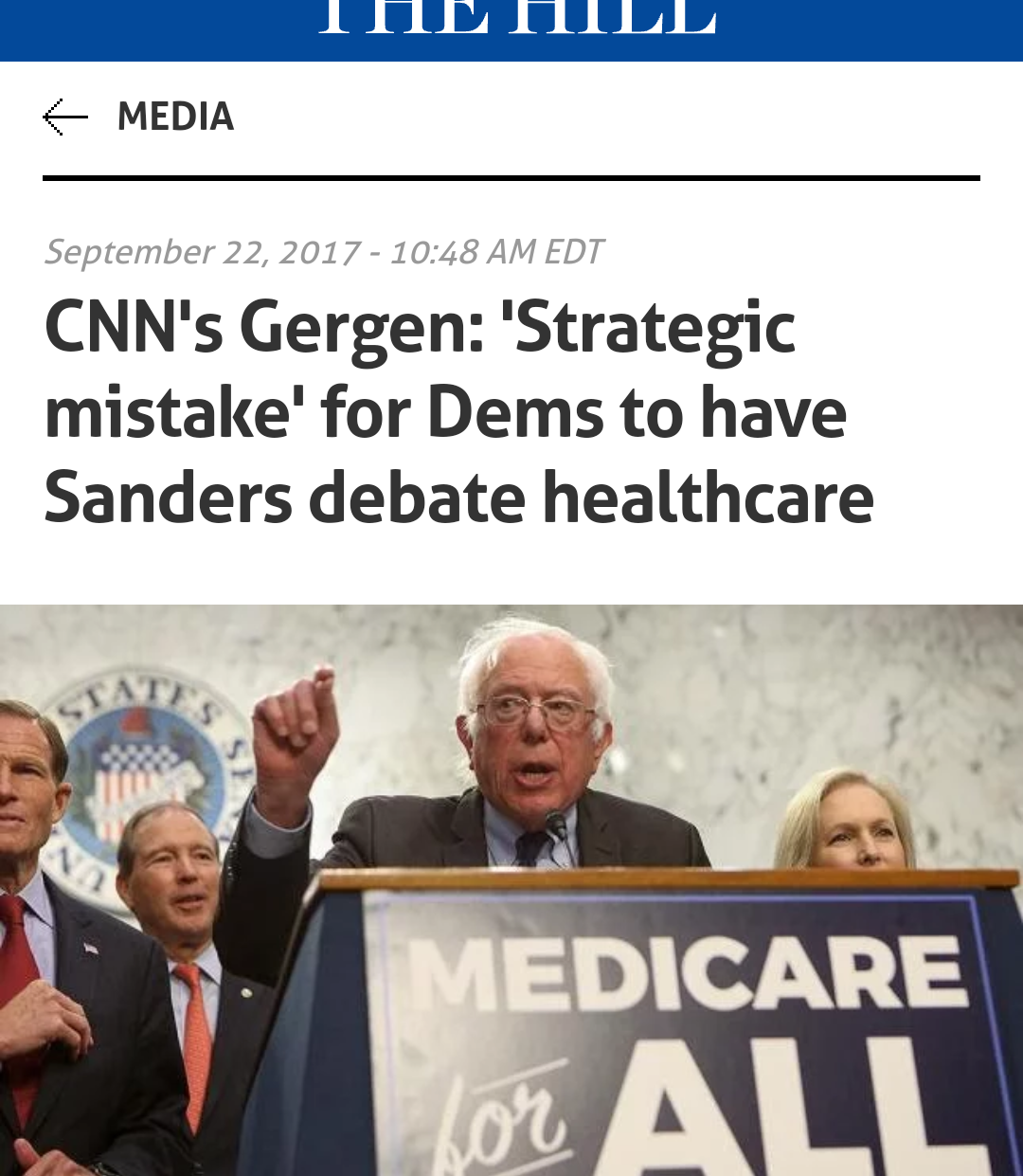
You want to save a life?  Many lives?  Our government needs to go back to the drawing board.  Perhaps it is time to go with the single payer health insurance.  But the current direction that our government is going to result in people dying.  I have many more pre-existing conditions all created by my original cancer diagnosis.  I would hate to think that my 27 years of survivorship will have been for nothing, having been put at risk for the benefit of politics, lobbying, and corporate greed.

Post Navigation