Paul's Heart

Life As A Dad, And A Survivor

Archive for the category “Education”

This Of Course Is A Course In Discourse


***while this post references politics, it does not lean in either direction

It is not something unusual for me to spend time with my daughters and during that time, I make moments learning opportunities.  There is nothing better than real time examples to remember by.  But this moment, more rare than two full moons in one month, the 2nd on Halloween (and if I have to throw in the fact that it is 2020), being able to experience and explain an election with my daughters in the great details that I was taught growing up.  Like many across the country and the world, we were no different, following results and commentary.

At no time did they hear me “ooo” or “tsk” as results came in.  In fact, at no time, did either even ask me who I voted for, one of the first things I told my daughters, their vote is sacred to them, and it is no one’s business who they voted for.

But as time went on, they did not hear me complain, see me celebrate any calls made.  They did hear a lot of “what’s” and “why’s”.  You see, some day, they will get to vote.  And as one friend of mine snapped back at me when I stressed the importance of understanding the election process, “don’t tell me I am not informed about who I vote for,” she clearly missed the point.  I will get to that in just a second.

I am a registered non-party, because I cannot stand behind either one.  I know and understand the platforms of both.  But it is the ideas of my friends who support both parties that have me curious.  But in order to understand them, you have to have conversations.

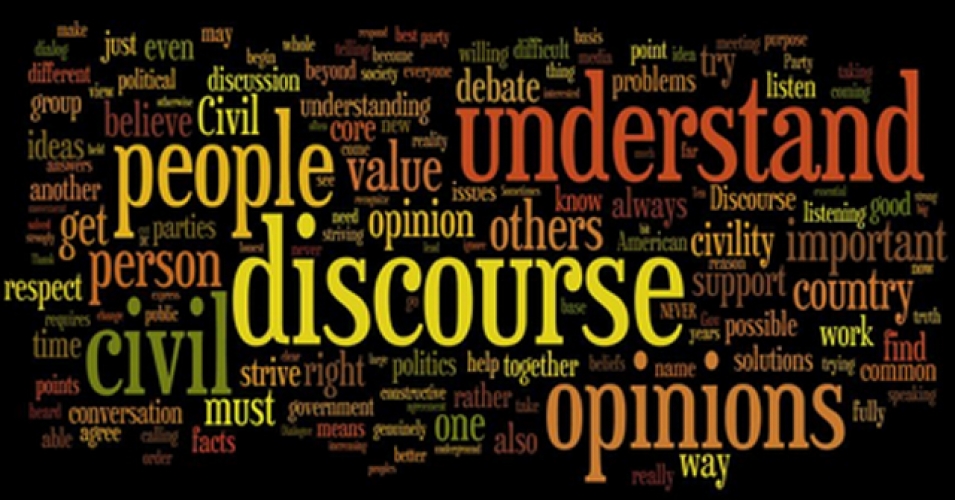
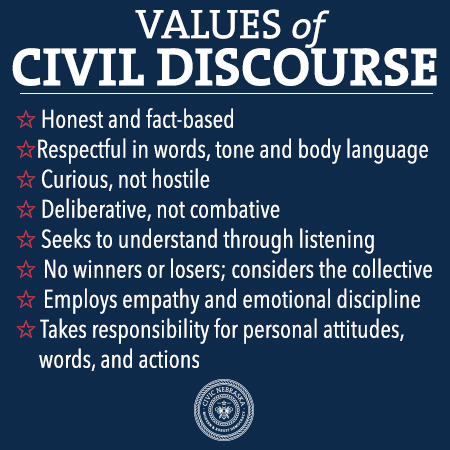
There are two friends (since High School) that I talk with occasionally to get their perspectives of how others think politically.  Not in the literal sense, civil discourse is an oxymoron, two terms having seemingly opposite meanings.  Discourse is of course a debate, or argument.  And we know many arguments are far from being civil, especially when it comes to debating politics.

But I lean on these two friends, and honestly, the list is growing larger of people willing to talk, and learn how others think and what they believe.  We still disagree at the end for the most part, but we each have a respect for each other because of our tones and not only the willingness to talk, but to listen.

One constant debate we have, is the concept of the “united states” versus the responsibilities of each individual states.  They believe that the federal government should be responsible for some things, and not others, and I believe, that 50 different ideas to handle one problem, makes more problems.  But we have many of these types of discussions.  And conversations are always respectful, and we end as friends.  Civil discourse.

So when I commented on a friend’s FB page, answering to an impatient voter, spouting of one of the many conspiracy theories of the current election, “you need to be more informed of the process of the election,” she took it as “don’t you tell me that I need to be more informed about my candidate.  I do my homework.”

You can see, the first issue of dealing with civil discourse, is making sure you are on the same page.  I never once told her that she needed to do her homework on her candidate.  Although, if you are a party voter, chances are you go straight down the ballot of your party, and truly have no idea anything of the candidate, other than the initial after the name, issues of the individual candidates making no difference.

No, I was referring to the actual process itself, after the vote is cast.  And this is the problem, and the perfect opportunity to explain to my daughters, how elections work.  And because I am an independent, I can do so without leaning in either direction.

I need to offer a disclaimer, I am not an expert in elections, nor did I major in political science in college.  But I do have a simple understanding of the election process, much of which came from my own local campaigns years ago.

One simple question, what happens after you vote?  Simple answer, you count.  Now, over the years, so much has been done to suppress voting rights by humans, and in 2020, a pandemic threw a huge wrench into the works resulting in record turnout of voting by mail.  More on that in a bit.

After the count, the votes get certified by each state.  Then the electoral college meets and casts the “ceremonial” vote.  Congress confirms the vote.  And of course, then there is the inauguration, and we have a new president.  Over our years, elections have not always run smoothly, but there are processes in place to protect our most cherished quality of our democracy, the right to vote.

Until now, our most controversial national election was 2000, between Al Gore and George W. Bush.  Initially, election night had Gore leading Bush by over half a million votes in the state of Florida, the state that would ultimately decide the presidential election.  The media networks had claimed Gore was the projected winner.  But we soon were informed that the lead had shrunk to just a couple of thousand, forcing a retraction of the projection, and the controversy of the “hanging chad.”  In 2000, ballots in Florida were punch cards, and apparently, some of the cards did not punch completely, leaving the “scrap” called a “chad”, hanging, leaving the validity of the ballot in question.  There is more to the story, but you get it.  It was a clusterfudge.

The 2020 election has so much more controversial fuel, potentially causing great harm to our sacred voting process like never seen before.  Social media, main stream media, campaigns, and even the candidates themselves are causing confusion that the average voter forgets, there is a process that has to take place.

We knew there would be no result on Tuesday, November 3rd.  And it had nothing to do with the overwhelming votes by mail, but the record setting turnout.  Though honestly, for being a free country of 330,000,000 Americans, having a turnout to vote of 150,000,000 is pitiful.  The media was much more careful not to repeat what happened in the 2000 election.  Social media was much more reckless.

But unlike when I first voted, the state I grew up in, only had to deal with in-person voting the day of, and absentee voting.  But the 2020 election had now three major components in most states, including my former home state, mail-in balloting, early voting, and day of voting.  Then of course you factor in the animosity that each side has against each other, and you have a record turnout, in spite of blatant acts of voter suppression in various states.  But that is another post.

Here is when the person I spoke about earlier needs a lesson in the election process, not just picking her candidate.

Fact, our election day is officially the first Tuesday of the November.  Why on a work day, I will never know, because clearly holding an election on a weekend when most have the day off would allow more people to vote without having to take off from work.  But I digress.

Mail-in ballots come in as early as weeks in advance, and some states allow them to be received after that 1st Tuesday, as long as post-marked by then, up to a certain time window.  And given the knee-capping that the postmaster general gave the postal service, causing a major slowdown and loss of mail, everyone knew this would cause problems.  That was the intent.  Non-the-less, this is the process.

As is typical, at least as long as I can remember, TV networks at the end of Election Day would “proclaim” the winner of the election.  It is ironic that it occurred much more smoothly than with all the technological bells and whistles that we have today.  But traditionally, this is how it has been.  But officially, it is not the networks that declare the winner.  That actually does not happen for many weeks after because there are other steps in the election process to take place first.  But we are an instant gratification society.  We need an answer right away.  And really, the TV networks are not far off (usually) from the exact results, figured out by mathematicians and statisticians, winners are declared, not certified.

In the meantime, and it varies from state to state per their election rules, recounts can occur, and lawsuits may be filed to nullify results.  These are all part of the process.

It is not until the results are certified, by county election officials I believe, that they election is official.  And even then, there are still more steps until we have our next president.  Once certified, then it is off to the electoral college.  I am not going to get into the weeds of what the electoral college is, but basically, it consists of 538 representatives, one for every member of the senate and house of representatives in Congress.  Each state’s political party in power picks their EC members who are then expected to cast their votes, based on the will of the state for that candidate for president, a formality if you will.

Here is where it gets fuzzy.  Just because a candidate wins a state, electors can go rogue and vote against the popular winner of the state.  I have heard stories that it can happen, but usually does not.  The intimidation and basically thuggery that occurs with that type of attempt is overwhelming.  So, we will keep it simple, the EC goes as it is supposed to and we have a new president according to the EC.  The results have to go before Congress, and THEN, we officially have a new president-elect.  The president is called that because until the president is sworn in on inauguration day, that individual is not called the president (nor does that person possess any of the powers of that position).

There is squabbling, again, something I have never really seen in my voting lifetime, this refusal to accept the results of election day, even if proclaimed by TV networks to call the victor “president-elect.”  And it is even more absurd, that after all of these decades, now those opposed to the apparent winner, want to wait for the official steps to be taken, even if mathematically confirmed, before acknowledging Joe Biden as the president-elect, as if holding on for a few more weeks will change anything.

So, when this individual that I mentioned back at the beginning of this post took offense at my suggestion that she needed to educate herself on the voting process, she clearly missed my point.  As brief as her objection to my comment was, so was her knowledge of the election process.

But do you know who knows more now about the election process than that person?

My daughters.  They are not old enough to vote.  But they have witnessed the good and the bad of this election cycle.  And like many other teenagers, they will make an impact in 2024.  And at least my daughters will understand there is more to our elections than just casting a vote, which they also definitely understand.

In Memory Of The Chalkboard


I do not recall which TV commercial refers to the “becoming your parents” stage of life, but I am pretty sure that I am there.

It is not unusual for me to have my daughters doing homework, or even helping them with studying when we visit with each other.  But a recent visit has taken the experience with me to a whole new level.

I am aware technology in school has advanced from the chalkboard, to the dry erase board, to the “smart board” (an oversized interactive computer screen mounted on the wall connected to a computer).

But due to Covid19, I now have my experience with “virtual learning.”  One of the most frustrating thing about the pandemic, is the impact that it has had on the children.  While it is true, the virus, though serious for children, does not have as populous an impact on them.  The threat is really about children spreading it to their parents, grandparents, teachers, and others.

And so, with little to nothing known about the virus, most children were sent home for the end of their school year last year.  While some schools had some form of virtual plan already, just under normal circumstances, too many were not prepared for what this pandemic would cause.

As politics entered the argument to return children to school, I found myself annoyed, as I did not feel the government had the best interests and safety of the children at heart.  Really, it was quite simple.  “We just feel there is a need to get our children back to school for their development”, was all that they had to say.  But it was adding, “then parents can go back to work and we restore the economy.”  I am sorry, but my children are not a tool for any economy.

While I have no doubt of the preparations of my daughters’ school district, others may not feel as safe.  Some have no plans, no support, of how to open their schools safely, keep them open, or what to do in the event of an outbreak.  Contract testing is not in place for many schools, and many schools do not have the supplies or equipment to deal with cleaning the environment.

So, when the new year rolled around, students were given the opportunity to return to school full time, part time in school and at home, or full at home.  My daughters were allowed to make their own decision as to what they would do.

Again, I want to be clear.  I do support their return to school.  I feel they need to be in school.  But it has to be done safely.  They cannot bring the virus home with them, or worse contract it themselves.

The situation has been unusual in results.  One daughter actually improved with virtual learning, which I did not expect because she is an audial learner (enjoys being taught).  My other daughter, has struggled in one or two courses because as a logical thinker, it can be difficult for her to decide between two answers that make perfect sense to her, and not have the classroom structure to seek help in determining the best of the two answers, whether from a fellow student or the teacher.

Socially, this is what hurts them the most.  They are lucky at least a little bit, in that they have the technology to at least keep in touch with some of their friends, but clearly, they miss the personal contact.  My daughters are social beings, used to physically interacting with their friends.  But they get how serious the situation is, and they do their part to make sure they do not get sick, and just as important, not get anyone else sick.

So, with this visit, I have gotten to actually witness their experiences with “virtual learning.”  It is fascinating, and for some of us old-timers, a bit intimidating.  Many of us have only recently even learned the word Zoom, and the shame we face if we do not learn about the “mute” button.  But students and teachers have it down.

My daughters bounce from class to class.  Attendance gets taken.  They even have to video their exercising for gym class.  Emails are sent back and forth to deal with questions and recommendations.  Of course, I was scolded for passing in view of a camera (I was not paying attention).  On several occasions, I did see some distractions while class was going on and computers were muted and screens not turned on (the equivalent of passing notes from classmate to classmate in the old days).

But they are getting it done.  Many schools have been closed their first semester to try and better prepare to be open for the next semester.  So schools once again offer options.  My daughters are comfortable with the current situation, while still concerned about the increase in cases of Covid19.  I do believe schools are likely to be shut down again, because of the rapidly increasing numbers.  And besides the safety factor for my daughters, I guess they also feel a certain continuity of remaining static by being virtual.

Like us adults, they are adapting and learning to get along while we try to figure out how to deal with, and hopefully defeat Covid19.

While I may be amazed at the technology, my daughters will never know the fun of being chosen to take the erasers for the chalkboard outside to be clapped, inhaling all that chalk dust.

Throwing Meds At You Faster Than A 90 MPH Fastball


There was a time, that all I took was a morning vitamin.  Occasionally I would make a trip to the doctor, and if I had a cold or something, he would venture back into his lab area, and mix up a cocktail medicine for me, which fortunately was not often.  This was long before the first CVS or Walgreens was even a concept.

Then I was diagnosed with cancer, Hodgkin’s Lymphoma.  That was 1988.  Even during the time period I was treated, I only took the medicines that were necessary from my chemotherapy.  And then that was done.  I no longer took anything.  My attitude was, I had put enough medicinal crap into my body.  I would not even take an aspirin for a headache.

One of the first side effects that I had to deal with, was a result of radiation damage to my thyroid.  There are plenty of people that have thyroid issues, even without having gone through cancer treatments.  In my family, there were several members with likely thyroid problems.

The thyroid in its simplest explanation is what controls your metabolism and energy levels.  A thyroid disfunction does not automatically make you overweight.  It can also cause you to be too thin.

In any case, most times, thyroid disorders are treated with a common prescription called Synthroid (or the generic levothyroxin).  Doses vary depending on the hormone levels, but the goal is to get the person’s levels stabilized.  In other words, get your body back to working and feeling like it should.  Simple, right?

Not for a patient like me.  I fought my doctor, who had been my doctor for a long time, for three years, refusing to take it.  Of course, over that time, my levels had gotten worse.  And then, as she asked me one more time, to reconsider, I finally asked, “what will happen if I don’t?”

Left untreated, you could develop Grave’s Disease, Hashimoto’s Thyroiditis, or even cancer.  She got me.  I had not idea what the other two things were, but I knew what cancer was, and I did not want that again.

What a battle it was.

An incident happened later which solidified my attitude with caution and taking medications.  I have written about it in the past.  My first father-in-law had developed a mental condition that resulted in him being put on psychotropic drugs.  Not wanting to waste too much time on descriptions, if you have seen the movie “One Flew Over The Cuckoo’s Nest,” you can get the idea.

He had been exhibiting an unusual, and offensive behavior, something totally out of character for him.  And it was getting problematic.  We got him to the hospital, where he was being diagnosed with “dementia.”  Working in medical research, I had a problem with that, for two reasons.  One, the word “dementia” is really an umbrella type term, in other words, it is in that family of mental illness, but we just aren’t going to go further to find out which one.  The second problem I had, I had just heard a nurse taking his blood pressure, it was 60/40, way too low.  And she was instructing him to take his dose of blood pressure medicine he has been on for many years.  His blood pressure was already low.  Anyone knows, if you are not getting enough oxygen to the brain, you may not act appropriately.  There is way more to the story, but long story short, they ignored the blood pressure issue, put him on psychotropic drugs, which basically reduced him to a zombie-like state where he remained for a long time.

Then, some how, he had enough internal fortitude, enough awareness, he refused to take any more medicines, in fact, refused food.  He had enough.  I really think he wanted to die.  But then, something happened.  He went through major withdrawals, and eventually came out, as if nothing had ever happened.  The inappropriate behavior was gone.  His blood pressure had elevated.  He was back to himself.  What sucked was, I brought this up, and was ignored.  This poor man lost so much time in his life because he was not monitored and not administered his meds properly.

Over time, my doctor would also convince me that I needed to be on a medicine for my extremely high cholesterol, a condition that I inherited genetically, as well as something for blood pressure.

In 2008, as I have written many times, I had my first of two heart surgeries, courtesy of late effects from cancer treatments.

For whatever reason, two of my medications were changed.  I took one pill, it was a combination drug to treat both my cholesterol and high blood pressure.  But now, I was going to take two, the medicines split up.

Over time, I began to notice some changes.  I had warned my ex-wife that I was not feeling like myself.  I was forgetting simple things, 4-digit codes that I had used for years.  My sight was getting messed up, not seeing things that were right in front of me.  The breaking point, was at the dinner table one evening.

A simple accident at the table, my daughter spilled her glass of water.  And I freaked out as if the spillage would result in wood rot of the foundation of the house.  I immediately reacted and got up from the table, and walked out of the house to gather my thoughts.  This was not me.  Something was not right.

While I still had my wits about me, my father-in-law’s memory still fresh in mine, I sought out what could be happening with me.  What was different?  When did things change?  The medications were the only thing I could see.  Yet, nearly every doctor argued with me that it could not be.  Then I met Dr. Beatrice Golomb, from the University Of California in San Diego.

Dr. Golomb it turns out, had done a study on cognitive impacts of statin drugs.  The one drug that was switched on me, was for my cholesterol, a statin drug.  We have all heard commercials rattle off side effects of medicines, but did you know, not every one has to be reported?  Like, if the incidents were so miniscule, under a certain percentage, they did not have to be publicly reported.  That does not mean that those side effects do not exist, but clearly, unless you know they can, you will not likely get the help.

Again, I wrote earlier in full detail about this.  But I was convinced it was the higher dose that caused my issue, and quit taking it, my side effects cleared up.  It was the new prescription.  Why did my medicine get switched in the first place?  My other meds were working just fine.  I was told, “this is our protocol.”  Really?

In the movie, “Love And Drugs,” Jake Gyllenhal plays an aggressive sales rep for a pharmaceutical company, who falls in love with an ill character played by Ann Hathaway.  In this movie, I saw, and learned, just who all these people dressed so nice with their briefcases were, coming into doctor offices during my appointments, and, what they were doing.

And then it hit me.  These were the latest drugs on the market, and clearly the doctor was being encouraged to prescribe these new medications.  I was having none of that anymore.  I would eventually go back to my original prescriptions, having no problems ever since, other than my progressive issues.

So, here we are, in 2020, what a year it has been.  My main doctors are back in my home state, but I am encouraged that I need to have a cardiologist local to where I currently live, in the event anything should happen.  Makes sense right?  Wrong, not when you have trust issues.  And one way to cause those issues?

“Your cholesterol is kind of higher than we like.  I see you are on suchandsuch already.  I would like you to start taking this new medicine which shows wonderful success in compliment to statin drugs in lowering cholesterol.”

Have you ever heard the expression, “if it ain’t broke, don’t fix it”?  I got up, and walked right out.  I was not interested in taking another drug, especially to boost profits of big pharm at the possible sacrifice of my health through side effects.

There are so many things to consider when faced with having to take a prescription, especially adding medicines.  In the case of the thyroid, the medication itself can impact the absorption rate of other medicines, in other words, not allowing the other medicines to work properly.  Then, other medicines might actually cancel each other out.  And worst, sometimes the reactions can cause lethal situations.

If you are lucky, and deal with a pharmacy that has all your medications, a good pharmacist is likely to at least give you the warning, because they see your list of meds, and know the possible interactions.  But in the world of revolving door medicine, where you likely see a different doctor every visit, the attention is just not paid to the medical history of the patient, and hence, it becomes real easy just to throw the latest pill like a 90 mph fastball at a patient.

I am lucky I still have my primary care doctor after thirty years.  I know that she knows my history, and my beliefs when it comes to medicines.  I trust her.  She also knows, how to make a better case to convince me sooner that something is necessary.  Otherwise, in the words of Talking Heads’ David Byrne, “same as it ever was.”


Post Navigation