
35 Years Ago – Where It All Began
November 17th, 1988. I recognize many anniversaries, this is one that I call a “dark” anniversary. In fact, it is one of my top 2 darkest anniversaries. Though the weeks before, doctors had suspected, while I fought and denied their opinions, the week before Thanksgiving, I was officially diagnosed with Hodgkin’s Disease, now referred to as “lymphoma.” With all due respect to Willy Shakespeare, and “a rose by any other name is still a rose,” cancer is still cancer whether you call it a disease or lymphoma, lipstick on a pig, is still a pig, just with lipstick.
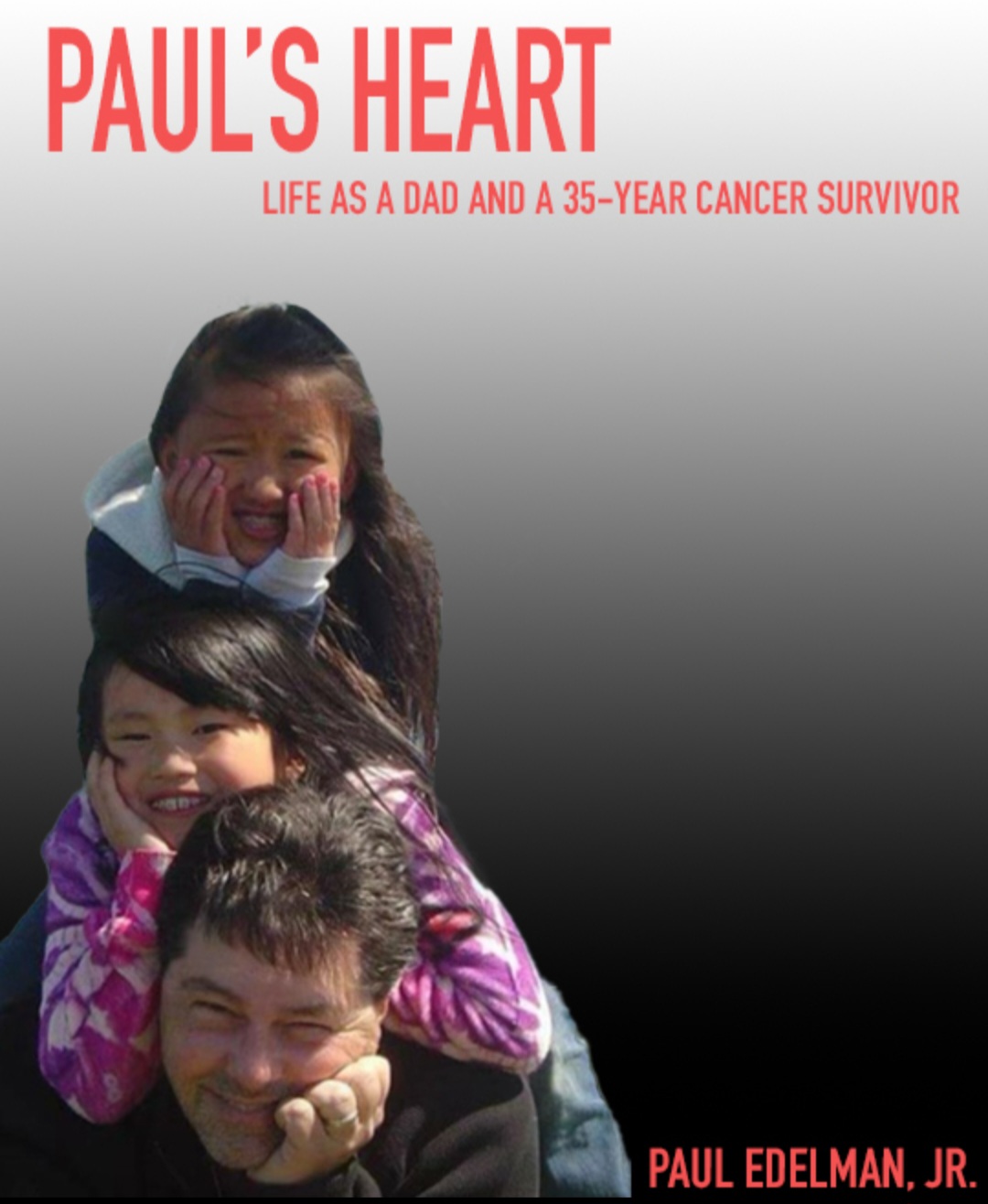
As I completed and proofread my first ever solo project, a book titled, “Paul’s Heart – Life As A Dad And A 35-Year Cancer Survivor” (available on Amazon December 19, 2023), the details of this particular time period, I found were as clear today as they were thirty-five years ago. Pretty amazing, considering just last night I got home from the grocery store, went inside the house, only to be told I left the groceries in the trunk of my car. But that is a post for another day.
Thirty-five years is a lot to remember. But the most amazing thing about surviving Hodgkin’s Lymphoma all these years, is remembering how it was handled back then, and seeing progress towards better diagnostics and safer treatments and care today.
I know many other survivors, all over the world, who are “older” than me. “Older” is in quotes, because it does not necessarily refer to chronological age, but years in survivorship. Imagine, if you think thirty-five years is a lot, I personally know many survivors who are forty and over fifty years out in remission! And not just in the United States, but around the world!
While all the details are in the book, here is the short version where I came from back in 1988. Again, keeping in mind, the things that were done to me, were newer methods compared to those who were treated before me.
The diagnostic methods, and again, I won’t bog you down with the actual descriptions of each, just know that these things that were done to me, were invasive, extreme, painful, and some, now considered obsolete.
- the original biopsy
- x-rays and CT scans
- lymphangiogram (a procedure to light up the lymph system, involving surgery to both feet)
- laparotomy (spleen removal and abdominal lymph node biopsies, liver biopsy)
- bone marrow biopsy
Today the standard used in diagnosis and staging of Hodgkin’s Lymphoma is the PET scan, positron emission topography. I have no idea what this even is, so I won’t try to explain it. All I know is that it is much easier than what I was put through, definitely more efficient and with Hodgkin’s chances of remission dependent on time, the PET scan definitely saves time.
Of, course, then there are the treatments. It is worth repeating, that those treated before me, were treated with much more toxic chemicals and higher doses of radiation. In reality, my treatments were toxic and harsh enough.
- high dose radiation, 4000 rads (or centigrey) – if you are unfamiliar with how bad this is, simply ask a radiation tech or someone who works in the nuclear field.
- chemotherapy cocktail consisting of chemicals used in chemical warfare to name a few.
This combined treatment plan is what has given me thirty-three years, Hodgkin’s free. Today, radiation is more targeted, lower amounts used with what is called proton radiation. Again, this is out of my lane and all too sciency and I would probably lose myself in the weeds explaining it. Chemotherapy has also changed dramatically, having now eliminated some of the drugs given to me, and adjusting the remaining drugs to more tolerable and safer amounts. As always, there are clinical trials constantly being studied for something better and safer.
One thing that has not changed over the decades, conversation from the oncologist, stating the one thing every cancer patient wants to hear, “five year survival rate.” We take this literally as all we have to do, is make it to five years remission, and we are good to go, forever. And if you did your math, for me, that was twenty-eight years ago, and I am still here. So why do I spend so much time writing and advocating for Hodgkin’s patients and survivors? Because in spite of better diagnostics and treatments, and continued high remission rates, there is one area that has not improved hardly at all, and that pertains to quality of “survivorship.”
Back in the early days, medicine knew that it was likely treatments had a decent chance of killing their patients because it was so toxic. But with the risk of dying from the cancer itself, you still had to try. And if you got through your treatments, “hurray!” It was more about the celebration of getting through the treatments, than the remission itself. However, if you were able to get to that five year remission mark, which coincidentally is all that science had studied as far as side effects, short term or long term, you were left on your own. And what cancer patient does not want to put their cancer past behind them? Just walk away from their oncologist and never utter another word about cancer.
There is a huge difference in telling a ten-year old and a seventy-six year old about a “five-year survival rate.” A senior is not going to be all obsessed about living a natural long life at that age as would a teenager or young adult. Which means only one thing, the younger you are, there is a very good chance to develop what is referred to as “late term side effects” or late developing side effects. The problem, these late effects were never studied or researched. In fact, as time would go on, even in my time, health problems would occur, that did not make sense for someone a certain age, and no explanation why. In fact, until the internet came along, is only when “word of mouth” came along, and survivors started sharing similar stories, and correlations made sense. And then some of us would actually be fortunate enough, to find a doctor who actually had been studying these issues, not common in modern medicine.
This is how “Paul’s Heart” came to be. With more than a dozen diagnosis of late effects, all tied to my cancer treatments, I learned of the right people, fellow survivors, and found the right medical care to help me reach thirty-three years of survivorship. So, all is good right? Not really.
Research documented in JAMA, states that survivors of childhood cancer, such as Hodgkin’s, are 95% likely to develop a “significant health problem” by the age of forty-five. Now again, I want to state, cancer patients to this day, are still being told the “five year cure rate,” and then being left on their own to decide their care. So researchers are aware of this need to follow up cancer survivors passed five years, but why aren’t doctors doing it? And why, when the correlation to cancer treatments for a particular issue, do survivors all too often hear denial of such correlation from their doctors when the patient brings the possibility to their attention? Why is this important surveillance need not being passed on and mandated to the doctors from those who researched it and is even recognized by the NIH (National Institute Of Health)?
A common discussion that takes place among my fellow survivors comes up every now and then, is how we are told how our bodies actually are older than chronologically dated. The NCI (National Cancer Institute) funded a large study of childhood cancer survivors treated in the last quarter of the last century. They found cognitive issues as well as an artificial increase in aging, making the bodies of long term cancer survivors appear 10, 20, or thirty years older than what actually are. Combine that with the progressive damaging side effects from our treatments, and our mortality is shortened quite a bit. Again, the NCI is a major institution in medicine and they are aware of this. Why are doctors not treating survivors appropriately with this knowledge that is available? Why are cancer patients not given any follow up plan, for the rest of their lives, after that last drop of chemotherapy has entered their veins? After thirty-three years, why am I still asking that question? After fifty years, my fellow survivors want to know, why aren’t they able to get the help medicine knows is needed and why are newer survivors just “kicked to the curb?” Fellow survivors involved in various social media pages are well aware of this, why aren’t all doctors?
The American Cancer Society barely recognizes any other cancers than the big one other than honorable mentions. And they certainly do not focus on cancer survivorship, again, because all the focus is on five years. What about after five years?
The Leukemia & Lymphoma Society, which actually has the word “lymphoma” in its name, while recently has posted information on survivorship on its website, albeit somewhat difficult to find, I feel does not address the issue of long term survivorship and the various health issues faced by survivors frequently enough.
If you recall in the beginning, I talked about “progress.” Well, sometimes that progress has to come from within. I mentioned the value of communications among long term survivors across social media. Several years ago, an organization was started, and founded, all by Hodgkin’s Lymphoma survivors. It is called, Hodgkin’s International.
Here is their mission stated on their cover page, “Hodgkin’s International is a non-profit (501c3) organization dedicated to improving the quality of life for Hodgkin Lymphoma survivors. Our goal is to connect survivors with one another and to provide them with essential information about the Late Effects they may face as a result of earlier treatments. We also seek to promote education and medical research in the area of survivorship, foster a better understanding of the particular needs of long term survivors, and to advocate for the interests of Hodgkin Lymphoma survivors around the world.”
On HI’s website, survivors and patients of Hodgkin’s Lymphoma, at any stage, can find personal stories, valuable and certified medical resources of information necessary to treatments and survivorship including medical concerns to look out for based on treatments, news and events, and even offer a monthly newsletter usually with an announcement to a monthly video conference with a variety of topics. To put it bluntly, this organization has finally given the opportunity and support for others not just to make sense of the things their bodies are experiencing long after treatment, but more importantly to let them know, they, we, are not alone.
There is still so much more that needs to be, and can be done. I still would like to see in my lifetime, a completely safe treatment for Hodgkin’s Lymphoma. I would still like to see a mandated follow up plan, listing the potential side effects (as they do on vaccine warnings), establish a communication network between all the doctors involved in the care of the patient, led by a primary care physician. Not to be forgotten, mental health also takes a beating in survivorship, and I usually commit a post to that alone. At least Hodgkin’s International is leading the way to a better quality of life for those of us in the Hodgkin’s world of survivorship.
Don’t get me wrong. While I dread this time of year, every year because of the flashbacks I still have, I am forever grateful to all who got me to Novermber 17th, 2023 from the beginning to today. I am forever grateful that I have had the chance to share so many memories with my daughters.
Many will say that they do not let Hodgkin’s define them, and I do concur. But surviving Hodgkin’s has made me the advocate for others that I am today.

 Paul's Heart