
Paul's Heart

Life As A Dad, And A Survivor

The Beauty Of Surviving Cancer


Yesterday afternoon, I gave a cancer survivor speech I titled “The Beauty Of Surviving Cancer” for a special Garden Party filled with cancer survivors.  The speech is actually a continuation of the speech that I gave a few weeks ago.  You can find that transcript on March 10 in the archives under the title “Defeating Cancer As A Team.”

Below is the transcript of my speech “The Beauty Of Surviving Cancer.”

11069906_1006454816046317_8129051527512285802_n

“I could not think of a better place to be celebrating the beauty of cancer survivorship than here, at this event at Moorings Park. That’s right, I said, the beauty of cancer survivorship.

From the moment we hear the words, “you have cancer,” it is all we can think about. “I want to survive.” And we trust everyone involved with our care, to make sure that it happens. A beautiful sentence, “I want to survive.” The ultimate fist-shaking of defiance at something so ugly.

The time from diagnosis to treatment, to hearing the beautiful words, “you are in remission,” seem to take forever. But nothing is more beautiful than remission being forever.

I am still young to be thinking about forever. But I have been in remission of Hodgkin’s Lymphoma for over 25 years. And that, is a beautiful thing.

I got the phone call while sitting at my desk at work. It was kind of ironic because although I had hoped to share the news that I was anticipating with my family, it was my employer who first heard that I was diagnosed with cancer, and he would be the first to find out, that I was in remission. I recognized the telephone number in the caller ID as my oncologist. And although I was expecting the call, and was quite excited to get great news, I actually froze at first, thinking about the what-ifs. And then I answered the phone, and I heard, “you are in remission Paul.” Beautiful. Again I found myself in a frozen state with my left arm whose hand was holding phone, slowly falling from my ear. I did it. I should be doing backflips. This was great news. And then the wave of emotions crashed over me. I did do it. I beat cancer. It took everything I had, but I did it!

Just then, right on cue, my boss came out of his office, not that he was eavesdropping, but seeing the reaction on my face, he knew right then and there, the phone call that I got, and that it was good news. And I thanked him for being there from the beginning to the end of this process.

Since then, I have enjoyed nothing less than the beauty of surviving cancer.

I have the beauty of celebrating a new birthday every year. While my birth certificate states my birthday as being December 19, 196… in reality, I recognize my new birthday as March 3, 1990 which meant that I just turned 25 years old.

I want to tell you about the beauty of progress in the world of cancer. Yes, we still have a long way to go, but in just 25 years, which nearly everyone present has been alive in their lifetime, diagnostics, treatments, follow up care, and survival rates have improved. Think about all the people before us who witnessed the discovery of the lightbulb, the toaster, and a cure for polio, in our lifetime, you have been witness to progress in the battle against cancer. In just 25 years, most of the methods used to diagnose my Hodgkin’s Lymphoma are no longer used. In just 25 years, the toxic and horrific treatments I was subjected are no longer used. And twenty five years later, I am still here to see even newer progress being made. And that is beautiful.

The beauty of cancer survivorship is getting to experience so many things that at one time, cancer patients would have never had the opportunity to experience.

There has been the beauty of parenthood. I was told that I could never become a parent because the chemotherapy treatments that I had, left me unable to have biological children. But just as all good things come to those who wait, I became a father not once, but twice, to two beautiful little girls, that only half-way through my survivorship, I was able to adopt my daughters and become the father I had always wanted to be.

I had a wonderful fur friend for nearly fifteen years of my survivorship, a golden retriever named Pollo, or as many knew him, as the “happy Golden” because of a smile that never left his face, and his tail that would just not stop wagging.

I made it a point that I was finally going to make sure that life counted. If I wanted something, or wanted to do something, or go somewhere, I was going to make it happen. It may not have been easy, but neither was fighting cancer. But I did that. I have gotten travel to beautiful places, and I currently live in a place nicknamed “Paradise”, Naples.

Another beauty of survivorship is meeting other survivors. And over my last 25 years, I have met hundreds and hundreds of other survivors. But as the Relay Survivor Committee has stated, a cancer patient is a survivor from the moment they are diagnosed. And as I wrote this speech, I thought about that concept. Because to be a survivor of anything, I feel “surviving” implies that you took on a fight. And while the circumstances may be different from what we refer to as a “surviving” event such as a natural disaster or travel accident, surviving a deadly disease is not any different. From the moment it occurs, we want to survive.

I have two examples that have made me a believer in the committee’s statement. The first, is a young man, who proclaimed to his mother and I, even before his treatments were finished, “I am going to be a cancer survivor”. Second, when told of his terminal prognosis, the doctors asked my father if there was anything that they could do for him, my father responded, “I just want to be a survivor like my son”. He still wanted to fight. Though their circumstances did not end as we would typically describe being a survivor, Michael, and Dad, both of you were survivors clearly not only in my eyes, but in others as well.

Then finally, there is the beauty of being a part of the state of Florida’s largest Relay For Life. Over twenty-five years, I have participated in many Relays, as well as spoken at many more. And I must admit, there is both beauty and excitement to be a part of something so special. And over twenty-five years to see how far we have come, and to hear encouraging news of just how close we have come to finding even more cures for cancer, that, is the beauty of cancer survivorship.

I will wrap up with a quote that I use frequently through various support web sites that I am involved with:

“As I drive on the road of remission, I will keep looking in my rear view mirror to make sure that you are still following me. And if for some reason, you are not on that road yet, hurry up and get on that highway. It’s a great ride once you hit the road.”
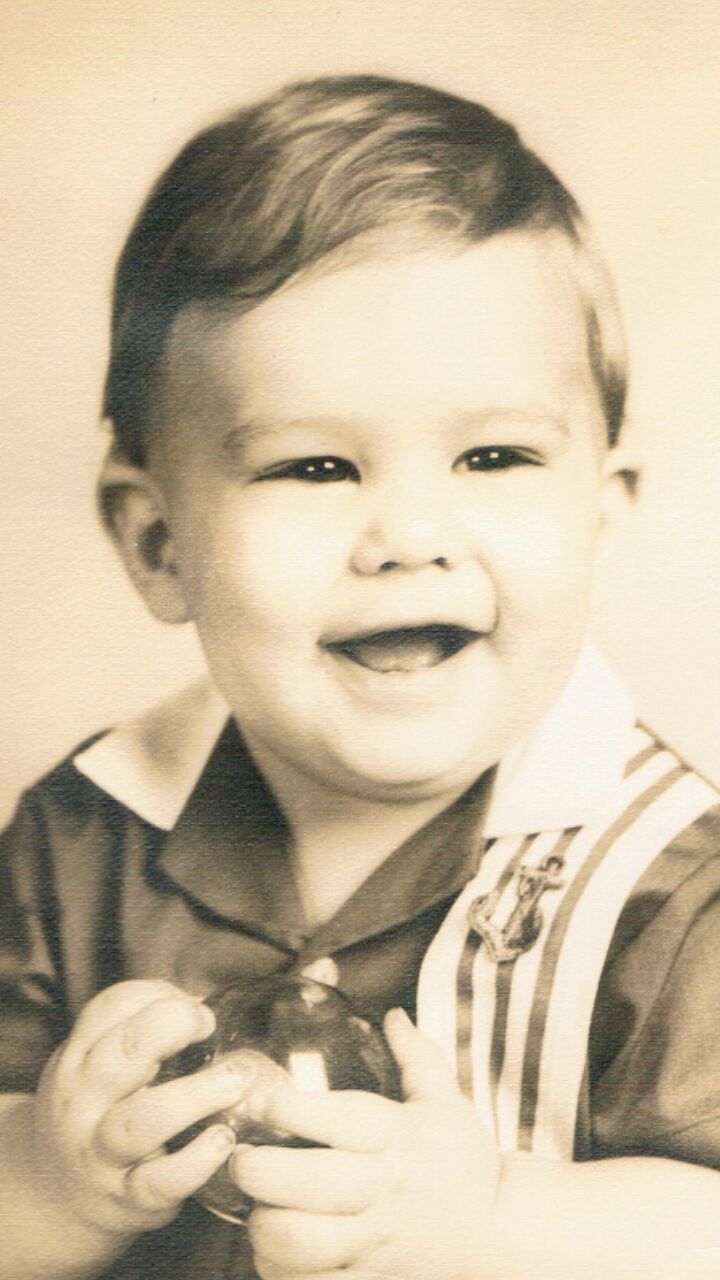
My First Primary Care Doctor… Ever


2 years old

No, this is not a picture of my first primary care doctor.  It is a photo of me when I was two years old.  It was around that time that I can still recall Dr. Gerald Backenstoe.  For those of us who are old enough to remember “house calls” and such, back when doctors were still allowed to practice medicine freely, clearly, he would not be enjoying medicine today.

Anyway, as the title states, Dr. Backenstoe was my first family doctor, and as so until he passed away at the age of 81, which put me at approximately fourteen years old.  I have had only two other doctors, both through a different practice, who until he retired a few years later, I ended up with his successor and have been with her (and occasionally her husband who also practices with her) ever since, more than half of my life.

Currently, I am more than 1300 miles away from my family doctor, and for that reason, I do all that I can to stay healthy.  I do not care for what I call “revolving door medicine” or “roulette” medicine, never knowing which doctor you are going to be seeing that particular visit, and then having to trust that doctor is fully informed of your health history before prescribing anything.  Committing my care to the same doctor means that I do not have to explain my health past 100 times to different doctors.  My doctors know everything about me.

Getting back to Dr. Backenstoe, I do recall him making at least two house calls for me, as well as follow up phone calls.  His office, which also was his home, is indescribable.  It had that “sterile” smell about it, so you definitely knew you were in a doctor’s office.  And throughout all of the exams room were antique medical equipment.  But never once did it ever cross anyone’s mind about sterility and cleanliness there, because everyone trusted Dr. Backentstoe to care about not only his patients, but also his career.

For some reading this post, and who may have been his patient, how many recall sitting on that wooden bench, just inside the entrance, wondering which exam room you would be taken to, and then glancing up at the walls to see not only his medical studies history, but also his fondness for aviation?  He had a colored history of flying experience including the Army Air Corp, logging over a million miles in the air, and two folklore-ish tales.  He had a “cancelled” framed ticket for the fateful Hindenburg hanging on his wall.  And after hearing the other tale, I am glad he was not able to keep that date.  The other tale was having dinner with Amelia Earhart in his home with joined by his fiancé to become his wife the next day.  that date was kept.

While his flying history is quite impressive, as is all of his other credentials of memberships in all kinds of organizations, it is the fact that he practiced medicine for over 50 years.  For sports fans, that is a rare mark like a baseball player playing 4 decades like Tim McCarver or a pro-football player playing more than 12 years.  But Dr. Backenstoe has that achievement to his name.

He will be forever remembered by me as a kind and gentle doctor and the reason today, that I know what I want and expect from my health care.  And to this day, I know with my current doctor, and her husband, in spite of regulations and restrictions, I not only have one of the best doctors, I also have one of the two greatest advocates for my health care (and I have both of them).  Because I see the same doctor, no matter the distance or schedule, she will be forever credited with saving my life from a fatal heart attack that could have happened at any time.  For that story, go to my page “CABG, Not Just A Green Leafy Vegetable.”  But she is also my children’s doctor.

Great doctors are hard to come by, and I need my current doctor to put in fifty years too (sorry doc, but I told you, when you retire, I am done with seeing doctors – I will never have another one that can do what you have done for me).


So Many Will Never Know


There is no rhyme or reason what I choose to write about, or how often.  My intentions when I sit down at my laptop are simple.  Go through the hundred or so emails I get every day, and do some other things around my apartment.  But like an attention span the size of a flea, I get distracted quite easily, and then I click on to “Paul’s Heart” and write.  Well, it happened again.

A link to an article about a famous NY Times journalist, David Carr, broadcasted that Mr. Carr had died from complications of lung cancer.  Okay, nothing really all that unusual as people die from lung cancer all the time.  But as I looked more into the article, because a friend had noticed something unusual about Mr. Carr’s past, I began to wonder.

Between the original article, and others that I read, Mr. Carr, had been diagnosed with pneumonia previously and had died some time after that.  The article also mentioned that cardiac disease had contributed to his death.  And for some reason, the article needed to mention a bout with drugs and rehab.  Again, to the average person, nothing really stands out about Mr. Carr’s death.

But at the end of the article, in a “by the way” mention, Mr. Carr also battled Hodgkin’s Lymphoma.  And to the average journalist, this is no big deal, and may not have been worth the ink and paper it was printed on.

There have been plenty of famous people who have had Hodgkin’s Lymphoma and lived, and died.  But because Hodgkin’s is a rare form of cancer, it rarely gets any attention.  And one of the only things that really gets less attention than that, are the late effects that Hodgkin’s patients develop, who were treated for Lymphoma well over a decade ago.  The sad thing, is most long term survivors have no idea, that many of the ills that they face today, probably have direct ties to the treatments that saved their lives years ago.  And the medical books do not necessarily help our cause either as protocols were never in place years ago to follow up on us to see things as they developed.  After all, statistic really only matter when it goes up to five years.  Studies did not follow any further than that because I guess we were not supposed to live longer and develop severe issues.  You can read up on mine, found under the “pages” section of this blog and compare the only things I had been warned about 26 years ago, risk of a secondary cancer and pericarditis.  In my case, not even close.

But back to Mr. Carr.  I am going to just throw this out and see if it grows wing.  David Carr was a Hodgkin’s Lymphoma survivor.  And I believe that there is a likelihood that his death may have been related not just to the lung cancer, cardiac disease, and the pneumonia, but also from late effects from his treatments.  And I know many people, okay, mainly long term survivors like me, who would feel the same way.

David-Carr

Now before everyone goes into a tailspin, treatments today are much more safer and pinpoint more accurately than when I was treated, and perhaps when Mr. Carr was treated (I have pinpointed his treatments somewhere before the turn of the century).

First, as many long term Hodgkin’s survivors will point out, just from the physical appearance, is a term we refer to as “Hodgkin’s neck”.  This comes from muscle loss as a result of the extreme radiation exposure during treatments which I am guessing he was treated with.  The article does not mention radiation or chemo treatments, but this is fairly obvious.  I would also probably guess, given that amount of loss he probably also had thyroid issues, common among Hodgkin’s survivors.  There is pain and control issues that come with this physical deterioration over time.  For many, the head begins to fall forward, again something we commoners refer to as “drooping head syndrome”.  I talked about this in an earlier post last year.

I have similar muscular loss, which I have written about, though not nearly as severe as Mr. Carr’s condition.  I also have a major amount of muscle loss in my upper torso.

But I think Mr. Carr’s long term issues went much further than that.  And even if it were assumed that he only underwent radiation treatments, which I would guess he may have gone through chemo,  the scope of damage from late effects can also contribute to pulmonary issues and cardiac issues, of which I and many others face.  Chemo late effects can also complicate things even more so.

There is a chance that Mr. Carr was never followed up for developing late effects.  Things may have just been chalked up to circumstances.  He did drugs.  He had cardiac disease.  He had pneumonia.  He had lung cancer.  So let me start the argument.

With the exception of drug use, the other three issues can have direct ties to late effects from treatments of Hodgkin’s Disease.  Radiation has a growing and lasting effect and chemo can also impact the cardiac system.  Like so many including myself, that would be a “yes”.  Depending on the diagnostics used on Mr. Carr, if he had his spleen removed, he had an increased susceptibility to illness, and even if he did not have the spleen removed, the cancer of the lymph system has an impact on the immune system.  Again, so many of my fellow survivors have multiple bouts of pneumonia from this situation, several develop pneumonia a few times a year.  I had two bouts in 2012.  And then of course, there is the risk of the secondary cancer.

But was David Carr being followed up post Hodgkin’s?  There is no mention anywhere.  And it is sad, that this is not even mentioned anywhere.  Because if it were not for a few of us “pioneers” and I do not even mean me, but the many before me who were the first to have their side effects tied to treatments, cancer patients today would not be followed up as closely as they are after treatments are done.

I do not mean to disparage David Carr, but for those of us who have had Hodgkin’s Lymphoma back in the 1950’s through the 1990’s, if his death was in any way related to late developing side effects from his treatments, I wish there was some way that this could be known and made public.  There are so many of us survivors out there who are aware of the issue of late developing side effects, and literally millions more who are not.  And when they go to their primary doctor, or even specialist, depending on how recent their education was earned, the tie to their Hodgkin’s past may never be made.

I’m just sayin’.

http://www.nbcnewyork.com/news/local/Times-Columnist-Died-From-Lung-Cancer-Autopsy-291975671.html

Post Navigation