Paul's Heart

Life As A Dad, And A Survivor

Archive for the category “The Heart”

Is There Really A Difference?


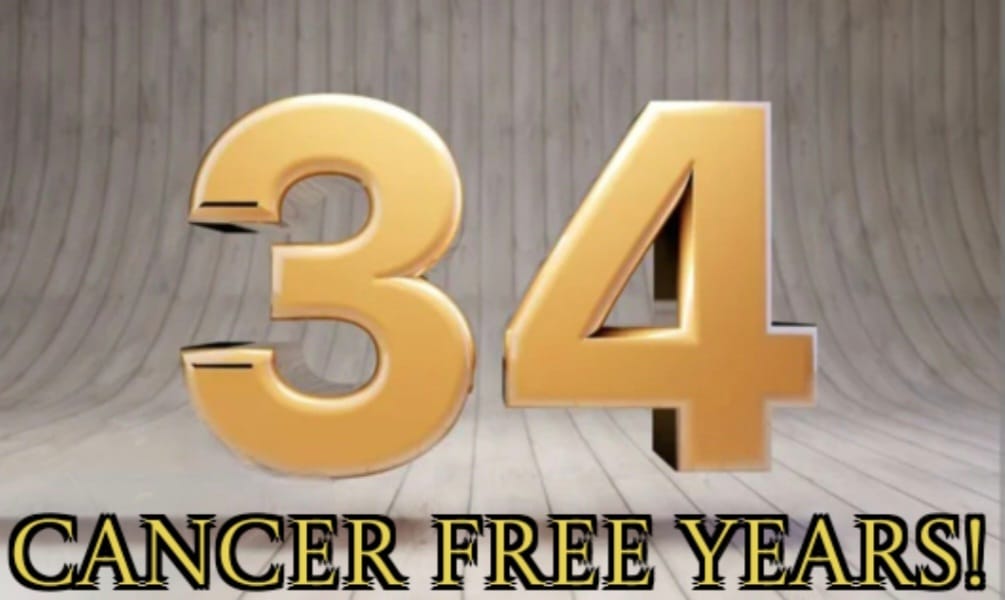
So earlier this week, I recognized my 34th year “in remission” of Hodgkin’s Lymphoma (in quotes for a reason I will explain shortly). As you can see, that coincides with the “countdown” on my page, now just six years away from what I am considering my next major milestone in my cancer survival, 40 years.

But several who follow “Paul’s Heart” on my various resources like Facebook, Instagram, and TikTok, noticed something confusing, perhaps a typo, or had I calculated incorrectly.

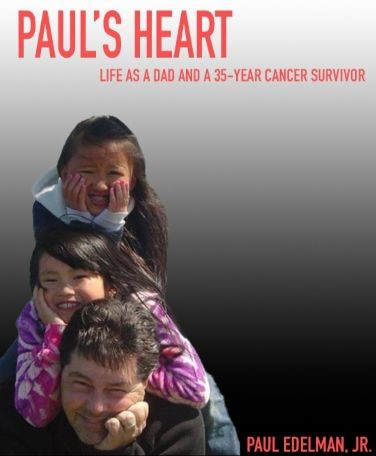
My book is titled, “Paul’s Heart – Life As A Dad And A 35-Year Cancer Survivor.” But I am recognizing 34 years in remission. So which number is correct? Actually, both are correct. In fact, there is a third number to consider. And a cancer survivor would be correct to refer to any of those three to be honored.

The question gets asked often on social media, “what do you consider your ‘survivor’ date?” And honestly, it is up to the cancer survivor what they choose, with three options available; the date diagnosed, the official date of remission (will get into the technicality of this one momentarily), and the date finished with treatments.

I have many medical anniversaries that I recognize each year, of course not all of them good. I never forget those dates. One of those darker dates are coming up next month in fact. But as far as my cancer history, I do remember my actual diagnosis date, well, at least the time period, because I fussed around and delayed and denied getting diagnosed so long (I dedicated a whole chapter in the book to this behavior).

And without spoiling the book, I mentioned an “official” date of remission. This happens usually when “halfway” scans are done halfway through the treatment schedule. If doctors, the treatments, and body have all done according to plan, a patient may hear the word “remission” even before the completion of all of the rounds of treatments. This was an exact date for me. I remember that moment very well when I got that phone call. This announcement creates another situation, and very complicated at that. Patients hear “remission”, and having likely struggled through the treatments they already have gone through, seek to end the rest of the remaining treatments, something nearly all oncologists will recommend to ensure long term remission. As I remind those patients, there is a reason I have hit 34 years in remission, because I followed my doctor’s advice, knowledge, and skills, and finished my treatment plan.

Finally, there is the date that you take that last dose of treatment, whether radiation, or chemotherapy (IV or pill).

So why did I choose to recognize the third option, actually a lower number than years since my diagnosis? I mean, I could do that. In fact, many cancer organizations clearly state that a cancer patient is considered a survivor from the moment they are diagnosed, and that is regardless of the prognosis. For me, this was a time period I would rather forget. While I cannot forget having had cancer, nor would I really want to, I simply do not think about the “when it happened.”

As for when I was declared in remission, that is also a reasonable date to set, but I do not use that date. In the book, I mention I actually hit remission following radiation treatments, but soon after, new disease was discovered (not considered a relapse as it was not in the radiated field). So when I heard “remission” again, this time halfway through the chemotherapy, I wanted to make sure that I was in remission, and that meant waiting until taking my last dose, which happened to be a couple of pills for the last dose (so before anyone fact-checks on March 3, 1990 is indeed a Saturday, I took the last IV dose the prior Friday, February 23rd and had only the pills to finish at that point).

And on March 3rd, it was 34 years since those last pills were taken, what I consider my official “remission” date.

So then why does the book refer to me as a 35-year survivor? Well, because I can. And besides, from an optic angle, the title would have just looked weird saying “34-year survivor” and I did not want to wait another year to publish the book. It took me nearly four years just to get it done.

Whatever date a cancer patient chooses to recognize and celebrate, is up to them, as are their reasons. But no matter if one year, five years, ten years, thirty, forty, or fifty, being a cancer survivor is a big deal. Many of us talk about not wanting cancer to define us, but we definitely find out a lot about who we are, and find out a lot about those around us. And every year that follows is a great one.

Debunking Three Myths


Up until a couple of years ago, there was a popular game that teens played among each other, as my daughters often challenged me to the game. It was an interesting concept, though I disagree with the one premise, the game did provide something valuable, an opportunity to learn about an each other. It was called “two truths and a lie.” This game is considered an “ice breaker” or conversation starter, and found not only in schools, but also in media such as Parade Magazine, even the Ellen DeGeneres show. You simply state three things, but two of those must be the truth, and the third must be a lie.

As a parent, I thought I had a pretty good edge with my daughters in this game, clearly knowing more about them than they themselves. It turns out that they were pretty good at finding things to tell me that I might be unaware of, one of the favorite topics, food choices. My youngest daughter was real good at getting me on that one.

So with that explanation, these are two of my truths, and one of the myths (I prefer to use myth as opposed to a lie because this is not something I say or believe, but rather what others believe.

  1. I love to attract drama.
  2. I am a shy person.
  3. I am a private person.

Now if you have followed “Paul’s Heart” long enough, it might actually be difficult to tell. But the fact is, two of these things are actually true about me, while the third, is more of a manifestation or a means for someone to justify how they feel about me as a person.

This first one really baffles me.

I have been told by a few people, that I “love to attract drama.” While I have had my share of intense events in my life, I certainly have never gone looking for them. When I ask for examples of the drama they refer to, I hear crickets chirp. I guess they must be comparing their lives to mine as far as things going on. They must be fortunate not to have anything nipping at their heels constantly. And for that, they feel I must go looking for trouble. I don’t.

I will admit however, that I have an unusually calm demeanor in dealing with crisis after crisis. But do I go looking for drama? Absolutely not. This is just one misconception that some people have expressed to me. I can say for certain, that when I face a crisis, I have a defense mechanism that kicks in, removing all emotions, allowing me to think rationally, recognizing that any kind of escalation in my emotions would likely make the situation worse. And so, I do not make it worse. I simply give myself time to think things out clearly and with direction. Ironically, I am a horrible chess player, but in life, I am able to think several steps ahead. But I definitely do not need to add anything more to my schedule demanding more attention of me.

I really do consider myself a shy person. Merriam-Webster defines “shy” as “timid, tendency to avoid, hesitant, or reserved.” Though I express myself through writing, speaking, and other performances, it is the individual one-on-one conversations that I can struggle with.

Through my school days, I kept to myself, often intimidated by the friendships that others had amongst themselves. Constantly moving during my school days did not help me to establish new friendships, only to move again as soon as I would finally get comfortable. As a co-worker, after some time and effort, I found myself being able to interact with moderate comfort. But really? Anywhere that I had a boundary, physical or mental, between me and someone else, is when I felt my most confident and functional. That became obvious as a radio disc jockey in my younger days, in a closed soundproofed room, broadcasting on the radio, no one looking directly at me. Recently, I had a former classmate call me out on social media following a post response which I considered quite neutral and factual, them stating aggressively and actually quite meanly, that I was still the same as I was in high school, still a “&(%*%” (fill in with any derogatory remark). Before I blocked any further access to me from them, I did make sure that those on that particular page were aware, that while I recognized the name, I never knew this person. I literally basically “hung” with maybe a handful of close friends in school. This person and I had never crossed paths because I was so shy.

But my biggest challenge came when I decided to run for a public office, our local school board. I did not prepare myself mentally, that campaigning was more than just saying “I’m running for school board.” I knew that I would have to give speeches, which I was okay with, because there would be separation between me and the audience. My problem came, when my campaign wanted me to attend “meet and greets” (candidates get the chance to mingle among the voters individually), and I was petrified. As a slate of five candidates, running for the five open slots against the five incumbents, I felt invincible. I had others behind me able to bail me out of any situation that I was getting boxed into. Not being a “politician”, I was not prepared for stumbling blocks that could be thrown at me. While I am a big “eye contact” person when I talk to someone, I found this to be a big problem when the eye contact was not returned.

After all of the speeches I have given, articles and stories that I have written, and other performances, I know that I can handle myself in public situations, but I still consider myself a shy person. This is a major challenge for someone trying to promote a book.

I am actually a very private person. I can hear the “I call bullshit” on this one from many. But I really am a private person, or at least, I want to be. And up until my diagnosis of Hodgkin’s Lymphoma, I definitely can affirm that I was a private person. There is one thing that prevents me from that privacy that I make the choice to live by. 

When I finished my treatments, I promised myself that I wanted to give back for the gift of life that I had been given. But as many cancer survivors know, because of treatments, I do not have the option of some of the more popular things I could do, such as give blood or donate organs. I wanted to help. I wanted to inspire. I want to give hope. To do this, that means I have to “share” my experiences, and if you have followed “Paul’s Heart” long enough, I am really quite transparent, some times to my own detriment. This advocacy that flows through my blood, would branch out to other issues such as patient care, cancer survivorship, adoption, public education, and of course, divorce related issues in regard to children. If I were not in the position I am in today, I would definitely prefer to going back to being a private person.

I am going to throw in a bonus truth. In spite of all of the difficult things that I have faced in my life, and continue to deal with, I really am a positive person. Sure, my cancer history, my divorces, and several other things that I have faced, are quite the downers. But I persevere. I come through every time, because I believe I will. All too often, many have counted me out, actually, they depended on me tapping out and quitting. But I don’t. Yes, I have many health issues that consume my attention. Of course, I missed being with my daughters during the divorce period as much as I was prior to the divorce. There are many things that I deal with as an advocate, and yes, they are difficult. But that does not make me a negative person because I make a choice, to deal with everything head on and to support others. I truly believe that things work out the way that they are intended to work out. And as long as I wake up tomorrow to do it all again, that sounds pretty positive to me.

Lasting Images


Country singer/actor Toby Keith passed away last week from complications of stomach cancer at the age of 62. In watching interviews with him where he talked about his cancer, he never stopped wanting to fight, and wanted nothing more than to beat his cancer. Keith stated that he did not want cancer to define him. But in his three year absence from performing, Keith found out, what many cancer patients find out during and after their battles, while cancer may not define you, there is no going back to the normal life you used to know before cancer. Instead, you face what is referred to as a “new normal.”

Many musicians have what is called “muscle memory.” This simply means for instance, the fingers do not forget how to play the guitar, or the vocal chords sing the notes. And though it had been some time since Keith had performed, he was confident that he could do both, in spite of the length of time since his last performance. But there would be one difference, a big difference.

Now, I am going to make my late Father proud, because he never knew me to be a fan of country music. While I appreciate most genres of music, country was not one that I paid a lot of attention to, though I did know some country artists and songs. But I soon found out, that I could sing country, as many male country artists were in my vocal range. Toby Keith was one of those artists whose songs I could sing. And he had a great catalogue of songs from patriotic, to fun bar-drinking songs like “As Good As I Once Was” and “Red Solo Cup,” popularized by being performed on the television drama “Glee.”

While Keith’s physical appearance definitely had been affected by the cancer and its treatments, his voice still sounded like it always had with one exception, and it was clearly impacted by his cancer. Keith had surgery for his stomach cancer, and part of the stomach had been attached to his diaphragm. And for those who are unfamiliar with the role of the diaphragm to a singer, for a singer like Keith, that is where he gets his power for his vocals as he belts out his songs. Because this surgery no longer allowed that abdominal support, Keith was unable to power out his lower and higher registers, producing a softer sound. This would become his “new normal” as he finally returned to the stage late last year.

The news of Keith’s passing, especially at the age of 62, was a shock to all. He was only four years older than me. And seeing the final images of Toby Keith, post cancer, reminded me of another popular icon, Patrick Swayze, who passed away from pancreatic cancer at the age of 57.

Swayze was known for movies like “Red Dawn,” “Point Break,” Ghost,” “Dirty Dancing,” and my favorite role for him, “Roadhouse.” But just as what cancer took away from Toby Keith and his fans, so did cancer do to Swayze.

From just the two pictures, you see a pattern developing. And I could probably list a lot of other celebrities and athletes who have lost their lives to cancer. The media gives all kinds of attention when someone famous dies of cancer, capitalizing on the attention paid by distraught fans. In the end, we are not left with memories of “Dalton” or “Sam”, strong characters that had us watching these movies over and over, but rather a lasting image of what cancer had taken away from us.

Ask any newly diagnosed cancer patient, what is one thing that will make a difference to them as they begin their own fight against any cancer, and they will tell you, “to know of someone who had beaten the cancer that they are now facing.” And there are plenty of actors, musicians, and athletes who have beaten cancers, but then most push their survival back into obscurity, never to be heard of again.

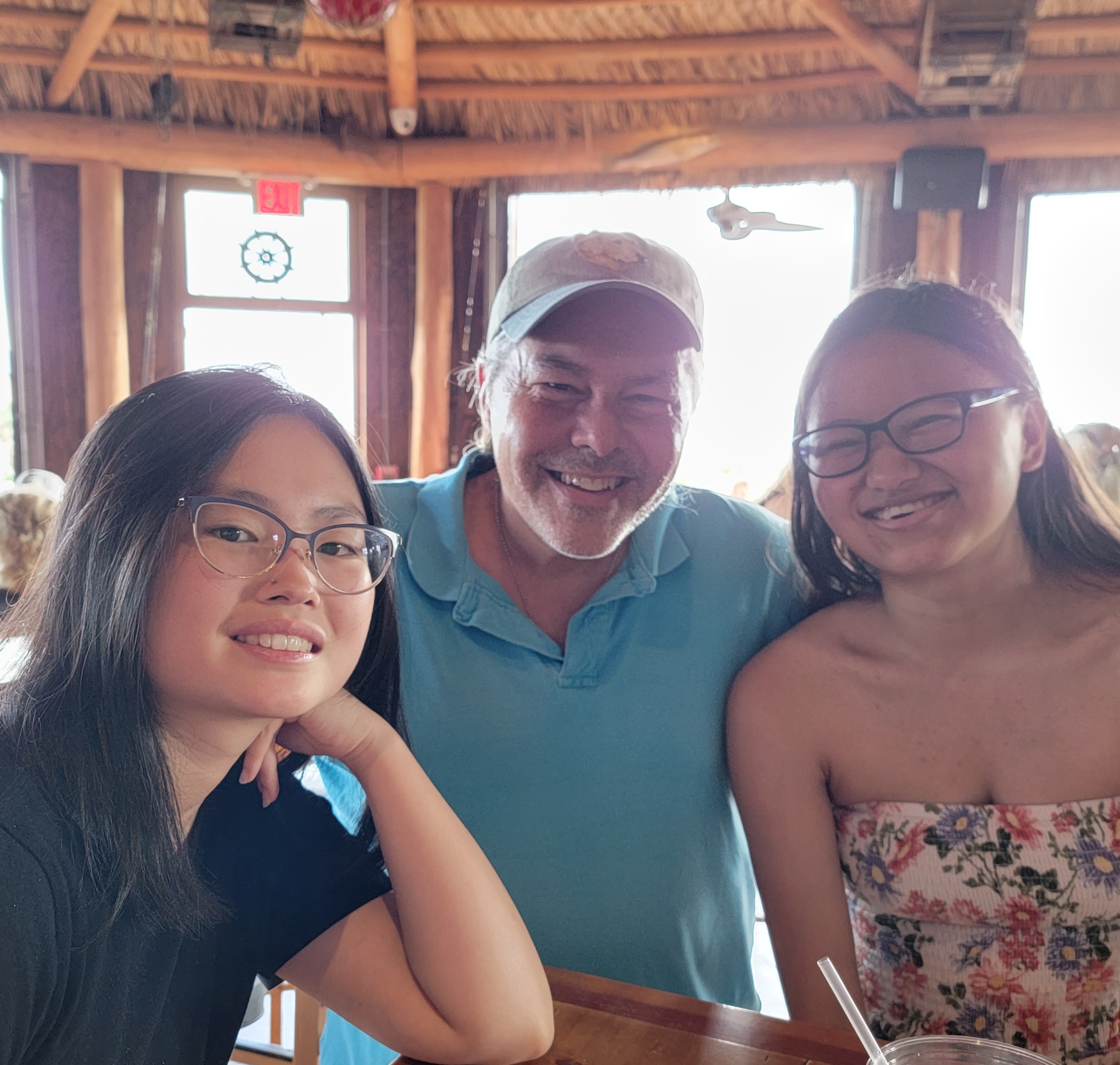
The truth is, there are millions of cancer survivors out in the world. We just are not famous, and most do not have any platform to offer their support and encouragement to those facing cancer. Pictured above on the left is me, at the age of 23, I believe during my second of eight cycles of chemotherapy. I had already gone through radiation therapy. There was no social media back in 1989 and 1990 when I was treated, and it looks like I was asleep, which would be why I don’t recall the picture being taken. The picture on the right, was taken at the beginning of the year, as I approach my 34th year in remission next month for Hodgkin’s Lymphoma. I am hoping this will not be my last image that I share, but I do hope that I do provide hope and inspiration for all of those newly diagnosed with cancer.

I do not mean to take away from those grieving the loss of Toby Keith, or anyone else who has not survived their fight with cancer. We should remember and honor those who have passed, and for all the good that they gave us. And hopefully the memories that our in our minds are from happier and healthier times.

I just wish that some would pay attention to the millions of us, and share our stories of survival, and what life has been like with our “new normal.” And realize, that while enduring treatments for cancer is not pleasant, in the end, in remission, life can be good. It may not be what we planned, but I know speaking for me personally, these last three and a half decades have been one helluva ride for me. And to quote Toby Keith from his hit that I love to sing, “As Good As I Once Was,” “I ain’t as good as I once was, but I’m as good once as I ever was.”

Post Navigation