Paul's Heart

Life As A Dad, And A Survivor

Archive for the category “Family and Friends”

Amusement Parks – A Fun Job – Great Memories


dorney1

I am not big on reunions, family, class or any kind.  For one, they are usually expensive.  Another reason, they often end up being about a “who’s who” or “success stories” since the good old days.  But an invitation came across my Facebook newsfeed, inviting me to special reunion which honestly has me quite intrigued.

dorney7

Dorney Park was the first amusement park I can remember ever hearing about.  There was no Disneyworld for me.  Dorney Park was just a short drive away, and because of the unique access to the park itself, and the rides, it was quite the bargain.

dorney6

Dorney Park had no admission.  You could actually drive through the middle of Dorney Park.  At one time, the road going through the park was a state road going from Allentown, Pa to Reading.  So, grandparents could simply park in the parking lot, buy a book of tickets (pictured above), and sit on a park bench while watching the grandchildren have a great time.

dorney4

Of course, Dorney Park was notorious for other things besides amusement rides.  They had stock car races that I remember my father taking me to when I was younger.  At the bottom of the park, on their “lake” was Castle Gardens, a former roller skating rink/dance hall.  You might describe it as the ultimate entertainment center, especially during the 1960’s and 1970’s and 1980’s.  And anyone who lived nearby got a great view of seasonal fireworks.

Most of us who grew up in the area would eventually look to Dorney Park as a great opportunity at a first official job as the area’s leading employer of Summer help.  There were many levels of jobs there based upon your age qualifications from someone sweeping the pavement to food services to games, and the ultimate and coolest job, ride operator.  This was even better than being a supervisor at the park.

dorney5

I would actually do two stints at Dorney Park, the first was in the Summer of 1981.  I was only 15 years old at that point, so I had the choice of working in the food stands or game stands.  Either way, because of work laws, I was only going to be able to work five hours per day.  Along the way, I actually learned quite a bit of secrets of carnival games as a result.  But it was two years later, as I turned 17 and graduated from high school, I REALLY enjoyed working at Dorney Park.

dorney9

The first ride I got to operate, was one of the most popular rides in the park to run.  It was cool because not only was it a fun ride, but I got to listen to an 8-track of awesome music (as awesome as 1983 music could be) all day long.  As a ride operator, we generally worked full days from open to close.  Throughout the Summer, I would get to operate most of the rides in the park from the roller coaster that I rode as a young boy to the log flume and more.

I got to make a lot of friends, who worked at the park, and some who visited the park.  After our shift ended, we would turn our uniform short inside out (a weird rule, but we were not allowed to appear as a working employee riding the rides).  After hours, things really got turned up a notch as we often got to have some special fun on rides once the park had closed.  On the Iceberg, like a “teacup” ride, we would actually bring a football inside and play “rugby” tossing the football from car to car.  Or as one challenge we had, riding the “Monster” with the challenge to make the rider vomit.  This ride resembled an octopus with its arms going up and down while spinning around and there was a mechanical trick you could do, which would cause extra force as the arms lifted up or dropped down.  Ah, good times.

At the end of the season, a reward for those employees who stayed until the end of the park season, we got to pick up a bonus paycheck.  The day that I went to pick up my bonus check, I got more than I wanted.

dorney2

A fire had started in the afternoon in a food concession stand, supposedly during some end of year maintenance.  The stand was located next to a wooden carousel, and nearly half the park went up in flames.  There were others who had come to the park that day to pick up that check.  Many, like me, had not only been employees, but grew up in that park.  And now, it was gone.  Nearly everything.

dorney3

The above photo after the fire was taken by local newspaper, The Morning Call.

Of course, the park rebuilt, bigger, fancier.  They closed the road that went through the park, and put a fence all around the park.  Gone were the $.10 tickets to ride rides, the park went “pay one price”.  A few years later, a huge water park was added.  Along with both of these moves, came much higher prices.  Soon, the park I had grown up with, had become like all the other amusement parks nearby, Hershey Park, Great Adventure.  But it was no longer like the park that I wanted to remember.

20130908_15071620130908_152705

As a parent, I took my daughters there on a couple of occasions.  And that was the first time that I had been back to the park since the big fire.  And though I enjoyed the day of hearing my daughters laugh, deep down inside, it hurt.  And I definitely did not enjoy Dorney Park anymore.

But this invitation has sparked a memory for me.  And I am intrigued.  The reunion is geared to employees who worked at the park from 1980-1985, which I worked two of those years, and made a lot of friends.  As much as it hurt to visit the park in its current operations, I can actually imagine conversations about the park in the good old days.  Sneaking into Castle Gardens after the park was closed (it was age restricted – over 21 for men, 18 for women) or heading out to a midnight movie with a group of other park employees.

But I also think it might actually be a bit healing for some of us, who were there on that sad day in 1983, to share stories and thoughts about that day.  And to definitely think about the days when the park was actually a family park.  And we should know… we grew up there.
Chemo Cat


chemo-cat

*** author’s note***  Each year, I compose two stories to be submitted to Visible Ink, a writing program through Memorial Sloan Kettering.  The stories are published in an annual anthology consisting of other stories as told by other cancer patients and survivors from MSKCC.  Each other in general gets one story published per year.  I will post the other story when the book is published, but for now, here is the story that was 2nd place for me.

Emotional support comes in all forms when faced with a serious illness like cancer. When it comes to humans, that support has its flaws. People can be moody. Some can be “two-faced”. Co-workers often express jealousy as if the cancer patient is receiving favors for their battle with life. Family members may find themselves distancing from their loved one.

Animals on the other hand, offer unconditional support. Many times, fur friends may be aware that you are not feeling well, long before you do. It is this type of companionship that led to the concept of “therapy pets.”

Even on our worst days, when we come home from a long day, a dog more likely than not, will approach you excitedly with tail wagging, not even an accusational glare as to where you had been that entire time. And cats also, will snuggle up to you if they so choose.

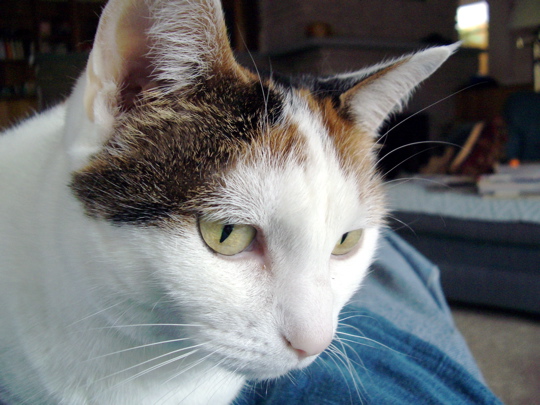
Shortly after I had been diagnosed with Hodgkin’s Lymphoma, besides selecting my medical care and direction, I made the decision that “pet therapy” would be a part of my cure. I lived in an apartment. Dogs were not allowed, but for a $25 fee, I could have a cat. I went to the local animal shelter, adopted “Pebbles,” a white female calico.

During the initial days of my diagnosis, she spent a lot of time on my lap, as I tried to gather my thoughts about the next days.

But it was not until I returned from my honeymoon, that new disease had been discovered, I would have to undergo chemotherapy. My wife went with me for the first chemo appointment. It was a 25 minute ride, which ended up being a critical detail to keep in mind. This was the amount of time that I had, to get home, get up three flights of stairs, race to the toilet, when nausea would finally make its presence known. That first day, I did not make it. My wife had driven too slow. There were too many traffic lights.

For the next fifteen treatments, I would be on my own. Knowing that nausea would hit me while driving, I ignored speed limit signs, accelerated at yellow traffic signals. Each appointment, I was consistent in getting to my apartment building, racing up the stairs, opening my apartment door, zoom past Pebbles, flip the seat of the toilet up, my body did the rest. After the first wretch, each time, I would glance over to the left, and there was Pebbles, just sitting in the doorway, watching me. She did not greet me as she normally would have on any other day, rubbing against my legs as I stood in the doorway. Pebbles knew my current situation was not normal.

Approximately a half an hour later, after I was certain that my nausea had ended, I had definitely hoped so because I was exhausted, I stood up, closed the toilet lid, washed my hands, my face, and brushed my teeth. I crawled into my bed, and passed out. I would wake up several hours later, upon my wife entering the apartment. Each time that I awoke, I looked over to my wife’s pillow, there was Pebbles, curled up and asleep also, clearly had been watching me when I crawled up into bed. My “chemo cat”, as I often referred to her from that point on, had actually been watching over me, keeping me company until my wife had come home from work.

Decades later, I would have several more pets, as I was challenged once again with severe health issues, pets were there for me every time. My biggest fear however was following heart surgery, with a freshly repaired breast bone, being greeted by my 100-pound Golden Retriever. It was not uncommon for him to stand up on his hind legs to greet me. This time, as if he sensed my fragility, simply sat right by my side, waiting for me to pet him. That is where he would stay as I recovered at home.

Today it is very common to see pets in chemotherapy suites and hospitals. The emotional healing power of pet therapy has been proven to lift the spirits of people who are ill or hospitalized. In two recent hospitalizations that I experienced, I had numerous visits from furry friends. After missing my own fur friend at home, my spirits were definitely lifted.

When my father went through his own battle with lung cancer, the very first day of treatment, he was greeted by a Goldendoodle, who simply rested his head on my dad’s lap. This was just one of the new changes in the atmosphere of a chemotherapy suite, which definitely has an impact on the psyche when dealing with such a difficult time period.

If My Survivorship Will Mean Anything… Part 3


What I am about to begin discussing is not conjecture, it is fact.  It is scientifically proven.  Only recently has medicine realized that closer follow-ups need to be made regular protocol to prevent damage not just from anthracyclenes, but any treatments.

In my time of treatment, there was not follow-ups other than bloodwork during my treatments.  If my counts were too low, the treatment was either reduced, or delayed.  But that was it, just bloodwork.  No other testing of any critical systems of my body.  And once I reached the magical 5 year mark, I basically vanished from the world of oncology until I was diagnosed with a “widowmaker” heart blockage caused by my treatments 18 years earlier.

At least in major cancer centers, today, patients are getting the “baseline” studies done prior to treatments, and depending on the drug being used, follow-up studies during treatments, and of course annual follow-ups following the conclusion of treatments.  And this is for life.  Finally, after realizing that Hodgkin’s survivors were living long enough to develop late effects, medicine finally had to learn how to not only recognize us, but how to treat us.  Sure, treatments have gotten better and a bit safer, but there is still a long way to go.

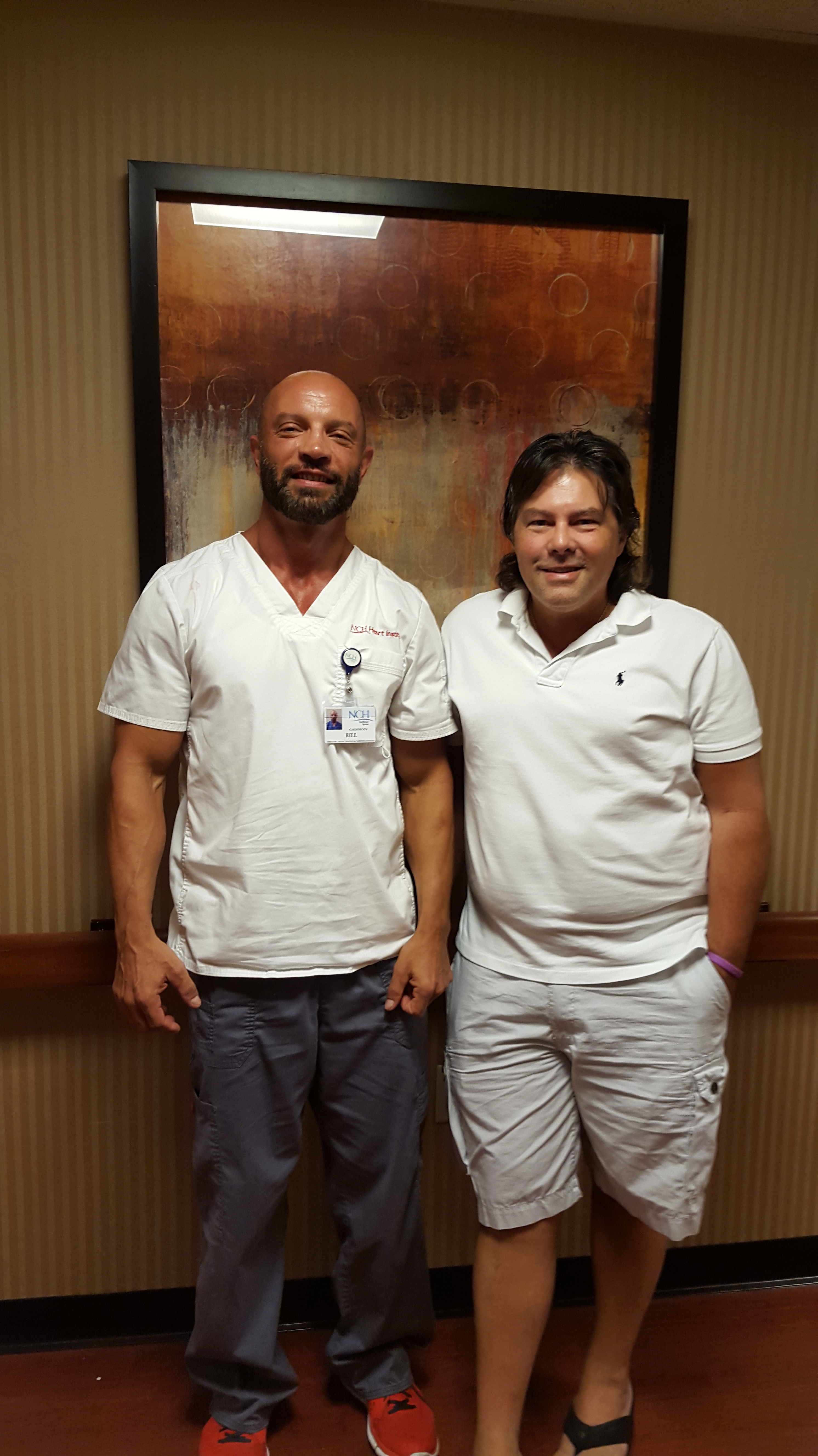
Now, I would like to introduce you to Bill Shirkey.  I got to meet Bill shortly after Michael had passed away.  Bill is the director of cardiodiagnostics and cardiac imaging at the Naples Community Hospital Heart Institute, associated with the Mayo Clinic.

20151001_123217

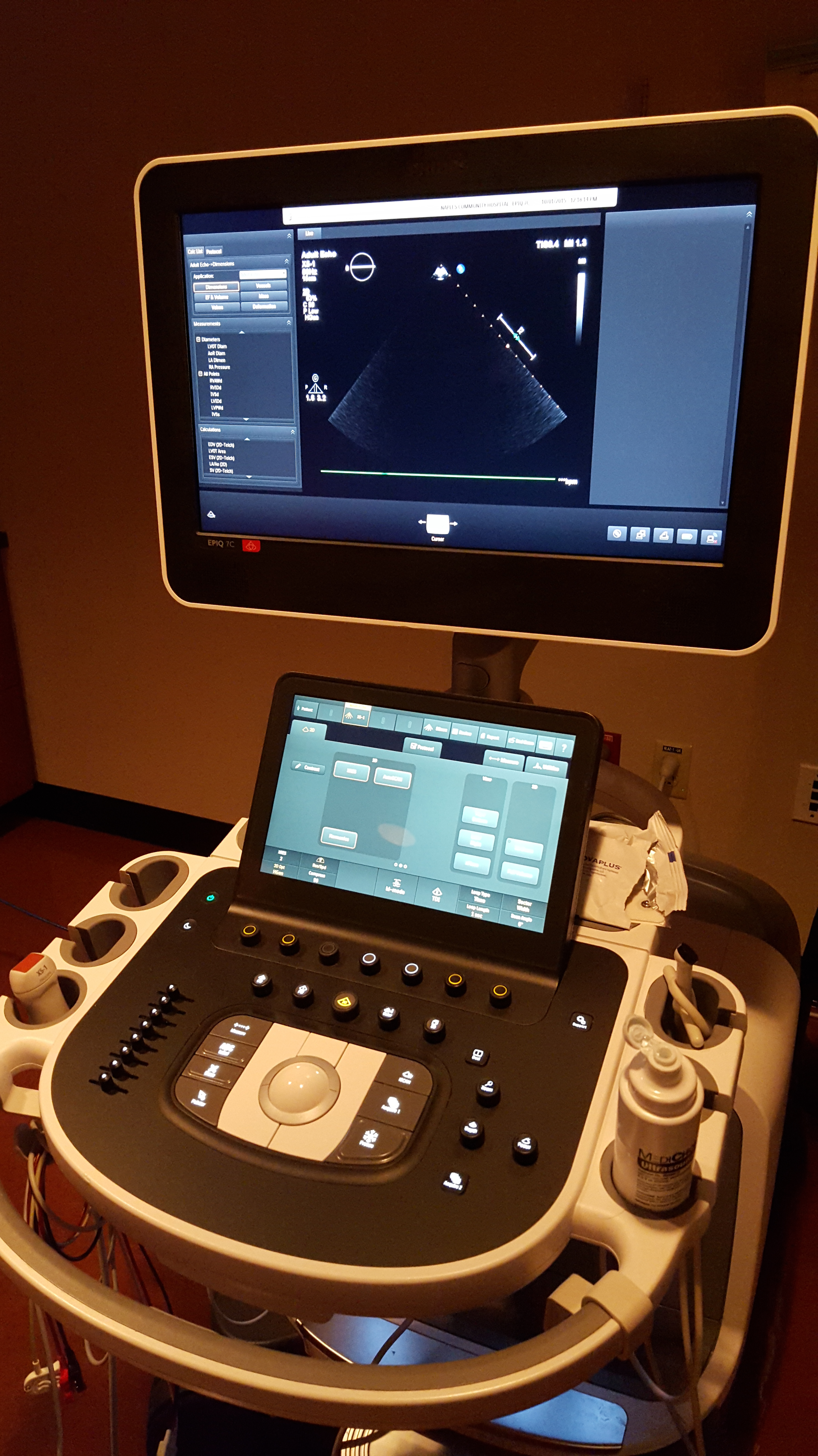
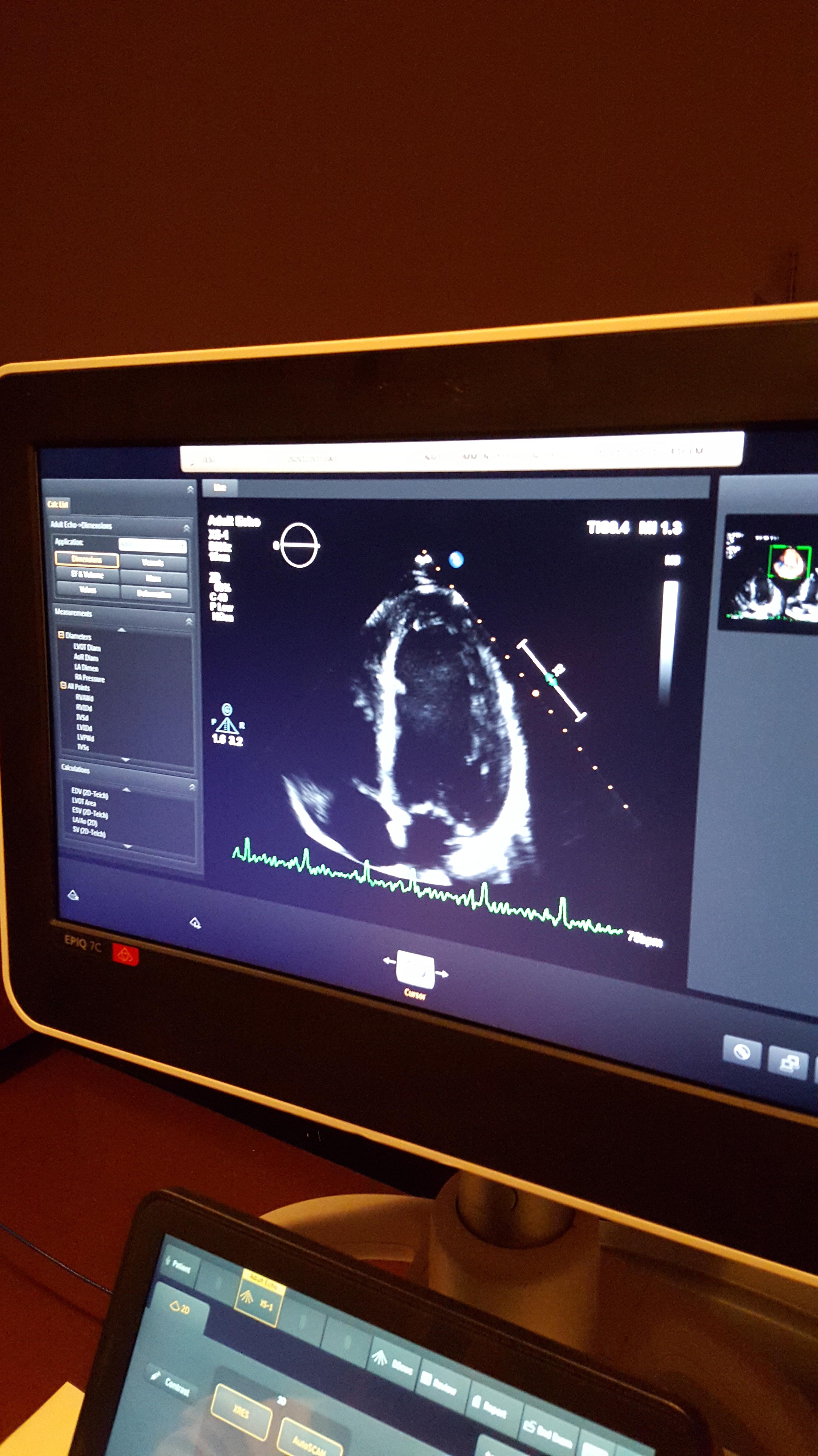
I sat down with Bill to discuss the exciting and lifesaving technology that he has studied and uses to help prevent issues such as damage from cardiotoxicity from chemotherapy as well as other health issues.  I am also going to try and upload the video of demonstrations that he gave of the equipment used, and how it works.  If I cannot do it in this format, it will be uploaded to the “Paul’s Heart” Facebook page.

Paul:  What was the result of your studies?

Bill:  The development of a protocol for oncology patients receiving cardio-toxic chemotherapy drugs.

Paul:  Please describe the equipment you use and its accuracy.

Bill:  The Phillips EPIQ 7.  There is a high degree of sensitivity.  It is the top machine for this type of work on the market.

20151001_121846 20151001_121939_001 20151001_122448 20151001_123057

Paul:  What are the benefits of this technology?

Bill:  We can predict cardiotoxicity in the early stages before there is permanent damage, and can help guide therapy modifications or changes.

Paul:  How soon can damage be recognized with this technology?

Bill:  A few months after therapy starts.  In some cases, as early as following the first dose in the case of anthracyclene drugs like Adriamycin.  The damage to the heart muscle can be seen as soon as the first or second treatment, and dealt with before the danage to the heart is too severe or permanent.

Paul:  While this is a definite benefit to current or new patients, is there a benefit for long term cancer survivors who are decades out in remission?

Bill:  Yes.  3D echo would give an accurate size and ejection fraction.  Strain would indicate myocardial performance.  It would help guide therapy if needed or establish if patient is clear cardiac-wise.

Paul:  Who else is using this technology?

Bill:  We are the only site in Naples using this technology.  Only some oncologists are aware of this technology.

Paul:  How expensive of a test is this?

Bill:  Generally around $1500-$2000 which is much better than the cost of medical intervention for severe heart damage.

Paul:  Are there any harmful effects of the test itself?  How long does it take?

Bill:  There are no harmful side effects of the test itself.  Baseline testing takes approximately 30-35 minutes with follow-up testing around 20 minutes.

(it should be noted, Bill actually demonstrated the machine for me on himself to show how it worked)

The videos of demonstrations and interviews cannot be uploaded on this blog.  I will post them on “Paul’s Heart” on Facebook so that you can see these for yourself.

Please, “share” this post.  With Adriamycin being used to treat not only Hodgkin’s Lymphoma, but also breast cancer, this information and knowledge is crucial.


Post Navigation