Paul's Heart

Life As A Dad, And A Survivor

Archive for the tag “cardiac arrest”

Going Home


It was a surreal feeling. I was being discharged from the hospital, back in April of 2008, after having a life saving emergency double bypass for a “widow maker” blockage of my heart. I was 42 years old. This was when my life, and my health, would change forever.

I was too young for this to happen. Everyone was saying it in the operating room. I heard them before I fell asleep from the anesthesia. When I awoke, I was attached to several machines, one of which was doing my breathing for me. As time would pass, and I would be expected to begin moving around, I discovered that in less than 48 hours, I had lost all of my strength from being confined to the hospital bed. I had countless people making a fuss over me, from techs taking blood, nurses monitoring vital signs, and of course, plenty of visits from residents, and therapists, physical and mental. My life would never be the same.

A hospital chaplain had even come into my room the day I was discharged, not to preach to me or spread Gospel, but just to prepare me mentally for the possible emotional waves I could (and did) face, to understand they were real, more importantly, normal.

It may sound cliche, that as I was rolled out of the hospital in a wheelchair, climbing into my car, as a rare passenger, not the driver, but I did feel as if I had a new start. Physically, at least as far as my body and looks, they were still the same, but everything else about me felt different. Though not consciously doing it, I could tell that things were appearing to me differently, giving me a new sense of appreciation. I was noticing details on the ride home that I had never seen before, or had not remembered in a long time. I guess this would be where the reminder “remember to smell the roses” would apply.

I could walk. Clearly I was weak physically. My mind was clear. I knew that I was about to die, and the steps it took for the doctors to save my life. And I wanted to do all I could, to recover fully, and quickly.

I had not seen my golden retriever Pollo in almost a week. We had never been away from each other. On an average day, upon my arrival home from work, he would get up on his hind legs, front legs on my shoulders as if to give me a hug hello when I came in the door. I had no idea what to expect when I walked in the door for the first time at that moment, but I was definitely concerned that I could not survive a full-on “where the hell were you” excited ambush from him. What I got instead, surprised me, but then solidified the best friend I knew that I had in him. As the front door opened, he stood in the kitchen doorway, perhaps with that “look, (where were you?)” which quickly turned to “glad you are home,” as he calmly walked up to me, circled around me, and then just stood against my left leg. He “knew” something had happened and was not right.

From there, I positioned myself on our couch, and my (then)wife turned on the television, so she could catch her daily soap opera. I have seen these two shows in particular over time, when I could not avoid it, and this was one of those occasions. I never pay attention because the story lines are all the same, for some reason, until now.

In this particular episode, one of the characters, a woman, was having open heart surgery. Very quickly, it became too much for me emotionally. I lost it, completely breaking down. My wife came rushing into the family room, “what is it?” I could not even get the words out, just pointing to the screen, but even she was not able to understand what I was trying to get out. I had never felt this way. But seeing on television, albeit in lesser detail, what had literally just been done to me, was too soon. I had my first flashback from the surgery of many. Welcome to the world of PTSD, post traumatic stress disorder. As I found out, PTSD did not just affect soldiers of war.

My first few weeks at home, I had a visiting nurse, documented my vital signs and weight, and as instructed, went for daily walks. Unfortunately, as I went for those walks, which happened to be along a main road which led to where I worked, and would now be out sick for a lengthy period of time to recover from my surgery, several of my co-workers spotted me. They decided to notify management that they had seen me, that I looked “great,” and were frustrated that I was not back at work yet, clearly “milking my absence” according to them.

Now it should be clear, the orders to return to work, were 3 to 6 months post surgery, and that was between me and my doctor, and the health services/HR department at work. This was day 3. While cardiac wise, an average patient might return to a less physically demanding job in three to four weeks, I had a very physically demanding job. And with one major issue that complicated my healing process, a history of radiation therapy to the chest area, and a freshly cracked open breast bone for the surgery, that breast bone would take additional time to heal. I knew that because my doctors told me that. Evidently some of my co-workers felt they needed to know this information as well. But even then, they were judging me on my shell, what the only thing they could see about this situation, since my heart and breast bone were internal, I looked great on the outside, now get back to work.

It actually got worse with my employment as time went on. Although I was protected by both the Americans With Disabilities Act and the Family Medical Leave Act, that did not stop me being sent a termination of employment notice less than the minimum three months ordered by my doctor, unless I returned to work, as the protection of the FMLA had expired. Though I knew my legal rights, and was prepared to fight them as hard as I could, that would not help me in the short while, if I were to lose my income. Knowing that I could count on a handful of workers to watch out for me, and help me as needed, I needed to convince my doctor, to go against his own recommendations, and release me back to work, knowing full well, I risked either reinjuring my rib cage, or worse, impacting my heart and recent bypass. I still needed to complete my cardiac rehab, but without my job, that rehab would never happen as I would have lost my health benefits.

In the end, nobody won by my early return to work. A bitter management failed to dump the perceived dead weight and an adversarial advocate for his co-workers, and as for me, my health continued to decline, perhaps even quicker. Had I to do the whole recovery over again, I am not sure I would have wanted my doctor to let me go back to work sooner than I was ready.
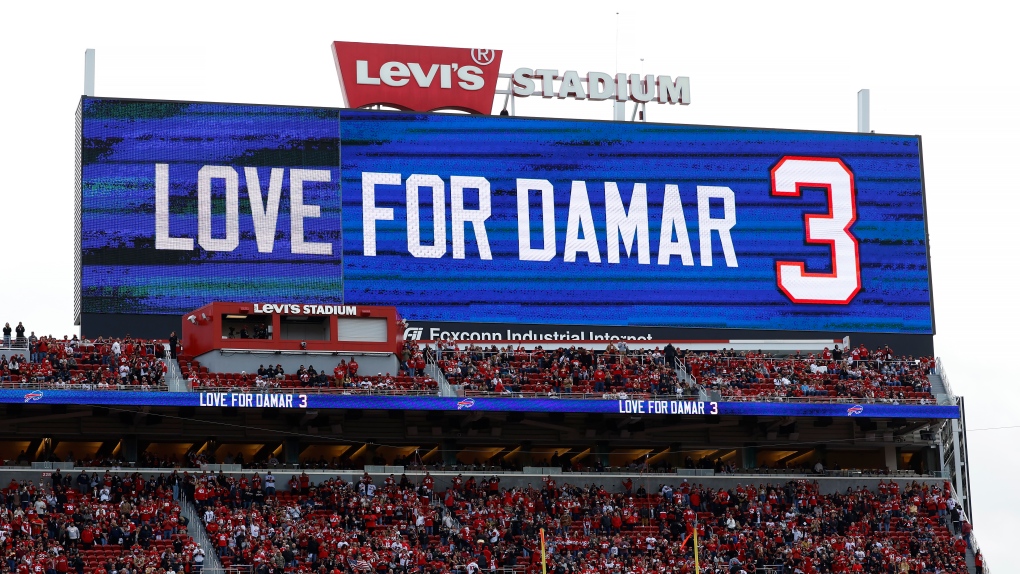
Which brings me to a story many of us have been following since it occurred more than ten days ago, Buffalo Bills’ Damar Hamlin. Collapsing on the field of a regular season football game with playoff implications, going into cardiac arrest, which normally would lead to death, on national Monday Night Football, on January 2nd, Hamlin, was transferred from an Ohio hospital to a Buffalo hospital a little over a week later, and after completing some more tests, was sent home for the rest of his recovery.

Anyone watching the final season game of the Bills last weekend, saw the opening kickoff returned for a touchdown by the Bills, clearly building from the emotional lift given by communications directly from Hamlin himself to his fellow players. Any fan who has seen a serious football injury, and to be given inspiration by that player, or just as in the movie “Rudy,” inspiration is definitely a powerful thing. The Bills won that game, and now the playoffs begin.

Of course, all of the chatter has been, will Hamlin be able to return to football? Should he return to football? What about the playoffs? If there is anything you read in my situation, you can make no mistake, if Hamlin had his way, he would be suiting up for the Bills playoff game against the rival Miami Dolphins. But also, just as in my situation, there is likely a lot going on through his head, though I am sure he wants to return, even with the cliche “lightning does not strike twice,” will not ease that shadow hanging over Hamlin if he decides to return. As a football fan, I have seen plenty of players reinjure themselves or have their play impacted worrying about a reinjury.

Make no mistake, what happened on that football field January 2nd to today, is nothing short of miraculous. I know I was not allowed to watch hockey games in the hospital because of what it did to my heart rate, so I was really surprised, though not really, he was allowed to watch the game this past weekend. But I am sure he will be watching this Sunday, even more so, wishing he was able to play. I think no one would begrudge the Bills getting more emotional inspiration from Hamlin during the playoffs.

Most football injuries are serious, but this is the first time, the NFL almost had a fatality during an actual game. If Hamlin wants to come back, it should definitely be on his own terms, and definitely when he is ready.

It’s About The Human, Not The Game


This morning, many of us, are getting an unexpected anatomy lesson of the heart. Though the catalyst occurred as an injury during a professional football game, the discussion around most breakfast tables and office water coolers is much more consuming.

Last night, the Cincinnati Bengals hosted the Buffalo Bills, in what was considered an unofficial “playoff game” with the end results affecting playoff positions for each team. In what looked like a normal tackle that football fans had seen thousands of times before, would soon become an event that no one would ever forget. Upon completing the textbook tackle, Bills Safety Damar Hamlin got up, as if to prepare for the next play, and suddenly fell backwards, unconscious. Hamlin is just twenty-four years old. And I use the verb tense “is”, because although reports claimed he went into cardiac arrest following that tackle, and needed CPR, and was revived on the field of play, he is currently being treated, in critical care. Everyone is concerned for this young man, and hopefully his full recovery.

Young man. Heart issue. Where have I heard these two phrases together before? Oh, that’s right, as I laid on an operating table at the age of 42, preparing for emergency bypass surgery for a fatal condition I was unaware I had, caused by treatments for my Hodgkin’s Lymphoma eighteen years prior. Since 2008, I have had two more additional heart surgeries, and will likely undergo more in the future. My purpose for stating this is not to say I am an expert, as I am not, is not to compare the situations, as they are not similar, but to say, I understand what is being explained as to what happened to this young football player.

Again, the play itself looked fairly routine, even if a bit more high energy, because it looked like a big play was being stopped. But as powerful as the heart is, its activities are often silent, or unknown to us. We go through our daily activities without giving the beat of our heart a second thought. It is something that just happens. But as myself, and plenty of other long term survivors of Hodgkin’s Lymphoma will tell you, there is so much more to the beat of a heart, and the various conditions that can exist. Unlike the normal and healthy human being, and perhaps the unknowing human, we are more aware of our heart’s condition.

I am not going to get too technical, as even I will get lost. But the heart has a basic rhythm as pictured above. There are five components, called waves, labelled P, Q, R, S, T. I honestly do not understand the mechanics, but I do know, that if there is an abnormality on your EKG, you will get attention. I do know that in my case, and ALWAYS gets a lot of attention from doctors unaware of my condition, that I have what is called an “inverted T” wave. As you can see from the picture below, compared to the one above, this is not a normal condition.

This “inverted T” wave can be a serious issue, as it is often a sign of what is called “ischemia”, a blockage, or what would likely result in an event of a stroke. Again, not going too deep into the weeds with this. Just know this, this inversion, shows that there is a potential effect on the blood flow through the heart. And this is where Hamlin’s tackle comes in to consideration.

It has been explained by various medical experts on various news programs, that a potential hit to the chest area, during this “T wave” part of the heart rhythm, could impact the flow of blood through the heart, and yes, causing cardiac arrest. While it has not been specifically stated by the Hamlin’s doctors, the speculation is that this “perfect storm,” the tackle and the stage of the heart beat, is what happened. There will likely be more discussed on this, days from now.

Nonetheless, the horror of watching any athlete collapse to the ground, is something we as fans just do not get over. But this time is something different. I recall watching the game where Washington Redskins quarterback broke his thigh bone during a game. I was watching both Jets and Lions games, when Dennis Byrd and Mike Utley were both paralyzed following collisions with their helmets (separate games). Even recently, with all the concussion injuries, these titans still manage to convey to us, usually with a “thumbs up” as they are carted off the field, this situation was different. Whether at the game or watching it on TV, this was different. Hamlin was unable to communicate with us. Everywhere you looked, fellow players, on both teams, were in tears. These seemingly tough guys, though trained to play through all kinds of pain and conditions, were suddenly witness to something, no one could have prepared for.

Of course, the conversation has begun on safety and just how common a situation this might actually be, even if occurring for the first time with the NFL. One news network actually stated a more common occurrence among teenagers aged 14 to 15, involving either a baseball or hockey puck to the chest. Stop and think about that, we hardly, if ever, hear about that. This situation can also occur during an auto accident. This cardiac phenomenon is called “commotio cortis”, caused by a sudden impact to the chest leading to cardiac arrest.

There are plenty of movies that innocently, and often times comedically show a recipient of a chest punch, gasping for air, with the assailant explaining “you will be alright in a few minutes.” One has to wonder with all of the boxing and MMA fights, we have not seen or heard of this before. I know with my own situation, a wired breast bone from my open heart surgery, I have always been sensitive to any impact to my chest for instance, wearing a seatbelt, knowing that in an accident, my breast bone could snap and damage my heart. And do not get me started on the act of CPR on me, if necessary, as it was explained to me how common it is, for ribs to get broken while CPR is being performed.

But this was such an unusual occurrence, and tragic. Hopefully Hamlin will recover fully, only time will tell. And unlike in 1999, when professional wrestler Owen Hart fell to his death from a rapelling accident during his entrance to the ring, and the WWE continued its Pay Per View after Hart had been taken out, the NFL did the right thing, and postponed the game.

We do not know if Hamlin had any other cardiac issues. Like me at 42 years old, why would anyone suspect a 24 year old to have any heart issues? Why would any of us suspect to have anything wrong with us? But the truth is, it can happen, and depending on the circumstance, that is when we find out there is a problem. And for some it can be too late.

My thoughts are with Damar Hamlin, his family, and his teammates and wishing for a full recovery.

Stay Home If You Are Sick? What If You Cannot?


Your child has a fever or vomits in school, you get the phone call to come and pick the child up.  Even when there is only ten minutes left to go in the day.  Last year our school district came up with some goofy policy in dealing with lice.  To be honest, I am not sure who does the actual determination as far as contamination when it comes to eggs and nits, but once again, the kids get sent home.  For the child, it is no big deal.  If there is homework missed, it would probably go home with a classmate if it was important, or a test would just be made up when the child returned to school.

But as adults we are expected to endure much more.  Not only are we expected to get to work, crawl into work, or be rolled on a stretcher into work, but we are expected to be exposed to all kinds of germs, bacteria, and viruses.  Currently, we are in the midst of a major flu outbreak.  It all depends on which media source you want to listen to, to determine just how bad the outbreak is every year.  A few years ago, it was the bird flu that was concerning everyone.  Last year swine flu acually led to my company having an attendance policy just for that outbreak.

If an employee had any sniffle, the company wanted you to make the decision to stay home.  Of course, we had a strict attendance policy that did not pay the employee for the first three days out sick.  But if you were sent home from work by health services suspected of swine flu, you were not allowed to return to work for seven days.  So the employer sends you home at your expense for three days and then you get paid for the remaining four.  The kicker is that the reprimand system kicks in at five days.  Nine days out you are suspended for five days (that is right, you are suspended five days for inconveniencing your employer if you are sick nine days in a year).  But at day twelve, potentially you will be fired, for being sick.

Consider this, whether paid sick time or unpaid, absenteeism is a huge expense for a company to absorb.  It is definitely worse if the employer has to pay the absent empoyee to do nothing at home, while expecting those who have come into work to make up the lost time, often without any extra pay.  So it becomes an accepted and tolerated procedure, reprimand the employee for not coming in to work, whether withholding pay, or by punitive actions such as suspensions and terminations.  The ironic thing is that this usually has no impact on the person who abuses any attendance system but has exactly the opposite effect on the employee with the legitimate illness.

It is normally the employee with the legitimate illness who is not used to getting a paycheck deducted with sick time.  Often times those employees live on budgets, so the stress of not missing pay from the check has the potential to make things worse.  So the reaction is for the employee with the legitimate illness to force themselves to work.  The employee is already at risk because of the depeleted immune system, but with physical exertion and exhaustion, the chances of recovery or worse, the illness becoming more dangerous,  has to be recognized at least as unfair. 

And if there is no concern for the legitimately ill employee, there should be even more disappointment in the concern for the other workers who are not contaminated with whatever bug the sick employee is dealing with.  So while the media spreads global fear of an Armageddon-like epidimic of flu, employers with their absentee policies actually contribute to the spreading of illnesses like the flu, strep throat, and other contagious diseases. 

If you are watching the bouncing ball, one sick person is bad, but risking several sick people is okay.  The cost of lost labor for one employee is bad, several employees out is very bad from a lost productivity point of view.  But that is exactly what employers create.

There is one final critical thing to be considered.  And it something no one, sick employee or greedy employer does not even consider, because it is something that neither can see.  There are people in the world, and especially in the work force who have what is called a compromised immune system.  A compromised immune system can be depressed supressed, compromised, and a few other descript conditions.  And unless one of those less unfortunate patients speak up, there is no way to know.

I am one of those who have a compromised immune systems.  I was not born this way, I was made that way.As part of the staging process of my Hodgkin’s Disease and determining the need for chemotherapy or radiation or both, a procedure called a laparotomy was performed.  One of the things done during this surgery was removal of the spleen to see if the organ is riddled with Hodgkin’s.  It was considered “no big deal” as I “didn’t really need a spleen” as others do without.  It was actually quite commone, not just for staging cancer, but in many forms of trauma, the spleen was removed.  This creates a condition for a patient being declared “asplenic”.

In recent times, it has been realized just how important the spleen is to the human being.  The spleen kickstarts your immune system and keeps it fighting whatever is fighting against your body.  For example, have a cold?  Your spleen helps to fight it.  Scrape and cut your knee?  The spleen helps to fight infection.  Having a heart attack?  The spleen helps to recover.  Simply put, no spleen, the chances of your fighting an infection or surviving are made that more difficult.  To help give me a chance, over the last several years, I had been given multiple pneumovax and menningicoccal vaccines.  My body does not respond in antibody production like it needs to which means that if you have a cold, I have an even bigger chance of coming down with it.  In spite of my children being innoculated for chicken pox, if there is a child at school who was not vaccinated, comes down with chicken pox, my daughters could carry it home.  Strep?  Increased chance.  Twice last year (within nine months to be exact), I was taken to the emergency room to be diagnosed with two different pneumonias, one case being septic, the other double.  But both types were determined to be “Community Acquired” which means I got it from someone else.  Someone else who was sick and either came to work, came to church, or some other public passing, created a near-fatal situation for me.  No, I know it was not on purpose, because they did not know I was at an increased risk or surely they would have avoided me.

My comments are more than just pushing for hand sanitizer every two feet or training everyone to cough into their elbows.  It is about awareness and consideration.  The flu might not be fatal for the majority of people, but for some, there is an increased risk.  Unlike last year when my employer forced a swine flu absence policy, it does not show any signs of improving preventive care today.

Remember Jim Henson, creator of the muppets?  Died of complications of strep, originally thought t o be pneumonia.  He was also asplenic.  In spite of agressive treatments used on asplenic patients, the creator of Kermit the Frog passed away at the age of 53 after two cardiac arrests.

I should not have to state publicly that I do not want to die, and that I do not want to catch what someone has.  It is common sense how to prevent the spread of things like colds and flu, clean hands, and staying home when you are sick.  I only wish employers realized that people do get legitimately sick and while there are those who play the system, those who do not, should not have to pay with their lives.

Post Navigation