The following is definitely a true story. The names and some of the circumstances have been changed only to protect subject’s privacy.
I received a phone call that my uncle was behaving in a bizarre fashion. He is normally a very reserved and somewhat introverted man. The only time you would really see him was when he would be outside mowing his lawn or working on his truck. But the phone call that I got was quite alarming. My aunt told me that I needed to come over to the house right away. Something had to be done.
When I arrived, my uncle was definitely acting unusual for his character. But I had to assess what was going on. I got no information from my aunt, other than something was seriously wrong. Looking at him, physically, nothing seemed to be the matter. I asked my uncle what was going on, why was my aunt upset. He mumbled in a frustrated tone, “I don’t know what she’s talking about. I didnt’ do anything.” I was puzzled even more because like I said, there is hardly ever a peep out of my uncle, and he is one of the most respectful people I know. Getting no answer from him, I turned to my aunt.
“He was over in the neighbor’s yard.” She began to ramble. Whatever it was, she did not want to discuss it. I would describe her as ’embarrassed’. A couple of sentences later, she finally got to it. “He was removing things from her clothes line.” Pretty much in denial myself at this point, I inquired if it was like towels, a sweatshirt perhaps, already having an idea this conversation was going to go bad. “He was grabbing and pulling the panties and bras off the line.” The neighbor was not home at the time, so my aunt had hung the items back up. But my uncle was still adamant that he had done nothing wrong. But just like that, something switched. He started getting vocal, obnoxious, rude and offensive. Clearly something was wrong. Something was happening. I could see in my aunt’s eyes, she needed help.
I convinced my uncle to allow me to take him to the local hospital just for a check up, in the event something might be wrong with his heart causing him to act like this. Somehow, he agreed. While at the hospital, the bizarre behavior had returned as he was actually grabbing at nurses inappropriately and making offensive comments toward them. The rest of my family was waiting in a conference room for the doctor to talk to us about what he suspected. I stood outside my uncle’s room, trying to make sense of what was happening.
A nurse came into my uncle’s room. She took his blood pressure. It was 60-40. I will never forget that number. He was on medication for keeping his blood pressure under control. It was his scheduled time, so the nurse gave my uncle his dose of blood pressure medicine. You do not need a medical degree to know that 60-40 is not good, but I could not make sense of giving him medication when his blood pressure was that low already. But who was I to raise any questions.
The doctor came into the conference room. His persona was that he did not want to take a whole lot of time to explain what was happening. “Your husband, uncle, I feel is suffering from ‘dementia’. Unfortunately, we can control his behavior with psychotropic drugs, but his progression is going to get worse.” He rattled off some other mental illnesses such as Alzheimer’s, but the doctor would not speak specifically about any. The doctor would only reference dementia. If it was Alzheimer’s, I was aware this was not something that just came on suddenly like these current episodes, but the doctor was insistent. I questioned the blood pressure and the doctor snapped back at me that it was not a concern. When I asked if any brain testing had been done, again the doctor grew irritated with me, and at that point, my family was now giving me warnings not to interfere out of fear the hospital would grow tired of the questioning and send my uncle home. But something was wrong.
The decision was to move him to a facility that would be able to handle “dementia” patients, a secured floor. The hospital could not handle him. My uncle was not happy with the decision at all, fought both verbally and physically with us in protest. And with what I would call one of the biggest betrayals in my life, I tricked my uncle into going into the facility by just telling him, it was for testing only, and that we would go home following the tests.
It was only minutes until he realized that he would not be going home with us that evening. He began to rage violently enough, that he had to be physically restrained. His screams of objections were horrifying, pleading with us to get him out of the restraints, and of the care facility. And then they sedated him. That would be the last memory or coherent words that I would have with my uncle. They psychotropic drugs would now also be administered. I had no idea what they were or what they would do until I got home and began to research everything.
The first thing that I found out, was that low blood pressure can result in a condition called “deliria”, which sometimes can mimic dementia and some of the other mental disorders. And there would be other possibilities, but testing needed to be done. We met with the facility doctor the next day, and I began to question the doctor on all of the information that I had discovered, convinced that not enough had been done to properly diagnose my uncle. This doctor also grew angry with me, and again, my family admonished me for interfering. My family was convinced that this was the proper direction to go.
Following the meeting, we stopped by my uncle’s room to visit. The drugs had taken effect, and I was horrified by what I was seeing. All that was left of my uncle, was a shell. Emotionally, there was nothing. Personality, nothing. When we got him out of his bed to go for a walk, we did not exist to him, literally he did not see us. He just walked around in circles and if we stood in front of him to block his way, he just tried to walk through us. None of this made sense to me, everything was happening too suddenly. But as opposed as I was to the diagnosis and treatment, my family only convinced themselves, this was the only way my uncle could be taken care of, never to go home again. I visited him often after work, but it was the same thing every day, a drooling shell of a man, walking in circles, saying nothing, doing nothing.
Weeks and months would pass and the care for my uncle remained the same, as did his condition and treatment. Clearly there was no hope that he would be cured, return to any form of normalcy, never go home. This is where he would live the rest of his life. I still could not help but believe that something else was still wrong with him that the doctors had missed.
After the Christmas holidays that year, something happened with my uncle. He was refusing to eat or drink. At first I thought he was just being picky and did not want the food that was being offered, but then refusal went to the next meal and so on, and then to days. We would argue with my uncle that he needed to eat or the doctor would have to medically install a feeding tube to get him nourishment. On the fourth day of not eating, he then began to refuse his medications. This was very dangerous as you cannot just quit psychotropic drugs cold turkey (as with some of his other meds).
This was not making any sense. How was he able to maintain this protest? There was really no mental function with him, yet he was denying food and medication. No one had any idea as to what was happening with him. Just that they knew he needed nutrients, and meds. The only thing that made any kind of possibility was that perhaps he had enough cognition available, that he was trying to end his life, the only way that he knew he would be able to at that point. The catatonic and lethargic condition that he had been reduced to was nowhere near the man he once was or ever wanted to be. Nor did he want to be such a burden to his family. We just did not know what was going on.
The next day we got a phone call from the nursing home. My uncle was going through severe withdrawal from the drug cessation. He had gotten too violent for them to control. We needed to come down and either take him or authorize for him to be transfered to another facility that would be able to handle and control him. Obviously, he could not go home, so he was ordered transferred.
Later that evening, my uncle had lapsed into some sort of coma, and he was transferred yet again, this time to another hospital (different than originally). The doctor met with us the next day, and explained what all was happening to my uncle, and what we needed to do to keep him alive. We would have to authorize a feeding tube and restoration of drugs. We were allowed to consider it overnight which is what I urged my aunt to do. I felt all along that decisions were made to hasty and ill-informed.
The next morning, we had just arrived, and there my uncle was, sitting up, having breakfast. He looked at the doorway and saw us there, and gave a smile. He was completely oblivious to what was going on. Not only that, but within minutes of conversation, it seemed as if everything in his brain had reset. There were no urges or impulses. No grabbing at nurses or vulgar comments. In fact, he had no idea what had been happening from day one of this entire episode months before. He did not remember the intitial hospital visit, his behavior that led to that trip, the restraints, nothing.
It was time for the second hardest decision. When could my uncle go home? Though my uncle clearly seemed like himself, all of the various drugs out of his system, and his normal meds under control and monitored again, my aunt was not so convinced that he would be safe to have at home. No matter how much the psychiatrist and doctor had assured my aunt that my uncle had recovered, she still was not prepared to let him go home.
It was nearly two years before the facility began its efforts to have my uncle go home. There was clearly no reason for him to be in there any longer, nor has there been. The doctors, without revealing their motives were suggesting outings for my uncle to help him with his progress. First a day visit had been planned, then a weekend, two weeks later was Christmas, and he was allowed to go home for that holiday as well. The doctors wanted to meet again with the family after the holiday. My aunt had asked me not to attend this meeting, because as usual she was afraid that I would support whatever the facility would recommend. And I had long objected to my uncle being stuck in that home. Sadly my uncle trusted my aunt and her concerns which is why he never spoke up about his confinement. This was the way his personality used to be, non-confrontive, non-combative.
The day of the meeting, my aunt asked me to attend, and asked me to just observe. Which I did. I just sat there and listened. Following the meeting my aunt asked me, “so what do you think they are planning to do?” I took a deep breath, one of relief because I know I was right in my feelings. “They are planning on releasing him.”
A week later, my uncle was sent home. It has been more than ten years, and he is still living in HIS house. But to think that the man lost over three years of his life, not even having any knowledge of those years, all because his blood pressure was not being monitored closely enough, his brain was not functioning properly. This could have been taken care of within days had the doctors just listened, had they actually paid attention to my uncle’s vital signs. I am sorry. I am sorry I did not fight for you harder.
From that point on, I have paid much more attention to side effects of anything going into my body. I was not with my wife at the time this occurred, but she knows of this story. She knows my concerns about prescription medicines. That is why in 2008, following my heart surgery, and I began to demonstrate cognitive, memory, and severe mood swings, my wife heard me, she not only heard me but reacted, when I told her I was concerned about the drugs I had been switched to for my blood pressure and cholesterol. My doctors were all at a loss as to why these issues were occurring, but I was not. I had come across some research on statin drugs and cognitive/behavior side effects, that were not listed for the drugs because the side effects had not occurred enough, and that is when I determined that I would have to stop the statin drug I was on. Three days later, those issues had resolved and from then on, I decide what meds I will take or if I will take anything.


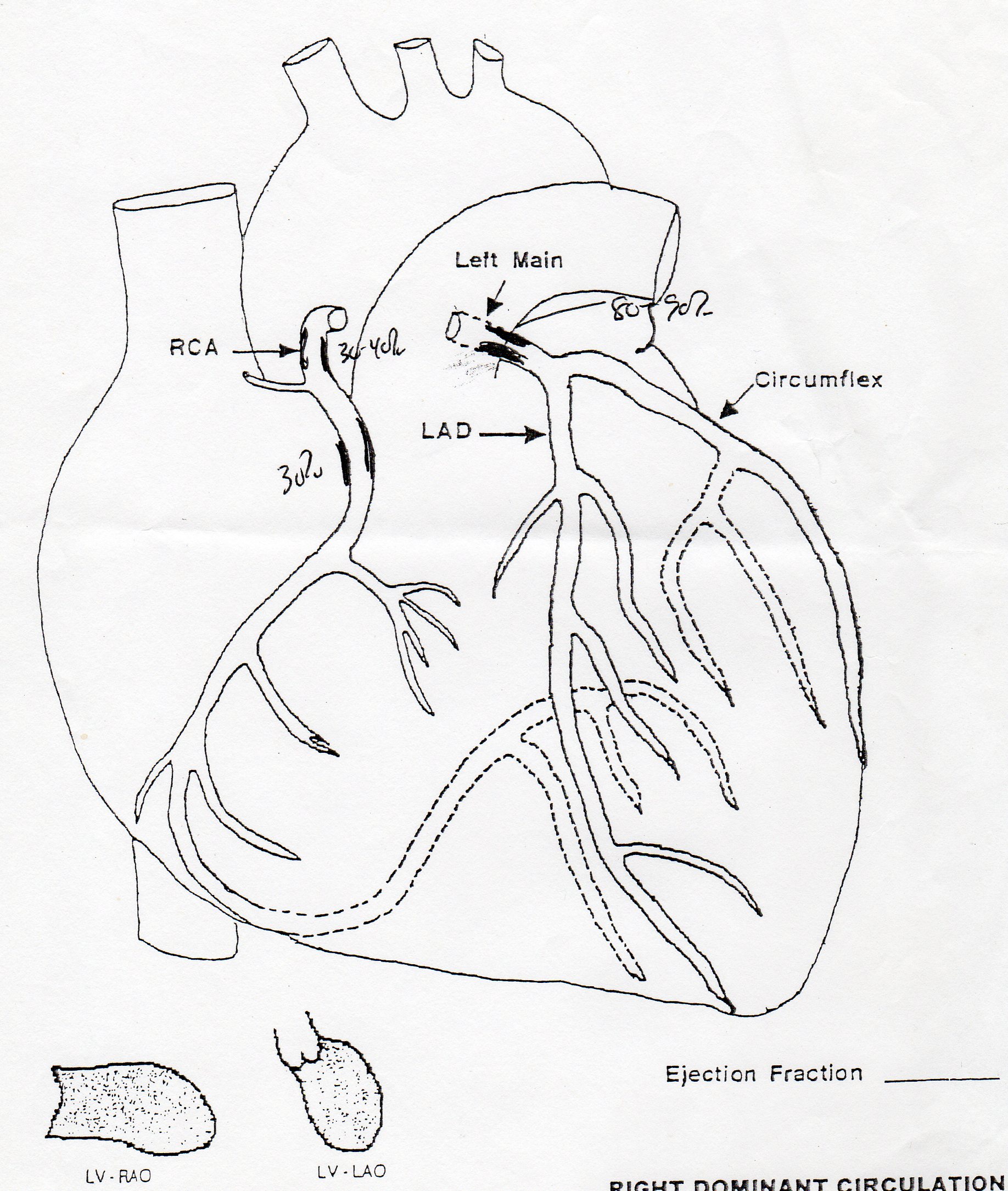
 Paul's Heart