Paul's Heart

Life As A Dad, And A Survivor

To Port Or Not To Port


When I think of the word “port,” my mind naturally goes to a place where a cruise ship pulls in for passengers to get off the boat, or perhaps where our country receives imports from other countries. But for today’s cancer patients, a “port” is a device that makes administering chemotherapy so much easier, and comfortable.

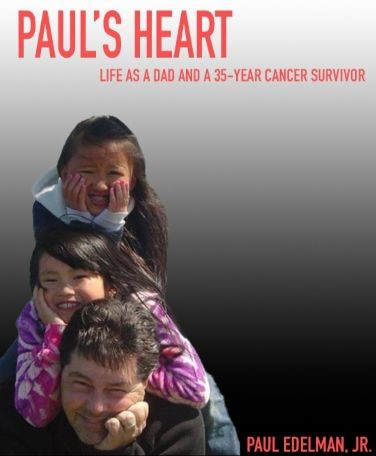
For survivors like me, we did not have the option of a port to administer chemo. But as you read my book “Paul’s Heart – Life As A Dad And A 35-Year Cancer Survivor” (available on Amazon), the port is another great progress made in treating cancer.
The question came from one of my feeds for current Hodgkin’s Lymphoma patients. ”Are you able to opt out of having a port for treatment?” This seems like a perfect question to ask by someone with no experience in cancer, and also likely to not have had any kind of surgery previously. The port is placed under the skin, which requires surgery. So, that of course is scary. And because diagnosis and staging is done with less surgeries than when I was treated, unlike just being another surgery for me, this can be overwhelming.
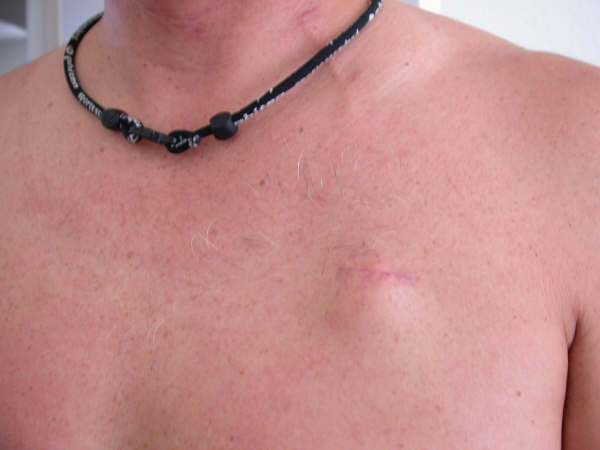
Typically, once placed, the only ones who will be aware that you have a port, is you, your oncologist, and your oncology nurse administering the chemo. Except for a bump or some raised skin, underneath your clothing, it is not visible to anyone else. So cosmetically it does not harm.

Here is the true benefit. Chemotherapy wreaks havoc on the veins, irreparable damage. I am not going to get all nerdy and scientific, as my experience and history explain it pretty well enough. I simply have no surface veins left for even a simple blood draw for a normal non-cancer blood test. As I went through each treatment, more and more veins became less usable. This also meant more “needle sticks” to find other veins.

Of course, I did get through my treatments, without ports being available yet. But now, here is how a simple blood draw goes for me. I walk into a lab. I sit in the chair. And the phlebotomist or tech asks me my name. I say, “Paul Edelman. I am a 33 year survivor of Hodgkin’s Lymphoma with chemo-ravaged veins. I am a hard stick. So I am going to ask you to use a “butterfly gauge” needle, and if you are able to find a vein, only if you are confident that you can hit it, then go for it. Otherwise don’t. I develop major anxiety with multiple sticks. If you don’t think you can do it, ask someone who might have more experience, or if you can use doplar to locate a deeper vein. I don’t mind. I actually prefer that.”

Even if you were not the one drawing blood from me, would you want that kind of pressure put on you? Would you be irritated with the whininess? Would you do all you can to prevent a panic attack that will begin with draw attempt number three? This has been my life for thirty-five years now. My daughters have always been better with blood tests than me. I do not bother with being embarrassed. I combine all my blood tests to be done at the same time. And there is only one place that I have confidence in the staff to listen to me. I have actually been in the ER with nurses who refused to even try because they knew what I was talking about.
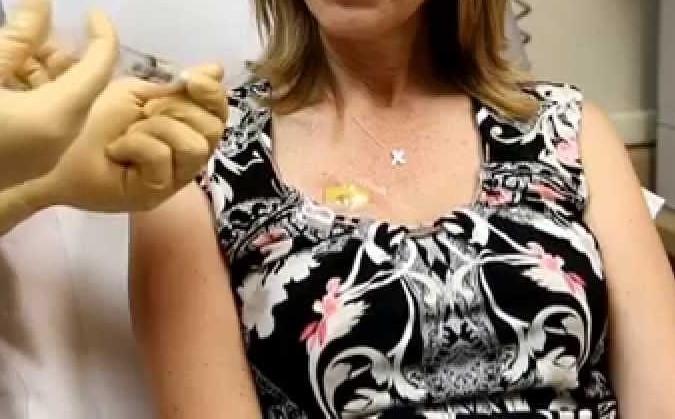
I would not be in this situation today, if I had the option to have a port, and have my chemotherapy administered that way. There would be no seek-and-destroy veins, just the constant dose into the same location. No stress, no anxiety.

I really cannot on the port itself since I did not have one. My father had one placed when he was treated for his lung cancer. But the overwhelming response to the writer was in support of getting a port. You could see an understand the writer was apprehensive, possibly scared. We do not come into cancer with experience, normally unless a patient has relapsed or developed another cancer. And “back in the day,” there was no social media to seek peer advice on what to do.

While there were a minority of patients who toughed it out without a port, the majority of patients expressed relief with having had the port placed. One response actually mentioned one of the only times a port might not be considered, and that is if the surgery and recovery were to delay treatment beyond any reasonable timing.

The important thing to keep in mind, just as the situation with cancer itself, the port is not permanent. The port will eventually be removed after a certain amount of time that chemotherapy is completed. The difference between those with ports and me? Those with ports will still have working veins for routine bloodwork. 

A Christmas Message


I have so many wonderful memories of Christmas’s with my daughters such as this one, their first Christmas together. For the first ten years as their father, I had found a way to once again find joy in the holidays.

Of course, as many families find themselves, in divorce, new arrangements need to be made. Knowing how difficult it could get in arranging time with the holidays, and with holidays not really having any personal importance to me, I made the decision to avoid any potential conflict, and instead chose time around the holidays to have my daughters visit.

I would see my daughters in between Christmas and New Year’s for the most part when it was possible. The feeling of Christmas was still in the air, and of course, there were still presents to be had. For me, it was all about getting to see my daughters.

This year, more so than any other year, I have many friends who are coming to this holiday, with major changes in their lives through loss, whether by divorce or death. This will be the first Christmas that they are going through, I purposely chose not to use the word “celebrate” as I’m not sure that they feel this particular year feels as such. My thoughts are with each and every family just trying to get through this year.

And then there are those who have faced major health issues (some both family loss and health), and are overcoming those challenges. So many of my fellow Hodgkin’s survivors have undergone procedures this year, including a heart transplant, the true gift of life. For all of those I am sure this is definitely going to be a special holiday.

This holiday season did not turn out the way that I had hoped for sure. But with my daughters both adults now, there will come a time when I get to seem them on Christmas Day once again. And until then, I will just continue the holidays with them as I have these last ten years, with the aid of technology.

May you and your families have a wonderful Christmas.

Getting Sick While Being Sick


If there is one thing that can make going through treatments for cancer or any other serious illness worse, it is coming down with something else. Contracting even the common cold is enough to delay treatments if blood cell counts get too low. And if you are like a typical cancer patient, as was I, you have a date written on the calendar, the last date of treatments. The last thing you want to have to do, is cross off that date, and write a “new” date, a later date, than what you had planned.

A post came across my media feed, “Super bummed. Found out that I have Covid so now EVERYTHING is pushed back, scans, treatments are delayed for 21 days. This sucks.”

I want to be clear, I am writing from the aspect of “been there, done that.” I was due to finish my chemo treatments in February of 1990. My first six cycles, though difficult, I managed to get through with no issues. While meeting with my oncologist, I asked him about the prospects of me being able to go skiing if I felt up to it, wanting not to get hurt or anything. I missed skiing over the previous two years, and felt good enough to try something “normal.”

While he did not disagree with me going skiing, he gave me this to think about. ”You dress in layers when you ski?” I replied yes. ”And you will probably sweat a lot, right?” Embarrassed I said, yes. ”And you are likely going to be around a lot of people in the lodge?” 

My question was simple such as asking the time of day, and instead he was telling me how to build a watch. It was a “yes” or “no” question.

“Sure you could go skiing. But look, you only have two months to go yet. Do you really want to risk getting sick, having your blood counts go low, that would delay these remaining treatments?” He was a buzzkill for sure, but he was right. I had been dealing with Hodgkin’s Lymphoma now for nearly two years, and I wanted “done.” I wanted to be getting back to my life, temporarily taken away from me by cancer.

If skiing would not get me, something else would, and did. A month later, my final month, I came down with a cold, a stupid, pain in the butt, didn’t feel that awful, cold. And of course, it impacted my bloodwork. My last treatment would have to be delayed, hence as the “countdown” shows my anniversary date of March instead of February. I worked for a small “mom and pop” type company, but large enough, and in an office environment, that made the spread of illnesses quite easy. Somehow, I had avoided anything, without even thinking about it. Until now. I was devastated. Almost as bad as the day I got my diagnosis.

For the last four years now, we have been dealing with a horrific virus, in fact lethal for those vulnerable, especially going through cancer treatments, Covid-19. The hyper awareness and precautions needed are ten-fold what I was worried about back in 1990. But cancer facilities and other hospitals all over, have done what they can to protect their patients. The rest was up to the patients themselves and those around them.

To be transparent, even though I am thirty-three years out from my cancer, the late effects that I deal with from my treatments have left me vulnerable to a Covid-19 infection should that ever happen. The warning from my cardiologist is dire, “do not get Covid-19, you might not survive it with the condition of your heart.” So, long story short, I follow his advice. Not a big deal. And I have picked up in my life, pretty much to where it was prior to the pandemic, just following common sense precautions that have worked for me all these years, masks, hand sanitizing, and limiting exposure. Even recently, anticipating a visit from my daughters from college during their Christmas break, had to be cancelled due to a Covid-19 infection in the home. My daughters had not been infected “yet,” but they had been exposed and a decision had to be made. It turned out to be the right one, to cancel their trip, as three days later (the day after she would have arrived here), one of my daughters tested positive. Had she come down, she would have spread it to those on the plane, and in my case, worse, to me. Of course, we were all disappointed, but there will be other times as opposed to what could have happened otherwise.

So I can understand the patient’s angst for her schedule of scans and treatments being delayed. I’ve been there, done that. But I also have to shake my head, and to be fair, not knowing more details as to how the exposure occurred, whether by her own false sense of concern about Covid-19 (as cases go through their annual spike again), or whether someone around her, selfishly or ignorantly spread the Covid-19 to her. The reason at this point does not change, as she put it, that it “sucks.”

I will always play the buzzkill in this case. I want patients to finish their treatments as planned, on time. I know what that is like. But especially when it comes to Covid-19, both the patient and those around them, need to take the risks of exposure seriously. Fortunately, it is just the delay of treatment if they are lucky.

Post Navigation