Paul's Heart

Life As A Dad, And A Survivor

The Innocence Of Children


children1

I was taking a walk yesterday along a local beach, when I noticed a young girl, about two years of age, approaching another girl, probably two years older.  From a distance, I could see that they had been playing separately in the sand.  But just as I continued to walk, I could see that both children were not only different in age, but ethnicity.  To be honest, I do not normally notice “differences,” other than for the point of this post.  I do know that the older child appeared Caucasian, while I am not sure what was the ethnicity of the younger child.  Nor does this matter, nor should it matter.

children2

As both parents looked on, the smaller child, seeing the older child playing in the sand as well, had picked up her sand bucket and wandered over to the older child.  The mother of the younger child got up from her beach blanket and followed her daughter.  The younger child stood there in front of the older child, and her grandfather as if waiting for the next step.  And then it happened, the mother asked the grandfather if their children could play with each other.

children

I am caucasian technically with some Cherokee lineage.  I have two daughters of Chinese descent.  I grew up in a city where I was the “minority,” but somehow managed to get along with everyone.  I know racism exists, through honestly I had hoped that by the mid-century mark of my life, that progress would have been made toward at least reducing it.  And though I normally stay away from political topics on this blog, comments by a media mogul, and then echoed by a certain political party candidate for president, really bothered me.  Headlines still cannot be read without mentioning the color of either the antagonist or protagonist.  But now, even a potential leader of our country is feeding into this.  This is unacceptable.

And I could not help but be sad for these two little girls.  Right now, they did not know that their skin colors were different, or that in our country it makes a difference.  They have not be taught this yet.  But somehow, by the time they start paying attention to the media, the education will still be the same, using “color” to describe the severity of a story.  They will be taught something they were not born with, racism.

My Dad – The School Bus Driver


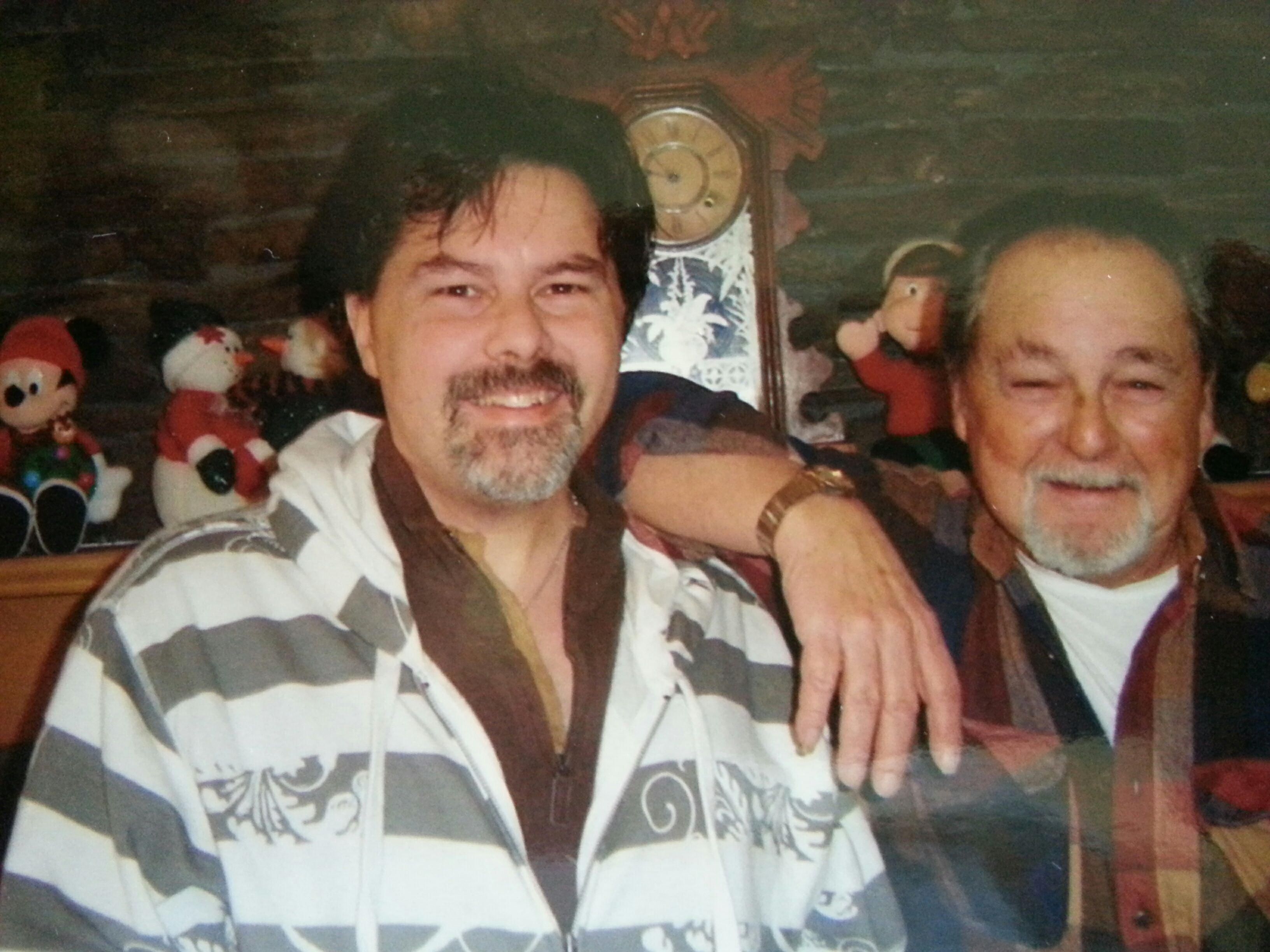
last photo of my dad and I before his cancer

There are moments in life, that just trigger memories.  Yesterday, I had one of those.  I grew up estranged from my father most of my life, so for me to have any kind of concept of my dad to be a “coochie coo” kind of parent, was really hard to imagine.  And in times when I did see him, I definitely would not have described him that way.

December 2008 - 55

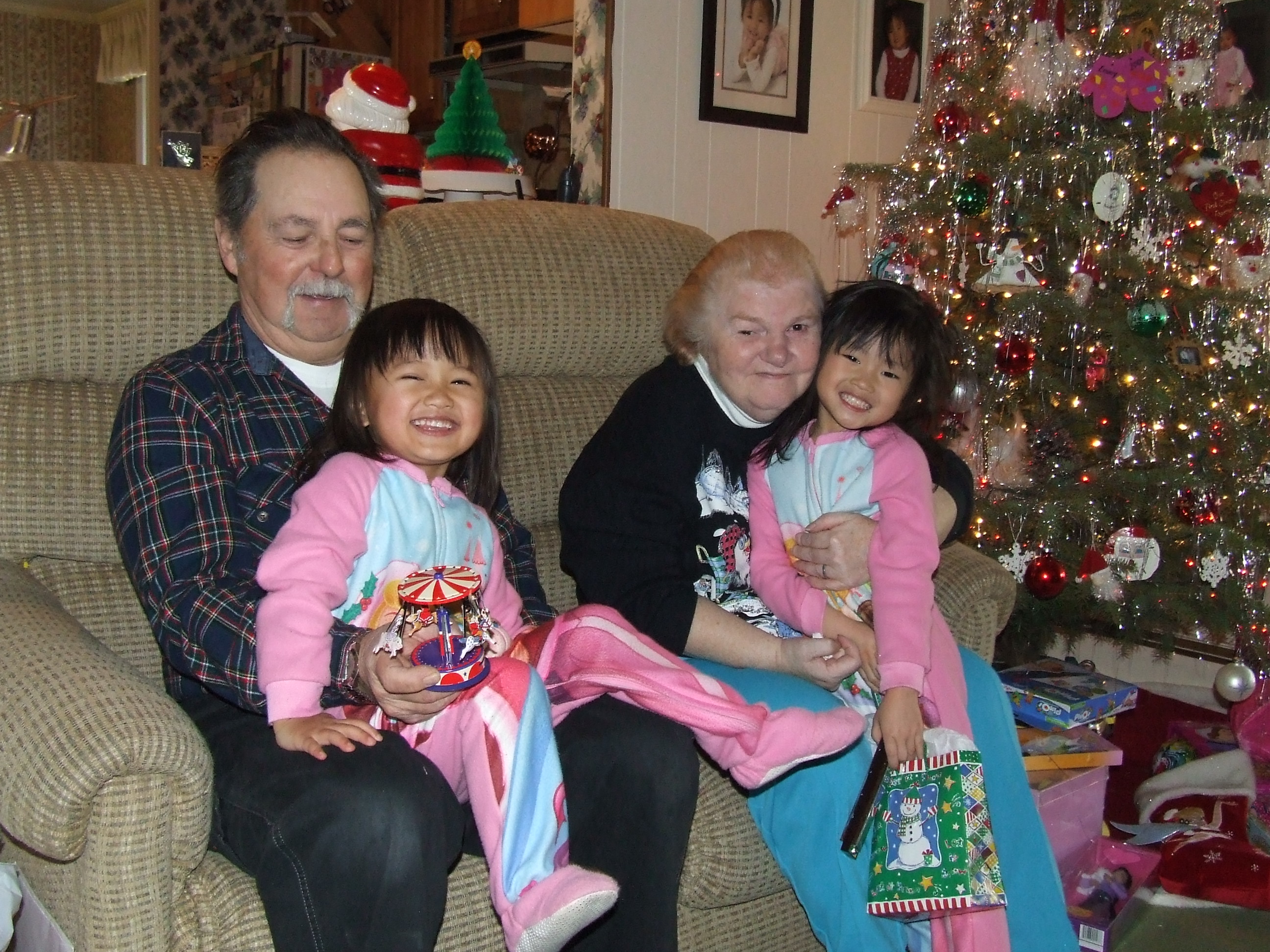
Which is why, when we adopted our daughters, one of the first things I told my father, who constantly felt guilt for the lack of being involved in my life, “we can’t change what happened, but you have two beautiful granddaughters and they love you.  If you feel you have something to make up, here is your chance.”  And my dad adored his granddaughters.  They especially knew that going to “pappy’s” house, meant raiding the huge Oreo Cookie cookie jar.

But from what I knew of my father, he was fairly gruff.  Driving truck most of his life, he was a “motor head” and quite talented with handy repairs.  Definitely not “coochie coo.”

But then a few years ago, he dropped a bomb on me.  Having recently retired due to both age and health issues, he decided that he needed something to fill his time in.  He told me, “I am going to drive school buses.”

school bus

I was like, “you know dad, they have kids on them?”  He laughed.  I began to warn him of how rough teenagers could be when he cut me off that he would be driving elementary school kids.  And again, I was like, “really?” as if I was concerned how the kids would react to someone the way I used to think about my dad, and  stress the way I “used” to think of my dad.  The fact is, my daughters did change the way he was around children.

My father told me lots of stories of children he had seen somewhere, telling me of behaviors both good and bad, and then turning the conversations to how I was raising our daughters, complimentary.  But one of the most touching stories was that of Chinese twins on his bus, that he said reminded him so much of his granddaughters, not just in a physical resemblance but also in manners.

When my father was diagnosed with lung cancer, eventually he had to retire for good.  And he was so touched by all of the families on his route who gave all kinds of tokens of support.  But is was the hugs from all the children as they said goodbye to their favorite bus driver, that meant the most to him.

It is often said, that depending on the situation of someone’s passing, it is better to remember them a certain way.  And this is definitely one of those memories  I will always cherish of my father.

Yesterday, I saw a school bus with a driver that resembled my father.  Being behind the bus, I saw the red flashing lights as the students poured off the bus, turning to wave goodbye to their driver.

I miss you dad.

Bedside Manners More Bedpan?


manners3

It really should not be all that much to ask, right?  You are dealing with a serious illness or injury.  All you want and expect is some empathy, some understanding, some patience for the patient.  But instead, you get snarkiness, robotic intonations of phrases, clockwatching, and no Q&A.  And if you are lucky, you might even catch the doctor give you a glance just to see if you are still paying attention to what you are being told.

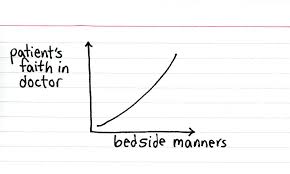
Being a patient and caregiver, I have been on both sides of this issue.  So I feel that I can be fairly objective about this.  But please do not confuse my objectivity with acceptance or letting anyone off the hook.  As a patient, we have our own responsibility to ourselves also, to make sure that our needs are being met.  And when we are facing a difficult medical crisis, those needs also include emotional.  Without our emotional needs being met, we lose trust in the one person who is responsible for possibly saving our life.  And this attitude can have a definite impact on our survival.
PART_1413411433365_Image1413411433361

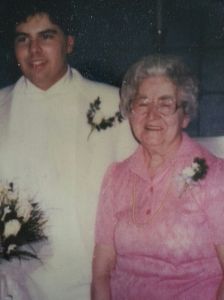
When faced with my own cancer, Hodgkin’s Lymphoma, I turned to the very first person that I ever knew to survive cancer, my grandmother.  She had been diagnosed with breast cancer in her early 70’s.  She had a mastectomy, and took some preventative chemo, and survived more than a decade.  She had been treated at a small-town hospital.  But she had survived.  It was a no-brainer, that I would choose her oncologist to treat me.  Dr. M had saved my grandmother.  I felt my chances would be great in my favor.

Dr. M was an older doctor, probably very close to retirement.  From what I figured, he was very set in his ways.  And it was his way, and only his way.  We clashed several times, but Dr. M soon learned that I was in charge of my care, and decisions were going to be made by me.  I still had trust and faith in how I was going to get through this, but it was going to be on my terms.

Well, I guessed wrong.  As soon as my lymphoma was gone (a result of my decisions), new disease was discovered.  This time Dr. M was not going to mess around.  I could no longer avoid chemo, a stereotypical terror I feared, and with good reason.  But it was his lack of bedside manner, while I was facing my biggest fears, and his reluctance to answer  two full pages of questions that I had in regards to chemotherapy treatment.  He took one look at my hands, saw the lists of questions and then said, “I don’t have time to answer that.”  And he walked away from me.

I was firm.  I had questions that needed to be answered before the first drip of poison was going into my veins.  And so I fired my oncologist, the same doctor that cured my grandmother.

I went next to my therapist and told them what I had done.  I was kind of surprised at his reaction in that I received part empathy, and part lecture.  It was the lecture that I got first.  I was made to understand, that oncologists deal with death.  Many of their patients do not survive.  Oncologists know this possibility exists with each patient that they take on, and for my requirement of an emotional attachment from my doctors, I was told, it probably was not going to happen.

However, then, I was told by my therapist that he would help me find another oncologist.  Surprisingly, it came from the same oncology group.  Dr. V was a younger man, an Army vet, but had a bit more of a personality, which I felt was important.  At least if my questions did not get answered, at least I might feel that he cared about whether I made it or not.  But who can argue with my decision?  I am here 25 years later because Dr. V earned my trust, which resulted in me fighting with a more positive and certain attitude.

manners2

There is no doubt the impact of bedside manners of a doctor, can have on a patient.  That is not to say that a doctor does not have a right to be a jerk, or scold, or lecture.  Every doctor I have ever had since Dr. M, has scolded me, lectured me, one even yelled at me.  But I also know, they cared for me.  If I did something foolish, like eat a particular food, or as many Hodgkin’s patients know, drink any alcohol, as a patient, we paid the price.  And an oncologist would have every reason to want to lecture us.  They are trying to save us, and we give off the appearance that we do not have the respect for what they are trying to do for us, save our lives.  I once told one of my doctors that I “deserved” the amount of daily pain I deal with as my price for surviving cancer.  And when I say I got yelled at, even at my then age of 45, I GOT YELLED AT!  But I knew where he was coming from.  And I also made sure I never gave him a reason to do that again.

Does that mean that we should stop living?  Having fun?  Doing dangerous things?  Absolutely not.  But we need to keep things in perspective with our doctors.  Yes, they are busy.  They may have a lot on their minds, perhaps a patient who did not survive, maybe even something personal.

manners1

But if you have a doctor that you feel really has no bedside manner, or at not enough to meet your needs, you have a responsibility to yourself, to not accept that.  There are options available to you to deal with this from nurses, to therapists who will intercede on your behalf, or even your case worker.  But remember, if the “manner” is being brought on by your own behavior, then the responses are to be expected.
Post Navigation