Paul's Heart

Life As A Dad, And A Survivor

My History Of Veterans Day


Vets

I have two uncles who served in the military.  I do not remember many details of their military careers.  I know the younger of my uncles served in the US Air Force as a mechanic, which would eventually serve as a path to his career working for one of the biggest truck manufacturers.  The older uncle was a pilot in the US Navy.  Again, I do not know that much about him, other than he had served in the Vietnam War.  I had been told that he had been shot down during the conflict.  He remained in the Navy long after the war ended, only to be medically discharged following a training exercise helicopter crash.

Because I was aware of the military at such a young age, and because I had veterans in my own family, I began my life with an appreciation for those who volunteer to preserve our rights and freedoms.

My Saturday mornings as a teenager were spent visiting the home of a childhood friend’s grandfather.  We would visit the home in between our Saturday morning activity bowling and then instructing bowling to the smaller children.  During our break, we would visit his grandfather’s house, enjoy a tasty hoagie, watch a little professional wrestling, and if time was left, we would get to hear my friend’s grandfather tell us a story about his experiences during World War 2.

Upon high school graduation, it was common for students to enlist in the armed forces.  One of my best friends, and unlikeliest to enlist, did so in the US Marines.  Somewhat of an introverted nerd, he actually did very well with the Marines.

During the late 1980’s, our country was headed back into another war, to liberate a country from tyranny.  This was going to be the first time that our television would play such a major role as we watched repeated bombings and attacks on key strategic targets were mean to provide freedom to a country overrun by a dictator.  This was also the first time, I would actually relate to people who had actually served in a war that I was witnessing.

Again, I had reunited with my friend’s grandfather later on, and I enjoyed hearing even more stories of his days in the US Army.  I was learning history from someone who was actually there, not being told to me from a text book.

More than a decade later, our government felt an even greater need to get involved in affairs overseas.  And now, children of relatives and friends of mine were now headed off to war.  Some were sent home for medical reasons, only to be sent back for another tour of duty.  Many struggle both physically and emotionally with the images forever engrained in their brains.

Social media like Facebook and Twitter opened up a whole other window, as I became more aware of the many more classmates and friends who had served in the military.

I am proud to know each an every serviceman and servicewoman who have served our country, protecting our freedoms, fighting to preserve our rights and beliefs.

And these are just some of the many things that I had the conversation with my daughters yesterday.  I made a post on Facebook, frustrated, having found out that my daughters’ school made no mention of Veterans Day.  While there were responses stating that other schools had paid tribute to our Veterans, it was disappointing that the school that my daughters attend, did nothing.

When schools spend so much effort to make sure that our children master Common Core and standardized testing, history is being ignored.  And history is important because one of the things that history teaches us, is what not to repeat.

My daughters listened to the many stories of the many people I know who have served in the many branches of the United States military.  I never had the opportunity to serve, but I am thankful to each and everyone who has.

November – A Bittersweet Awareness


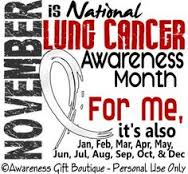
I have many things that I advocate.  And you have probably seen me write about all of them at least once, if not, at the beginning of the month, when everyone begins to announce that month’s “awareness” cause.  I used to have only one thing that I advocated in the month of November, until a couple of years ago.

lung cancer

My father died a year and a half ago from lung cancer.  His diagnosis did not come as any surprise to anyone except for him.  The side effect of denial affects only the smoker, “it will never happen to me” or “I wish I would have known.”  He smoked tobacco products over 50 years, trying multiple times to quit, unfortunately being unable to fight off the addictive additives of the various tobacco products.

Over the years, I have done my best to protect my children from second hand smoke, even witnessing the act of smoking.  I am more than aware of the peer pressure that I have no control over, but one thing was certain, my children were not going to learn to start smoking by witnessing me smoking.  It was hard enough for my daughters to have witnessed the later stages of their grandfather’s life, and knowing what his fate was going to be, just because he smoked tobacco.

It was a shame really.  As his fate became more of a reality, the bargaining stage of his life had become apparent, begging for more time, wishing that he had never started.  It is too bad the tobacco companies did not care enough to create an antidote to reverse the addictiveness of their product.

But now, as my daughters are “tween” in age, they have become more aware than ever of their environment.  It may not have been enough for them to have witnessed their grandfather die of lung cancer, caused by decades of smoking.  I am certain that before they become adults, they will not only witness someone close to them smoking (or now, vaping).  My only hope is that they remember what happened to their grandfather died from, and that it was not good enough to just hope “I can quit any time I want”, because you cannot.

I realize that I am overstating the obvious that smoking does cause cancer, and not just lung cancer.  But to be fair, there are other circumstances that cause cancer, that really are no fault of our own.  Every day we breath in chemicals and pollution.  And if you are a cancer patient, especially a long term survivor like myself and many others, there is a pretty good chance, that due to either chemotherapy or radiation therapy, that we have an increased chance of developing lung cancer, having traded a cure for a cause.

That point I am trying to make, there are enough things that we have no control over in our lives, but smoking is one that we do control and the role it plays in developing lung cancer.

But as I said, November is a bittersweet month for me as far as advocacy.  One of the happier and more positive causes that I support is adoption.

adoption1

The process of adoption gave me the opportunity to fulfill a dream, to become a father.  Cancer took away my ability to have children biologically.  And though science provided some opportunities, it was not successful.  And in 2003, the process began to adopt the first of my two daughters.  There are pros and cons to domestic and international adoptions, closed (private) and open.  But China gave me the opportunity that could not be achieved through the United States due to financial and my health history.

I will never truly understand the feelings either of my daughters will have as to the absence of their origins, other than the country we know that they came from.   I have some information for them, about how and where they were found, who took care of them prior to their adoption, and of course, lots of photos during the visits to China to complete the process.

And although our family has gone through a major disruption, that many seem to say is “unfair” to children who have gone through so much in their lives already, nothing should really change.  Both their mother and I play major roles in their lives, and I have made it clear that the girls will have only one “mother” and only one “father.”  Our responsibilities to our children have not changed.  And it is “unfair” to the children, to make a blanket assumption that somehow the children would be better off under any other circumstances, especially when the complexities of the family have not been discussed publicly.

As they children get older, they will have to deal with the fact that they are adopted.  Our agency had given us material a long time ago to prepare us for the times that would come, dealing with identity, racism, bigotry, in a multi-racial family.  Of course, there is going to be the serious relationship issue as well to deal with.  Parenting will continue.  While the adoption circumstance is obvious, I have always treated my daughters, as my daughters.  And through the adoption process, my dream of becoming a father has been realized.  There is a lot to be done yet as I prepare them through their education and life experiences.

Adoption is a wonderful opportunity to build a family, under any circumstance.

adoption2

Being A Jerk, Or Being A Teacher


It happens approximately once a year, not on purpose, not budgeted, but an opportunity presents itself, and I seize that opportunity.  And when I do take that shot, I am going to make a shocking impact, a psychological punch in the stomach, and it is going to have an effect on the person I besiege.  The words that come out of my mouth will not cause physical discomfort, but it will still be my will to educate the lessons I have learned, the hard way, on someone else.  Some may call this arrogance, or the act of a jerk.  By the end of the conversation, the person I am talking to is going to have a much different emotion than prior to, but I am hoping that what they learn from the discussion, will be used to make things better.

I used to work in an environment that was not necessarily healthy to work in, even for a healthy individual.  But when you take someone like me, who has a severely impacted health history, courtesy of the extreme treatments used to cure me of my cancer, only to leave me dealing with late developing side effects, I can admit, a “jerk” inside me was making itself known.

During my treatment for Hodgkin’s Lymphoma, I was exposed to radiation levels that caused a life-threatening condition to my heart.  In fact, there are still additional issues with my cardiac system that I will have to deal with in the future.  Every year, my department would have to undergo “radiation training” to meet OSHA requirements.  This was to make sure that any time that we may be exposed to the various types of radiation, we would know which was more serious to deal with, exposure risks and limits, and other nerd-type information.  But having been involved in one radiation-related issue (no, I do not turn green and bulky when I get angry), I was already had some knowledge.  But there has always been one answer that I was always seeking.  And when I asked that question, the reaction by the leader doing the training, was shock.

shock

In the cancer community, many of us long-term survivors refer to radiation therapy as “the gift that keeps on giving” because of the cumulative damage that it does over time following the conclusion of treatments.  During the first training session I attended, the topic of “half life” of radiation was discussed.  “Half life” refers to the length of time that radiation exposure lasts, especially in someone’s body.

To give you an example, when you get a dental x-ray, the amount of time the radiation lasts is quite minimal.  But in an industrial environment, the levels of exposure are much higher, and “half life” becomes very important, especially if you are a pregnant woman or have other health issues.

So, we are muddling right along through a very boring radiation training, many of my co-workers had gone through the same training year after year.  This was my first training.  But when the topic of “half life” came up, and was explained, something curious happened with me.  After hearing the various examples of radiation I was exposed to at work, and learning how long the exposure could affect me, I decided to make the training personal.  You see, I know how much radiation I was exposed to during my treatments, and I had a question.

“What is the half life of 4000 grays of ionized radiation?”  It was a simple enough question.  All I wanted to know, or be able to figure out, was “is the radiation finally gone from my body?” or “how much longer will it take?”  The instructor’s answer?  “That’s impossible.”  I said, “I know” (and I did know this because they no longer expose people or patients to that level anymore – but the fact is, it did happen).  “But what if it really happened?”  Again he responded firmly, “that’s impossible – no one would ever be exposed to that.”

And then I introduced the trainer to someone who had been exposed to that level of radiation.  I also mentioned that I know another cancer survivor who was exposed to 8800 grays of radiation.  If my level was impossible, imagine more than double that.  It was clear by his reaction, and his lack of an answer, that would have to do as my answer.  I would be dealing with that exposure the rest of my life.

Years later, I would meet a friend who worked at a nuclear power plant.  Eventually the discussion went down the path where we were talking about exposure.  This was a friend that I was talking to, so my questioning was not as cynical.  This time it was more of a confirmation.  But that did not do anything to reduce the shock and obvious fear on his face.  He had explained that his daily exposure was limited to double digits, and once an employee hit triple digits, they would be restricted from anymore exposure.  For him to hear a friend had been exposed to the level I was, he began to tear up.  The reality of what I had been exposed to, the dangers, and the potential side effects, became clear.

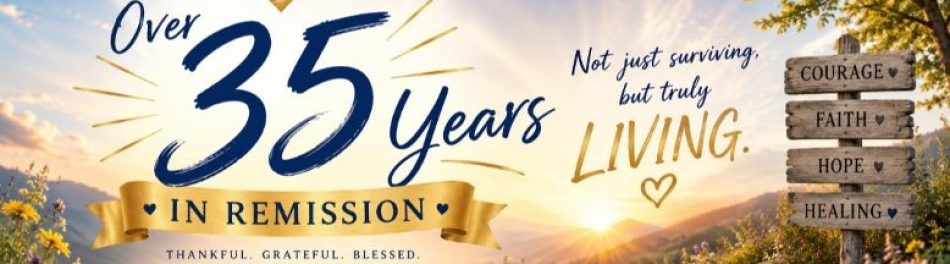
Five years ago, to mark my 20th anniversary in remission, I located my radiation tech, who clearly played a role in saving my life.  Noreen was still there, but when I walked through the door, and she recognized me in spite of it being 20 years since we last saw each other.  She looked like she had seen a ghost.  After a giant hug, the very first words out of her were, “we had no idea”, making reference to what she was assuming my current health situation was probably like without me saying anything to her.  I know from looking at my original documents from back in 1988, the only late side effect that was noted as a concern, was pericarditis, a swelling of the heart.  By the time our reunion concluded, they missed those late side effects by a mile, because they did not know those risks back then.  They do now.

A recent visit to a cancer hospital though, was even more telling for us long term cancer survivors.  This was a major cancer network, main satellite location, whose staff was shocked to see, not just a long term cancer survivor of 25 years inside of their doors, but with the long list of health side effects that I have had to deal with, and clearly the amount of testing that would have be done on me.  Technicians actually had a sense of appreciation that they did not have to deal with fear or apprehension, and that I even asked questions during the testing.  One responded, “you really know you health and history quite well.”  I have to.  No one taught “Long Term Cancer Survival 101” in medical school.  Even now, it is not on the radar at the majority of hospitals.  There are some major cancer centers that now pay attention to us long termers, but when one of us walks through the door, to see the surprise in their eyes, still amazes me.  There are millions of us all over the world, and we have been forgotten.

Finally, I recently met a gentleman who explained to me that he was a radiation technologist.  I told him, I admired such an important job that he did.  And then… yep… I told him I was a 25 year survivor of Hodgkin’s Lymphoma, of which I was treated by radiation, so I had an appreciation for radiation techs.  You could see his response was satisfaction for his vocation.  And then I became a jerk.  I could not let him enjoy his moment.  I asked him his thoughts on a patient being exposed to 4000 grays of radiation.  He could not believe that he was standing in front of someone who had been exposed to that level.  I could not believe it.  How could they not be teaching the history of this medical treatment, and preparing those for the one day, they will finally run in to someone who was exposed to toxic levels of radiation (and/or chemotherapy)?

Clearly they do not use those levels of radiation anymore.  Nor do they use what is called “scattered field”, instead using a fine-tuned beam directed exactly to the cancer, reducing the exposure to other body organs.  And we chatted about that.  But while I feel like my intentions may be perceived as being mean, or a jerk, I recognize that I taught someone something quite valuable.  The odds are pretty good that he will someday have a patient who was exposed to the levels of radiation or worse than I had been exposed to.

Jerk or teacher, maybe both.
Post Navigation