Paul's Heart

Life As A Dad, And A Survivor

Archive for the category “The Heart”

It’s Just A Snow Storm


I am sitting here watching some news, and for my friends and family up north, it looks like you are in for Armageddon according to the weather fearmongers.

blizzard1

Although I now live in a climate where I should never expect to see snow, nor want to, I do recall happier times enjoying snow, when a snow storm was just a snow storm.  There was never a need to name a snow storm.  But as weather fearmongers realized that they could make their job much more important and a part of news history on the level of wars, scandals, and tragedies, capitalizing on Summer storms a.k.a “hurricanes” which are named storms, Winter weather storms could instill the same fear and panic of the threat of a severe tropical storm.

I do not want to minimize the potential for issues with large amounts of snow.  But much more is made of winter storms than needs to be, but hey, it is good for the economy, right?

blizzard3

At the first threat of a snowflake, everyone flocks to the grocery stores, and empty the shelves for fear of being without food for weeks.  The sensible person knows, that following the end of a snowstorm, it will only be one or two days at the most (in most areas of the country) that you might be “trapped” in your home.  And chances are, on a normal no “bad weather” week, at most a person might go grocery shopping once or twice for the week, having more than enough food to get by.

blizzard4

I am not going to get into the clusterfluck that happens with the transportation industry when a major snow storm hits.  Let us just say, if you had a flight, and it gets cancelled, you can pretty much expect that your flight either back or to somewhere will occur probably two or three days later, unless you are willing to sit at a customer service desk overnight, waiting for the terminal to open, or hope you might get a seat as a standby, courtesy of passengers who were unable to get back to the airport from the hotels they were shuttled to following their flight cancellations.

blizzard2

And schools…?  I have mixed feeling about this.  One was as a child, the other as a parent.  Of course, as children, we loved hearing the news of school being closed.  It meant delaying a test that we could have studied better for.  It meant perhaps an extra long weekend.  It meant a lot of fun.

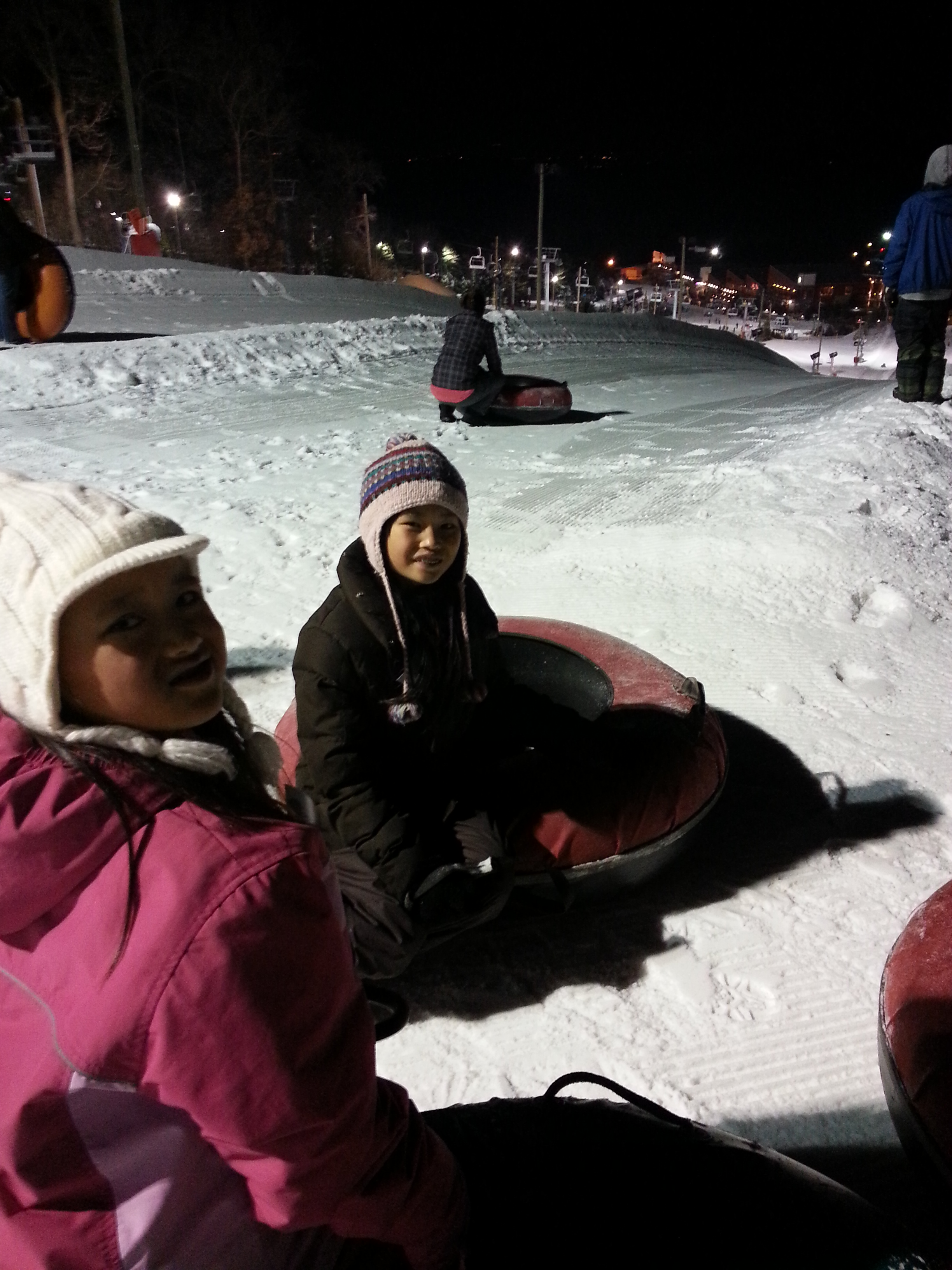
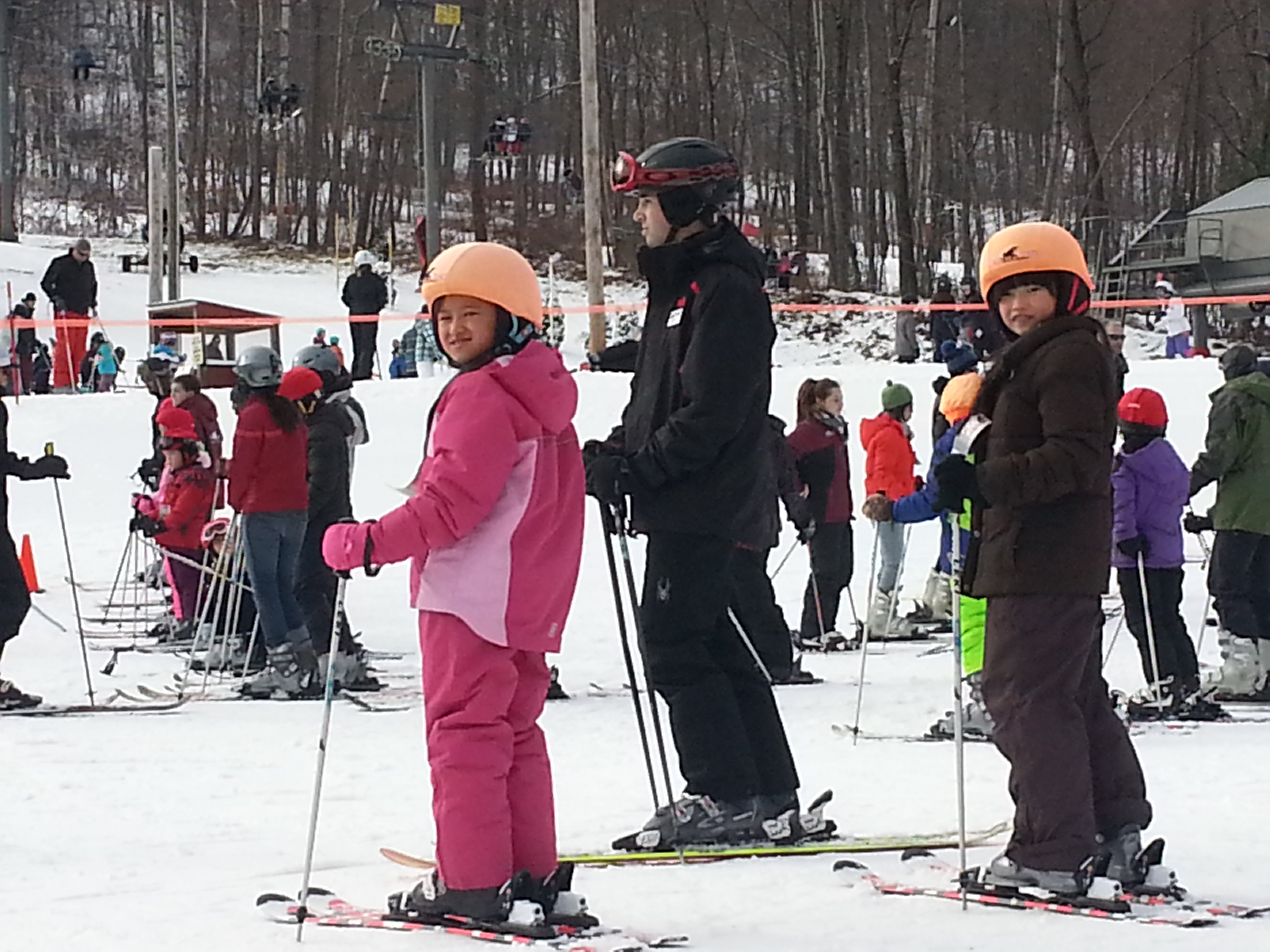
20131208_132220 20131208_132225

But as a parent, I know it is nerve-racking to be worried about what might happen on a school bus driving in bad conditions.  And it was not necessarily about how the bus driver performed in the frozen conditions, my children have always had very safe bus drivers.  But as my father, who drove school bus in his retired years told me, there is enormous pressure knowing that you are responsible for 60-80 of other people’s children, and all it takes is poor driving by another driver to turn something so wonderful and fun, into a nightmare, a tragedy.  And it makes no difference whether a parent is driving their own children, if the student themselves are old enough to drive.  But what also needs to be considered in these days with more drivers on the roads than ever, even walking home from school, in blinding snow, is not necessarily safe for a child if the driver cannot see the walking student.

This is a huge contradiction for how I experiences snow and school.  I attended high school in Allentown, Pennsylvania.  In our school district, we had no school buses.  You either walked, had your parents drive you, you drove, or took a city bus.  There was never any need for snow days.  The funny thing is, the Catholic high school did use school buses (they were not part of the school district), and they had lots of snow days.  In fact, the joke to those of us in the public schools, were that the Catholic kids had their school cancelled at the first sighting of a snow flake.

And in 1983, approximately 3 weeks from this time of year, the northeastern United States would be hit with a “historic” blizzard.

blizzard9

This snow storm actually resulted in an actual snow day for us, my senior year in high school.  It would be a short lived snow day, because it took us all day pretty much to shovel out our sidewalks, cars, driveways.  But the next day we would be expected to in school.  And we were.  For me, I had a four mile walk each way, uphill and downhill, across a huge bridge through enormous amounts of snow that had not yet been shoveled.  Yes, I know, it sounds like a story that we would hear from our grandparents.  But at least in my story, I was wearing shoes.

As an adult, I was still able to enjoy snow.

20131204_082631 DSC04926 20131226_194149 20131227_134354

It was easy to still enjoy snow.  I had an awesome golden retriever that loved deep snow especially.  While he often had difficulty for some reason smelling for his treats, but had no issue being able to “smell” snow soon to arrive.  He would constantly go to the patio door to be let out to do his business, take a good whiff of air, stick his nose up to the sky, and he would be “gone.”  He would eventually do his thing, and I would call him back into the house which he came reluctantly.  But within seconds, he would be back at the door, whimpering to go back outside.  He knew snow would be coming, and once it finally arrived, he would develop what I call “snow deafness” – in other words, he would hear nothing, especially my commands.  But who could blame him?  He did not care about how “bad” a storm was going to be.

I learned to ski as an adult, and had only one wish for my daughters, that they too would learn to ski.  But heart surgery in 2008 would mean my prior ski season was the last time that I would have had stepping into my skis.  The weird side effect from the surgery was that my cold temperature tolerance had dropped quite a bit.  I had also been concerned  for my fragile breast bone, and then there was also the higher altitudes with my lungs, and over all physical conditioning.  But I got all the satisfaction I needed watching my daughters enjoy tubing and skiing.

In 49 years, I have seen my share of snow storms.  And yes, some have resulted in enormous measurements,  and some have shut down cities, counties, and even states.  But a Winter storm typically does not cause the catastrophic losses that warnings should be given with such weather events as tornadoes and hurricanes.  I say that, with two recent exceptions, two late Fall/early Winter storms, actually tropical storms, Irene and Sandy.  These were two storms that had major impacts as far as destruction, beyond shoveling out.  Irene’s destruction in my area was severe flooding, and Sandy, was rain with high winds resulting in power losses due to an extraordinary amount of down power lines, which meant homes with basements like mine, had no power to operate sump pumps, and furnaces would not operate, resulting in pipes freezing.

Make no mistake, snow is beautiful.

blizzard7 blizzard8

These are pictures from a blizzard in 2010.  The sound of the snow, more like deafening silence creates a serene environment.  And it is beautiful.  At times, you could not see past your front yard.  But as you can see from the picture on the right, it created quite a challenge for Pollo to do his business.  The snow amounts were so high, I would actually not only shovel our sidewalks and driveway, but a pathway and “patch” for him.  Which would end up covered in no time.

It was after this blizzard that my body finally got it through to me, that I could no longer deal with the physical stress of shoveling snow.  Shoveling snow is not good for anyone from a cardiac standpoint.  In fact, many heart attacks happen during snow shoveling.  And though with my cardiac history, I clearly should not have been shoveling snow, but I did.  Until then.  I finally broke down and got a snow blower to handle amounts of snow like this.  One of the final things I enjoyed, yes, I enjoyed snow shoveling, was now no longer something I could do.

I no longer miss the snow, the cold temperatures, or the panic generated by the fear mongering weathermen and women.

I do think about everyone back home up north.  Please everyone be safe.  Kids, have fun with what will probably be a snow day tomorrow.  Build your snowmen, your snow forts, and get some sledding in (at least if you can, if it has not been banned yet there – what the hell is up with something that has been a tradition for centuries?).  And when you are ready, we can build sandcastles down here.

Flu Are You? Oo Oo, Oo Oo


2D274907683596-today-flu-view-150123_blocks_desktop_medium

Just imagine, the title of this post, to the tune of the Who’s “Who Are You”, and change the word “who” to “flu.”  My task is done, I have subliminally planted a song in your head that you cannot get out so easily, and of course, now you are now wondering what the two have in common.  Nothing.

But, headlines are surging right now, as they do every year, about the current year’s flu epidemic.  While serious, the media of course does its sensationalist work to prove your need for their service.  For those of us that have minds of our own, and unlike the images presented in George Orwells 1984 where we simply need to place value in everything reported by the media.

300px-CampFunstonKS-InfluenzaHospital

This picture is from a military base in Kansas from approximately 1918-1920.  There was a major outbreak of what was called “Spanish Flu.”  To keep morale under control, information was restricted.  In this particular situation, mortality carried a fairly high rate, in the 10-20% range.  Keeping that in perspective, given today’s population count, a dozen fatalities (not to belittle anyone who loses a loved one to the flu, and I will explain later) does not even equal 1/8th of a percentage of our population.  But by allowing our media to sensationalize and validate their claims with our panic only proves the strategy used back in the early 1900’s not to propagate the panic that would be sure to follow.

I have a very mixed opinion on vaccines, though clearly, the concept is well intended.  To vaccinate or not is an individual decision, and needs to be considered carefully.

We have to admit, were it not for the polio vaccine, the small pox vaccine, and others like it, our society would be devastated.  And medicine has produced vaccines to help eliminate disease or prevent the contamination of diseases such as chicken pox, mumps, and measles just to name a few.  This is supposed to be a good thing, and for the most part, from being required to attend school in the later part of the 1900’s, outbreaks were kept to a minimum.

Then the internet hit, and people were not only able to get information on vaccines and their risks, but they were also able to share the information.  For once, prevention was not just in the hands of medicine, but now the patient.  And I have to admit, right now, I am not a doctor.  I do not play one on television.  I should not be making medical decisions, but rather I should be informed enough to make those decisions, and they should be up to me.

I am not the only one to feel that way.  And many object to vaccine’s for many personal reasons.  Personally, I believe that only if the risk of the vaccine is worse than the disease itself, then that is pretty much the only time an exception should be given.  I do not believe in making an exception for religion or personal belief as such.  But it is not up to me to force my wishes onto someone else.

There is a price to pay however, for not vaccinating, and this is the problem.  It is not usually just the person who has avoided the needle who will eventually contract the illness, but there are those around the individual that may be exposed to the direct virus.  For many it may not be as simple either about someone who has been vaccinated and still not be immune for other reasons.  Case in point…

Part-WAS-Was8896645-1-1-0

A measles outbreak, though definitely not the only one, but clearly one that has gotten attention because of where the outbreak is taking place, occurred recently at Disneyland in California.  All it took was one person, not necessarily infected, but carrying the measles virus, and over fifty people have come down with the very contagious virus.  And because we do not know how many other have been exposed, and possibly not immune, the measles has continued to spread.

There are always the warnings when we have outbreaks about who needs to be protected… the young, the very elderly and weak, those with compromised immune systems.

20140428_154751(0)

Here I am pictured with two of the many important decision makers in my life.  They are also big vaccine advocates.  And they should be.  They know more about my individual immunity concerns, than most medical professionals in the country.

Brief history, as part of my cancer diagnostic staging, my spleen was removed.  This, in spite of my young age, has left my body challenged immunologically.  A simple case of strep throat exposure from someone has the potential to be fatal to me just as one example.  So as you can see, I not only have to be concerned for my own exposure, but be concerned who around me might not be vaccinated.  To be real, I cannot live my life in a plastic bubble, and I generally do not.  I have flown.  I have cruised.  I have ridden the bus and subway.  I have done what I have to, which only makes it more curious my strategy for dealing simple illnesses that have potentially fatal consequences for me.

Two areas of concern for those of us immunologically challenged are pneumonia and meningitis which there are vaccines.  In fact, one of the first vaccines I received prior to the removal of my spleen was for pneumonia.  But the trick was, this was supposed to be a lifetime vaccine.  Newer and current research has revealed this was not the case, and blood work for titers has confirmed it.  Not only due to the different strains and types of pneumonia, by the lack of a spleen meant I would actually undergo seven pneumonia vaccines in a two year period to get my body back to the level of protection necessary.  And similarly I had to get a similar number of vaccines for meningitis.  But here is the kicker.  I still came down with pneumonia, twice within nine months, and neither case were related to the vaccine, but another issue.

So next of course comes the often repeated “recommendations” for the flu vaccine.  Admittedly, I have only had two in my life.  The first came along with the pneumovax but I would not accept another flu shot until a much propagated media blitz several years ago with an outbreak of not just the flu, but a “DEADLY” swine flu outbreak.  My two advocates pictured above annually challenged me about my reluctance to get the flu vaccine every year.  My doctor actually put it this way for me… “it’s like pulling the wheel of a slot machine.  You won’t always hit a winner.  You have gone 19 pulls in 19 years without having dealt with a serious case of the potentially deadly (for me) flu vaccine.”

And so, he actually convinced me.  And it was even more of a concern, that we were not just dealing with the flu, but now the swine flu which was a separate vaccine.  And combine that with me needing to get the pneumovax, and not having a clear explanation of how to get all three of these, it was a recipe for disaster.  And so I got the pneumovax one day, and two days later, I received both the flu vaccine at a local drug store, and the special swine flu vaccine at a specified location due to restricted supply.

The restrictions were specific, young, elderly, pregnant, and people with compromised immune systems, which included me.  I was hesitant enough about getting all the shots, but especially the swine flu shot.  But the stares and glares as I received as I waited in line with the hundreds of small children, seniors, and pregnant mothers, I was the only one that looked like I had no reason to be in line, though clearly I did, I just did not look the part.  Even when it came time to get the vaccine by the technician, the grilling I got, though I understood, undermined my self esteem because I did not want to be getting the shot in the first place, but I was, and still am very self-conscious about discussing some of my details with total strangers in a public setting like that.

But I did receive all three vaccines, which clearly should not have been given that close together, but were.  And I was sick as a dog from the reactions.  I challenged my body too much, too soon.  It was also the last time I got any of the vaccines.  Foolish, yes.  Could they be the difference in living for me?  Yes.  But for now, I rely on a card in my wallet that after seeing my med alert bracelet telling them to find the card, the instructions are clear on how to handle my challenged immune system.  And it was that conscious decision I made to not get the flu vaccine again.  And though I can admit that it is foolish on my part, it is for my protection from everyone else, not for me to keep from exposing anyone else, I still hold to my decision.

No matter what my decision, I still need to use common sense.  Wash my hands not only in public, but at home.  Cover my mouth and nose when I cough or sneeze.  And if I do have an illness that can be contagious, I stay at home and isolate myself so that no one else might get it.  And just so you know that I understand the risk I am taking, stay tuned for a future post on my first battle with pneumonia.

But just as I mentioned at the beginning of this post, imagine if the media were just as concerned for those who have challenged immune systems like me, and they would actually use their sensationalistic skills were used for the good instead of instilling panic to suit their often political and rating needs.

“Hey, Why The Long Face?”


A horse walks into a bar.  The bartender approaches the customer for his order and asks, “hey, why the long face?”

a-horse-cant-stand-that-old-joke-anymore-horse-long-face-jok-demotivational-posters-1306795814

It is an old joke, but for the purposes of this post, a great example of how something so obvious can be further from what is actually the case.  It happens a lot to us as humans as well.

Years ago, following shortly after my heart surgery, a comment was made to me, that I needed to cheer up.  And I remember that initial comment very well.  Because all things considered that I was going through at the time, I was actually in a pretty good mood.  But my co-worker who was making the erroneous judgment of my mood, was actually reacting to a physical observation.

Unbeknownst to me, I had developed a habit of walking with my head down, as if sulking, or perhaps sad or depressed.  And it had been so common for me to be seen this way, that friends and co-workers had grown concerned.  I do not know how long this had been going on, but it appeared that I finally got attention for it.  I lifted my head up, and looked at my coworker and told him that I was fine.  He told me that he was getting so concerned about me, because I had been walking with my head down for so long.

About the same time, I became a patient at Memorial Sloan Kettering Cancer Center in their “survivorship clinic” studying long term cancer survivors for late effects, and how to manage them.  The first two doctors remarked almost immediately upon my physical appearance once I had removed my shirt.  Both had confirmed that I had lost a major amount of muscle mass from my upper body area, the same area that had been subjected to an ungodly amount of radiation to treat me for my Hodgkin’s Lymphoma.  So, not only did the radiation cause the need for my heart surgery, but it had also caused damage to my physical being.

The good thing about being seen at a long term survivor clinic that specializes in the care of those of us who have survived their cancer for as long as we have, and unfortunately developed severe, permanent, non-reversing conditions, is that at least we would at least learn how to manage the side effects, and the pain and discomforts that come with them.

For the purposes, I am only going to touch on one of these physical issues from the radiation damage, also known as Radiation Fibrosis Syndrome.  Dr. Michael Stubblefield (one of my physicians at MSKCC) discusses this medical condition in great detail on the web site:

http://www.cancerforward.org

“Dr. Stubblefield explains in his article, “Any tissue within the radiation field can be affected including nerves, muscles, blood vessels, bones, tendons, ligaments, heart or lungs. The clinical manifestations (i.e., signs and symptoms) that result from RF are called radiation fibrosis syndrome (RFS). RF can occur a few weeks or months after radiation treatment and continues for the duration of a cancer survivor’s life. The patient and their doctor may not notice RFS until years after treatment. Unfortunately, there is no way to stop the progressive RF that results from radiation treatment.”

In all my years exercising, I never noticed the physical difference with my body following my cancer treatments.  But once it was pointed out to me, I could see it very clearly.  Any exercise you do, works out a specific group of muscles.  This is why you are supposed to a do well-rounded routine of exercises so that you concentrate on all groups of muscles.  But when you have lost muscle mass, and you exercise only the groups of muscle that you have left, the visibility is obvious.  I am missing half of my pectoral muscles (making it look like I only have the lower half of each breast), the majority of both of my deltoids are gone, and my trapezius muscles are non-existent.  So that is just the upper torso muscle damage.

When you get to my neck, I have lost the majority of the lateral (rear) muscles of my neck from radiation deterioration, and have some anterior (front) muscle loss.  While not textbook by definition, because I still have muscle in the front of my neck, the effect is still the same, my head was drooping, or dropping.

Many of us “older” Hodgkin’s patients have a visual description of our radiated neck area, referred to as “Hodgkin’s Neck” because with no muscle mass of the neck, the neck of a Hodgkin’s survivor may have a “pencil neck” appearance.  And it is very obvious.  Those who have this amount of loss are probably more susceptible to the “drooping head” simply by not having the strength to support the weight of the skull.

In my case, the front muscles of my neck actually pull my head forward, having no resistance from the lack of lateral muscles.  Hence, my head hung low constantly, unaware of why.  But it was not because of my mood, there was an actual physical cause.  Combine this issue, with the fact that I was dealing with my surgically repaired chest muscles following my open heart surgery, which were now also pulling my both of my shoulders forward.

dropped head 1

This is where Dr. Stubblefield came in.  Where every other doctor outside of the MSKCC network that I was being seen by, only Dr. Stubblefield recognized what needed to be done.  I would have two choices, either something referred to as a “headmaster collar,”

dropped head 2

or physical therapy.  Dr. Stubblefield was allowing me to make my decision.

As Dr. Stubblefield stated further in his Cancerforward.org article:

“Physical therapy is highly individualized to the patient and involves normalizing body balance by stretching tight structures, strengthening weakened muscles, and retraining the body’s sensory organs to re-establish coordination. For instance, in the case of HL patients with dropped head syndrome and severe neck pain, functional deficits are not just a simple matter of the patient not having enough strength and endurance to lift their head. Invariably their chest wall and pectoral girdle are tight and bound down with their shoulders forward which puts their neck in a flexed position. All of this must be released which is where advanced myofascial techniques come into play. Their core muscles must also be strengthened and conditioned as they are almost always very weak. The fibrosis restricts the flow of lymph fluid throughout their chest and thorax creating a barrier that must be mobilized if the proprioceptors (sensory organs that provide position sensation) are to function effectively. Without properly functioning proprioceptors, the patient cannot even tell that their head is upright without their eyes open making them more prone to fatigue.”

Finally, not only has the condition been given a name, but also a firm definition and description, as well as a plan to manage the condition.  I chose physical therapy, and actually, went through several courses of physical therapy for not only my neck, but for the rest of the physical issues that I deal with.  I know very well the exercises that I must do, to keep from reversing back to my drooping head, not willing to say that it will come back.

dropped head 3

But all of the exercises in the world, cannot help, if a patient is not given the time to complete them.  There are a lot of exercises to be done, and they take time.  Finding a balance while trying to earning a living, raising a family, taking care of a household, and then finding time to complete physical therapy needs, after being clearly exhausted and fatigued, mean that the odds of the drooping head returning, are quite realistic.

Speaking on the behalf of not just Hodgkin’s Lymphoma patients and survivors, but all cancer patients and survivors, our bodies have gone through, or go through so much trauma, not just from the cancer itself, but also from the treatments.  Our bodies are changed forever.  It is so important to make sure that the doctors that care for us, not only recognize our issues, not only accept our issues as real, but give us the care and direction that we need, so that we can manage our lives to the fullest potential.


Post Navigation