Paul's Heart

Life As A Dad, And A Survivor

Archive for the category “Side Effects”

The Toughest Part Of My Heart Surgery


A post from a fellow Hodgkin’s Lymphoma survivor triggered an emotional flashback for me recently.  A young parent themselves, one of their main concerns, is for their young children, and this will be the first time that this friend will be apart from their children for any amount of time.  Even more relatable, are two main factors, this fellow survivor is having open heart surgery, and their children are the same ages as my daughters were back in 2008.

My daughters were three and five years old, and had never been apart from me.  I went from just telling them, I had to go stay overnight somewhere for something special, but would see them the next day, to the horror 24 hours later of thinking I would never see them again.

A blockage had been discovered that was believed correctable with a simple stent being placed.  I would be up and going in just a week, an overnight stay in the hospital.  No big deal.  I was still coming out of the anesthesia that day, when the doctor was informing my family, my situation was more grave than thought, and instead I would need to have open heart surgery the next morning.  You can read the story “CABG – Not Just A Green Leafy Vegetable” for that whole situation.

But as I came out of the fog from the anesthesia, and began to understand the severity of what I was facing, there was even a more daunting concern for me.  If anything bad happened to me during this surgery, I never got to see or hold my daughters again, especially before the surgery.

I am a firm believer in not discussing things with children that are not age appropriate, and this was something that was not going to be discussed with them in great detail.  But that did not make my heartbreak any less.  Even if the surgery was successful, I would be in the hospital, expected to be about a week in length.  I had never been apart from them at all, even until the day before for the stent process.  I got to talk to them on the telephone that night before, and that was going to have to be good enough.  In less than eight hours, I would be taken down to the operating room.

Three days following the surgery, out of the ICU and in a private room, I still had some tubes and wires, but not nearly as many as when I first came out of the surgery.  At that point, it was decided to bring my daughters to visit me, a surprise visit, because they were all I could think about.  My older daughter was curious about all the equipment that I was hooked up to.  And the joke, er… concern, was that she would not do to me what she did to her mechanical horse Butterscotch, when we were not looking and she started pulling the horse’s wiring apart.  My younger daughter on the other hand, sat on the foot of my bed.  This was the first either of them had seen me in this type of condition, and clearly she was scared.

The picture above, was taken a couple days after we got home, no worse for the wear.  In fact, my younger daughter had resumed her playfulness with me, forgetting the fragile area of my chest, starting from across the room, running full tilt at me, unsuspecting, planting her head into my chest like a battering ram.  That was when that “heart” pillow came in handy besides my coughs and sneezes.

My daughters would witness another event, just as severe, and probably more scary, because they watched it happen in real time.  After just celebrating my older daughter’s birthday  that day, an ambulance crew was rolling me out of our house on a stretcher, again facing a dire situation, septic shock, due to a specific type of bacterial pneumonia I was unaware that I had.  One of the only memories I have of that early 4am event, was the look on my daughters faces as I was rolled by.

As I talked to my fellow survivor, one of the things I wanted to do, as I do with others in our situation, is to share our experiences, as to offer some sort of comfort to the stressful event soon to take place.  I encouraged her to focus on the surgery.

I had spoken with both of my daughters this evening, to gather their perspective on what happened those two time periods, the second time period they were five and seven years older.  Neither really remembers anything from my heart surgery.  And all either of them really remember of the second episode, was all the policemen and paramedics in the house.  It was never a thought to them that I would not come back home, though it was unusual for me not to be home.

For the second time, I had been apart from my daughters.  And this would happen again several times.  It never got easier.  Just as my fellow survivor feels I am sure, our children mean everything to us.  Fortunately they were at an age, where they really did not need to know or understand how serious everything was.  All that mattered to me, was that they knew I would come home.  And with every time something happened, this was how I handled it.  Each time, they believed I would come home.

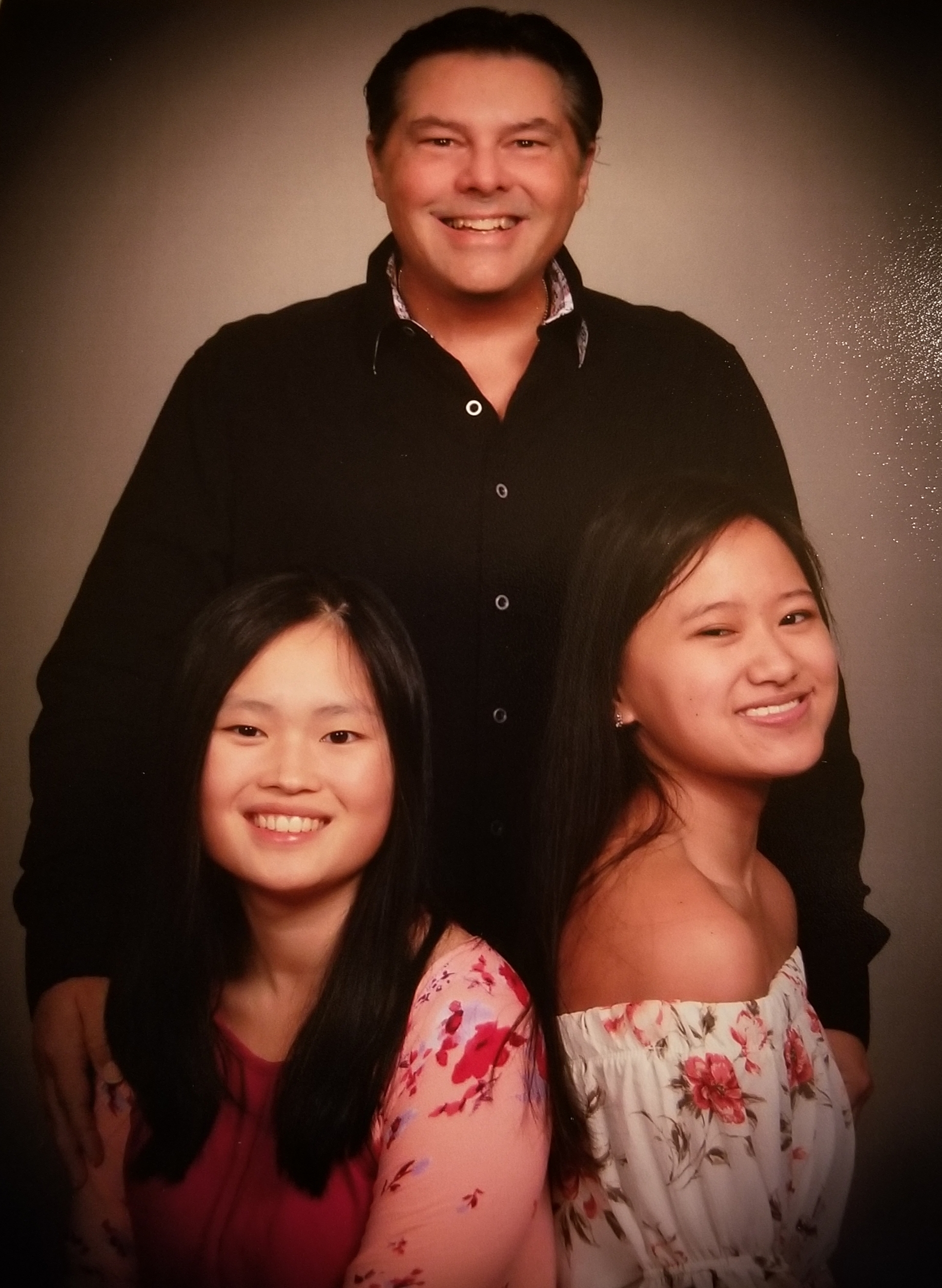
Late in their teenage years now, they are learning more about my health history, and the origin, my battle with Hodgkin’s Lymphoma and the treatments used to save my life.  They can handle the details as I have given them in small amounts, and not in vivid detail.  As adults, they will learn the seriousness of the things I face, because as they will be my medical proxies, it will be important that they know all the details.

My daughters do not recall anything from my heart surgery, and have very few memories of the second event.  And I am glad for that.  They have witnessed enough with me in the hospital.  They know my situation is serious.

More importantly, they know that they are the reason that I keep fighting when faced with these challenges.  My divorce has caused quite a bit of separation, and while I do miss every moment I wish I could have with them, it pales in comparison to the emotional pain I felt back in 2008 when I thought I would never see them again.

Yet, here I am.  Another year closer to seeing them graduate, hopefully go to college, and perhaps start a family of their own.  Something back in 2008, I never thought I would see.

In The Worst Of A Crisis, Can Behavior Get Any Worse?


Like many areas of the United States, my locality is dealing with the Covid19 crisis as best as it can.  Eight months in, scientists and our government leaders still struggle to learn about this pandemic, how to treat it, and how to prevent it.  All politics aside, as the US is quickly approaching 200,000 dead Americans, and over six million Americans infected, there is no denying the reality of this crisis.

As a long term cancer survivor, having various issues related to my health history, I am considered “vulnerable”.  Needless to say, I pay very close attention to details and data, that I gather personally from the medical professionals that I deal with personally.

From the beginning, I saw the line drawn in the sand that instead of drawing us together as other national emergencies have done, instead pitted us against each other.  Throughout our history, we have dealt with major epidemics from measles to polio to the flu of 1918.  We know when faced with a health crisis like this, they are real.  People actually died.

Which is what is maddening to me.  Right from the gate, when we were warned about Covid19, and a decision was made to downplay the serious and mistaken potential of spread, our country had done what it had never done before, denied reality.  But why?  Because, instead of saying to ourselves, “hey, this is getting really serious,” some decided to take the approach, “don’t attack the president.”

If anyone has been witness to a brush fire, and living in Florida I have experienced that, it does not take long for a spark to ignite and spread to 10,000 acres.  And it depends on how much time you waste, grabbing the water bottle over by the rock to pour on the growing flames, or reaching out for the professionals that determines the devastation.

In the case of Covid19, “a bottle of water” was poured, denial that it was serious enough to require extra attention.  And that denial actually exploded to a full blown inferno, as some reinforced their protection of the decisions by the president, to calling it a hoax.  Keep in mind, a hoax gets defined as something not real.  Nearly 200,000 dead Americans alone from Covid19.  Far from a hoax.

The strategies to deal with this crisis only made things worse.  And we can argue constitutionality til the cows come home.  We have today has not worked.  We needed a plan from the top.  Instead, it got passed down to the states to fend for themselves, and then within the states, leadership said it was up to the local governments to figure things out.  I am going to get to that cluster-F in a moment.

We have the professionals in place to tell us what we need to do.  Whether they come in the form of mandates or recommendations, they will help.  But again, that boils down to leadership, on all levels, to acknowledge and set example of following the recommendations, most made by the CDC.  And that should be all there is to it.

But the problem is this.  Our federal government has teeth.  Our state governments have teeth.  Our local governments try, and if faced with unsurmountable criticism and objections, may not withstand doing the things that are recommended, instead falling on the “common sense of the people to do the right thing.”  And if the people do not do the “right thing,” enforcement or mandates are met with resistance.  And it is the “why” of the resistance that make no sense to me.

A couple of months ago, our county held an emergency meeting to determine safety precautions that our federal and state governments would not do.  I will only discuss the one option, as it is the one getting the most attention.  The county was taking a vote on mandating masks in public.  Again, this is something recommended by the scientists at helping to reduce the spread of this deadly virus.  It is something that all people with “common sense” should see as a good thing.

I did not take notes of that meeting, but it was quite contentious.  Most of the public speakers spoke against any mandate.  I really do not recall their reasons.  Unfortunately I missed any professional testimonies that were given most likely to support the mandate.  The mandate went through by a vote of 3-2 and would go until last week when another meeting would be held to discuss renewing or letting the mandate expire.

This meeting, I paid a lot more attention to, because I follow the numbers for various reasons, not just because I am a nerd.  I have reasons besides my health for knowing if we are getting better or worse.  So, the first part of the meeting, I did hear the testimonies of the local professionals, doctors on the front lines, who brought data to support the success of the efforts of the mask mandate since it was first imposed.  The information was all there in black and white, lower cases, lower hospitalizations, and lower deaths.  Our county had been on an upward climb until that mandate, and now the numbers were lower.   And really, that should have been the end of that.  If you want to know how to make a good chicken florentine, you ask a chef.  If you want to find out how to change out a transmission on a car, you ask a mechanic.  If you want to know how to deal with a lethal pandemic, you ask the doctors and scientists.

Following the testimony of the local medical professionals, came public commentary.  And as the title of my post suggests, it was not good.  If I had to guess, those opposed to extending the mandate made up maybe 80% of the public comments.  But it was their reasoning, and their methods that left me shaking my head in disbelief in what I was witnessing.  The comments about wearing a mask, made as much sense as someone taking something out of an oven without oven mitts.

The following is the list of arguments against wearing something, while not perfect or guaranteed, could still have a positive impact on getting through this crisis:

My choice faith will get us through charts by professionals prove nothing death counts fake social engineering experiment health department conspiracy silent majority are fed up lack of intelligence stats are inconclusive right to breathe freely rights and freedoms media propoganda personal responsibility lunacy busy living fear porn Natzi rule moving the goalposts totalianarianism wearing a diaper on the face about an election seizure of property oath of the government to protect the constitution not the people overreach communism hoax being lied to okay with dying medical negligence and finally, pharmaceutical profits.

I intentionally left out commas, because I wanted it to be a list, but when I typed it up, I realized how long it made the post look, and did not want that appearance.  But among all of these reasons people gave not to wear a mask (some were repeated), they were also follow up with insults and threats.

I was shocked.  We are dealing with a major crisis, likely to kill 500,000 Americans before we have any kind of control over it, and people are actually threatening and insulting government officials trying to do something to help us get through this.  But beyond the insults and threats, look again at the list given against masks.  Do you see any reference to even recognizing the virus as real?  Do you see anyone relate to any personal experiences with Covid19?  Do you see anyone offering any other possible solutions?  Clearly there are those who want to make this pandemic end and they are doing what they can, and then there are those who are doing all that they can to prevent it from ending.

And this is what is referred to as being politically driven.  And this is going to kill even more people.  There is no world order out there trying to wipe out millions of the world’s population.  And while our president DID NOT create this virus, we relied on his leadership, just as we did with Roosevelt, Truman, Carter, Reagan, Bush (both), Clinton, and Obama, we needed this president to lead us through this crisis.  And yes, that same group of people who made up that list of complaints against masks, see this as an attack on the president they vehemently support.  And I get the concept of support, just not at all costs, especially if it involves lives.

I do still have faith in our scientists and doctors.  I have no reason to trust otherwise.  And it is a shame, because I honestly believe, that had the right decisions been made sooner, we could have been done with this, at least under control, in three months or less.  Now, we are entering our eighth month, and into a time period, this virus is expected to increase in cases and deaths.

I will finish with actually agreeing with one of the negative comments, to a degree.  How we get through this is personal responsibility, with the information that we have been given and recommended to do.  But as the numbers continue to climb, it is clear that not enough are exercising that personal responsibility.

And that is disappointing.

A Reason To Celebrate Labor Day


It is odd.  We celebrate this weekend for all the wrong reasons.  We recognize it as the “unofficial end to Summer,” the last hoorah to go to the beach or Summer party before schools begin.  Only a select few actually understand what the holiday is about.  Politically speaking, for many, it is not something that is wanted to be talked about.

We know why we celebrated Veterans on Veteran’s Day.  We know why we honor and memorialize our fallen on Memorial Day.  But Labor Day is not just a day off or a long weekend.

Labor Day recognizes the advances of the Labor Movement, as well as those who have contributed to the advances and achievements.  In 1887, Oregon became the first state to recognize Labor Day as a holiday.  By the time the United States recognized it as a national holiday in 1894, thirty states had already recognized this annual recognition (Wikipedia).

The key is what brought us to this day.  It begins with the “evil” trade unions and the labor movement.  The whole idea of this movement was to create a better and safer working environment, and to be able to negotiate for better wages and benefits.  The concept is simple.  It is more successful to negotiate as a group, than individually.  Someone asks for something individually, it is very easy to tell that one person “no.”  But if an employer risks a work interruption, a “strike,” where workers refuse to work until the company and union comes to an agreement, the employer is likely to not opt for the work stoppage and risk profits.  It should be noted, union workers do not earn their pay while on strike, and unless the union is financially prepared, even health benefits are at risk by a “strike.”  It is not really an option that neither side wants.

You can thank the Labor Movement for the “8 hour work day” which became effective in 1886.  Can you imagine what it would be like to have an employer require you to work sixteen hour days?  You can be thankful for breaks during the work day.  You can be thankful for the establishment of OSHA requiring workplace protections.

Labor Unions came into the picture in 1935 with the signing of the National Labor Relations Act.  This allowed workers to organize into unions and engage in collective bargaining (negotiate a contract) to earn better wages, safer working conditions, benefits, and job security.

In the beginning, unions had a major impact on such dangerous jobs as coal mining (a separate story deserving its own post), and many other large industrial jobs.  Eventually other public sector jobs would also join into the labor union representation such as teachers and police.

Over the years, unions have been portrayed as both evil and necessary.  Evil, because to provide a better work environment means it costs a company more profit to provide such.  Politically, as companies lobby the government for assistance against labor unions.  Obviously, if a company can pay someone less, they will make more profit.  But the question is, at what cost to the employee?  The answer, a company owner only cares about the profit, not who earns it for them.

If you have never belonged to a union, it is very easy to be jaded against them.  Chances are, all you have ever witnessed, are news stories about strikes.  Whether they be transport workers, nurses, airline pilots, teachers, or whoever, if you do not belong in a union, the immediate warcry is “greedy bastards” when the workers are shown on strike, asking for better conditions and more pay.  And why that warcry?  Because it is likely, that person does not have that representation, and thereby deems it unfair since they do not have the opportunity to have the same negotiating power.  But you do.  You choose not to.

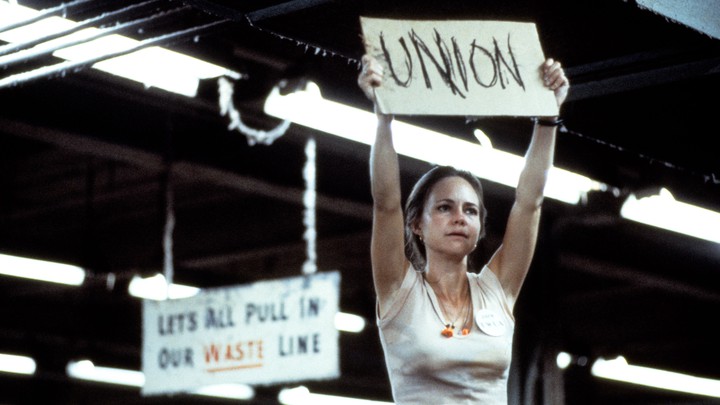
Unions have typically been portrayed as thugs in Hollywood (both of these were great movies by the way, “Fist” starring Sylvester Stallone, and “Norma Rae” starring Sally Field).  There is no doubt that there have been issues of violence associated with labor negotiations.  But I would argue, that for the most part, the benefits of being represented far outweigh the benefits of not being represented.

Personally speaking, my grandmother belonged to the Electrical Workers Union, and was even a treasurer for her local organization.  I laugh at the thought of my grandmother being a “tough guy” in a union, as she stood only 4 foot 7 inches tall, and was quiet in appearance.  My mother also worked with the Electrical Workers Union.

Then came my turn.  But up until that point, I was one, like many, opposed to unions, for the same reasons as others, misconceptions leading to unfair judgments courtesy of my jealousies.  In 1997, an opportunity came up to work for a major pharmaceutical company, with the entry level position, including union membership.  I would become the third generation belonging to a union, oddly, the Oil, Atomic, Chemical Workers union, yes, in pharmaceutical.  Immediately, I would see the difference and the benefits to me.

In 1988, I was diagnosed with cancer.  This made me uninsurable for health insurance, life insurance.  Hell, employers did not even want to hire me at all, just because I had cancer.   But the first benefit I received following my probationary period?  Guaranteed Health and Life insurances.  You see, the union negotiates this for their workers.  That is why they call it collective bargaining.  Because it benefits their entire group.  Everyone in that group has to have the same thing.  I could not be turned down just because I had cancer.

Sure, the money was also good.  And compared to other pharmaceutical companies that did not have union representations, my counterparts were lucky to make even half of what I was making.

Work environment?  If I felt my work area was unsafe, or equipment was lacking, I could count on my union leadership to demand action.  In industrialized jobs, workers are automatically at a higher risk for injury and death, and deserve all precautions to keep them as safe and protected as possible.

And a big thing with unions, job security.  Do you know anyone who was fired just because a boss did not like the otherwise productive employee?  Have you ever been laid off from work, after working decades, while the company kept someone who just started, simply because they made less money?  Seniority is one of the pillars of the labor movement, job security.

Of course, there are problems within the unions, the slackers who goof off while other good hard workers carry a respective work ethic.  Some of these get into trouble, and seemingly get away with it, unscathed.  That is the benefit of a union, representation to get you out of trouble, by accident, or intentionally.

My experience with the union, I will always support unions.  Besides finally obtaining insurances that I was otherwise denied, my wages allowed me to purchase a home, and allowed me the opportunity to bring the two most important people into my life, my daughters.

And when I needed my union the most, in 2008, following my emergency bypass surgery, for my heart, caused by damage from my cancer treatments nearly twenty years earlier, when my employer threatened to fire me, as my FMLA (Family Medical Leave Act) days had expired and demanded me to return to work, even though I had not recovered.  My union fought for me with the Americans With Disabilities Act protections.  You try to do this working for Walmart.   Eventually, I would become a shop steward, a “lawyer” or union representative for my co-workers myself.  And I was a good one.  As one of my co-workers noted, I may not have been well liked by all (I was a stickler for rules, so I could be a pain in the ass), but everyone knew I would support and protect everyone.

I worked for my employer another five years before my disabilities became too much for me, and for my employer to accommodate my health restrictions.

When it came to my early retirement, my union took care of me as well.

The same cannot be said for my peers with other companies who do not have representation, doing the exact same work as me.  But envy should be held against me, because I had representation that I was worth as a human being?  Or should there be displeasure in the fact that someone is either unable or unwilling to establish representation?

As you are out on the beach today, or having a barbecue, be glad for unions and the labor movement.  That is why you are hopefully not being forced to work today.  And if you are being forced to work… I hope you are being compensated properly.

Post Navigation