Paul's Heart

Life As A Dad, And A Survivor

Archive for the category “Politics”

But What About…?


I first experienced this “illness” back in 1989, long before it had a name.  The concept, someone is dealing with a crisis or tragedy, but someone else feels slighted or jealous about the attention that other person is receiving, whether it be good or bad, did not matter.  It was always, “what about me?”

As I dealt with my cancer, I had several co-workers who felt slighted, that I might be receiving favors from management because of my situation.  To be honest, I have no ideas what those favors would have been, but I know that I heard the “jealousy.”  Yes, that is what we called “whataboutism” back then, “jealousy.”  The difficult thing to comprehend about “whataboutism” in my case with cancer, I could not grasp why people would be jealous of what I was going through, or they just felt I had to have been pitied by management which meant I might be getting special attention that they did not get.  I really have no idea, because no one ever came up to me personally.  I had only heard about this situation through the grapevine.

This was not the first time though that I had experienced “whataboutism.”  In 2008, upon learning I was going to die without heart surgery, I was going to experience this phenomenon for the second time.  I won’t go into the details of the surgery, other than to say, MY BREAST BONE WAS BROKEN OPEN!!!!  So, everyone is on the same page, this is a major trauma to the body, not just the surgery itself.
While the initial and surprising concern by my co-workers I feel was sincere, the shock that I was only 42 years old and had to have a triple bypass, that concern soon faded when I arrived home a week later, and spotted going for a walk, part of my recovery, and just so happened to take every ounce of energy and strength I had just to even walk one hundred yards.

Word had spread at work that I “looked great!” and why wasn’t I back at work.  Again, major heart surgery, and my breast bone was cracked in half, now wired together as this broken bone healed.  But it did not stop there.  When I finally returned to work, my doctor ordered physical restriction accommodations to be made, in accordance with the American With Disabilities Act, as I continued my recovery.  I had not been at work in over three months, had lost all of my strength, and needed time to readjust.  And then the war cries came out.

“THIS IS NOT FAIR!  WHY DO I HAVE TO DO MORE THAN HIM AND GET PAID THE SAME JUST BECAUSE HE HAD SURGERY?”  HE ISN’T DOING THE SAME AMOUNT OF WORK AS ME!  HE ISN’T WORKING ALL OF THE ASSIGNMENTS THAT I HAVE TO AND IS GETTING PAID THE SAME!”  The list of whines of “whataboutism” was long enough to run out of types of cheeses to accompany.

But that is what “whataboutism” is.  It is about being slighted because someone cannot reap the perceived benefits that is believed someone else is getting, even if the circumstances are critical or tragic.  There is that jealousy to not be able to enjoy the benefits given to someone who might be struggling, just because they are not struggling themself.

Today, “whataboutism” is as common as milk in a dairy.  Every day you can hear someone scream out, “what about me?  What about this other time?  Why is this issue different?”  Our country’s citizens suffer from major ADHD, unable to focus on one crisis at a time, often unable to see any need or commonality of situations that they might actually be complaining about.  But just because the current issue is not their own issue, “what about me?”

One of the more common times “whataboutism” comes out of course is politics.  And I am not going to get into that, because that cycle is one that does not appear to have any end.  As political parties trade back and forth in their “whataboutism,” each time a party changes power, there is not interest in saying, “this is when it ends.”  They just keep going like the Energizer Bunny.

Heart-breakingly, it is during times like we have been dealing with for the last two months, a major pandemic, and now a super-heightened racial awareness to do a public lynching of an African American, the cries of “whataboutism” are endless and unrelenting.  But these cries go beyond a jealousy for the most part.  Many times these shouts are more about distraction, realizing that if you can distract enough from the crisis at hand, then just like all of the other times, the problem will go away.

We are witnessing that right now.
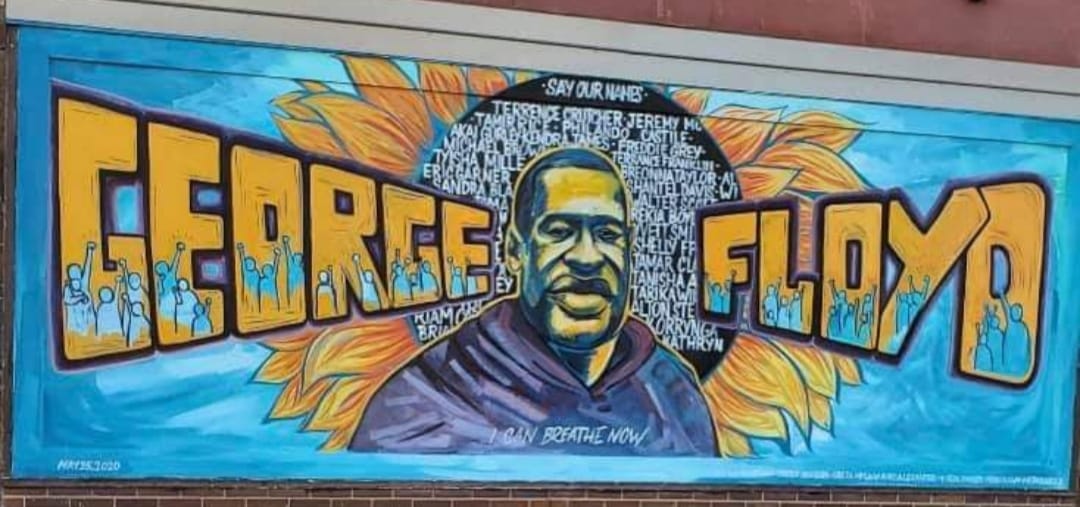
What everyone witness over ten days ago, was horrendous.  Unless you are a racist, the brutal lynching of George Floyd has given us all an awakening to a struggle that continues to knee cap  many of our citizens, and just because of the color of their skin.  And sure, it is understandable to ask why did we not respond this way when unarmed Walter Scott was shot in the back by the police, or Eric Garner was choked out and killed by the police.  Why is this situation any different than the hundreds of others.  “Whataboutism.”  The question is, why should it matter?  We keep asking how many more.  We keep expressing outrage.  We keep protesting.  But it continues to happen.  That means what we are doing is not working.  But the cry “what about” is the distraction that makes the issue go away for the ones that do not want to admit that there is a problem.

And do not even get me started on those who really want to dismiss the awareness we are experiencing from people of all colors, not just here in the United States, but now all over the world.  They choose to want to label any bad deeds this human being, a father of a small child may or may not have had.  Of course they say, “it does not make it right that he was killed that way, but he was a bad dude regardless, so maybe…”  You can fill it in from there the shit that comes next.

Do you know how to tell if you suffer from “whataboutism?”  Watch the video of George Floyd being murdered, the entire thing, even once.  If you have to turn your head because you just cannot watch, or it makes you feel that uncomfortable that when you see people protesting for the rights of a certain part of our population, and complain about “inconveniences” you are dealing with because of such, chances are pretty good, you may have a case of “whataboutism.”

My late brother-in-law died from Lour Gehrig’s Disease (ALS).  As he was struggling with the physical issues of the disease, one of the major issues being the ability to swallow, he would often choke as he tried to swallow even his own saliva, let alone actual food.  While he was experiencing this, I was struggling with my own swallowing issue from the radiation damage to my esophagus caused by my cancer treatments.  We used to joke about who would choke out first.   But instead of saying “what about me,” I felt bad.  My condition was not likely to be fatal, as uncomfortable as it was, and I felt bad mentioning it, even though the struggle could be seen on my face.  My brother-in-law said to me, “we have two different circumstances.  Just because our ends will be different, does not make your issue any less relevant to deal with.”

I miss Mike a lot.  It was wisdom like that, that I have carried through my life.  Yes, my issues are real.  They are not any less important.  But I do not need to hijack someone else’s situation for my cause.

“Paul’s Heart” is about advocating for health and parenting.  I seem to be spending a lot of time now on dealing with race issues.  Sure, I have my reasons, obviously.  But even without my daughters, standing up for what is right is who I am.  It is what I was taught.  And as I pointed out the other day, silence is complicitness.  You are racist or anti-racist but you cannot be a “not a racist.”

It is time to stop screaming “what about me?” or “what about the other times?”  We have two major crisis going on, and the more we distract ourselves with “whataboutisms,” we are just going to continue to have to deal with these issues and more.  It is sad to me that we have learned nothing from 1992 when it comes to police brutality and race relations.  That was 30 years ago.  Oops.  See what I mean.  What about 1992?

Let’s fix this now.  For the sake of everyone.  We are better than that.

When One Word Is Not Enough


Without giving it much thought, the phrase “I am not a racist” used to seem reasonable to sum up my position when it comes to those of different color.  But recent events have taught me an important lesson, it is not enough to claim you are not a racist.

Let us get the easy part of the equation out of the way.  There is no mistaking a racist.  If you exhibit a behavior that discriminates, intimidates, humiliates, demeans, or worse, commits an act or participates in an act against someone of a different color, based solely on that reason, you are a racist.

So there you have one side, you either “are a racist,” and the inclination is to want to say “or you are not a racist.”  To simply state you are not a racist, is just not enough.  There is a complicity about taking the position of “not being a racist.”  There is no effort in that statement.  “I said it.  I can move on.  There is no more racism in my life.”

The example I am going to give is going to prove just how wrong that thinking is, and actually makes the problem worse.

Remember the days back in school, and acts of bullying on the playground, how the big, bad kid, picked on the little squirt, just because he could?  Do you remember how the crowd of other students would gather around, and chant “FIGHT!  FIGHT!  FIGHT!”?  Did you ever take a look around the crowd, even behind the crowd, some of the faces of horrified kids, knowing how bad the situation was, but either felt powerless or had no interest to get involved?  Why?  Because it was not them.  They were not the bully.  Nor were they the victim.  But their complicity made them more a part of the incident than their denial otherwise.  Any one of them could have chosen to do something.  Instead, “I was not the bully.”  “I was not the victim.”

Whether or not you related the example as being comparable, I do.  It is not enough to state, “I am not a racist.”  Sure, anyone who knows me, knows that I am not a racist, especially given my own ethnicity having a Native American background, and daughters who are Asian.  It is not enough to believe that I am not a racist.

You are either for, or against.  You are either a racist, or you are anti-racist.  Being “anti” implies an effort is taking place.  Without that word, there is no effort.  You are just standing there, watching or cheering another fight.  And that is not good enough.

I will be the first to admit, I do not grasp every detail of what it will take to not only address racism, how to deal with racism, and how to get rid of racism.  But between my childhood, and now my adulthood, I am at least trying to do my part.

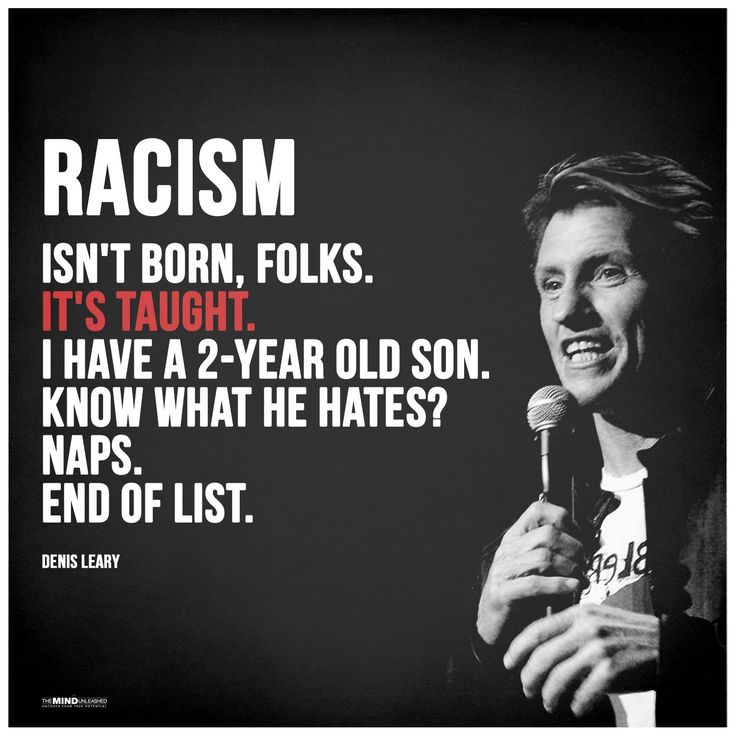
“A picture tells a thousand words.”  You are not born a racist.  You are taught to be a racist.  Our children are the only proof we need.  It is unnatural to “hate” someone just because they look different.  Have you ever heard the concept “nature versus nurture?”  This is where that applies.  Racism has been around for hundreds of years, but only because some of our parents may have taught us, because more of their parents taught them, and the numbers increase the further generations that you go back, one thing is clear to at least start the process of dealing with racism.  Stop teaching our children to hate.

Growing up, I literally lived in a small town that was not only predominantly white, it was all white.  Without me mentioning that I was Native American, no one noticed as my skin color did not signal any awareness.  Unfortunately, I did have one characteristic that falsely labeled me as “Asian,” my almond-shaped eyes, often resulting in me being hit with all kinds of Chinese slurs.  But I was not Chinese.  This was my first exposure to racism back in the 1970’s.

Around the time of third grade, a new boy had arrived in my class.  He was Hindu.  I do not recall his name (apologies but my age does have its limits).  But I definitely do remember, I did not notice his skin color was not the same as mine.  The only thing I did notice, was that he did not seem very popular, or at least have many friends around him.  He was friendly, actually living within minutes of my house, though he was never invited to my house (an issue I will get into later, but it had nothing to do with his ethnicity, at least to a point), I did visit his home on occasion and meet his family.  They were all nice.

We remained friends through elementary school until he and his family moved.  I never did know why.  I also would move, and switch school districts, this time to a “city” or urban school district.  And guess what I found out, there were a lot of people of different color.  But just like my Hindu friend, everyone was friendly with me regardless of the color of our skins.

I want to back track now.  I mentioned that my Hindu friend had not been to my house.  To be clear, I had two close friends across the street from my house, as well as a couple of kids that lived next door, and none of them were ever in my house.  The house was owned by my grandmother, and occupied by she and her sister, my mother and my sister.  It was kind of an unspoken rule, we only had family in our house.  I would ask a couple of times for friends to be allowed, but not having the stamina to hear “no” more than a couple of times, I gave up asking.

Only recently, and I do mean recently, I have discovered why.  I have had multiple discussions with my mother over the years, about my admiration for my grandmother, and the high regard I have held her, my moral compass in my life.  But as the expression goes, “nobody’s perfect.”  The conversation lasted less than fifteen seconds, because I wanted to hear nothing more once I heard “your grandmother had a bit of ‘racism’ in her.”

No way!  Not my grandmother.  She was perfect.  She loved everyone, and anyone who knew her, loved her.

I decided to open this can of worms following the recent events of the murders of Ahmaud Arbery and George Floyd.  So I phoned up my mother to continue the discussion that we had years earlier.  I had a hard time believing, since I was “not a racist,” my mother was not a “racist,” there was no way that my grandmother could be one.  I needed an explanation.  I lived with my grandmother for nearly fifteen years, and never heard her mention color let alone use any slurs.

Intentional or not, I am hoping that the fact that I had not heard anything from my grandmother’s lips, it was because she wanted me to be better than what she was taught.  What was she taught?

First, I want to be clear, my grandmother was not a textbook definition of a racist, belief that her race or ethnicity was superior to anyone else.  But there is an issue that she did grow up with, and it technically applies when it comes to dealing with racism.  Because, had I learned this from her, this might actually be a different post than what I am writing.

I realize many around the country/world may not know the culture I am going to mention, but my grandmother was Pennsylvania Dutch.  Actually German immigrants, they came to Pennsylvania.  Their make up is religious in nature and foundation, often associated with the Amish, Mennonites, Moravian, Reformed, and Lutherans.  And though my knowledge of the PA Dutch culture is limited, the whole behavior revolves around isolation, keeping outsiders just that, outside.  Sure it seemed like an odd thing in the 1970’s and 1980’s, but other than bringing a significant other into the house, that is pretty much all I ever saw.  Which brings me to my next point.

Pre “me”, my mother has told me of a certain section of this town that I grew up in.  I had heard the “nickname” of it before, but like everything else that was mean-spirited, I had not paid attention to it at the time.  Recent chatter on a FB page stirred up that nickname a memory, but clearly it affected many who grew up during that time.

Nicknamed “Hunktown,” and I want to be careful because I know very little of its history other than, it was a section of my town where many Hungarians and other Europeans lived that were not considered “PA Dutch” or other form of immigrant that was clearly “American.”  Again, I want to remind you, my town was all caucasian.  And clearly those living in this section would blend in at school and work.  How could you tell?  By their accents?  Nope.  They spoke perfect English.  But just as the PA Dutch were able to speak German at will (I heard a lot of this growing up, but only remember the bad words), the other Europeans were also able to speak their native languages.

So, how did my mother, her two brothers know who not to bring home?  Their last name.  Their name would give their nationality away just as it “assumes” today.  My last name, I am often told I am Jewish, just by my last name, which is incorrect for one, my name is not spelled correctly to be Jewish, and second, I was named after the living, a “Jr.” of my father.  But if someone had any other name than a German name, they were basically “shunned”, yes, like you have probably heard done by the Amish.  Remember, they come from the same mold.

Okay, so my grandmother never demonstrated a blatant “color” racism if for no opportunity because of where we lived.  But I never saw or heard any hateful words from her lips either.  But looking back, clearly, the only way to make sure, since I was not being taught to not like others different than me, was to keep our doors closed to those outside of our family.  It was the only way to not appear “racist” in nature.

Yes, the way my grandmother raised me, not blatantly teaching me to be racist by accepting the PA Dutch way, she actually broke the cycle of racist beliefs and tendencies.  And though I am shocked to have learned this history of my family, it is the foundation to learn that it is not enough to just be “not a racist.”

And that is why, my daughters are taught to be “anti” racist.  That it takes a pro-active role against one of the most evil and hurtful ways that we treat our fellow friends and neighbors.  It is the whole reason that there has been no progress made in race relations in hundreds of years.  Even as we have all the technology to see racism at its worst with our own eyes, too many still stand back like the bystanders and cheerleaders of a playground bully incident, complicitly.

I was too young for the rioting of 1967 and 1968 associated with the Vietnam War, the assassination of Martin Luther King, Jr. and the Watts riots of 1965.  But I was alive and watched in horror, the riots in Los Angeles following the acquittal of 5 police officers , accused of severely and brutally beating Rodney King.  The beating was caught on video camera (we did not have cell phones or social media), but the incident was seen on all three major network news.  News of the acquittal sparked of rioting like I had never seen before to the injustice.  Until now.

And now, my daughters old enough to see what is playing out for the whole world to see, that in the 21st century, we still do not have equality for all, regardless of it being written in our Declaration of Independence.  Part of their adoption process, includes racism education and how to deal with the issues that may come up being from a bi-racial family like ours.  And then again, the issue of racism against them being of Asian heritage itself.

Which is why I take such a strong stance, anti-racism, when I hear a president not use his words carefully, and even when warned that it could incite those who are racist, speaks those hurtful ideas and words regardless, intentionally.  He does not get a pass for doing it accidentally, because he is warned about his words, and uses them anyway.  I am tired of hearing “he talks like us and that is why we like him.”  Well guess what, when the president uses those words so carelessly, and you approve them just because he talks like you, then that makes you racist.  No, not the cross-burning lynching level, but racist by complicity.

I will admit to not knowing what all I can do to be anti-racist, and there are physical limitations that I have as well (especially as we deal with Covid19 and me being vulnerable, protesting in crowds is not an option for me).  But I will at least do my part, to make sure my children know that I will always protect them and who they are, and respect each and every person that comes into their life regardless of color or ethnicity.  And that example gets set, by respecting everyone that way.

It is up to us to teach the simple concept.  You are either racist, or anti-racist.  You either participate in the evilness, or you stand up to it.  There is no complicity.  That is not an option.

A Lesson On Behavior From Parent To Child


From the days that I became a father, I knew what I did, what I said, and what I thought, would matter to my daughters.  I would have four eyes and ears surrounding me from different directions, taking mental notes of the many things I would say or do, looking for consistency and if they were correct legally and morally.  Decisions I would make, words I would express, and actions I took, would have an impact on both of their lives, forever.

The first ten years for each, it was always by example.  It was basic.  Sharing.  Empathy.  Telling the truth.  Manners.  Fun with friends.  Anticipation.  Doing things with no motive and no expectations.  It was all about doing the right thing.  Learning and doing all of these things would never require a correction or an apology.  Sure, things could get lost or broken, but my lesson would always include, did anyone get hurt because of it.  As long as the answer was no, we were going to move on to another day.

During the third quarter of their lives, just as things around the home that once were new, they may not work as reliably as in the beginning.  And it is important to pay attention to when things begin to change.  Reinforce well enough, and it can last even longer as the first day.

And so it goes with teenagers.  Other influences appear in their lives, wearing on the values and ideals that you raised your children with.  And that can mean mistakes.  The lessons begin then on how to work through the errors in judgements, minimize any lasting effects, make any corrections necessary, and then move on.  As a result, character develops, because that is who you are.

So throughout their lives, I hope that I have given my daughters everything they need, to figure out the difference morally between right and wrong, how to manage time, differentiating between want and need, and that quite possibly their thoughts and actions may have an impact on others.  It especially starts with their lives, adulthood just a short time away.

My daughters have witnessed a lot of circumstances that can lead to struggles and sorrows for others.  And they have the best of hearts and intentions to want to help, to empathize at the very least.  The legitimately want to treat others the way that they want to be treated.  Which is what makes the current situation we are all dealing with so difficult for at least one of my daughters, if not both, to understand.

As typical teenagers, they were not really aware of the beginnings of the Covid19 crisis.  But the very first thing that came to their attention was not illness around them, but behavior.  A simple thing as shelves in a grocery store, being empty of not just one item, several items.  To my knowledge, my daughters have never been through something like we are experiencing.  They had never heard either of their parents complain about a store being out of something we needed.  This was too obvious, because too many things were out of stock.

And so, my daughters learned about panic and hoarding.  I spent so much time trying to teach them the right way to live life, I made the mistake of not preparing them for the bad behavior of others.

In the northeast U.S., news of a winter storm rushes people to the grocery store for milk and bread, but rarely are the shelves bare.  Along the east coast and southern U.S., hurricanes make people rush out to buy gas, water, ice, and other non-perishables to survive for days if not weeks.  Admittedly, things could get kind of testy among us humans as supplies definitely do run short.

Under normal circumstances, shelves would not remain empty for long, maybe a couple of days.  But my younger daughter noticed, the shelves were staying empty.  What she may not have realized, at some point, the shelves may have been restocked, but by the time they got to the store, the shelves had been emptied again.  It was then that I explained to her the behavior of panic and hoarding.  I explained that people, just like when they prepare for an extreme weather event, they were doing the same now.  The only problem, that unlike a weather event, there was a good chance that we would be asked to remain home much longer than a couple of days.  With most of us not having been through a third world experience, the thoughts of preparing for shortages was unfathomable.  Yet here we were, and still are.  My daughter struggled though with why there was not enough for everyone.

This was just the beginning of the behaviors that would come into question as we all dealt with Covid19.

Commentary from certain people, including “Chinese” as part of the blame, and how it has an effect on them, just because they are Chinese.  My children know they are innocent in this, yet they hear the rhetoric that is generically cast out to spur racist outrage toward people in our country of Asian heritage.

They do not understand the necessity to go to a state capital, armed with weapons of war to stage a protest.  My daughters have learned about protesting from me, because I have participated in them.  And at no time, did I ever present a weapon.  My weapons were presence and words.  But when a question is asked, “what were they going to do with the guns?”

But this is one that definitely gets to them, because they can kind of relate, as the participants being interviewed by various media resources, are young, and as far as I am concerned, ignorant, stupid, and selfish.  “I’m just like taking it like, if I get the virus and die, like, then it was my time.  I’m like going to have a great time at least with my freedom.”  Other than the too frequent use of the word “like”, my daughters have nothing in common with what these “kids” were saying while being interviewed on the beach.  My daughters are doing their part, not to be responsible for spreading or contracting the virus.

They could not understand why these morons first off, felt they were hanging on to their freedom.  My daughters knew that they had their freedom and were not aware it was being taken from them by staying safe.  But even my daughters could understand the dumb thinking that these selfish buffoons were not thinking about anyone but themselves.  How would they have felt had they come down with the virus and taken it to their parents or grandparents, or someone else close to them, costing them their lives.

Sure, it’s easy to be so cocky and confident, “won’t happen to me,” as long as it does not happen to you.  And then it does.  And my daughters have witnessed that too many times with my health.

This crisis has definitely affected their worlds.  But at least the one thing I do not have to worry about, is them losing their common sense, and their core values on respect and empathy for others.  They are not waiting for something bad to happen to make them see the truth.


Post Navigation