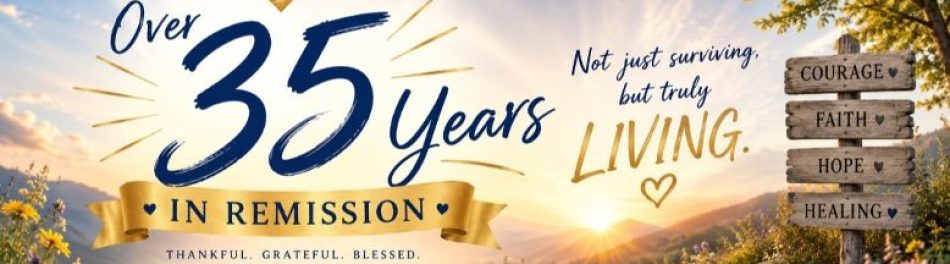
Today is National Cancer Survivor Day (the entire month is recognized as National Cancer Survivor Month). Today, marks 35 times I have seen this day since my fight with Hodgkin’s Lymphoma occurred back in 1988. Being a survivor of cancer, regardless of how long it has been, is no easy fete. The struggle to survive is both physical and emotional, and though remission is often reached, and the struggle seems to fade, it never completely goes away.
I often consider milestones or anniversary recognitions in regard to cancer, as bittersweet. To this day, 35 years later, cancer is still the number two leading cause of death, just 20% less than heart disease, and 33 % worse than deaths related to Covid according to the CDC (Center For Disease Control). Cancer has taken six of my relatives. I can no longer count how many friends and fellow survivors I have said goodbye to, either directly from cancer, or survivorship related issues, their bodies just unable to take any more of the trauma from long term side effects from their treatments. Bitter.
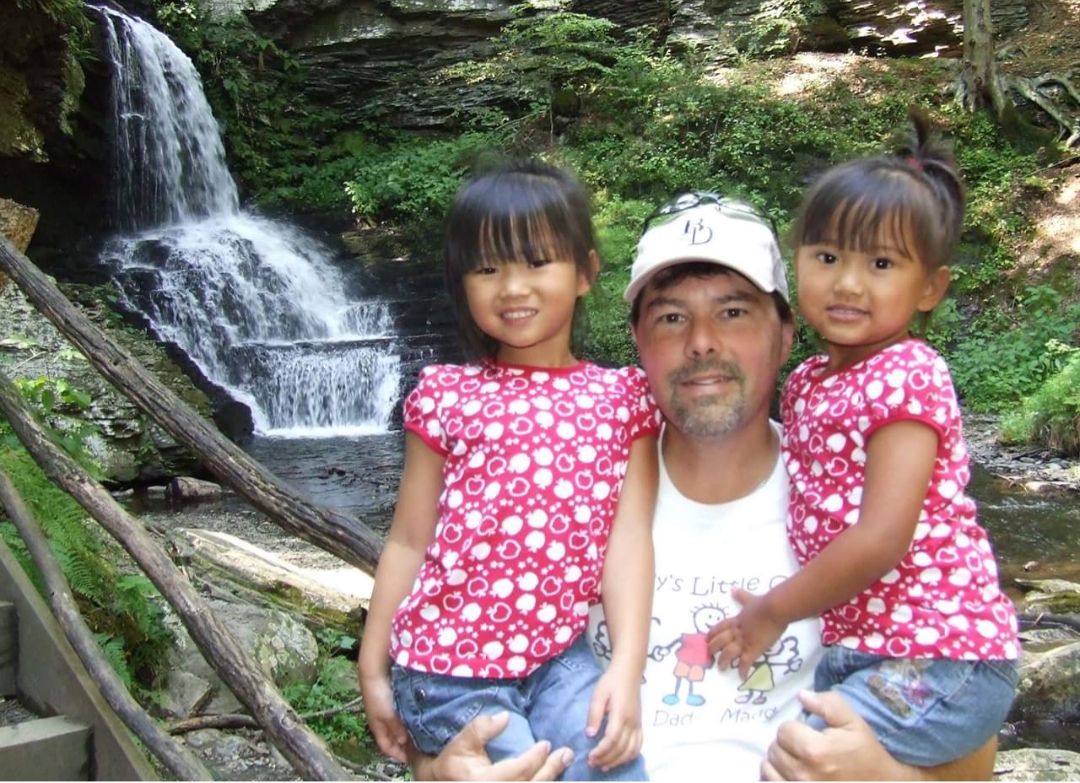
But the sweet part, a continued life I never thought I would have, mostly, a family. And here I am, less than two weeks away from seeing my youngest daughter graduate from high school. There is irony. She was named after my grandmother, a two-time cancer survivor, and will graduate on the same date as the day my grandmother passed from her second cancer, changing the mojo of that day from one of sadness, to one of joy. And I know my grandmother is looking down and watching all of this unfold.
Merriam-Webster defines “survivor” to “remain alive” or “continue to exist, function, or prosper.” When we think of surviving something, our first thoughts usually go to some sort of catastrophic event, such as an earthquake, plane crash, or cancer. When we think of surviving an event on that level, there is one stand-out characteristic that all of those events and more have in common – we do not volunteer for them. There is nothing or no one on standby to prepare for something horrible to happen, to reduce casualties or injuries.
Which is what really frustrates me about television shows that hype themselves with “survivor” as the theme, of course I am referring to “Survivor” and Bear Grylls new show “I Survived Bear Grylls.” While I do enjoy competition style television, one major peeve I have are shows that claim survivorship. Again, an actual trauma victim does not volunteer. If they survive, they have every right to call themselves a survivor. But competitors on television shows like this, are volunteer, actually auditioned for. These shows are not about survivorship other than being the last person standing, a matter of endurance and strength, oddly enough, two characteristics of most if not all cancer survivors. But again, the difference being, cancer survivors never volunteered to get cancer. There is no cash or prize award for beating cancer.
I think what triggered me on this, while flipping through channels, I came across Grylls’ new show. The competition at the moment, Grylls hyped up as “man’s worst fear – being buried alive”, the contestants being placed inside a container, made of snow, with more snow piled on top of it, to simulate being trapped in an avalanche. Now, to be clear, if this had happened, an actual avalanche, and you survived, you get to call yourself a survivor because you did not volunteer for that to happen. While I doubt being buried by an avalanche is man’s worst fear, again, cancer? Hello?, Grylls explained what needed to be done and how fast. In the real world, you would either live or die, but this is a set, granted a natural set, but with several crew there to assist, risks of fatality are kept to a minimum. Cancer patients don’t have that kind of protection or assurance.
So, if you really want to know what a cancer survivor is and actually looks like, take a look around. We are all over the place. Some have gotten to enjoy life, completely worry free and in remission, others like me, continue to deal with late effects from our treatments, but we are still surviving.
How about someone making a television show about real survivors?
Do not bother looking for this word in Merriam-Webster’s dictionary just yet. It is not a word, for now. But it is a term that has appeared recently, meant to be critical of today’s youth in reference to delaying entry into the workforce. Politically, a certain part of society would label these youth as lazy, not wanting to work. But an essay by Suzy Welch in the Wall Street Journal recently, brought up a different aspect as to why “Gen Z” is in no rush to apply for jobs.
To qualify Welch is a professor at NYU. She had been teaching MBA students when the topic came up about what they would be doing after college. A student who answered Welch, said she had no plans, and was just going to take advantage of some “funemployment.” The concept of “funemployment,” being the time period in between school or a job, and another job. This concept is really about attitude and approach with being unemployed, not being afraid, intimidated, or panicked with being unemployed. They simply just plan on being chill.
Anyone who has ever been unemployed for any reason, terminated or resignation, is likely to have felt the unbelievable stress, experienced mounting cash shortage, and possible eviction from their homes. It seems, this generation, “Gen Z,” may be on to something even bigger, perhaps by having seen their parents experience negative consequences during periods of unemployment, and simply have found a different way to deal with this period of time. They also may have seen their parents rush to take a job, just for the sake of taking a job, and being miserable for it, resulting in the entire household becoming one of misery.
Think about it. I know my daughters over their youth, while knowing only one company that I had worked for, knew that I had spent many overtime hours at work, totaling on average between 50-60 hour work-weeks, and often felt mistreated at work by my employer. They knew that my job also carried somewhat of a physical risk. And when my health started going south from my late effects from my battle with Hodgkin’s Lymphoma, they saw how poorly the company thought of my worth. Though discussion of work with my daughters has not come up yet, I know that one thing I have encouraged both to be a factor when choosing a career, find something you have passion about and do not be forced to make it a job or work, and that will be something they can make a career out of.
One thing I will say about my daughters, I do not believe they are afraid of work. They have been and continue to be good students, carrying good grades. Their education has always been a priority for me, so I was not a parent who pushed for them to participate in year round sports, or as they got old enough, to get part time work. While there was definitely a reason to get part time work, from social skills building to earning money for personal things, maybe even save for college, my concern was sacrificing the time that was needed in the evening to complete homework, share family time with each other, and of course, make sure that they got plenty of rest and a good dinner. Anyone who ever worked as a teenager, knows an employer will take advantage of teenagers from long and late hours, and I simply did not want their grades impacted.
Getting back to the comment about what today’s youth have witnessed by their parents, again, there is a split among opinions. Most parents will state they did what they did, worked how they worked, made the sacrifices for their kids, so that they could have nice stuff and do fun things. I am no exception. Being from a divorced home, I wanted nothing but better for my daughters than I had. Here is where the difference occurs in opinion. Some parents will say, “now they need to do what we did, make the sacrifice. It is what you do.”
I find myself in a different thought process, especially in light of this new phenomenon “funemployment.” Were all the sacrifices that I made for my daughters worth it, in particular to my daughters? Until my health started failing, and it was occurring much quicker because of the physical toll I placed on my body with the extra hours I was putting in, I was able to provide nice gifts, went on trips, seemingly giving my daughters, “better than I had.”
But one day, my oldest daughter, ten years old at the time, asked me completely out of the blue, “Daddy, how come you are never home? I miss you.” That is when it hit me. I am sure at the time, my daughter definitely enjoyed everything she was given and experiencing. She also realized there was something she was missing, me, and time with me. We were out grocery shopping when this question came up. It was one of the rare times I had been home during the week with the number of hours I had been putting in at work. It left me with such a pit in my stomach. This was not what I wanted my fatherhood to be.
To keep things in perspective, neither of my daughters are likely to remember most of the trips we took, and except for some of the stories told, will not remember many of the gifts. But what they do both remember, is me working a lot of hours. And though we have different reasons for missing our Dads in our youth, their Dad lived in the house with them, yet they rarely saw me, especially as they got older. Sure, they knew I was working, working a lot. I am pretty sure they would have preferred that I not work as much. Because in the end, what they saw, was their parent, not happy with his work environment, feeling disrespected, underpaid, and underappreciated in spite of my commitment and dedication to my employer. I was a good and reliable worker until my health started going bad.
I know my daughters definitely do not want to be working in an environment that will require them to sacrifice themselves, time with family, self esteem. And if they are one of the millions of “Gen Z” who have found a way, not to panic about getting work, just so that they can take some extra time, to find that perfect fit, because clearly, our generations jumped into job after job, just for the sake of having a job, only to need to find another, I will not hold that against them.
My daughters are far from lazy. And it is likely, that many “Gen Z” are thinking the similar way. I am not naive though, that there may be some who are lazy. I just know that I can say my daughters will some day find their careers, and be the best at it. I do not want them rushing into something, only to be negatively impacted by an experience. As the saying goes, slow and steady wins the race. I am okay with that.
Yesterday’s post was quite heavy. Today it is going to get much harder. But it is my hope, that when all is said and done, I might just have been able to finally grieve for my Dad.
So a comment made to me on my post yesterday read, “so what would you have done differently?”
I know what I needed. No, wanted. More time. I missed nearly half of my life with him, mostly my childhood, and there was so much more to be said and done. As I went through my divorce, I recalled what I could remember about my youth, and thought about what I could not remember, and I used that to make sure that I did not do the same things to my daughters as they grew. Because it is that past that still haunts me to this day, and the day my father passed, I lost any chance to deal with or resolve any of those issues.
When my Father and I finally began speaking to each other again, after being estranged for so many years, it was at a time, when crisis had struck him. My stepmother had been hit by a car while crossing the street. Just before that accident, she and my Dad were having an argument. They had to run some errands, but now mad at each other, he went outside to the car, parked across the street, and waited for her there. As she finally came outside and began to cross the street, she never saw the car approach. But my Dad witnessed the impact and everything that happened after. A guilt that he would carry with him the rest of his life, it was at that moment, my Dad felt the need to unload other guilt that he carried, while he had the chance. It was too late for my stepmother. She had survived the accident, but her injuries left her crippled and without memory of the accident. My Dad would make it his life, to care for her, for the rest of her life. Turned out, he could only do it for the rest of his life. Somehow, a surprise to all, and a nod to my Father’s care, she is still living, now nine years later after his passing.
Anyhow, this second chance, or new beginning, whatever you want to call it, was awkward. I did not start right off with calling him “Dad” again. He was not forgiven for what I felt he had done, rather had been told he had done, and for not being there for me. I had told him, we would put that aside for the time being, and instead, build forward. Small talk about current daily life would become in depth conversations about things that needed to be done or have help with to eventually, becoming involved again in my life, now with grandchildren.
“I wish I had done things differently,” my Dad said quite often. And instead of airing everything out, what I had missed, what he had missed, and more importantly, WHAT THE HELL HAPPENED THAT YOU STOPPED WANTING TO SEE ME!?!, I would respond, “I know Dad, but now you have two wonderful granddaughters who adore you and love you. Make up that lost time with me, but with them.”
And my Father did just that. Heck, one story is told how he caught me off guard, offering to babysit my daughters overnight. While I did not hesitate to take him up on his offer, this was something I was so happy to do. It was the date of my 25th year class reunion, and it was being held local to where he lived. I would stay overnight at the hotel, not risking drinking and driving. Should my Dad need anything, I would be near enough by. I had a great time that evening, only to be getting a wake up phone call at 6:30am from my Dad. “Hello?”, I answered groggily. “So? How was your night?”, my Father asked. Now, I know the older population wakes up early, even on the weekends, but I really did not think he would call me this early. Something had to be wrong. But he was offering small talk, or so I thought. “I had a good time. Been a long time since I have seen some of my friends.” I do not think my answer mattered to my Dad. “So what time are you picking the kids up?”, he asked. My daughters could not have been too much to handle. They both were easy going, easily entertained, and always focused on the giant “Oreo” cookie jar, filled with cookies.
To preface the rest of this conversation, my daughters were aged three and five years old at the time. My Dad continued, “they had me up at 3am. They found my flashlights and were running around the house with them. It woke your stepmother up, who then woke me up.” I myself just waking up to this conversation, had to use every ounce of strength I had not to laugh or guffaw, because clearly my Dad was not amused by the early hour activity. I would not have been either. The funny thing is, I am a light sleeper, and I had never seen either of my daughters up in the middle of the night doing anything. “I will be there around 10. I just need to get some breakfast. Sorry.” This is just one memory of many my father gave me, with my daughters, which is one more memory that I have of my Dad from my childhood.
My parents divorced when I was three years old. Over fifty years later, I still have no idea why. And with only one side still living to tell me, I have chosen not to hear anything. Being divorced twice myself, I know there are two sides, and ultimately, the children will eventually figure things out themselves if they want to, and are able. But when I informed my daughters, who were 8 and 10 years old at the time, I was able to explain to them, nothing was going to change between them and myself. I was always going to see them. I was always going to be there for them. I was never going to disappear.
But what was said to 3 year old me? Was my Father even there to explain anything to me? Or was he already gone, out of the picture? Did I ask where my Dad was? Did I try to stop my Dad from leaving, “Daddy, don’t go?” I have no memory of that time period at all. While that could be a good thing, depending on how the divorce was going, but soon I would realize, I didn’t have a Dad in my life, and that hurt when I saw all the other kids in the neighborhood all had fathers.
To be fair, to my Father, I do know that he did occasionally have custody visits with me, but honestly, I can remember only enough to count on both my hands. As I got older, words I heard spoken around me, made me resent him for not being more involved in my life. Soon, it was me refusing to go with him when he would come for my sister. This attitude is not normal for a child to hate their parent. It was taught to me. My high school graduation was the final straw for me. I actually threatened my Father, “show up, or I never want to see you again.” He did not show. It would be years until I would ever see him again. I meant what I said.
I used my childhood experience to do all that I could to protect my daughters from the same parental alienation tactics. I know divorce is not easy. But it is between the husband and the wife, not the children. It is not natural to turn a child against either parent. And at least I can say, I never did any such thing, and I still do not. I have no comment on their mother and others.
But this much I do know, I have tons of memories that I continued to build with my daughters. Sure the living situations were not ideal, but they were the best for all of the circumstances. I wanted to protect my daughters from witnessing any harassment that I was receiving, which would have put me in the position of fighting back against those they loved in spite of those who held animosity towards me, or witnessing me being bullied. If you asked them today, and this is with them having exposure to their friends who have “broken” households (the ones where the parents stay together no matter what, with all kinds of hostility), and those who are from “broken” homes (divorced), my daughters both will tell you, they are more at ease with their mother and I having gotten divorced.
Next month, my youngest daughter will graduate high school, and just like with my oldest daughter, I will be there, proud as ever for both daughters. I have navigated through one of the most difficult things in my life, focused on only one thing, actually two, my daughters. I was never going to give up.
But what did my Father do my entire childhood without me? Did he think about me at all? Did he remember my birthday? What went through his mind when he made the decision not to show up at my graduation?
It was a tragic event that brought us back to each other, and a long road to haul to where we ended up. I never bothered asking my Father those questions as we repaired our relationship because all that mattered to us at that time, was moving forward. I certainly was not going to ask those questions from his deathbed. But following his passing, those questions would surface in my thoughts, as I often found myself struggling emotionally with some of the tactics used in my divorce towards me.
Though my Dad and I had made amends, and I once again developed a huge amount of respect for my Father, I struggled with his absence in my childhood once again. I was my Father’s son. As hard as it was to go through this divorce, I know my Father’s divorce paled in comparison. Why did he not want to see me? Again, this is still something I struggle with today.
But as my Father neared his end, it was not situations of my youth that I wanted answers to, our lives split into two halves, I finally had my Father back in my life. Sure, he had some health issues, and I was there for him. I had some health issues, and he was there for me. I had my Dad back. With my health issues, I did not anticipate outliving my parents (a totally different but accurate post). We were having grown up conversations about current issues, and things that needed to get done around the house. I was going to rely on my Dad to keep my legacy with my daughters alive should something happen to me. To be certain, I do not plan on anything happening, but it is just the nature of a Hodgkin’s Lymphoma survivor with my treatment history decades ago. My daughters grew up with several other children who had lost their fathers. I did not want my daughters to go through that pain, very similar to that of growing up without a father due to divorce.
I know my Father regretted many things. Missing out on my childhood. And though he relied on my experience in medicine during his cancer as his advocate, he regretted not questioning certain things that I recommend he do question. Would that have resulted in a different situation if he had? Would he still be alive had he not gone for the additional treatments recommended to him, suspected by me? We will never know. But toward the end, I believe he did believe things would have been different.
There was so much more I wanted to experience with my Dad, for my daughters to experience with their Grandfather. Unlike fifty-four years ago however, I know for certain this time I told my Dad, “Dad, please don’t go.” I do hope that I had that chance when I was that little boy and told him, “Daddy, don’t go.” I hope he knew how much he meant to me. And if there is any way possible, I hope that somehow, he is able to see what is happening today, and be happy for his son and granddaughters. Because ultimately, he is what got me through these last ten years, even though he has been gone only nine.
I miss you Dad.
So, in the end, instead of fighting off everyone challenging decisions interfering with my Dad’s care, instead of one court battle after another, I just wish I could have had the time to discuss all these things with my Father, and allowed to feel the pain emotionally as he struggled physically, and then be able to mourn his loss, as I now seem to finally be doing at this moment.
American Cancer On-Line Resources
Internet support from peers, caregivers, survivors, and professionals in several hundred types of cancers and related issues
American Cancer On-Line Resources
Internet support from peers, caregivers, survivors, and professionals in several hundred types of cancers and related issues
Radiation Exposure
Information about radiation exposure, limits, and risks