Paul's Heart

Life As A Dad, And A Survivor

Archive for the category “Education”

Five Years, Follow Ups, For Life


It is that time of year again for me, twice a year, every six months, follow ups with doctors as a cancer survivor. Many get confused when they hear that I see doctors for this reason, when it has been over 36 years that I have been in remission. And honestly, once I hit my five-year mark, and my oncologist declared I no longer needed to be seen, no surprise, I was more than willing and happy to move on with my life. And for eighteen years, it worked, and then it didn’t. You can dig in to “Paul’s Heart” for the many reasons why this was a mistake to move on after oncology. I want to start at the beginning.

Why primary care remains essential after oncology follow-up ends?

Being released from an oncologist after five years of remission is an important milestone, but it does NOT mean that medical follow-up is no longer necessary. It usually means that the risk of recurrence of the cancer has fallen enough that routine care can be transferred to your primary care provider, sometimes working with a cancer survivorship clinic or the oncology team if or when needed. It is frustrating to me that after all these years, oncologists still do not either mention or emphasize that cancer survivorship is lifelong, and most survivors should have continuing follow-ups for their general health, and “possible” recurrence (not definite or likely), new cancers, and any possible delayed side effects from treatments.

While I and many cancer survivors may mark their calendars with the date, the significance of five years being a milestone is not just as an expiration date, but varies considerably according to the type and stage of the cancer a patient goes through. Some cancers rarely recur after that point while others can return many years later. More importantly, chemotherapy, radiation therapy, and surgery may cause health problems that do not appear until years or even decades after treatment. These are what you have often heard me refer to as “late side effects”.

It is your oncologist’s responsibility to make sure that your primary care provider (PCP) know the exact cancer diagnosis and stage you had, the chemo drugs received including cumulative doses when available, locations and doses of radiation, surgeries performed and any organs removed, and this is important, any known or possible treatment complications, and the recommended schedule for future follow-ups, tests and screenings, including baseline measurements for future comparisons.

This information should be written up as a treatment summary and survivorship care plan. This not only tells your PCP what needs to be done, but any future clinicians that you come across in your care, the follow-up care needed, what late effects may occur and what warning signs require attention.

So what does your PCP oversee after the five year mark?

Your PCP becomes the main contact, the main coordinator, the facilitator of your care for the rest of your life. Though unlikely after five years, your PCP will monitor for any recurrence. The PCP needs to know what symptoms, physical exams, and lab studies or imaging tests are appropriate for the original cancer. Routine testsing should be based on the particular diagnosis rather than performed indiscriminately.

Your PCP should screen for additional cancers as some previous treatments can increase the risk of a second or secondary cancer. Screenings may need to begin earlier than others patients (such as for colon cancer or breast cancer), occur more frequently or include tests that are not normally recommended for someone of the same age without your treatment history.

And as I found out eighteen years after my remission date, the PCP should look for treatment-related late side effects. Depending on the treatment received, these can involved the heart, blood vessels, lungs, thyroid, bones, kidney, nerves, reproductive system, digestive tract, immune system, cognition, or other organs. As I have said before, these things can pop up as early as months, or as late as years or even decades later.

Of course, your PCP will also still manage your ordinary health conditions. You still should have regular physicals to monitor blood pressure, cholesterol, diabetes, vaccinations, infections, weight, bone health and other age-appropriate screenings. This is important because some cancer treatments can raise the risks for cardiovascular, metabolic or bones.

Always put on the back burner or forgotten, is the care the PCP provides for emotional or mental health. The mental trauma from cancer lasts a lifetime. Whether it be fear of recurrence, anxiety, depression, fatigue, changes in identity and “scanxiety” continue long after treatment ends. It is important to understand, this is not the same or to be confused with “moving on.” Your follow up care has nothing to do with “moving on.”

Look at it this way, leaving your oncologist should be viewed as a transition, not a discharge or dismissal from health surveillence. Yes, celebrate hitting the five-year mark! That is a big deal. But the goal now changes from concentrating on eliminating cancer to protecting your long-term health and quality of life. A cancer survivor should never be treated as though their cancer history became irrelevant after the five year mark. That history remains as important a part of the person’s medical identity, and will inform and support your care for the rest of your life
Music And My Survivorship


I am driving to the grocery store with my then two year old, and as always, I am listening to my CD player in the car. ACDC’s “Back In Black” comes on. I just happen to look into my review mirror just to check on my daughter as I frequently did, and I notice her rocking her head forward, back and forth, and coincidentally, to the beat of the song. Holy crap! My daughter is “head banging”, a term for bouncing the head to the beat of a head throbbing song. A lover of music, this was a proud moment for me, because I truly believe in the importance of the arts and the development of childrens’ minds.

As time went on, my daughter would move on to a new artist and song, Kelly Clarkson and “Since You Been Gone.” Now of course, barely speaking any words, she gave it her all when it came to the chorus, screaming something, on beat and on note. And then there was this classic about a year later. I got a phone call from daycare. “Mr. Edelman, we have a problem. Do you know what your daughter is singing?” Of course I had no idea what was happening prior to the phone call, but my daughter had already learned so many different songs, and to be clear, childrens songs as well. I replied, “um, not really. Why?” Wait for it, “she was singing ‘Girlfriend’ by Avril Lavigne.” Hmmm… okay, this could be problematic, but I was a quick thinker.

“Was she singing the edited or unedited version,” making reference to Lavigne dropping a “mother f-er” bomb in the song, which got edited out on the radio. They asked, “what difference does that make? It’s Avril Lavigne and it’s inappropriate!” I told her, “it matters because she knows not to sing the naughty words that are in there. And if she isn’t singing them, this call can end now.”

I was just over a year old when my grandfather passed away. Back in 1967, there were no cell phones, so not a lot of photos were taken then, including at least one of a memory that I cannot look back on, the love for my grandfather. I heard countless stories on how I was so excited everytime I was taken to see him. Even as an infant, he meant the world to me.

As I got older, just before the age of starting school, I learned something special about my grandfather, he could sing. He had what is called a “baritone” voice. And even though he had passed, I was able to hear his voice, as he had made a recording. He had recorded “Battle Hymn Of The Republic.” I remember two things, he had a powerful voice, and I wanted to sing just like him.

My grandmother gave me my beginning, by taking me to church, and having me sing on the children’s choir. This would open the door to other organizations that I would join for the opportunity to sing and perform.

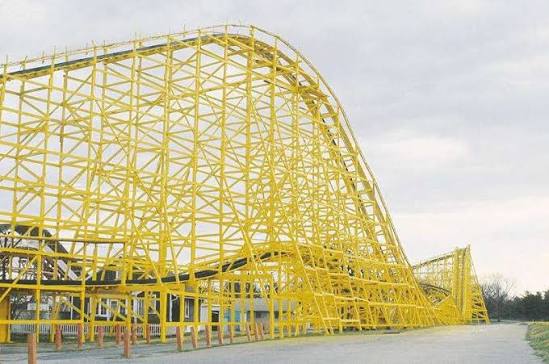
(image courtesy of Times News)

I was five years old when I would experience something that I had never felt before, a roller coaster, this roller coaster, currently called the Thunderhawk. It is world reknowned as one of the top ten wooden roller coasters. I remember that ride very well. But that is not what stuck with me most. Over a loud speaker atop a telephone pole, music was playing. Chicago, “Wishing You Were Here.” That memory sticks in my head to this day. I soon learned about the car radio, and AM radio stations. And then thank goodness, FM radio came along. And something new happened, I heard people talking about the music from the radio, DJ’s. I wanted to be one. I was still singing and performing, but I wanted to expand my experiences.

Throughout Junior and Senior high school, my musical involvement continued either through choral or stage, with training and competition. After high school, I would audition and join a local symphony chorus. I would also give several attempts at joining local bands in need of a vocalist.

In 1984, my music interest and range would jettison, as I finally took my shot behind DJ tables at my college’s radio station, where I would get to play all kinds of genres of music. I would take a couple shots at commercial radio, but it would be from doing live locations, such as weddings, reunions, and other parties that I would truly find musical happiness for the next forty years.

(image courtesy of Ebay)

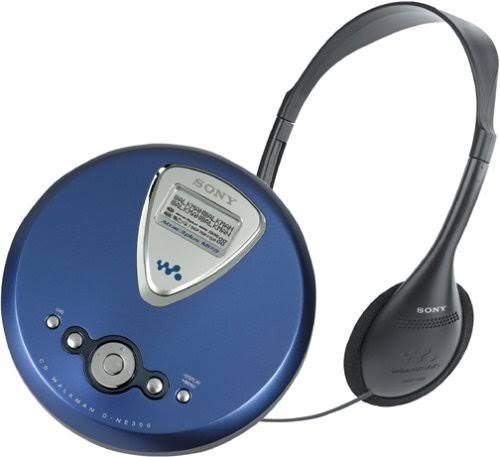
In 1988, music would take on a whole new role for me, and literally get me through the most difficult time of my life. It was in November of that year that I was diagnosed with Hodgkin’s Lymphoma. During diagnostic surgeries and chemotherapy treatments, my CD Walkman was filled with what I considered motivational tunes never left my side during those appointments. It seemed like every morning I drove to my radiation appointments, I would hear Madonna’s “Like A Prayer.”

After I completed my treatments, I continued with DJ-ing. And then my daughters came along, and one thing I wanted both to love and enjoy, was music. My other daugther developed her own path in music, that she still follows to this day, finding the right instrument.

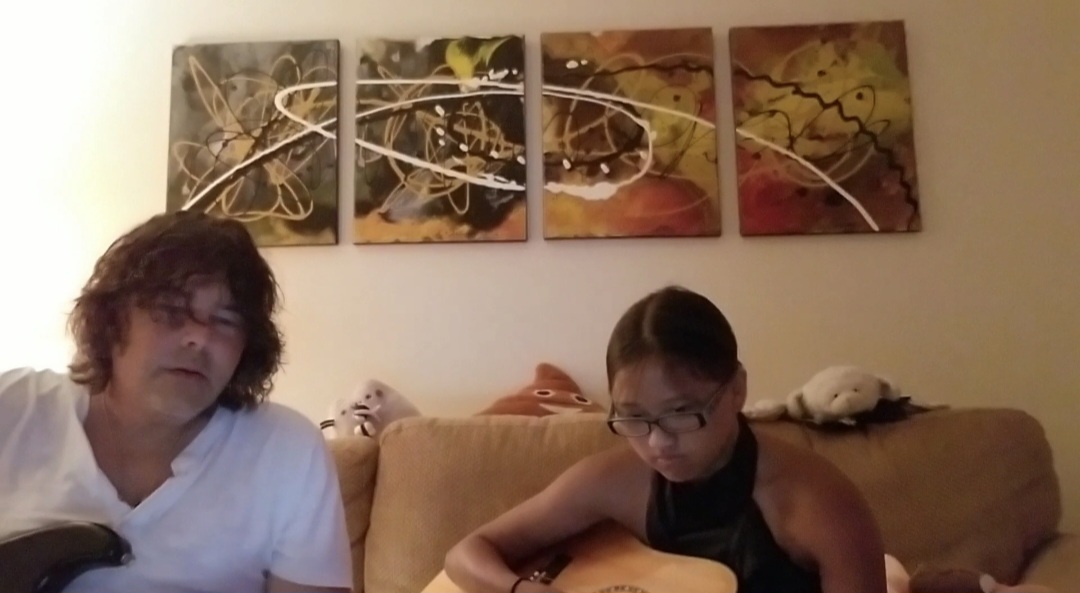
It was only a week before something happened I will never forget. She was learning guitar, and learned a song that she had heard me sing, “Chasing Cars” by Snow Patrol. One night, we both sat down and recorded a video of that song, with me singing vocals. A moment I will always cherish.

As I chugged through my survivorship, I would face many health challenges, which would mean bringing new technology, my phone loaded with my entire music catalogue. During appointments of rehab and physical therapy, I would once again play motivational music for me to exercise.

Approximately five years ago, something happened. After listening to their father’s music their whole lives, it was their turn to make their musical influences on me. It is an easy task with me being open to nearly all genres.

(photo from The New York Times)

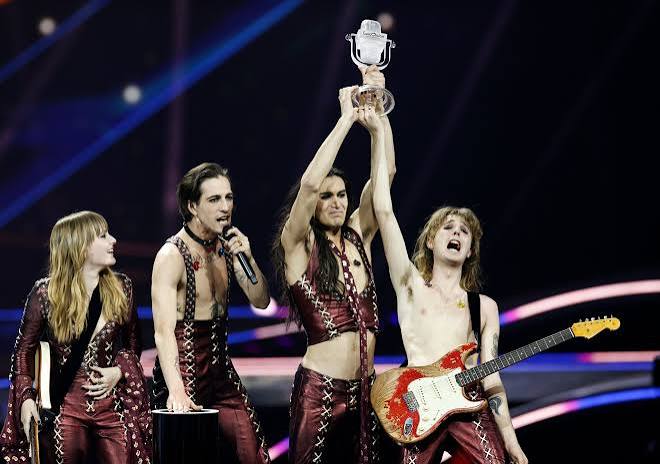
Eurovision. I had never even heard of it before, even though the international competition gave the world one of the most popular bands of all time, ABBA. My oldest daughter started showing me old video clips, and soon, we were watching each year’s competitions.

(image courtesy of Variety)

(image via IMDB)

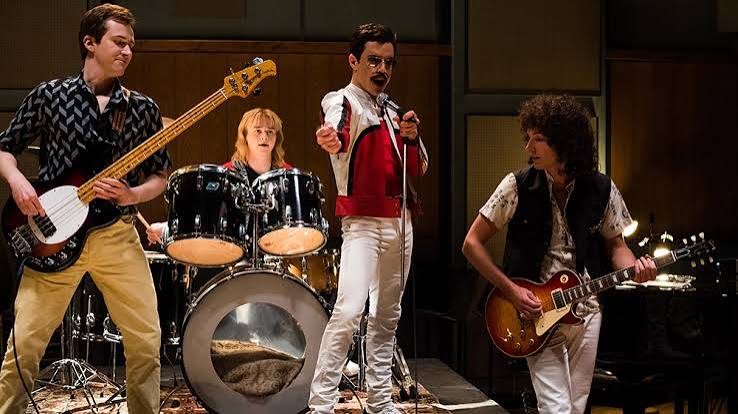
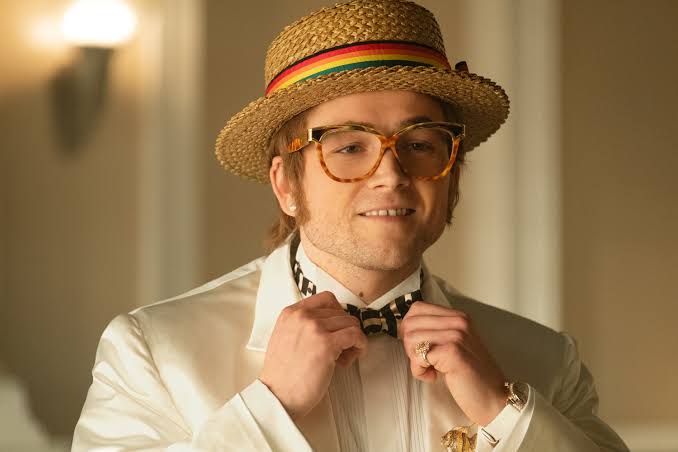
And then two blockbuster “rockumentaries” came out, Bohemian Rhapsody about Queen, and Rocket Man about Elton John. And the connection was made about music they listened to in my car when they were younger. But now, older, once in my car, the blue tooth gets hijacked from my older daughter’s Spotify and I am introduced to new music, not mainstream, but indie music. And not just indie music, it turns out that she is often going to see them live when they are local. The full circle moment comes when some of the venues she goes to these concerts, are some of the very same venues I saw concerts at decades ago. And since punk and alternative genres are some of her favorite, some of the bands I listened to have popped up in her collection. This was cool to hear. But my musical tastes are now expanding, including the Marias, Bikini Kill, and Amyl and the Sniffers.

(image courtesy of Wikipedia)

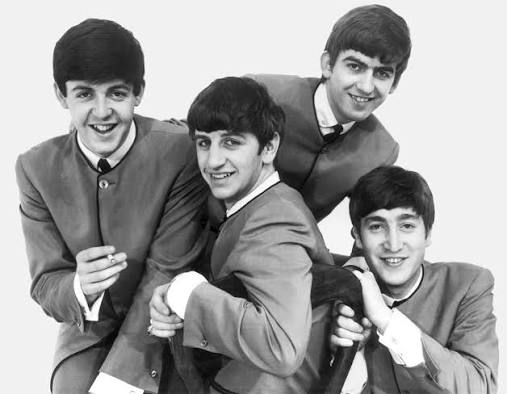
My younger daughter, not be outdone, needs electives for her college education, and on a whim, thought a course on the Beatles would be interesting. It may have originally seemed like just an easy padding for her GPA, but she really has enjoyed the course so far, learning all of the history of the Beatles together, and having me fill her in on the post-Beatles years. We have Beatles chats at least twice a week.

But then her discussion takes an unexpected turn. She really is confused as to how the Beatles, so good, so popular, could just break up, and never take an opportunity to get back together, until it became impossible. She admits that seeing Ringo and Paul appear on the same stage in recent years show that it could have happened. And then she turns to me.

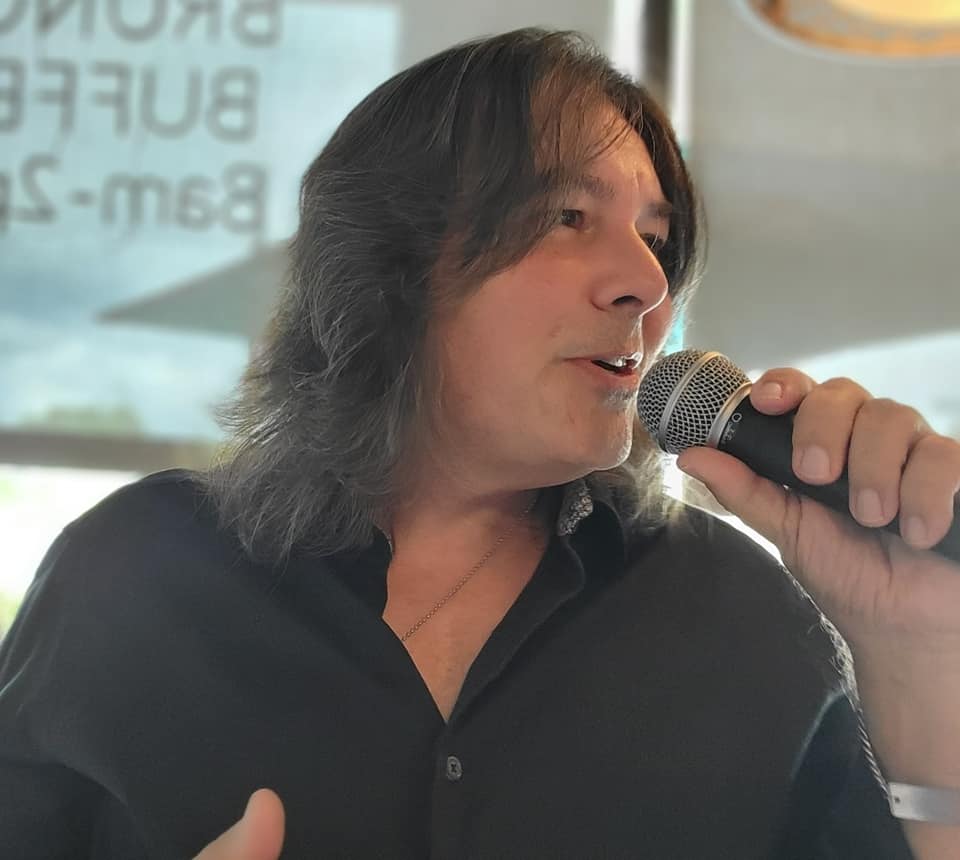
“Do you think you will ever want to perform again?” That came out of nowhere. She had heard me sing many times, and knows how important music has been to me. About the time that Covid hit, is when I stopped performing, well, because of the obvious. But over my survivorship, singing for me has not only been about the music, but therapy for my lungs and my heart, keeping both in optimum shape best I could. As long as I could expand my lungs enough, my technique and my sound was good. But without singing regularly, I stopped.

Getting back to her question, I thought about an opportunity that had come up almost a year ago. Some local musicians had gotten together, just to jam, and needed a vocalist, and asked if I wanted to sit in. It had been a while, but I really wanted to give it a go, no pressure, just to see what I could still do. Some of the players were new to me, which enabled a wider catalogue of music, songs that I had never tried before. By the end, I lost track of how many songs we had done, but they definitely enjoyed the jam session. But just as importantly, even though I was exhausted, I felt really good with how I did, my lungs supporting my voice.

And then came the idea, how about throwing a party, and we could play for everyone. To be clear, I still follow Covid precautions (for every virus now, not just Covid), but I thought I could be safe with just the spouses, and all the while, putting on a great gig. But soon I would hear that the number attending would be four times that of the band and their spouses. Initially, my thoughts were like “cool, haven’t performed in front of a large crowd like that in forever,” but then reality, and panic hit me, too many people, in too tight of an area, too much exposure. I had never felt like that before, and really felt embarassed by it, but my concerns about exposure were legit. And with this panic in my head, I bailed.

So, getting back to my daughter’s question, I can honestly say that I would love to give it one more go. I know my lung capacity has gotten worse over the past year, and my fatigue has become an issue. I would have to practice and train to build up my stamina, I honestly don’t know if I can. Would I take the opportunity if everything could be worked out? I know my daughter hopes, “yes.” She knows what music means to me. And that is purposely in present tense, it still matters to me.

Using Keyboard Medicine As A Crystal Ball


Ah, the good old days when you saw the doctor, they told you what was wrong, told you what they would do to make you better, and with everything worked out, you would live happily ever after. But over the decades, things have changed dramatically, for the best or the worst, depends on the individual situation.

As an addition to the “21st Century Cures Act” of 2016 which was meant to speed up medical research and treatment approval, in April of 2021, an addition was made to this law, requiring every health care provider to give patients access to their electronic records, immediately, rapidly, and completely. Oh, and free of charge. As a cancer survivor, I cannot tell you how many hundreds of dollars I once had to pay just to get copies of my medical records, my records, about me. I was already paying the doctor, why should I have had to pay for my records?

I would guess that doctors did not like the patient getting a preview of their records before the doctor could talk to them, for any number of reasons, mostly, the patient would jump the gun on diagnosis, and quite possibly stall treatment while arguing from a position the patient knows nothing about, wasting time. There is also wasting time, with distracting research and diagnosis that keyboard doctors find as they find out things on their own and then argue with their doctors. And did I mention, the frustrations of waiting to hear back from the doctors when even they have the information at their fingertips?

In 1996, HIPPA gave patients the legal right to get their records which of course takes time, effort, and money. But the records being digital today, these records are literally at our fingertips. And it is a known factor, that this convenience, does have its benefits. Patients can be better prepared for their appointments having the information ahead of time. A lot of time is wasted dealing with the emotional shock of a serious diagnosis, so if they can get that out of their system prior to the appointment, the doctor can deal with the issue at hand. And then of course, patients can potentially rid themselves of any anxiety waiting for the doctor to call them, sometimes up to two weeks or more.

But how the information gets used as a patient can also have its downside. For instance, a question came across my feed, “from what I have been reading, the typical lifespan of someone with congestive heart failure is 5 years. What are your experiences?” was posted to the social media page.

First, DAMN! I hope it is not five years! I am “living” with congestive heart failure myself, one of my many late side effects from my cancer treatments over 37 years ago. Fortunately, back then, I could not Google research on longevity for my cancer survivorship. But this poster put the question out there. As I mentioned, I am in CHF, and have been since 2021. That makes me at five years right now. I guess I need to make sure my ducks are all in a row at this point. Or… as the other 200 replies he got, basically saying the same thing, stay off Google, and then sharing their inspirational results, 10 years, 25 years, and more, living with CHF and the various activities they still enjoy, including running a marathon.

You see, the problem with making a blanket statement like “how long do people live with…”, one of the reasons statistics are so complicated, they do not take all the mitigating factors into consideration, especially when it comes to the individual patient and their history.

As I often do, I will use myself as an example, even though exposing myself publicly like this with my history some would not consider wise, I sacrifice that, because my purpose in survivorship at this point, is to make a difference to others. And so, I am as transparent as I can be.

As I said, I have been in CHF for five years now. And my past is definitely complicated due to the treatments (high dose radiation and toxic chemo) for Hodgkin’s Lymphoma 37 years ago. For the purposes of time, I won’t list all the potential issues or body systems that can have an impact on CHF, but just listing my heart history by itself, should seem daunting enough:

  • double bypass of the LAD following a “widow maker” level blockage
  • stent of the RCA after blockage of 90%
  • TAVR replacement of aortic valve
  • Left bundle branch block
  • Damage to the mitral valve
  • Well pronounced murmur
  • Ejection fraction of 40%
  • Myocardial ischemia
  • and of course, my diagnosis of CHF

As you can see, my heart is a mess. So if I were to take that poster’s question literally, I don’t have much time left. Now compared to someone who has no other issues with their heart, just CHF, of course, their survival is going to be less complicated, and hence live longer. I mean, is the patient smoking and drinking, eating healthy, living as stress-free as possible, exercising? And of course, do they have their own “other” health issues that could complicate their survival? That is why a blanket statement as fact, just does not work, and is actually harmful.

This is the danger of keyboard medicine, for as good as it can do, it can put the unwarranted fear into someone, who should really get their information and data from those who know, their doctors. Putting your trust in a digital crystal ball is dangerous and will also rob you of quality time you do have, until told otherwise. I know that I have more time than five years, and I am counting on many more.

I am a major believer and supporter of this medical transparency. It really is just a matter of how you use it, and how much time you obsess over the information. For me, I do not use it for the purposes of how long I may have, but rather as a reminder to appreciate everything that I have gone through.

Post Navigation