Paul's Heart

Life As A Dad, And A Survivor

Archive for the category “Education”

Playing The Cancer “Card”


cancer2

Imagine, it is hard enough to deal with a cancer diagnosis, struggle through the steps of the staging process, tolerate the brutal side effects, and manage the days after treatments have ended, worried about if the cancer is permanently gone.  For long term survivors like me, who have health issues to deal with, cancer has been the least of our worries.  But as if fighting our own bodies and mindsets were not enough, most of us in our lifetime will hear this phrase at least once, “playing the ‘C’ card, eh?”

cancer3

You pretty much have to intimately know the person making the comment to figure out if the words are meant lightly or critically.  Regardless, the insinuation that a cancer patient, or anyone dealing with a serious issue, would use their illness to acquire special favor or assistance.  I know speaking for myself, as I struggled with my cancer, and survival, the last thing  want is anyone to feel sorry for me, and at many times, to assist me or “baby” me.

I wrote in a previous post about co-workers who felt I was getting special favors at work, while I battled my cancer.  I dealt with other co-workers who, just because they saw me walking my neighborhood a week following my open heart surgery, felt I should be back at work.  I have a whole list.  My case is not unique.  We strive so hard to be treated normal, and without pity, that without external signs of what we are dealing with, we are not allowed to feel bad ever without being accused of using the cancer card.

1426107776976

Unfortunately however, I think our society has become desensitized because of so many who take advantage of systems.  We have all seen it.  A shopping center parking lot, someone is using their parent’s car which just so happens to have a handicap tag on it, and so, feels entitled to use the handicap parking space.  No one will notice, or no one will care, right?  Especially the one illegally using the handicap tag.  And then there are those we feel, who are not justified in even possessing tags like pictured above.  But if there is one thing I have learned, even after witnessing someone with a handicap placard being used on a pick-up truck, with “monster truck” sized wheels, there was a reason that placard was there.

Even Disney has adjusted their policies on allowing those with certain special medical needs while waiting for lines.

There is no scheme involved when a cancer patient or anyone else dealing with a severe health issue, needs to ask for a break, some assistance, some understanding.  This does not mean that we are playing any kind of “card.”  It simply means that today just might not be one of our best days.  And if you were to ever have to go through exactly what I am going through at that particular moment, you would understand that.

Cancer patients have very important needs, especially as far as exposure.  With immune systems challenged to the point of having no immunity system, there are many precautions that need to be taken so as not to be exposed to anyone have the common cold, or being exposed to someone who has refused vaccinations.  Fatigue is another major issue, especially during treatment, and in the weeks, possibly months following treatments, where a person just is not able to keep up.  In spite of having all their hair back, weight back to normal, and other things that remind you of how the person was before cancer, does not mean that there still are not issues being dealt with.

I possess a handicap placard.  And it does occasionally get used in certain circumstances.  Typically weather related when the temperature is too high, or the humidity is also.  The impact on my lungs is severe.  And as opposed to being held hostage inside my home, I do like to get out, and that means that the sooner I can get from my car to a building, and vice versa, the least time I have to spend recovering from gasping from air.  But by simply looking at me, you would never know this, unless you knew me.  There are other issues I deal with, but you only need to know this one example for the purpose of this post.

cancer1

So, for those of us, who deal with issues that require us to take extra time, ask for help, or just not be able to do something, it is okay.  And if we are accused of playing a “card”, so be it.  We have nothing to be ashamed.  But for those who feel the need, even in jest, to say “oh, playing the cancer card” or “oh, playing the heart card,” you cannot control how we receive that comment, and depending on what we are dealing with at that moment, we could end up feeling a lot worse.  And I do not think most people want that.

Children Of Divorce


This post is not about my own personal situation, nor will it discuss any details about my personal situation.  Examples listed in this post are just that, examples, which hope to bring awareness and understanding to a difficult situation that many families deal with.

DSC03196

No one is more aware of the emotional impact on children, from the divorce process itself, than someone who once was a child of a divorced family.  Of course, there are the cynics who will refer to divorce statistics to reinforce and coerce potential suitors of the potential marital future of any suitor.  And then of course, there are those who offer unsolicited judgment in the form of criticism as the only form of support.  A former psych major in college, I can tell you that books, opinions, and statistics pale in comparison and meaning when actually dealing with a child caught in the middle of a divorce.

People need to understand, that using statistics as a way to sway or pressure someone to somehow prove everyone wrong by staying in a bad relationship, or by insinuating that the children have been through enough trauma in their life (for whatever reason), that it should be better for them to continue life in a home of constant stress and turmoil, than go through the divorce process.  Quite the contrary.  To continue to subject children to the typical hostile environment of a bad relationship, married or not, is child abuse.  FLAT OUT CHILD ABUSE if you continue to leave your children in that environment.

It is much better to have the differences between parents separated, to be dealt with between the parents, than to put the children at risk of being emotional collateral damage.  As Dr. Phil states, “it is better for a child to be from a broken home than to live in one.”  Children have amazing hearing when they want to.  They also want to be able to have unrestricted and unsuspect conversations with both parents.  Children are not pawns.

Statistically, yes, I am now second generation divorced.  I proved the statistics correct.  But more powerful than the statistic is that I know what it is like to be a child of a divorced family, and experience means multitudes more than any information provided by books.  I know what my daughters are feeling right now.  I also know and understand what my parents had to deal with.  This should be a good thing and help in protecting the children and keeping the emotional scarring to a minimum.

But there are so many in the world, who have not had any experience with a divorce, other than receiving or observing input provided by bias family members and friends who may or may not have gone through a divorce.  For many, opinions and recommended by nothing more than “bandwagon jumpers”, totally unaware of the complete history of the relationship, and rely solely on, “stick it to him/her.”

Again, I am not referencing my own situation.  I will not discuss those details.  This post is about providing awareness.  Awareness that I am indeed trying to practice what I preach, but to also let others know, who are in the process of a divorce, the children’s well-being need to be considered first and foremost.  Would the children actually be better off if the parents did not get divorced?  How to protect the children from comments not only from within the four walls of their home, but also from mean-spirited playmates?

The potential dangers are of serious concern.  And regardless of my experience as a child of divorce, that does not necessarily mean that I can prevent these things from happening to my children.  But rather, by being aware of them, I know the potential things to keep an eye out for signs.  I refuse to be a parent who claims “I didn’t know”.  So I would like to share with those of you, dealing with divorce and custody things that I have learned or experienced when children are involved.

For most children, having both parents in the home (not being insensitive to those who were brought into family with only one parent), having both mom and dad is all that they have ever known.  Even when the time has come that both parents do separate activities and rarely spend time together as a family, holding hands, kissing, simply cohabitating in the house, the children still see both parents at the same time.  Regardless of the problems, “mom and dad” are still together.  And it is important to make sure that no child ever feels as if they are to blame for the divorce.  And this feeling will develop if not careful to watch conversations around the child.

But when the two parents decide to separate and divorce, it does not take long for a child to figure out that one parent will no longer then be living in the house.  The relationship between mom and dad does not change ironically, because they have been acting in this manner for a long time.  But now the children recognize it.  Unless the children are shown that they will not have to prove loyalty to one parent or another, it will not take long until the children are drawn into the process itself.

My main intent when I left home was to make sure that my daughters understood two things.  Their mom was always going to be their mom, and I was always going to be their dad.  And we made it as positive an experience as I could, that our children would learn that they had two places to call home.

But children, while very intuitive and adaptable, are also capable of making their own opinions, and when you mix children who are about to enter puberty, or are already teenagers, divorce and custody can get very complicated.

As children get older, they already gain independence.  And children who struggle with divorce, have a tendency to grow even more independent.  And that could be understood.  Parents will be taking attention away from their children to deal with the divorce, and children soon learn to rely more on themselves for even the simplest of things.  But there is a reason why we do not let 8 year olds drive cars or legally permit 15 year olds consume alcohol, because they are not capable of making grown up decision.  Yet that is exactly what happens to a child who escalates this independence if not followed closely enough.

Suddenly, those that the children spend the majority of their time with, and not the custodial parent, are the ones who will make lasting impressions as well as enable the hurting child to erroneously make horrific and sometimes tragic decisions.  And it is amazing nonetheless to hear a parent proclaim that they had no idea, when a child’s school grades suffer, bad habits like smoking and underage and unprotected sex occur, and possibly worse, such as issues with legal incidents.

Things to be concerned about and watch for?  Depression, anxiety, smoking and drug use, and sexual activity.  To assume “not my child,” all but seals the deal that they will face those behaviors and activities.

I once kidded with my former spouse, when we first adopted our oldest, that she would constantly come to me first, when picked up from daycare.  After all, my ex was the soft and cushy parent, where as I was known as the strict one.  I explained that it was the security and dependability that she always got when she came to me.  Whereas with a softer parent, decisions are made on emotions, which are neither reliable or dependable.  So it should come as no surprise if either of my daughters should some how now describe me as being unreliable or dependable, because I am no longer with them 100% of the time.  Which is why, I spend each and every day talking to them through Facetime so that daily, they are reminded that  am still a major part of their lives.

It is important that a child knows, that love will never be lost between the parent and the child.  And that is difficult, because their only examples of true love are now in the process of divorce and separation.  And if it can happen to their parents, who is to say it will not happen between parent and child?  Emotional reactions will be determined most likely by their age.  Younger children may have a tendency to regress in behavior while older children may lash out in anger or other harmful behaviors.

Parents have to understand, in dealing with children and divorce, although “grieving” is most often affiliated with death, grieving is actually associated with any kind of loss, and that includes the loss of the family as a unit.  Children are not adults, but they will grieve just as adults.  The important thing to remember is to pay attention to the children even more so than when you did as a family unit.  There is nothing worse than hearing a parent say “I wish I had known” or “I never saw it coming.”

As a child of divorce, I have just told you.

Hiding The Pain… Because We Have To


A current news story about an airline disaster, with speculation of a pilot possibly having had medical issues that could have contributed to the crash of that plane, led me to write this post about something that I have not had to think about for a long time.  This post is not about the disaster itself, but rather choices that many who face challenging illnesses are forced to deal with, in order to survive.

pain6

It happens without warning, you get hurt.  It is called an accident.  You end up with an injury and you seek out proper medical treatment, and you plan to move on, even return back to the work assignment that you were working on.  Only in most employment situations, it is not this simple.  For an injury on the job, we supposedly have protection in place to make sure that we are taken care of.

But when we get injured at home, or develop a serious illness, we are supposed to have federal protection in place, called the Family Medical Leave Act.

The truth is, in neither circumstance are we guaranteed protection with our employer.  Your best bet at being treated like you matter, whether hurt at work or at home, is if you are dealing with a small company, a “mom and pop” company, where you will employer and employee will spend a lot of time with each other, perhaps more than people who have spouses and the time that they spend together.
pain5

More likely than not, if a person is hurt on the job, more than medical care may be given for the injury.  Depending on the severity of the injury, an employer will be obligated to report the injury to OSHA.  This causes major issues to an employer.  An employee risks being scorned by the employer for the inconveniences that will come forth that quite possibly have prevented the injury.  Just Google coal mining accidents in recent years and you will see what efforts are made to cut safety and the “impositions” forced on the employer following the accidents.

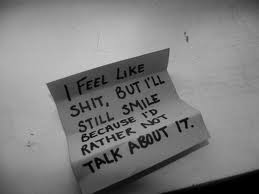
It does not stop there.  Even co-workers are eventual participants in the scorning as new policies that change standard operating procedures because of the injured person now “inconvenience” them.  If you have been in the work force long enough, and have seen this happen enough, then you can also guess, that many people would rather “hide” their injury than be harassed often daily.

In 2003, my hand was caught between a 500 pound cage and a doorway, crushing my wrist.  It was an innocent accident, well for the most part.  The hallways were crowded, and instead of pushing the cage, I had to pull it, with my back to the direction I was moving.  And in spite of my slower and careful speed, alternately checking both sides of me, my wrist still got smashed.  So while the conditions were not ideal, it was still an accident.  I did get medical treatment, sort of (put ice on it, take a few Tylenol, and wait a few days).  But it was the paperwork report and the treatment by certain co-workers that proved very unfortunate.

I was not losing time from work, so my employer did not have to worry about OSHA.  The problem was that I was working temporarily in another building for the day.  And that building was on an impressive streak, and following my injury, I can almost assume how they got to that point, being injury-free for an entire year.  Were they to make that point, the entire staff (only in that building I should add) would not only be recognized for their effort, but be rewarded with a very nice company coat.  My injury, just weeks before the year mark would approach, ruined that.  Immediately, I had co-workers just telling me to “shut up”, “just put up with the injury”, and “change my story” because I “was fucking it up for everyone!”  I was injured.  I needed surgery to correct the injury, and all anyone was worried about, was their jackets.

The solution was quite comical, and it did not eliminate the harassment that I was receiving, but it did get those employees their recognition and their coats.  Because I was only temporary in their building, the report would be written that the injury had taken place in my regular building, a blatant act of fraud on the report.  But for those who watched me go through all this abuse learned painfully what was at stake for taking care of themselves, that it would be better to hide the injury than face the scorn.

pain2

But what happens if you are facing a serious illness, injury, or accident?  What if you are dealing with cancer, cardiac issues, burns from a fire, an auto accident?  Surely there would have to be compassion.  After all, who would want to be in the shoes of anyone in those circumstances?

pain4

I had not even begun my treatments for Hodgkin’s Lymphoma before the first co-worker lobbed accusations of me being treated “special.”  Now keep in mind, I made a decision that other than the diagnostic surgeries, I was not going to miss any other time from work, other than to go to my treatments.  My employer was on my side as he had gone to extraordinary lengths to improve our health plan to provide me the best medical options.  The benefit would go to everyone, because now everyone had that coverage.  I made the decision back then, that it was important for me to be at work, so that my mind would be distracted from the daily struggles of thinking about cancer every day.  I missed a half an hour of work in the morning for my radiation treatments (for 30 days), and two Fridays a month, I lost 2 hours at the end of the day so that I could get my chemo (for 8 months).  I missed no other time because I spent the weekend getting sick, and recovered well enough on Monday to return to work.

Somehow, my co-workers felt that the time that I was being granted for my treatments, was perceived as being “given favors.”  I would be willing to bet that not one of my co-workers who were harassing me would have been willing to trade places with me.  But I made a decision that I thought would be right for me, but it was all wrong for everyone else, and that would eventually take a toll on me emotionally.  But I could not hide what I was going through.  My body was showing the effects of the treatments.

pain3

In 2008, doctors would discover what the extreme cancer treatments had done to my body over the years.  This would result in doctors ordering medical restrictions that would not only become permanent, but would increase for me as time goes on as my issues progress, but might also increase as complications arise.  Unlike the obvious balding from chemo, my issues are hidden as well as I can do.  But there were days when I could not hide my limitations, and just like before, issues developed between myself and my employer, and myself and my co-workers.  My employer would often find it difficult to find work for me to do under the requirements of the FMLA, but better to have me reading papers at work, than to pay me sitting at home collecting sick pay or disability.  But to many of my co-workers, strong resentment built.  Not only was there resentment for the special assignments I was given that were within my restrictions, so that the others were never given “special work”, only the normal daily grind assignments, but I was being paid the same as them, and for doing what they perceived as easier work.  Again, I do not know any of them who would have traded places with me to undergo emergency heart bypass… to have restrictive lung disease… to have a precancerous condition called Barrett’s Esophagus… to having radiation fibrosis syndrome… and more.  But because those things are more easily hidden, unlike chemo conditions, most assume that the issues are either not real, or at least not as bad.  Again, walk in my shoes.

Were I to do it all over again, and I said this prior to my heart surgery that I would not let it happen again, and I did, just to prove to myself how “strong” I was, I would have gone right for Social Security Disability, which cancer is definitely one of the diagnosis covered as is all of the other issues I deal with today.  But weighing the horrible treatment I got from especially my co-workers, I would have rather sat at home, risking feeling sorry for myself.  Because at least I knew my situation was real, and I knew what I could do and could not do.

pain1

For 26 years, I let what others thought of me, dictate how I treated myself, so as not to upset them, no matter the physical cost to my physical and mental well-being.  Just keep pushing… PUSH HARDER…  HARDER!!!

I have now spent over half of my life, living with cancer, and its late side effects.  Over all, I am a very positive person and appreciate life and what it has to offer.  But I stopped letting others tell me how I feel and that things were not “so bad”.  Never again.

Employers need to do more to protect those who face adversities with their health.  It is called being a human being.  It is being compassionate.  A work atmosphere that emphasizes care instead of pause and fear will be more productive and profitable, if employees did not feel that they had to hide what they were going through.

But until those days come, I would offer that the moment you are diagnosed with a serious illness or facing some other health trauma or crisis, file for SSDI immediately.  You will be better off filing right away with the tedious and time consuming process, but you will also be better off emotionally not having to deal with the selfishness of others who expect more out of you, than what you know you are capable of.  Just because they do not see it.

Post Navigation