Paul's Heart

Life As A Dad, And A Survivor

Archive for the category “Education”

Using Keyboard Medicine As A Crystal Ball


Ah, the good old days when you saw the doctor, they told you what was wrong, told you what they would do to make you better, and with everything worked out, you would live happily ever after. But over the decades, things have changed dramatically, for the best or the worst, depends on the individual situation.

As an addition to the “21st Century Cures Act” of 2016 which was meant to speed up medical research and treatment approval, in April of 2021, an addition was made to this law, requiring every health care provider to give patients access to their electronic records, immediately, rapidly, and completely. Oh, and free of charge. As a cancer survivor, I cannot tell you how many hundreds of dollars I once had to pay just to get copies of my medical records, my records, about me. I was already paying the doctor, why should I have had to pay for my records?

I would guess that doctors did not like the patient getting a preview of their records before the doctor could talk to them, for any number of reasons, mostly, the patient would jump the gun on diagnosis, and quite possibly stall treatment while arguing from a position the patient knows nothing about, wasting time. There is also wasting time, with distracting research and diagnosis that keyboard doctors find as they find out things on their own and then argue with their doctors. And did I mention, the frustrations of waiting to hear back from the doctors when even they have the information at their fingertips?

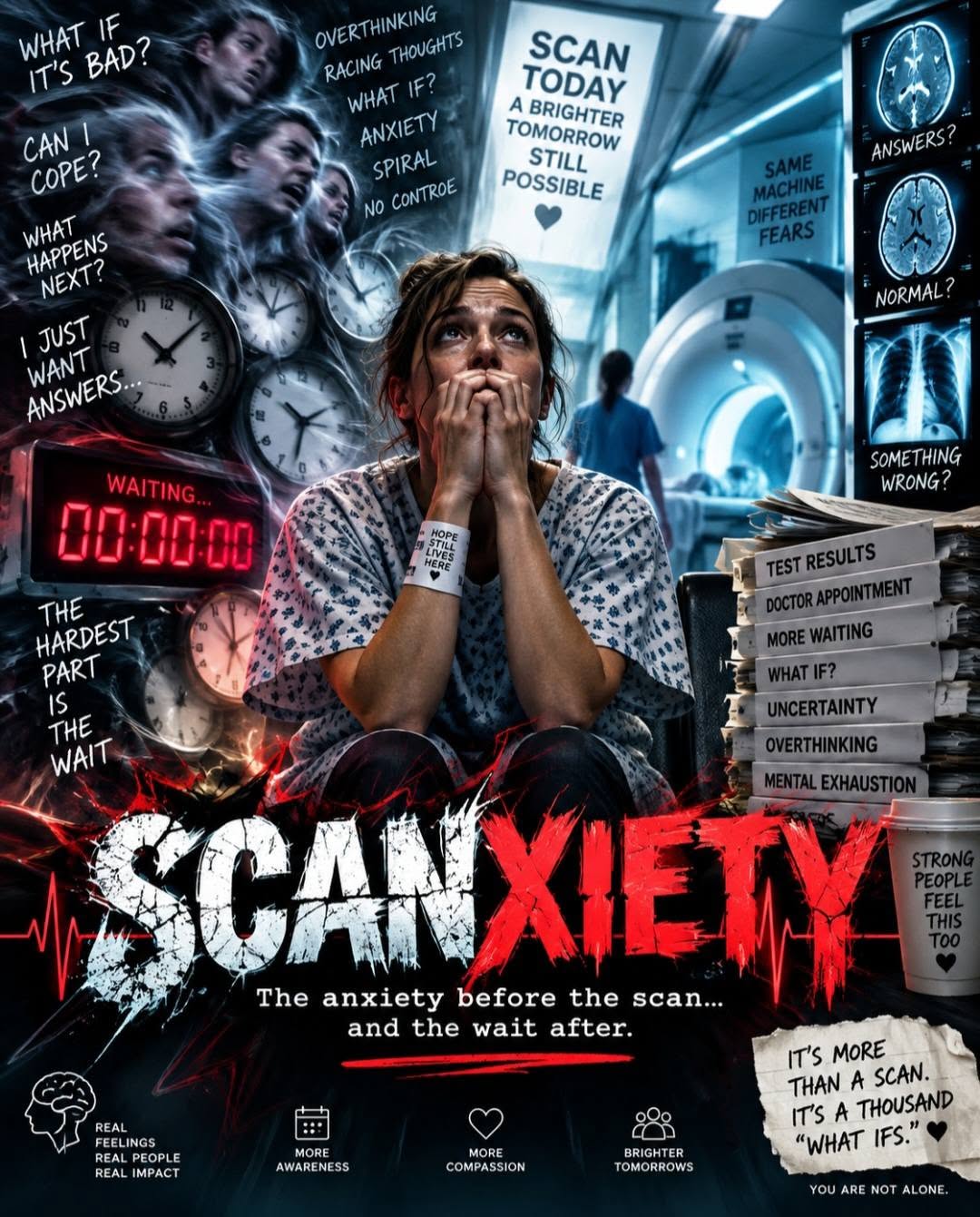
In 1996, HIPPA gave patients the legal right to get their records which of course takes time, effort, and money. But the records being digital today, these records are literally at our fingertips. And it is a known factor, that this convenience, does have its benefits. Patients can be better prepared for their appointments having the information ahead of time. A lot of time is wasted dealing with the emotional shock of a serious diagnosis, so if they can get that out of their system prior to the appointment, the doctor can deal with the issue at hand. And then of course, patients can potentially rid themselves of any anxiety waiting for the doctor to call them, sometimes up to two weeks or more.

But how the information gets used as a patient can also have its downside. For instance, a question came across my feed, “from what I have been reading, the typical lifespan of someone with congestive heart failure is 5 years. What are your experiences?” was posted to the social media page.

First, DAMN! I hope it is not five years! I am “living” with congestive heart failure myself, one of my many late side effects from my cancer treatments over 37 years ago. Fortunately, back then, I could not Google research on longevity for my cancer survivorship. But this poster put the question out there. As I mentioned, I am in CHF, and have been since 2021. That makes me at five years right now. I guess I need to make sure my ducks are all in a row at this point. Or… as the other 200 replies he got, basically saying the same thing, stay off Google, and then sharing their inspirational results, 10 years, 25 years, and more, living with CHF and the various activities they still enjoy, including running a marathon.

You see, the problem with making a blanket statement like “how long do people live with…”, one of the reasons statistics are so complicated, they do not take all the mitigating factors into consideration, especially when it comes to the individual patient and their history.

As I often do, I will use myself as an example, even though exposing myself publicly like this with my history some would not consider wise, I sacrifice that, because my purpose in survivorship at this point, is to make a difference to others. And so, I am as transparent as I can be.

As I said, I have been in CHF for five years now. And my past is definitely complicated due to the treatments (high dose radiation and toxic chemo) for Hodgkin’s Lymphoma 37 years ago. For the purposes of time, I won’t list all the potential issues or body systems that can have an impact on CHF, but just listing my heart history by itself, should seem daunting enough:

  • double bypass of the LAD following a “widow maker” level blockage
  • stent of the RCA after blockage of 90%
  • TAVR replacement of aortic valve
  • Left bundle branch block
  • Damage to the mitral valve
  • Well pronounced murmur
  • Ejection fraction of 40%
  • Myocardial ischemia
  • and of course, my diagnosis of CHF

As you can see, my heart is a mess. So if I were to take that poster’s question literally, I don’t have much time left. Now compared to someone who has no other issues with their heart, just CHF, of course, their survival is going to be less complicated, and hence live longer. I mean, is the patient smoking and drinking, eating healthy, living as stress-free as possible, exercising? And of course, do they have their own “other” health issues that could complicate their survival? That is why a blanket statement as fact, just does not work, and is actually harmful.

This is the danger of keyboard medicine, for as good as it can do, it can put the unwarranted fear into someone, who should really get their information and data from those who know, their doctors. Putting your trust in a digital crystal ball is dangerous and will also rob you of quality time you do have, until told otherwise. I know that I have more time than five years, and I am counting on many more.

I am a major believer and supporter of this medical transparency. It really is just a matter of how you use it, and how much time you obsess over the information. For me, I do not use it for the purposes of how long I may have, but rather as a reminder to appreciate everything that I have gone through.

The Disappearing Phenomenon


Illness doesn’t just reveal the strength within you – it reveals the strength, or absence of it, in the people around you. That realization can be painful, but it often leads people to build deeper, more authentic relationships with those who choose to stay.

So where does everybody go? Why do those around us, we consider our close friends and family, disappear when we face extreme health challenges such as cancer and other serious health issues?

There isn’t one universally accepted psychological term for this behavior because people leave for many different reasons. Depending on the reason, different concepts may apply. Social withdrawal because they feel uncomfortable, overwhelmed, or don’t know what to say. Avoidance coping, avoiding situations that cause them emotional distress, such as someone else’s cancer. Compassion fatigue which is common among caregivers or healthcare professionals who simply get emotionally exhausted. Emotional avoidance because being around someone seriously ill evokes fear, sadness or thoughts of mortality. Relationship attrition where the relationship just gradually fades over time, accelerated by the illness. Stigma or illness-related stigma when people distance themselves because of misconceptions (like cancer being contagious), fear or discomfort. And disenfranchised support when someone doesn’t receive the emotional support they reasonably expected.

Among cancer survivors, this experience is often described more simply as “the disappearing friends phenomenon,” or social abandonment during illness. These are not a formal diagnosis, but widely recognized experiences in survivorship communities.

Illness has a painful way of revealing who cannot walk through the storm, but it also reveals the rare souls who never let go of your hand. Hold tightly to them, for they are your true family and friends.

In most cases, it isn’t that anyone stops caring. Quite the opposite. Having to hear that someone they know or are close to is facing a life and death challenge, is something they will never forget. It is that serious illness changes relationships in ways most people are unprepared for.

When your world grows quiet and the crowd disappears, don’t mistake their absence for your worth. Some people leave because the road is hard, not because you are unworthy.

Some people disappear because they are afraid. They don’t know what to say, so they say nothing, and that is actually a good thing. They worry that they will say the wrong thing, remind you too often of your illness, or have to confront the possibility that something similar could happen to them. And then there are the thoughts and fears, that the one they care about so much, may not survive.

The people who walk away during your darkest days don’t define your value. The ones who stay remind you of it.

Others disappear because illness is inconvenient. Yes, I know, but you are the one going through it. When life becomes centered on appointments, treatments, fatigue, and uncertainty, relationships that were built around fun or convenience may not survive. Crisis reveals which relationships were deep and which were mostly circumstantial, and finding out what you thought were most dependable, and not after all, can be devastating (such as a marriage).

Cancer doesn’t just test the body, it tests relationships. Some will fade away, but those who remain will become the light that helps guide you through the darkness.

Some people are overwhelmed by their own lives. They intend to call or visit, but days become weeks, and eventually guilt keeps them away even longer.

You may lose people you thought would never leave, but you will also discover people you never knew would stay. Sometimes the greatest gift hidden inside hardship is learning who truly belongs in your life.

There are also people who simply cannot tolerate suffering. Seeing someone they care about in pain forces them to face their own fears about mortality, aging, and loss. Distancing themselves becomes a way of protecting themselves emotionally.

One of the cruelest side effects of serious illness is discovering that not everyone has the strength to stand beside you. But one of its greatest gifts is discovering those who do. Treasure them, they are the people who love you for who you are, not just when life is easy.

There are those who will surprise you. Sometimes a casual acquaintance, a coworker, a neighbor, or even a stranger becomes one of your strongest supporters. Illness has a way of revealing character more than history.

Many survivors talk about this as one of the hidden losses of cancer. They expected to fight the disease, they did not expect to grieve friendships. The loneliness after the diagnosis and sometimes after treatment ends can be as difficult as the physical side effects.

Paradoxically, illness can also make your world smaller, but richer. While the number of people around you may decrease, those who remain often become more authentic. You learn who will answer the phone at 2am, who will sit beside you in silence, and who loves you without having to be healthy.

For many survivors, this realization changes them permanently. They become less interested in superficial relationships and more protective of their time and emotional energy. That is one reason people often speak about “the new normal.” The illness doesn’t just change the body, it changes your understanding of friendship, family, priorities, and what love really looks like. Serious illnesses don’t necessarily change the people around us, but they often reveal who those people already were.

And no doubt, while that revelation can be heartbreaking, it can also be freeing. It allows you to invest in the people who stay, welcome the unexpected people who step forward, and let go of relationships that existed only when life was easy.

For many of us cancer survivors, the question eventually changes from “where did everybody go” to “who walked with me when I needed them most?” Those are often the people who become family in the deepest sense of the word.

Perhaps the most important thing to remember is this, that the behavior is usually more about the other person’s ability to cope than about the worth of the person who is ill. Some people genuinely just don’t know how to face suffering, while others step forward in remarkable ways. Just as there is no training for developing a serious illness such as cancer, there is no training for being a caregiver either. We are both thrown into these rolls. The realization can be painful but it often leads people to build deeper, more authentic relationships with those who choose to stay.

Ice Cream – I’ve Always Screamed For Ice Cream!


(image created via ChatGPT)

“Ice Cream! Ice Cream! We all scream for ice cream!”, the long time favorite chant. Today, thanks to a presidential act in 1984, is recognized as National Ice Cream Day. I say it is literally okay to have ice cream for breakfast, lunch, and dinner. Okay, maybe a little bit overboard, but… back in 1988, when I was going through chemo for my Hodgkin’s Lymphoma, it was not unusual for me to eat large amounts of ice cream (and pasta). Why you may ask?

Oddly, as part of my chemotherapy cocktail of MOPP-ABV, I won’t get into the individual drug names and issues related to each, I was actually restricted from certain foods, surprisingly and not a problem for me being a picky eater, the restrictions were for “healthy” foods such as brocolli and cauliflower, but also others that I did eat, such as processed foods like cheese, carbonated beverages, and bananas. The reasons ranged from contradictions to the chemo, to issues with bloating and gas, bacteria from eating raw or not cleaned well enough vegetables, or issues with high fiber which can be problematic if experiencing bowel or mouth irritation issues.

But do you know what was not restricted? Ice cream, and of course pasta. Again, mentioning that I am a picky eater, I had no problem with either of these options. However, a warning from my oncologist, “don’t go crazy on this stuff”, making reference to a major side effect from Prednisone, one of the chemo drugs in my cocktail, weight gain.

One thing that I had not expected going through chemotherapy, especially after going through radiation therapy having lost weight, was gaining weight. Anything I knew about chemotherapy stereotypes, was that patients looked almost waif-like having lost so much weight.

Unexpectedly, I gained fifty pounds during my chemo, I believe courtesy of the Prednisone side effects; increased hunger, fluid retention, metabolism changes, and yes, muscle loss. And when I say hunger, I mean ravenous. I could eat pints of ice cream at a time (which by the way also helped with the mouth discomfort), and quart containers of meals made of pasta.

The result of this diet? Something we in the cancer world describe as “moon face.” Now I am not going to post any picture examples of this, because this is definitely one side effect, next to hair loss, that really upsets us. But, just as it describes, the moon is round, and no matter the shapes of our faces, our faces look swollen, and much more round, like the moon as a result of the high dose prednisone intake.

Multiple drugs are often used to treat cancer together, because that is what was studied and determined to have the best chance to reach remission, and more importantly, stay in remission. And in particular, Prednisone actually helps to reduce side effects of the other chemo drugs, and has its own benefits of destroying lymphoma cells, in working with the other drugs to reduce any inflammation, reduce any potential allergies, and there is even a benefit to reducing (though not eliminating) nausea, that is what other drugs are for.

But it is that one super unfortunate side effect, increased hunger, that will easily cause a potentially major weight gain. Which to be honest, gaining some weight during chemo is not a bad thing. I do understand that the fifty pounds I gained was not good. Here is the important part.

Just like the hair loss, the weight gain is temporary. Just like the hair has already started growing back towards the end of the treatments, slowly but surely, so will the weight drop off. And if you use the hair growth by comparison, it is not going to happen overnight.

At the completion of my chemo, the date that I have marked on the calendar of this page, I gave myself a break for about two weeks just to soak in all that I had gone through, now in remission, gathered my thoughts, to produce a checklist of goals that I now wanted to achieve, and think how I could achieve them, and potentially how long they could take.

My number one issue was dropping the fifty pounds I gained. It definitely did not have me feeling well. So the easy part would be, focusing on my diet. Now off the prednisone and chemo, my diet was no longer restricted, and the amounts would be much smaller as my hunger had decreased. Exercise, even the smallest effort, such as a five-minute walk in the beginning and building up as time went on, would make a difference because for two years, I did nothing. As time went on, and I felt my body get stronger, I was able to do more. And yes, the weight did come off, all of it. It did take six months, and if you tell any of us in the beginning how long it would take, it would overwhelm us. But I am just being realistic. If you went through cancer treatments, you likely went through a year or more of some of the most difficult days. You can get through the recovery so much more easily.

The great thing is, of all the things that I “lost” my love for food-wise during my cancer days, ice cream is not one of them. Which is why I am definitely celebrating today.

(image courtesy of Simon Says Dip This)

(image courtesy of Istock)

And with three meals to choose from, it will help me not be limited to my choices… waffles and icream for breakfast, an ice cream sandwich with my lunch sandwich, and a nice sundae to cap off Sunday. Sounds like a plan.

Post Navigation