40,000!!!!

Thank you! Thank You! Thank you!
Today “Paul’s Heart” recorded 40,000 views!
I am truly humbled.
On to 50,000.

Thank you! Thank You! Thank you!
Today “Paul’s Heart” recorded 40,000 views!
I am truly humbled.
On to 50,000.
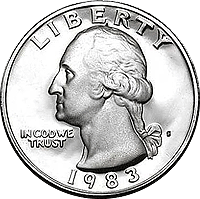
Our country has often talked about getting rid of the penny, many times considered useless. And there is rarely ever any mention of nickels and dimes anymore. But the quarter, I would like to tell you something about just how powerful a quarter can be.
I do not remember when or where I heard of this life lesson, but the challenge was this. Place a quarter on a window ledge in your kitchen. Lore had it, that if you lived your life in that house, and that quarter remained in that same place the entire time, you would be wealthy. The lesson, as long as you did not touch that quarter, you had the ability to save money. I guarantee, if you took your entire lifetime and added up the pennies, nickels, and dimes that were spent by you, the figure would be astounding. That is the perspective that people lose in the short term, why a few pennies for change, do not seem to matter and should. Add up a lifetime, and you have a much larger amount.

One of my roles as a father, is to teach and prepare my daughters, how to handle money. They need to learn how to save. They need to learn how to spend. They need to learn the disadvantages of “spaving” (impulse spending for the sake of saving money). They need to learn that there are sales tactics that are just plain deceitful, and while in the short run may seem quite satisfying, can ultimately cause a lifetime of financial issues. It is important that they learn the value of the dollar now, as well as the dangers of credit.

We want stuff. And many times, we can control our urges and impulses. Other times we cannot. We see something. We want it, and we want it now. Even the slightest delay however, is enough for our common sense to take over, allowing us to rationalize, just how badly we actually need something.
Last year, I took my daughters to an event that they were both interested in. Over the year, they both had saved for the activities and souvenirs of the event. My job was to get them there. It was up to them, their decisions, what happened once there. It was a simple lesson really. Impulse control, dealing with the “kid in a candy shop” mentality. Once inside the event, there would be excitement and mad impulses. If my job was done correctly, at worst, they would leave retaining at least some of the money they came with.
It was an expo. So that meant visiting a lot of vendors and stands. It is understandable with the adrenaline of excitement, at first sight of the first vendor, “gotta have it” mentality kicks in to overdrive. As parents, we see this early on in childhood. We set the tone as far back as then, for the day we were about to begin.
The strategy was simple. I explained to my daughters that there was no rush for time. I wanted them to walk the entire floor before making any decisions on purchases. Together, they viewed the many vendors, stands, and celebrities. They spent five minutes at one location, fifteen at another. My daughters understood, as they advanced from one booth to the next, what I had explained to them earlier, if you start spending without knowing what is ahead, you may not have enough when you come across something you truly want.
There were several hundred stations, and as we got further into the center, a lot more attention to detail was being paid. I could see as they looked at everything, not only were they looking at price, they were also looking at quality. About a half an hour in, there was an item that definitely caught their eyes. My daughters worked with each other to determine if the item should be bought, and proudly so, if they might want to pool their efforts together.
After we got through the entire hall, hardly anything had been purchased. They counted their money, and seemed quite shocked at what they had remaining, clearly expecting to have spent it all. I then told them, if they would like, we would take another walk through before we left, in case there was something they wanted to take a second look at. And because they controlled their impulses, they were each able to purchase something else that they may not have been able to. Even after that second walk through, each daughter still left the expo with more than half of the money they came with.
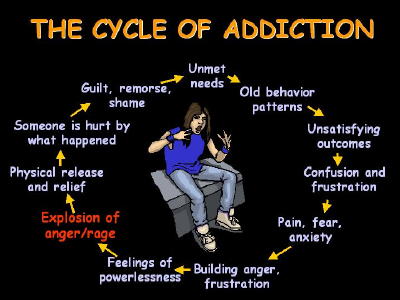
It is my hope that even such a minor life lesson like the one mentioned above, is enough to stick with them. Because, if we do not learn to control that urge/impulse, the effects can be devastating not just on ourselves, but on those around us as well. The need to have stuff, “keep up with the Jones’s” to have everything that others have, to devalue and not appreciate what you already have, are all part of an addiction. Chances are also pretty good, if you have an addictive personality (cigarettes, alcohol, gaming, foods), you may probably develop a problem handling money, unable to control wanting something, just because it is new, whether you can afford it or not, you just want it, or you are entitled to it.
Again, I want to teach my daughters the importance of saving. It has nothing to do with depriving yourself of stuff. But as I know personally, shit happens in life. And without planning ahead, the results can be disastrous. Over the years, I have had several health events that have left me out of work many months. As a union employee, I often had to prepare to go out on strike during contract negotiations (you do not get paid when that happens). And of course, any other emergency that arrives. I always tried to save at least three months worth of salary to prepare for any type of crisis that would affect us financially.
It was always that quarter on the window ledge that inspired me.

But stuff does happen. And if you are prepared for it, how you deal with those emergencies is also determined by how you prepared for it. Those who have not saved, will struggle emotionally, often feeling desperate. If you are dealing with an emergency that could have financial consequences, the last thing you need added to your problems, is emotional instability and irrational decision making.
Developing good money management skills at a young age, while impressionable is important. What children learn now, will have a huge impact on their future from jobs, to cars, to homes, and to family.

I am now on my third attempt with saving just one quarter. This late in life, and events in my life that have occurred, it most certainly will not amount to any kind of windfall. But at this point, it is about proving that I could keep that one quarter. It is about principal.
It was inevitable. I have seen this happen so many times before. I have even made several jokes to others affected by this moment… a daughter’s first date.

The days are passed, where my daughters looked at me more as some sort of superhero. Of course, the super hero reference is more than coincidence as they both know how much I like superheroes. Each of them have their own special skills, abilities, traits, and characteristics. But as my youngest daughter let me know the other day, not to undervalue the role of a Dad as a superhero. I may not be green, but unprompted, she said, “Dad, you are one of the strongest people I will ever know.” She was of course making reference to the many physical challenges of my life, and my refusal to quit.
But now, as I enter the next phase of parenthood (full blown teenagers), just as superhero movies get re-boots, I am due as well. Although I will still retain all the qualities that my daughters have known their whole lives, strong, smart, brave, there is a new one that I want them to pay special attention to.

My oldest is going to be going to her first dance soon. I remember my heart dropping to the floor when she told me. Of course, she relished in telling me this news, because I have always kept this type of future conversation very light, jokingly, maybe, that I wanted her to remain a little girl, never grow up. But she is growing up.
When I talk to my daughters about this next part of their life, I talk to both. Because it is important. I have told them, it is important first and foremost, that they respect themselves first. How they want to be treated, is how they will expect an interested individual to treat them. My daughters should want doors opened for them. If the dating continues… gasp… gets serious… gasp… that they refer to themselves as dating or… gasp… boyfriend or girlfriend, then the actions of the other must reflect the values that I want my daughters to insist on. I told them that if hands are going to be held, then school books should be carried for them. Of course, most importantly, treat my daughters with care and respect.
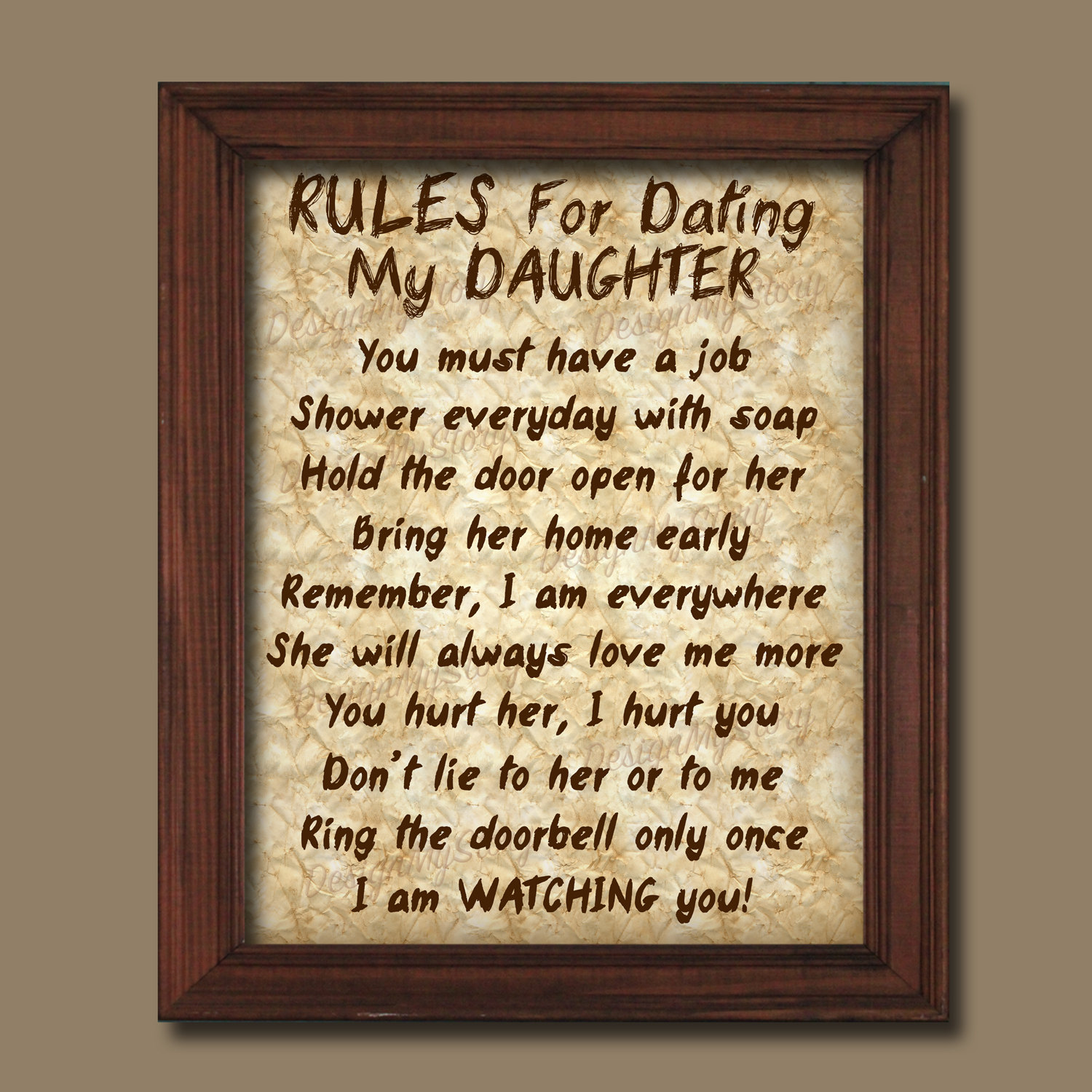
All kidding aside, I am very proud of both of my daughters. I believe they both have a good head on their shoulders. And I knew some day this day would come. I am hoping that they have seen enough of my example to see how my actions, and that they should want to be taken care of the same way. But here is an interesting, and differing view point of just a two year difference.
In having the conversation with my oldest daughter upon finding out of her first date, the first question that I asked, “is he nice boy?” And she said yes. I did ask her his name, and I did so, as I explained to her, this time was one time that I did not want to make a joking matter, and treat him with respect right from the beginning, which meant, calling him by his name, not “him” or any other nickname.
It was the next question that I got two surprisingly different answers. I asked, “who is paying for the dance?” She responded that they were each paying their own way. I could not have been any more proud of her. Having experience of being a teenage boy, going “dutch” (each paying their own way), was at least a psychological way to make sure that each knew that there would be nothing funny going on during the date, that otherwise might be assumed if paid 100% by the suitor. Of course, I complimented my daughter on that decision, saying only that it was a good thing, because by doing it this way, it would allow them to enjoy only the moment they were in, going to the dance, without thinking about anything else. Sure, I am dreading dates #2 and #3 and so on, but at least I know right now, she is thinking respectfully of herself.
My youngest daughter took it from a different angle. She is two years younger, but felt her sister was making a foolish mistake not saving the money by making the boy pay for the dance. Of course, I would agree with her logic, because I have had frequent conversations with both about money and decision making. And I want them both to make good money decisions. I let her know that she made a good point, but then I told her this situation was a little more complicated than that. I kept the explanation a bit simple by just saying, by her sister paying her own way, it did not make the boy feel or think, that there was any more interest at that time, and she would not expect that either. This way, there was no pressure, they could just enjoy the school dance.

I am fortunate to have the relationship with my daughters that I do. It is not the Norman Rockwell family photo type, as like many families, our family is no longer together. But between the times that we were together, through the last 24 hours, I still take every opportunity to remind them about life, what they should want, expect, how to handle adversity, and hopefully to make good decisions. One of the best decisions I made, was in hiring their “final” babysitter. After having issues with several, we found “the one”, a teacher at their daycare, and for the next eight years, she became a role model for them as both a young adult and student. This special babysitter was not only caring when it came to babysitting, but in her personal life, she balanced work, school, along with what was important to her at the time.
For now, I am starting to regret teasing my other dad friends about this day.

