
A Cancer Like A Needle In A Haystack
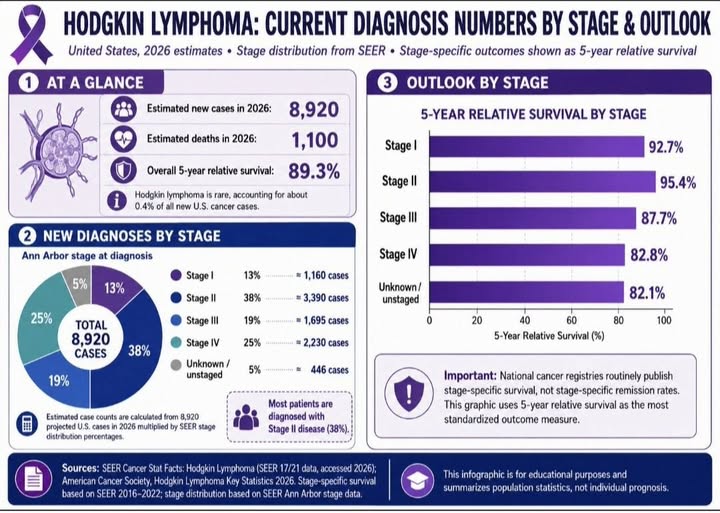
September is National Hodgkin’s Lymphoma Awareness month. As cancers go, this is really the only time that Hodgkin’s gets any real attention. The media does not pay attention to it unless a celebrity is diagnosed with it, and as far as major cancer organizations go, Hodgkin’s is just a blip on the radar compared to the other bigger cancers such as breast, lung, and colon. It is for that reason, I have committed my survivorship to advocating for all of us dealing with Hodgkin’s, survivorship, and late side effects, even if I am small fish doing this one at a time.
Hodgkin’s Lymphoma is considered an unusual cancer not just because it is rare, but because it often starts with vague symptoms, and the actual cancer cells are often hard to find. My own diagnosis back in 1988, was misdiagnosed as the common cold, because all I showed was a swollen lymph node, something all of us experience at one time or another.
According to SEER, in the US, Hodgkin’s Lymphoma accounts for about 0.4% of new cancer diagnosis, which as the picture above suggests is approximately 8920 cases projected for 2026. This makes it far less common than breast, prostate, lung, colon, or even non-Hodgkin’s Lymphoma (it needs to be noted, there are multiple forms of lymphoma). Back in 1988, the number of new cases of Hodgkin’s was around 8,000.
One of the biggest frustrations for us Hodgkin’s patients and survivors is why, what caused it? There is no single common environmental cause for Hodgkin’s as there is for say lung cancer or colon cancer. The disease seems to arise from a combination of B-cell genetic changes, immune system behavior, inherited susceptibility, and a common occurence among those diagnosed with Hodgkin’s, a past history with Epstein-Barr virus or mono (EBV). The truth is, most people diagnosed with Hodgkin’s have few or no obvious risk factors.
Why is Hodgkin’s so hard to diagnose? Simply because the symptoms can look like many other illnesses. Early onset often presents something as nonspecific as a painless enlarged lymph node (in my case, my node itched), usually in the neck, chest, or underarm. Other symptoms can include, unexplained fatigue, itching, fever, night sweats, unexplained weight loss, coughs, and shortness of breath. But enlarged lymph nodes are overwhelmingly more often caused by infection or inflammation than lymphoma. So there is no initial reason to suspect Hodgkin’s as was the situation in my case.
Another thing that did not help, blood tests do not usually diagnose it, which is different from other blood cancers such as non-Hodgkin’s and leukemia. A person with Hodgkin’s can have a white count, red count, platelets, and routine chemistry tests that are relatively normal, while blood tests are great at determining anemia, inflammation, liver abnormalities, or other advanced diseases, there is not standard blood test for Hodgkin’s Lymphoma. Even imaging studies are not able to diagnose Hodgkin’s, though those kinds of studies do come into play when it comes to staging the cancer (how bad the cancer is).
So why is it so hard to diagnose? And the notable answer is why Hodgkin’s was changed from “disease” to “lymphoma,” the discovery of the actual malignant cells – the Reed-Sternberg cells – and they may make up a small fraction of the enlarged lymph node, while most of the mass can actually consist of normal-looking inflammatory and immune cells that have been recruited by the cancer. That is why, in order to diagnose Hodgkin’s, I won’t even say properly, a biopsy is usually the only way.
Surgically removing the suspected lymph node, pathologists don’t simply look for one giant abnormal cell. They look for the Reed-Sternberg cells, the architecture of the lymph node, surrounding inflammatory cells, fibrosis, and immunohistochemical markers. I am not diving that far into the weeds, but for Hodgkin’s, the common proteins of the Reed-Sternberg cells are CD30 and CD15. Even then it can still be hard to differentiate between non-Hodgkin’s.
Biologically, Hodgkin’s appears to have a mind of its own, biologically peculiar in that it originates from a B lymphocyte, and the RS cells become so abnormal, they lose many of the characteristics of a normal B cell. They also release chemical signals that attract large numbers of their immune cells. Ironically, the cancer can effectively create an immune environment that protects the malignant cells instead of eliminating them.
So, a Hodgkin’s node may contain very few cancer cells surrounded by huge number of normal immune cells, which contributes to the characteristic swollen lymph nodes and the difficulty of diagnosis. It was definitely more difficult to diagnose back in 1988 as medicine lacked modern immunohistochemistry, the discovered markers, better imaging and other sophisticated molecular techniques.
The remarkable paradox is that Hodgkin’s Lymphoma is rare and sometimes diagnositcally tricky, but once correctly diagnosed, it is one of the most curable cancers in oncology. And though unfortunately poorly documented, Hodgkin’s survivors often live long after their treatement ends, well beyond the five year average which is normally the only benchmark discussed.
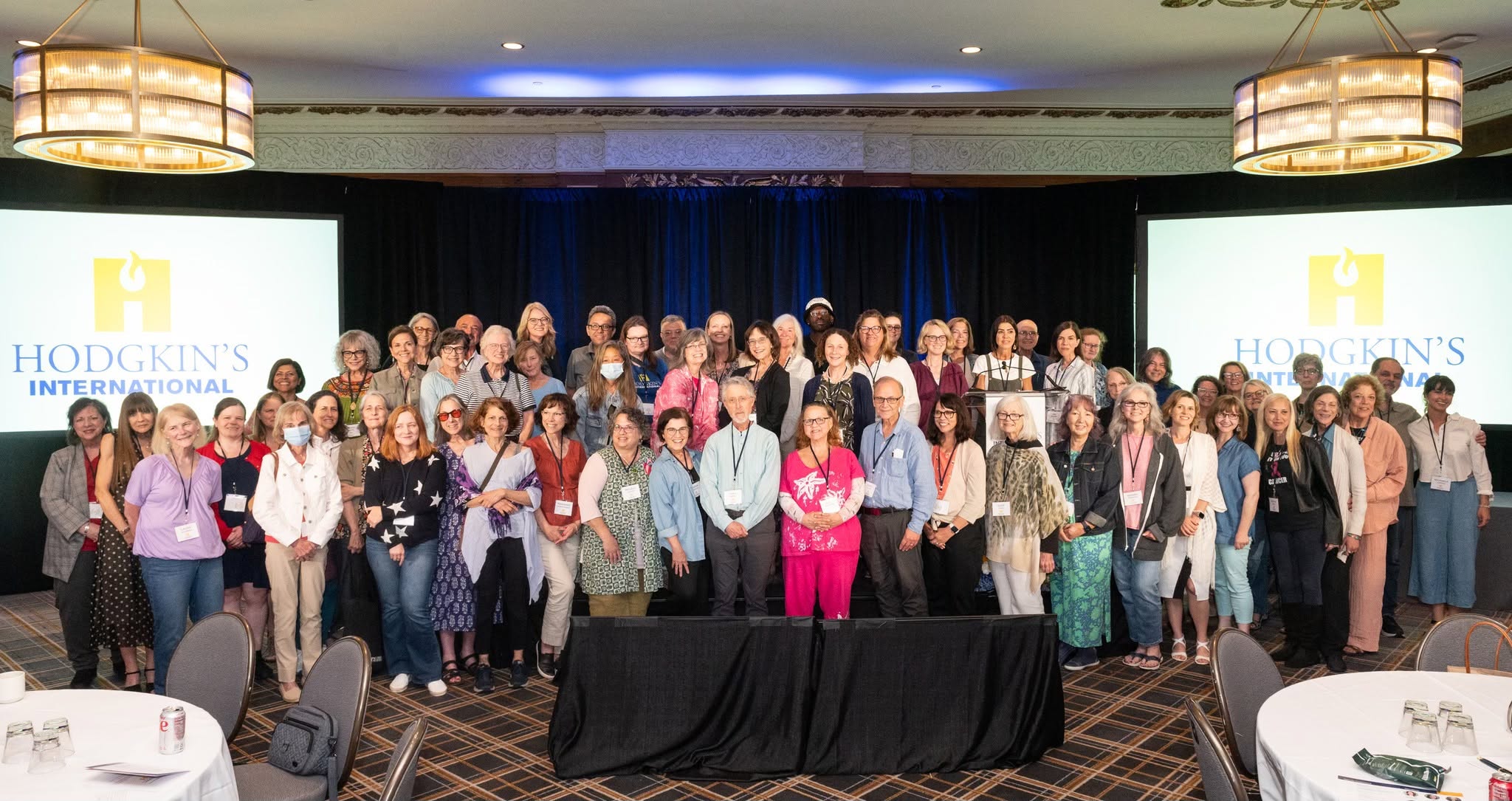
(photo courtesy of Hodgkin’s International)
Hodgkin’s may be rare. And you may not hear about people living a long time after cancer, but here is proof that cancer survivors are now living a long time, in fact decades after their treatment. I participate in social media peer support sites consisting of thousands of long term Hodgkin’s survivors, out decades, 30, 40, and 50 years from treatments. The photo above was taken two years ago at a conference hosted by Hodgkin’s International, and organization created by Hodgkin’s survivors to meet the needs of Hodgkin’s patients and survivors. Finally, an organization that would meet the needs of Hodgkin’s patients and survivors, where others were falling way short. In that photo are survivors averaging between 30 and over 50 years of survivorship. And that is a fact as rarely discussed as Hodgkin’s itself is considered rare.

