Paul's Heart

Life As A Dad, And A Survivor

Archive for the month “September, 2022”

This Was Us


Decades before Jack and Rebecca (in full disclosure, I had to look up their names as I have never seen the television show “This Is Us”), there was my fiance and I.

We had been dating for a couple of years, in actuality, most of it as “engaged”. We were social butterflies, looking for parties to attend, just wanting to have fun. She was slightly older than me, and she had an established career. At age 22, I was still barely “legal” drinking age (yes, having to stress the word “legal”). I still really had not figured out my life, and it did not matter. I found someone that I wanted to hang around with the rest of my life, which sounds different than “spending the rest of my life,” and perhaps it was. All I knew was that we were happy with each other. We had fun with each other.

In November of 1988, that all changed. I had just come from two other locations in this order, an oncologist (cancer doctor), and my employer, who would be the first person to find out, that I had just been told that I had cancer, Hodgkin’s Lymphoma. It was an odd choice that he was told before my fiance, but it really just happened to be circumstance. My fiance lived forty-five minutes from where I was, and I was upset enough, I struggled driving and knew that I should pull my car over. My workplace was actually on the way to her house where I planned to tell her in person. But as I drove by my work, I saw a light on in my boss’s office, and I pulled into the parking lot, and went inside. This story is for another post, but long story short, we talked about what just happened to me in the last two hours.

While that detour actually ended up being unintentional, it ended up being a dry rehearsal, for gathering my thoughts, what and how, I would tell my fiance, that I had cancer.

When I got to her house, she was in the back room with her mother and father. I asked her to join me up front in the living room, that I had something I needed to talk to her about. She was expecting me that evening, as was usual, but did not expect what I was about to tell her. She got the cliche “you need to sit down for this.”

“The doctor thinks I have Hodgkin’s Disease (it was referred to as disease back then instead of lymphoma).” She looked confused, not sure what that meant. I had to clarify for her, “cancer.” A tear welled up in her eye, and she uttered out, “so what does that mean? Are you going to die?” More tears were coming out, a lot more. At that moment, I just hugged her.

She had a previous boyfriend that was killed in a motorcycle accident. I was certain that she did not want to face another tragedy of another significant other. But I had one conversation in my head up until that moment, some further testing that needed to be done, and likely treatments, to hopefully reach remission. That is not what came out.

“Listen, this is not what either of us had planned on. And while I do love you, I love you enough to understand, that this diagnosis is going to change everything that we had planned for our future, and what you may have dreamt of, quite possibly in a very bad way.” My mind had switched from caring about my needs, to thinking about my fiance. I knew her well enough, that she would not just bail on me because I had cancer. She had a great heart, and would never do that. Even if it meant exposing her to yet the possibility of another boyfriend dying. Call it arrogance, but I did not want that to happen to her.

“Listen, I am about to undergo a lot more tests, including a major surgery, all to determine how bad this is going to be. And I could have to go through chemotherapy and radiation therapy, all which have the potential to interfere with our wedding plans. We may have to postpone, or even if we go ahead, I have no idea what will happen to me. There is a chance that we could not have children. There is a chance I could die.”

She had been listening carefully to everything I was saying, yet she remained stoic. And then I said to her, “I would totally understand, and be okay with, if you wanted to call things off. We would part as friends, and I would completely understand, because I know what you have gone through before and do not want you going through it again. I would never hold this decision against you, because in the end, our lives will never be the way we had planned after this.”

As I now read what I said, and wrote here, what a stupid thing to say. But as I said, I was 22 years old, and clearly not ready to even make a decision on getting married, let alone, face the road that I was now on.

She made the decision to stay with me and we were married six months later, following six weeks of intense and extreme levels of radiation therapy. Our honeymoon was nowhere near what we had planned, as expected due to my recovery. When we returned, my follow up appointment revealed that I had new disease located, and this would mean highly toxic chemotherapy. This course would leave me unable to have biological children. It seemed, what I had warned her about ended up being correct. Our lives together would never be as we had imagined, and now, we were “stuck” with the decision of having gotten married.

There is a common expression amongst many cancer survivors. “Don’t let cancer ‘define’ you.” That is not to say that you cannot change, but perhaps even improve. You do not need to go through the rest of your life with a huge “C” on your chest. But there is nothing wrong, with seeing things in a different light, another perspective, a reorganization of priorities, or what might or should be important in life. When you have faced something life threatening, it is an understatement that there is a new lease on life.

One problem that can occur, while the survivor definitely knows what the experience has done to them, those around the survivor, caregivers such as spouses or other family members or friends, do not. They may have witnessed the struggles, and may have been able to empathize, but those closest to the survivors have no idea the changes that have taken place, and may continue for many years later.

That is what happened with my wife after my treatments ended. My wife was ready to move on with the lives that we were living prior to my diagnosis, which relied a lot on socialization and partying, fun. Again, while cancer has never defined my life, it did have an impact on it, and if there is anything good that did come of it, it was the change and awareness of what I felt was important in life, things that should matter, wanting to make a difference. The only problem is, my wife did not share that same direction. And though we gave the appearance of getting along as a married couple to those looking on, inside our house, we just co-existed. We both were going in our own directions. Until…

My wife was hit head on while driving home from her night class, a dark, two lane rode, with high embankments, nowhere to go. She was driving a Geo Storm. The other driver was driving a Ford Crown Victoria. The result was like an army tank running into a Mattel Big Wheel toy. My wife was flown by helicopter to the hospital with serious injuries. As I went to the junkyard the next morning to retrieve her belongings from the car (if I was able), the image of what was left of the car, left me with a sunken feeling of my skeleton having been removed from my body, total collapse. The front end of the car was completely crushed as easily as a soda can, and the top cut away to remove her from the car. The other person’s car, hardly any damage except noticeably broken headlights. How my wife ever survived this accident, I would never know how.

Now remember, cancer is a life threatening moment. And I was not going to let it define me. It could lead me to want to improve myself, appreciate things and life more, good things. I had been frustrated that my wife could not understand what I was going through. But as the weeks went on following her accident, I held out hopes, that now, having been put in her own life-threatening situation, she not only would understand how it felt for me, but that she too might see the difference her life could have, our lives, I felt, for the better.

As time went on, and her healing continued, change of perspective did not happen. And I did not fault her for that. Epiphanies do not happen to everyone. Her goal upon recovery, was to get right back to what she was doing and enjoying before the accident. She was not interested in anything different. From that point on, we continued in our separate directions, albeit civilly, until one fateful conversation, that resulted in not being able to turn back from, leading to our divorce. As I said, our situations affected each of us differently, and looking back on that fateful day, when I broke the news to her of my diagnosis, I wished either she had taken me up on my offer to walk away from me, or perhaps I should have just ended it myself.

While this was not a period in my life I am happy with, combined with my attitude of not letting cancer define me, the changes in my life that occurred because of my cancer, and the many challenges since, have made me the person that I am today, most importantly, an example for my daughters to look up to and respect. That when the time comes for them to get involved with someone, they expect someone who will share their similar values and dreams, not just be willing to support in difficult times.


There Is Life After Hodgkin’s Lymphoma


As Lymphoma Awareness month rolls on, I want to write a lighter piece about Lymphoma, about life after Lymphoma. While I wrote last, that we are never really over “cancer” even when we hear the word “remission,” there is still a life to be lived.

One of my favorite places to visit both as a child and as an adult especially with my daughters, was a place called “Boulder Field” located in Pennsylvania. I spent hours upon hours climbing all over the rocks, never taking the same path, or hiking the same combination of boulders. Each trip was different. It is kind of symbolic for all the different things that would be ahead of me in my life after Hodgkin’s Lymphoma. The ironic thing, prior to my cancer, I do not believe that I was doing much of anything with my life worthy of fulfillment or purpose. I had been content with living a “party” lifestyle that my first wife and I were enjoying. No commitment. No plan. Just show up. That was our “normal.”

But there is a phenomenon known as a “new normal” that cancer survivors experience. Resistance is futile, because it is just something that happens. It would have been easy to pick up right where I left off before the rude interruption from cancer. But with all of the toxicity and damage I had gone through with my treatments, I had to be more careful. A new “normal.” I had follow appointments and testing to undertake as part of this new “normal.” For the first time in my life, at the age of 24, I began to think of other things I wanted to do with my life. And part of that was not to let cancer dictate my new “normal.” This new “normal” was going to be what I made it to be.

A couple of years after my treatments ended, I led our church’s youth group. Actually, this was the first of two that I had been in charge of over ten years. I had done something that other predecessors had not done, and that was open the group to all ages of children, not just the teenagers. Sure, their activities were grouped just as the different levels of school; pre-school and elementary, middle school, and high school. But at least once a year, the entire program came together on a Sunday dedicated to the youth of the church, and all participated and led that Sunday’s services, no adults. The program had all kinds of activities for outreach, and the older kids, the teenagers got to experience road trips such as ski trips and white water rafting. It was an honor to watch these kids grow. In fact, over twenty years later, I am still in contact with several of them, now parents themselves.

I would get an employment opportunity that would change my life forever, working for a major pharmaceutical company in medical research. After years of trying to improve my otherwise mediocre employment situation, and in spite of having no college degree in medical research, after just one interview, I was hired. The job not only provided a much better salary, but something up until that point, since my cancer diagnosis unobtainable, health and life insurance, without being discriminated against. I would actually handle one of the drugs used in my chemotherapy cocktail. But the biggest reward was to be a part of some very important discoveries against several major diseases.

I began to travel. One wish I had was to see my favorite football team, the Seattle Seahawks, play their arch rivals, the Raiders. That trip out west, would change the way I travel forever. For me, the trip became about opportunities. On this trip, I would actually get to meet two fellow Hodgkin’s survivors in person who up until that point, I had only known through emails. Both were a bit younger than me, and diagnosed a few years after my treatments had ended. But I got to see several places I had never seen before, Seattle, Anaheim, Bakersfield, and Lake Tahoe before returning home. From that point on, nearly any trip I made after that, would almost always involve an opportunity to meet other survivors.

But one of the biggest events, which actually happened twice, happened because of the one long term and permanent effect from my treatments, the inability to have biological children. On two separate trips across the world to China, twice I became a Dad. Every day with my daughters has been a blessing, and many times a new experience, likely an experience that never would have crossed my mind such as swimming with dolphins and stingrays, exploring caves, and so much more. Nothing could be cherished more, than being their Dad, each and every blessed day. Both now in their late teens, they are soon ready to go out into the world, and make their own memories, and for that, I am truly blessed as that spectator.

I will only mention this part briefly, well, because it speaks for itself. For over a decade, I have been writing about my experiences as a cancer survivor, whether it be on “Paul’s Heart,” published in various medical newsletters, anthologies, and am currently working on four books of my own. This has led to opportunities to speak in public at various functions as a living, breathing long time survivor of cancer. A frustrating thing for me really, that more of a big deal is not made about us. But perhaps the coolest experience of my writing career, was to have something I wrote performed live:

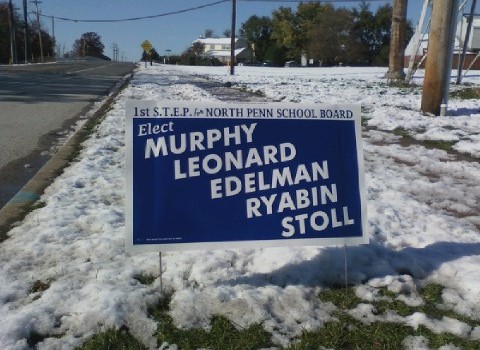
An unexpected direction in my life occurred back in 2009, when I decided to enter politics, at our local school board level. I was unhappy with the way the current school board had been behaving and many of their decisions, which I felt would have an impact on my daughters educations. And so, I enjoyed the experience of two campaign runs. It was a wonderful and exhausting experience, there were so many memories made. Several long term friendships came from my running for school board, friendships from running mates. I wanted to, and felt that it happened, to make a difference for my daughters educations, which of course would benefit other’s children as well.

The Covid19 pandemic gave me an opportunity to return to something I enjoyed doing, playing guitar and piano again. I won’t ever do it publicly, but I am having a lot of fun again, expanding my musical horizons. Combined with my singing, I even wrote my first song and recorded it, a very cool experience.

No, my life did not turn out at all the way that I thought it would. But then again, I never thought I would get cancer either. But as many put it, “I won’t let cancer define who I am.” I am far from finished writing my story. And to do that, I have to keep living my life after Hodgkin’s Lymphoma and in spite of what it has left for me, just as my fellow long term survivors.

Survivor’s Guilt… Not What You Think


Any time that I have brought up the issue of “survivor’s guilt” in regard to one of the many lasting effects of my survivorship from Hodgkin’s Lymphoma, there is always at least one person, who will make the comment, “why would you feel bad about living? What an ingrate after all the efforts to save your life!” Now, to qualify that statement, it has typically been made by someone to the best of my knowledge, who has never had to deal with a potential tragedy. So, I will make it quite clear, in this post, I am not ungrateful for the thirty-two plus years I have experienced after my fight with Hodgkin’s Lymphoma. The last eighteen years have been my best years so far, years that I did not think I would ever see because of my health complications from my treatments for my Hodgkin’s.

So, now that I have cleared up what “survivor’s guilt” is not, what actually is survivor’s guilt? According to Centerstone.org, “survivor’s guilt is a response to an event in which someone else experienced loss, but you did not.” Though it can be assumed to refer to life, it can also refer to property, health, or anything else important to someone.

To keep things simple, I am only going to refer to my own issue with survivor’s guilt. I know plenty of other cancer survivors who deal with this, and I know others who fight this demon for other reasons, such as fires, car accidents, earthquakes, tornados, hurricanes, and a lone survivor of a small plane crash. This is how survivor’s guilt has affected me, and still does.

I did not always have survivor’s guilt. I completed my treatments in March of 1990 (so that is 33 years next March). Life was good. I had gotten married. Job was going well. I was in the market to buy my first house.

But one thing that oncologists (cancer doctors) do not tell you, is that you are never really done with cancer once your treatments end and you are in remission. There will be follow up appointments including blood tests and scans and the awful anxiety that comes with each approaching appointment. The frequency of these appointments gets less as the years go by until you are lulled into a false sense of security that you do not need to be seen after five years. Spoiler alert. You do need to be seen beyond five years, and you can actually thank long term survivors like me for making medicine recognize that need. But that is a different post.

My first ex-wife, yes the one that I got married to during my cancer, could not have been happier to put cancer behind us once my treatments were done. As I was re-acclimated back into social settings (you know, that no one was going to catch anything from me, cancer or related to my treatments), she saw our lives getting back to normal. Actually, it was going to be what she considered normal.

I however, had developed this need to “give back” for my second chance at life. I had heard of a pilot program called “Cansurmount” being started by the American Cancer Society. This was a peer-to-peer trained counselor program, that would match survivors of a particular cancer, with a patient currently going through a similar diagnosis. It was a lengthy process, but one that would cover nearly every potential scenario and pitfall that could be run into, and things to avoid. Having struggled through my own Hodgkin’s journey emotionally, I really could have used this program.

No time was wasted upon completion of my training. I was immediately matched to a fourteen year old girl, who had Hodgkin’s Lymphoma also. Her story can be found at this link:

Spoiler alert, if you did not read the story first, Jennifer passed away prior to graduating high school. I had spent a number of years visiting her and her family, even as she entered hospice. But if you remember, my post a few days ago… “Could There Be Such A Thing?” referring to the “good” cancer of Hodgkin’s Lymphoma, as Jennifer was dying, and she was not my only patient I was working with as I had three others who all had better prognosis, I began to experience something that was not covered in my training. And honestly, I don’t think the American Cancer Society had thought about either.

I could not help, sitting across from Jennifer’s mother, wondering about her thoughts if they were similar to mine, “how is it that I am getting to live, free of my Hodgkin’s Lymphoma, and Jennifer will die? What is so special about me that I got to remission, and she will die? Why can’t someone do for this child what was done for me?” Go back to the definition, an event that causes a loss for someone else, but not for you, survivor’s guilt.

While I believe I was quite effective in helping so many other patients, the death of Jennifer, not only my first patient, but my first patient to die, I was devastated. I did not feel that I could look any other patient in the eyes and wonder too, will they be the next to die or what different circumstances will they experience. I decided to take some time off which actually ended up being approximately a year. I had finally been able to put this feeling (it had no name back then) behind me, and I was ready to take on new patients again. And I did. I was one of the more active volunteer counselors. I seemed to have overcome the guilty feelings of my surviving cancer.

In the mid-1990’s, I learned about the internet and through the internet, there were email support groups where patients could share their similar and different situations about their particular cancer. I had found a group for Hodgkin’s Lymphoma, two of them actually. I felt that I could be of support for those in this group as I could relate to the many situations from diagnosis to treatment, and just like I did in person, I could do so only on a larger scale, all over the country.

There was one fellow survivor, named Linda, like me, she was also in remission for Hodgkin’s. But she had a different reason for being in this group, which I would learn about later on. She had often referred me to join this other email list, for “long term survivors.” At four or five years of survivorship, I felt that I did not meet the qualifications to earn the title of “long term survivor.” After about a year of her pushing, I ended up joining that email list, soon leading to another issue for me. The “survivors” on this list, actually of different cancers, but many Hodgkin’s, had health issues following their treatments, some, very extreme. I immediately felt overwhelmed, and felt that I did not belong on this list, because except for a few issues (certain permanent hair loss, a thyroid issue, and infertility), I definitely had nothing in common with these survivors. And then it hit me, if I went through similar treatments for the same cancer, why I am I not having those issues? What is so special about me? Remember the definition, an event happening to someone else, but not to you. Again, I was having this overwhelming guilt by having a fairly normal life post-cancer, this for yet a second reason. Just like before, I found myself having to remove myself from this email list, because I really felt out of place, and felt that my good health, was unfair to share with those who were suffering. And just like before, I found myself coming back to this email list. But this email list could get so overwhelming, I would actually cycle, on and off, several times, to allow myself to gather my thoughts. But that guilt just would not go away.

Then, in 2008, my life changed even more so dramatically than it did with my Hodgkin’s Lymphoma. The radiation treatment back in 1989 (I also underwent chemotherapy) used such a high dose (no longer used), not only did my body retain the radiation, but actually developed progressive damage to various parts of my body, especially my heart. Again, you can read about that story at:

Once I learned that an imminent fatal heart attack was about to happen, and what was the cause of the condition, I soon became a life-long member of that “long term survivor” email list. This list was where other survivors could find answers to questions doctors were completely unaware of, because long term cancer survival had never been taught in medical school. These survivors, were teaching its members, the questions that needed to be asked, the recommendations that needed to be made for treatment, and offered support, that no matter what, we were not alone in this struggle. Eventually, we would discover some major medical involvement with several key doctors, but nowhere near the number of doctors that were necessary.

But, just as what happened occasionally in the treatment stage, the passing of a Hodgkin’s patient, so would happen occasionally to a long term survivor and one of the issues that they were dealing with. And it could happen as part of a procedure or complication, something totally unknown and undiagnosed, or the result of something spontaneous, combined with the compromised health. This was an important group of people to each other, and many of us would actually get the opportunity to meet up with each other in person (we did not have Facebook or Facetime). So when a fellow long term survivor would pass, again I would get hit with that wave of guilt, whey them, why not me?

I would actually spend many years in therapy over this issue (spoiler alert – I still have this issue). Again, I want to be clear. I am not ungrateful for the time I have been given all these decades later. And I accept the many diagnosis I have faced over the years related to the treatments I went through.

But towards the turn of the century, I found Facebook. And I found a group that dealt with similar issues as the email list that I belong to. And this group did not just cover the US, but reached world wide. And there were photos. We could actually see each other, and we were actually able to communicate a lot more efficiently and often. Over the years, this group has grown and grown, now with members nearing a thousand. We members would also take the opportunity to meet each other as we travelled whether medically or recreationally. This created a huge bond for us to the point, that today, many of our members refer to our group as a “tribe.” And we are a very tight and supportive group. Each and every one of us, makes caring for each other, offering support, and personal experience, to help anyone in need of such.

As our numbers in membership have grown, two things have also grown. We can actually see the longevity of Hodgkin’s survivors, living 30 years later like me, 40 and many living 50 years later. And do not be fooled. With Hodgkin’s often looked at as a pediatric cancer (even though I was 22 when I was diagnosed), many of these 50 year survivors were not even teenagers yet when they were diagnosed. But the toll taken on our bodies from decades ago, has left us with bodies seemingly aged decades older inside. And just like with the email list, members of our group also pass, from either their late effects, complications, undiagnosed, or complications from spontaneous non-related events. I would say, we lose probably an average of five members each year.

This is when it really gets hard. Because now we have a name to go with these feelings that I, and many others have, “survivor’s guilt.” Fellow survivors that I haver personally known for almost as long as I have been in remission are now gone. Why am I still here? Why have I not gone through all of the long list of other things that my deceased fellow survivors went through? And that is really the odd thing, not one of us survivors is like another. We all have different issues. Some of us have access to care with doctors who have the knowledge today of our issues, too many do not. Some do not have any health coverage at all. And holy shit! It wasn’t enough to deal with what we do, and along comes Covid19? Don’t worry, not expanding on that. My point is, I am now at the point, where so many survivors I have known, are gone, and I am one of the more “senior” survivors. I cannot help but feel my mortality creeping up on me, no matter how hard I fight it.

I don’t feel guilt for surviving my 32 years of Hodgkin’s Lymphoma. But I am dramatically affected by those who have not survived, experienced multiple relapses, developed other cancers because of their treatments, or, as in my case, developed other health maladies, some quite serious. I have lived with this “survivor’s guilt” as it turns out for my entire survivorship, and will probably never be over it.

This does not mean that I do not enjoy life. Quite the contrary. I am able to focus on my daughters, who almost lost me back in 2008. I have goals that I want to reach, and though I know I am not guaranteed to reach them, I am only thinking about doing just that. I have watched both of my daughters grow, one has graduated, now in college, and my younger will be in college next year. And then there will be the next stages in their lives that I want to experience. And with each milestone reached, I believe I will see the next one, and the next one.

I will not let “survivor’s guilt” take that away from me.

Post Navigation