Paul's Heart

Life As A Dad, And A Survivor

Archive for the month “March, 2020”

Looking Good?


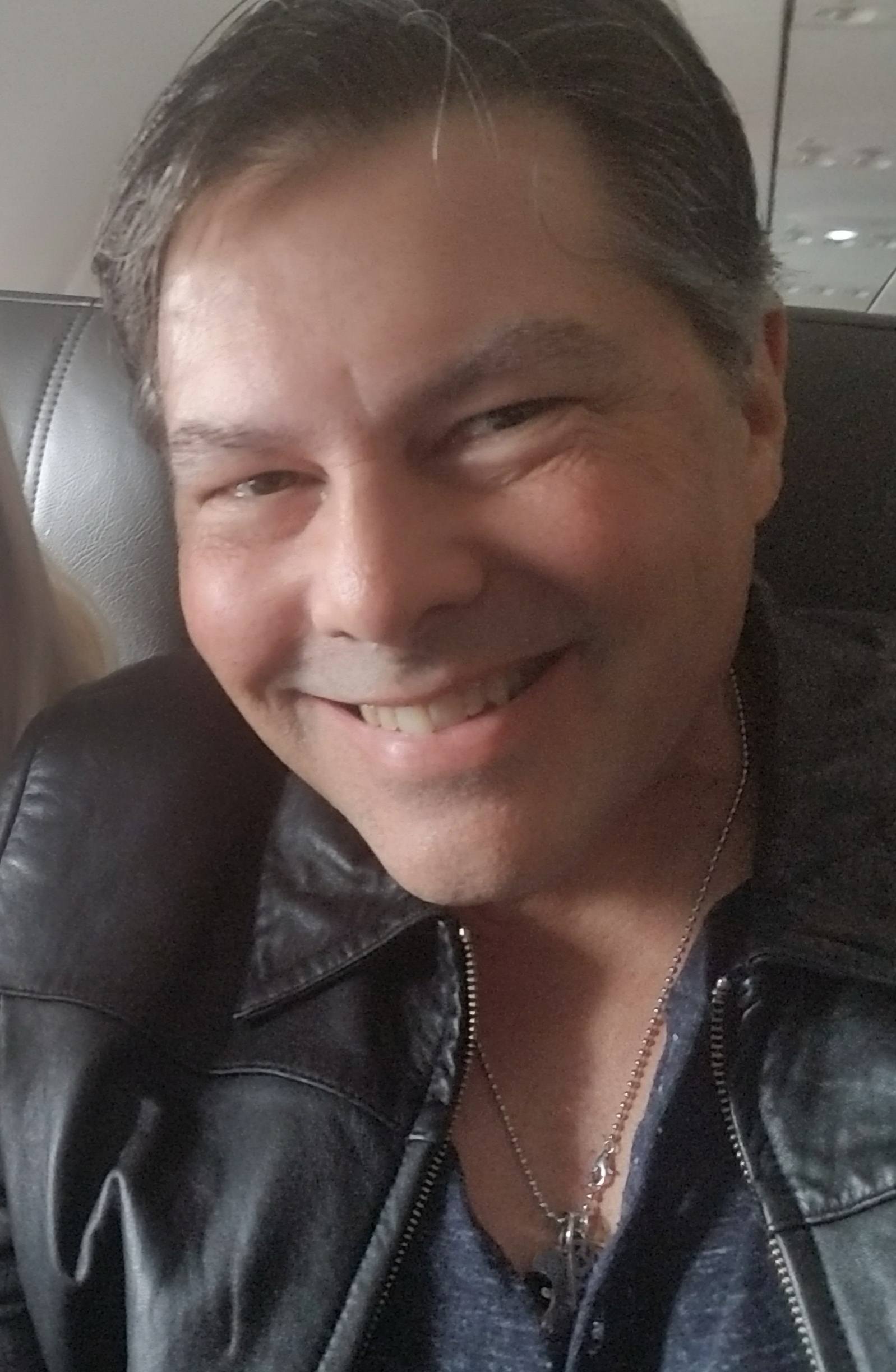
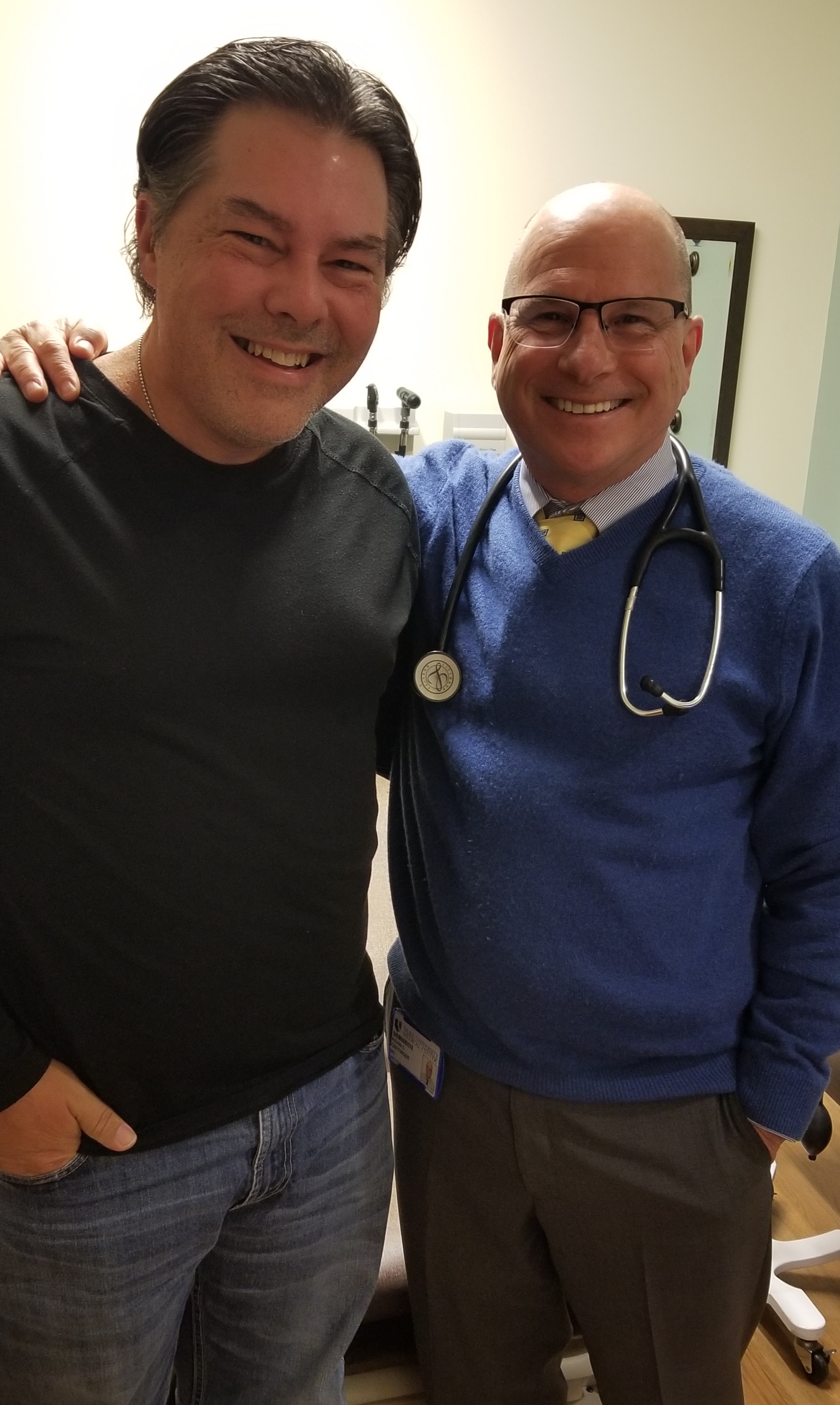
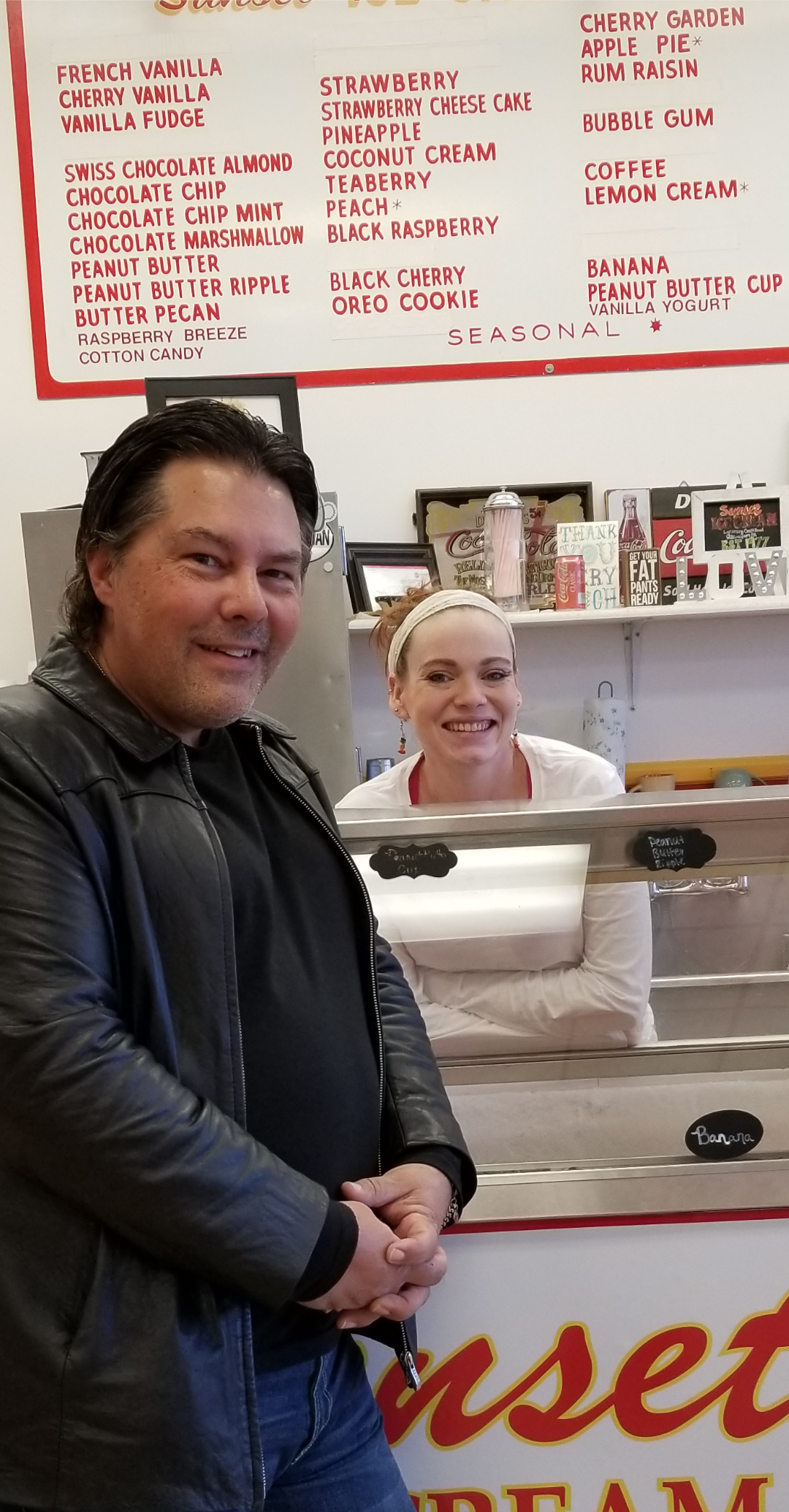
These two images actually have something in common.  Do you have any guesses?  Well, the outer coverings of both, look pretty good.  I would definitely buy this red delicious apple from the grocery store because on the outside it looks perfect!  The other is a photo of me with a “friend” from a survivor clinic years ago.  He had just given me a compliment of how “good” I looked.  But what if the outside, looked nothing like the inside?  Well, then you would have how I describe my life as a long term cancer survivor.  The outer covering does not allow you to see what I am dealing with my body.

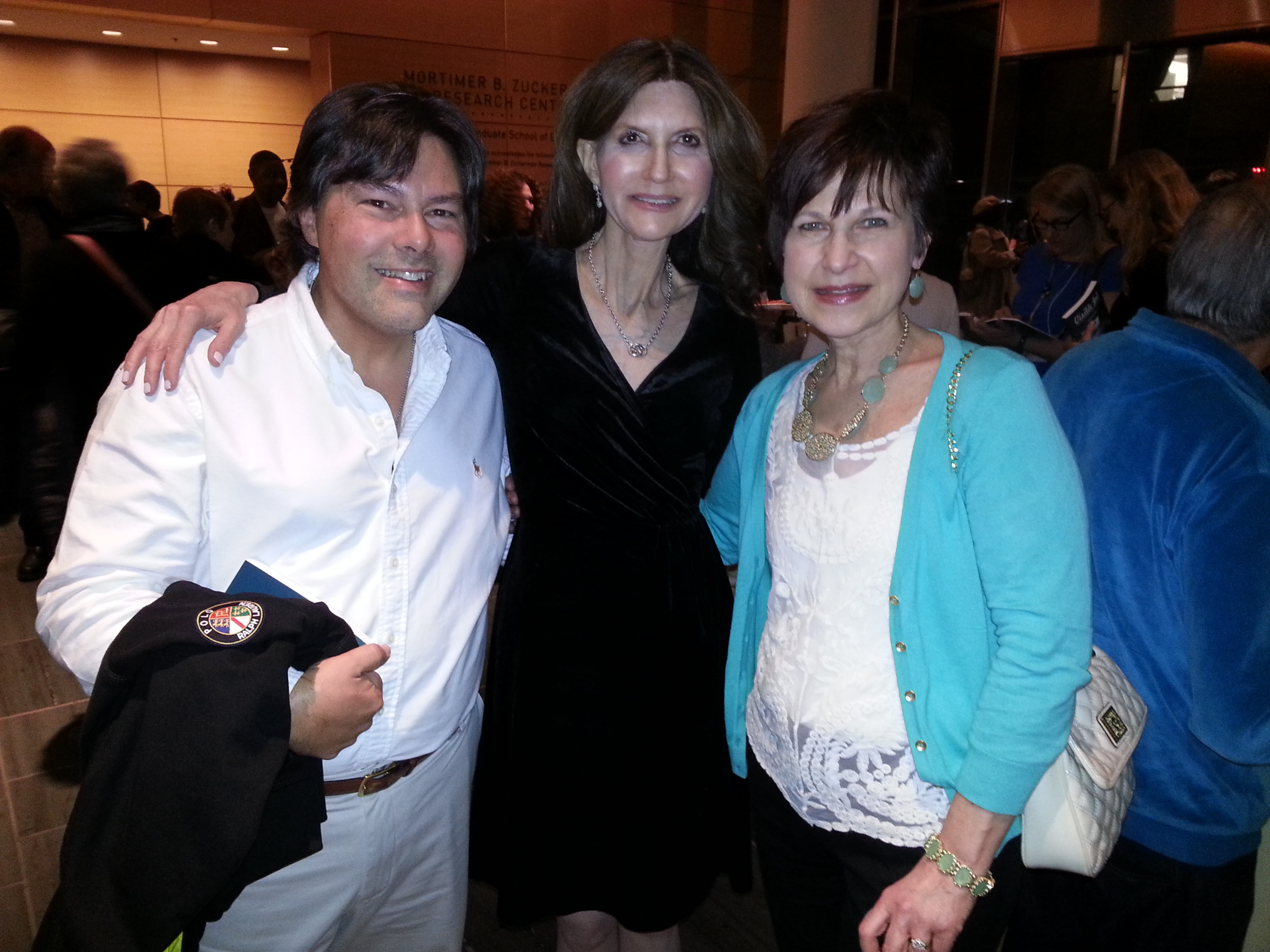
But how many times have you bought an apple that looked perfect, any fruit really, and found out that inside, it was either bruised or spoiled.  Do not worry, I will not show a picture of that as an example.  But you have likely seen that.  Again, that is how I would describe the inside of my body.  Again, will spare the photo.  Instead, I will share this snapshot taken from a symposium for cancer survivors.

First the reality check.  If you were to ask any of my fellow decades long cancer survivors, you would probably hear us all say that we were maybe told one or two things possible if we were lucky.  I remember, I was told a “chance of pericarditis” (inflammation of the heart), and a possibility of a secondary cancer.  Oh, and these were considered possible in the first five years, not “long term” as in decades later, because there was no known studies of such survivors.  There was no reason.  Why?

After we reached a magical 5-year mark, we were considered less likely to have a recurrence of our Hodgkin’s Lymphoma, and it was likely follow-ups would end, deemed unnecessary.  So, we would basically go through life, living like everyone else, with one exception.  We just would not know it.  Our bodies would not age like everyone else’s.  In recent years, studies would confirm this.  But if you were not being followed up by a doctor who knew what to look for, often times, symptoms would just not make sense, and likely, out of frustration, a survivor would feel like giving up on pursuing the problem as there would not be any obvious answer.
Out of the above listed of potential side effects that are now recognized for long term cancer survivors, under chemotherapy, I now deal with:  bone and joint, dental, digestion, fatigue, heart, infertility, kidney, lung, nerve, osteo, and risk of other cancers (had a scare a few years ago).  I deal with 70% of those issues from chemotherapy.  As for radiation:  dental, cognitive, digestion, fatigue, heart and vascular, thyroid, infertility, intestinal, lung, lymphedema, osteo, hair loss, stroke risk, risk of other cancers.  I deal with 80% of the listed issues.  Under surgery, I live with 75% of those issues.  Hormone and immunotherapies did not exist for me thirty years ago.

So there you have it.  You cannot see it.  But it is there.  At least with an apple that is bad on the inside, you can just get another apple.  With my body, I do not have that option.  Neither do my fellow survivors.  So what are we to do?  I can tell you what we cannot do.  Just “get over it.”  Or another favorite, “stop thinking bad things, you will make them happen.”
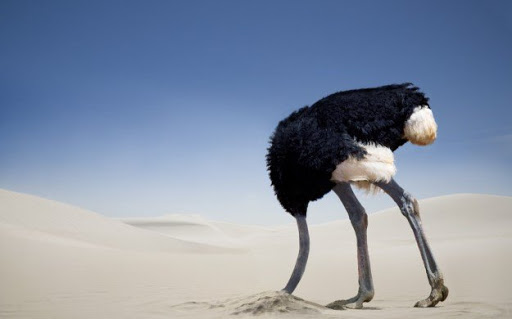
This attitude for a long term cancer survivor will do as well as it would for the ostrich with its head in the sand.

It is not known who or why, someone develops a late effect or multiple late effects.  But if you are one of the unlucky ones, and you are not being taken care of, your fate is pretty well certain.  And those around you will wonder “he looked so healthy.  What could have happened?”  And if it is a fellow survivor who hears this news, the first thing we wonder, was it because of a late effect?

Awareness is the first important part of long term survivorship.  That begins with follow-ups.  Today, doctors know that they must follow patients “forever.” Why?  Because of survivors like me and others, 30, 40, 50 years out from our treatments, long enough to have secondary issues.  Participation in a survivorship clinic gives survivors the best opportunities to deal with things before getting too extreme, such as my “widow maker” back in 2008.  I had no follow up at all for heart damage, and eighteen years from my treatments, cumulative and progressive radiation damage nearly killed me.  On one hand, this is an advantage I have over a “healthy” person who is not being surveilled.  With annual follow-ups, I should never be in a “widow maker” situation again.  Well… sort of.

Follow ups today begin with baselines of everything from cardiac, pulmonary, and muscular.  Then, depending on the frequency of the follow ups, determines the course of action on current testing compared to the baselines.  For us decades long termers, there were no baselines.  For many of us, numbers and measurements are already at concerning stature.  But that brings us to another problem.

Risk.  Because of the damage done, especially from radiation, risk of correction sometimes is worse than the risk of the actual condition.  Therefore, what happens is we end up “watch and wait” until the risk of doing nothing is worse than the risk of correction.  As in this example.  Let’s say a carotid artery is badly scarred from radiation and is blocked 75%.  Yes, that is a pretty bad number.  But the risk of correcting it, carries a pretty high stroke risk, higher than the current risk of doing nothing.
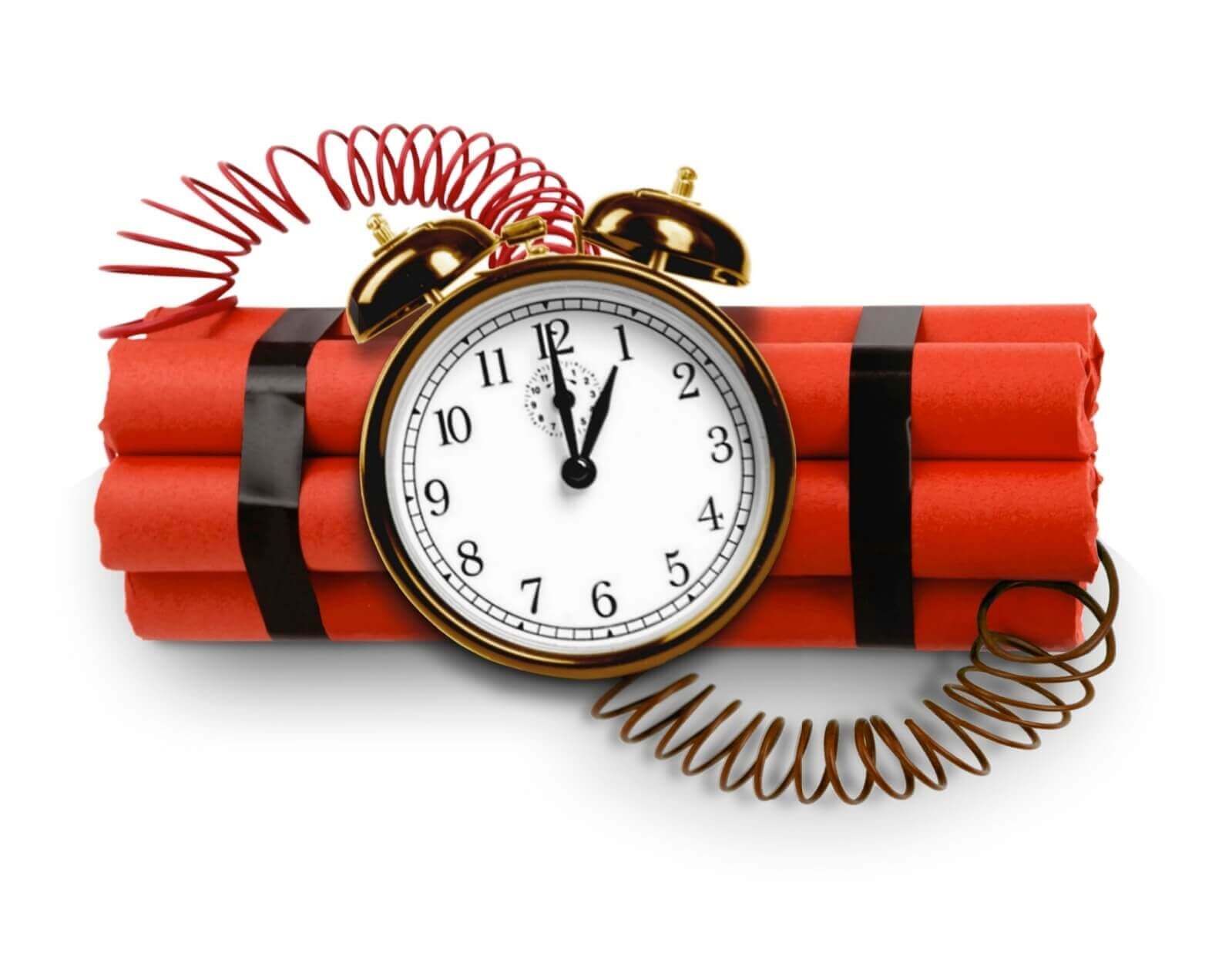
That is how I would describe several issues with my body.  So far, two things finally got to a point where they had to be corrected.  The risk of doing nothing was worse than the correction.  I am still looking at two others… waiting.

So, once a survivor is aware, is when advocacy takes on a more important role.  Because it is one thing to know, it is another to protect yourself.  All too often, we put too much trust in our medical team, and that is not a bad thing.  But as a member of our medical team, that’s right, it includes the patient, we need to speak up when something does not feel right.  If the doctor says, everything went well, and you do not feel like it, you need to say something.  Because not only does our body betray us with these late side effects, though our doctors’ hands may be quite skilled, the final concern is the one that causes many problems, some times tragically.  Many survivors get through a procedure, only to run into complications with infections or other issues, and the body cannot take any more trauma.  And again, the first sign we feel something is wrong, even if the doctor does not “get it,” we need to convince the doctor.  Over the years, I have lost count of the many survivors who went through procedures, even just common ones, or suffered some sort of trauma from an accident or fall, or anything else, actually get through the corrective actions, get well into recovery, only to all of a sudden change direction, tragically likely due to infections.

And that is our reality, if we are “lucky” to know it.  So yes, that apple may be bright and shiny, and may even be crisp.  If the apple feels soft inside, of course the apple cannot feel something is wrong inside.  It is an inanimate object.  But that does not mean it is not there.  Well, my shell may be bright and shiny, and that crisp smile I share with everyone, unlike the apple, I do feel what is inside.  Just like the apple, just because you cannot see it…
Corona Virus – No Hype, Just Facts


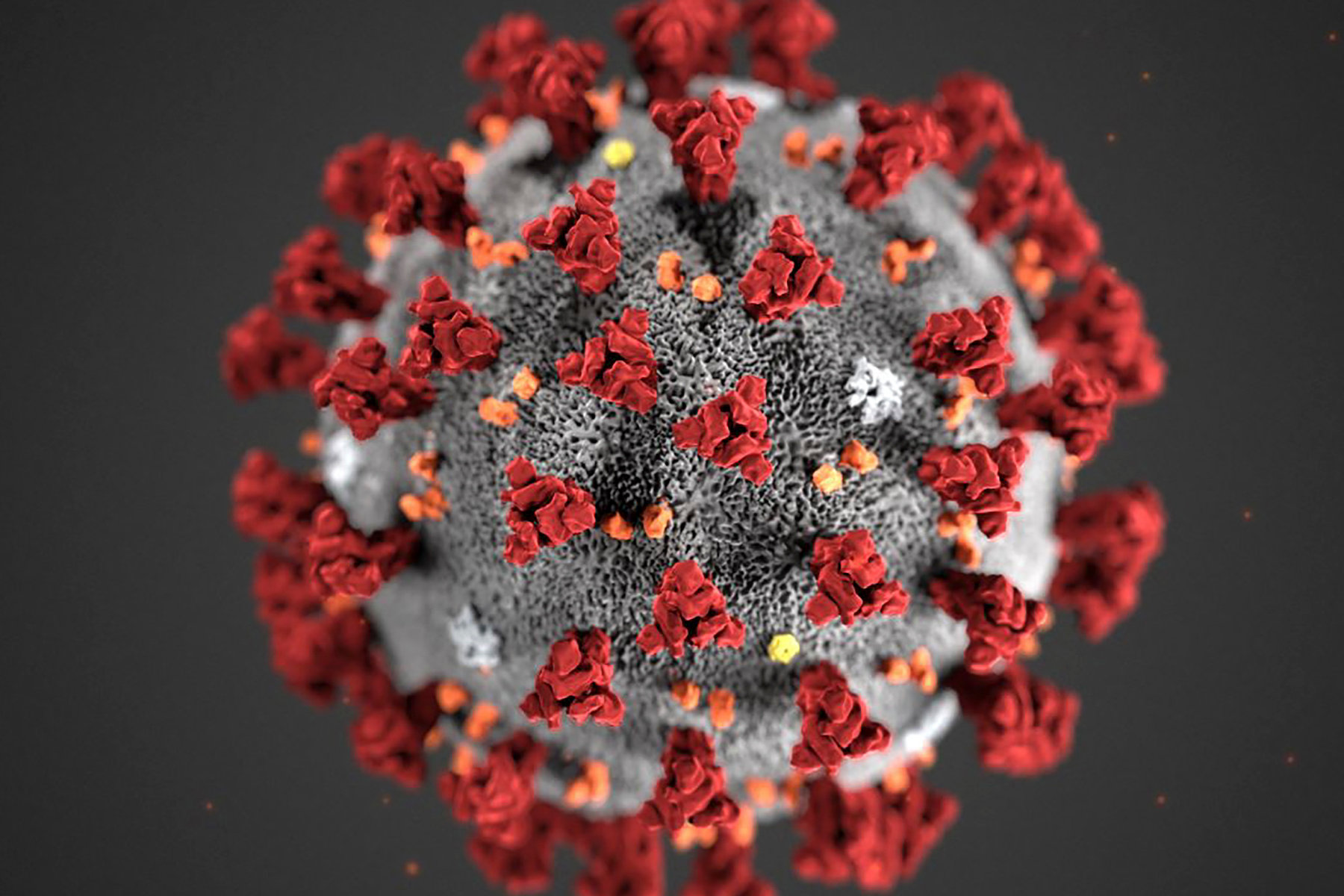
There it is.  The Corona Virus.  Covid-19.  That is a fact.  What makes it bad?  That it has the word “virus” with its name.  Defined simply, it is an organism that has a detrimental result.  The problem is, how bad can the virus get?

At one time, we used to just let our doctors diagnose us, and treat us.  And it was that simple.  Of course we had to deal with outbreaks, but we did not have social media to broadcast the mayhem and paranoia, and in the case of the Corona virus, even racism.  And now, we cannot even rely on factual information from our leaders, out of concern for how it may impact our day to day operations or our economy.  And pardon my cynicism, but as a country that prioritizes profit over health, I understand why there is the need to minimize the severity of this current health crisis.  Already the war cries have begun, comparing Corona virus to a flu outbreak, heart attacks, car crash deaths, all meant to lessen the impact of what we are dealing with.

My post here is not going to be conjecture or assumptions or hype.  With my involvement in the medical community over the last thirty years, I believe in the resources that I have used to find out as much as I can, to protect myself, and if necessary, take care of myself in the event of an infection.

These are all major health networks that I have a connection to.  For that reason, I feel that I can trust what they are reporting about the Corona virus.

At issue, is just who is going to contract this virus and why.  And you need to understand the “why.”  Everyone is at risk with a new virus, and for one reason, you do not have any antibodies in your system, like you would have from a prior exposure or vaccine.  That is how that works.  So then the next issue is, how bad will it get.  This is the fuzzy area.  Because if you are a “normal” and healthy individual, if you contract the virus, your symptoms may be minor to flu-like and then recover.  Some may just carry the virus.  And then there are those who have pre-existing conditions.

There is a group of people always listed as especially susceptible, the elderly, the immuno-compromise, the young.  And I suppose this is where the anger and more importantly, the misinformation originates.  Under normal conditions, if something does not affect you, what do you care?  You don’t.  And you move on.  So, here we are with Corona virus being told it is not going to affect normally healthy individuals, and of course it is likely that they do not want to hear any more of it.  But here is why the healthy need to hear it.

The immune systems of the elderly do not work as well as they used to.  And according to resources, those with cardiac, respiratory, and compromised immune systems, not only have higher risks, but also potentially difficult recoveries.  In my case, I have all three of these pre-existing issues.  So, yes, I am paying a lot of attention to what is going on.  But I am also dealing with it, like I have dealt with all other potential exposures.

At work, I would actually go home if a co-worker came in with some illness that could really have an impact on me.  When my daughters got their vaccines, depending on if it was a live or dead virus vaccine, I was restricted from diaper duty.  I even restrict myself from exposure to those who have received a live flu vaccine until a certain time period.  But I do not lock myself in a plastic bubble until everything passes.

I carry all kinds of alerts and identification warning those who must care for me, the various issues with my health.  And I rely on medical personnel to respond appropriately.  That means that the rest of the efforts fall on me, and those around me.  Again, if you are normally healthy, you may not even get sick, or not as severe.  And if you do not get sick, you might still be a carrier, meaning others can get sick from you, even if you do not.

That is why this is a big deal.  And that is why, in spite of the false assurance of our government, we are likely to see an increase in these cases, because of carriers, not just the sick.

We are not prepared for this virus, and this is not the first time.  That is why we have these outbreaks.  We do not have vaccine yet.  We have only just begun to have testing kits available for use.  But there is no protocol for if we suspect we are dealing with Corona virus.  Do we call for help?  Do we walk into a doctor office or ER, and risk contaminating everything?  Sure, washing hands and not touching faces (not something I have had an issue with much to my friends’appreciations) help, but what exactly are we to do if we think we have it?  But every one of these networks, and many more all say the same thing, and it does contradict the misinformation being dispersed, we are going to see more cases.

But as I said, even with my health issues, I still have a life I want to lead.  I have to travel to see my daughters, and there are other opportunities that I might be in groups of people.  I have previously written about the use of the “surgical” masks that people feel protect them from viruses, and they do not.  They are a splash guard for your sneezes and coughs.  But they do not prevent you from breathing in airborne particles, like viruses.  The use of the N95 respirator, and here is the key, properly worn, is the level of protection needed.  Here is the problem, medical personnel need these in order to take care of the sick.  And just like people flocking in fear to Costco and Walmart to prepare for a hurricane, the shelves are empty when it comes to masks, sanitizers, even toilet paper.  This is one message that the medical community is trying to get across, DOCTORS AND NURSES AND EMTs NEED THE RESPIRATORS TO HELP THOSE WHO ARE SICK OR ELSE THEY RISK BECOMING SICK THEMSELVES AND THAT LEAVES NO ONE TO HELP THE REST OF US.  It does not get more simple than that.

So yes, wash the hands thoroughly.  Cover yourself properly when you sneeze and cough.  Sanitize surfaces that may get contaminated.  Stay home if you think you are sick.  And if you are using the masks, they are not reusable.  Properly dispose of them.

I have gone through SARS, bird flu (avian flu), swine flu, MERS, and though not an illness, the events of 9/11.  Dealing with Corona virus, it is going to be no different.  We still have to carry on with our lives.  We have no reason to hide in seclusion until it passes.  We just need to be a bit more careful.  We need to be informed.  And we need to be prepared to make necessary changes as they come up.

30 Years Of Cancer, 30 Years Of Gratitude


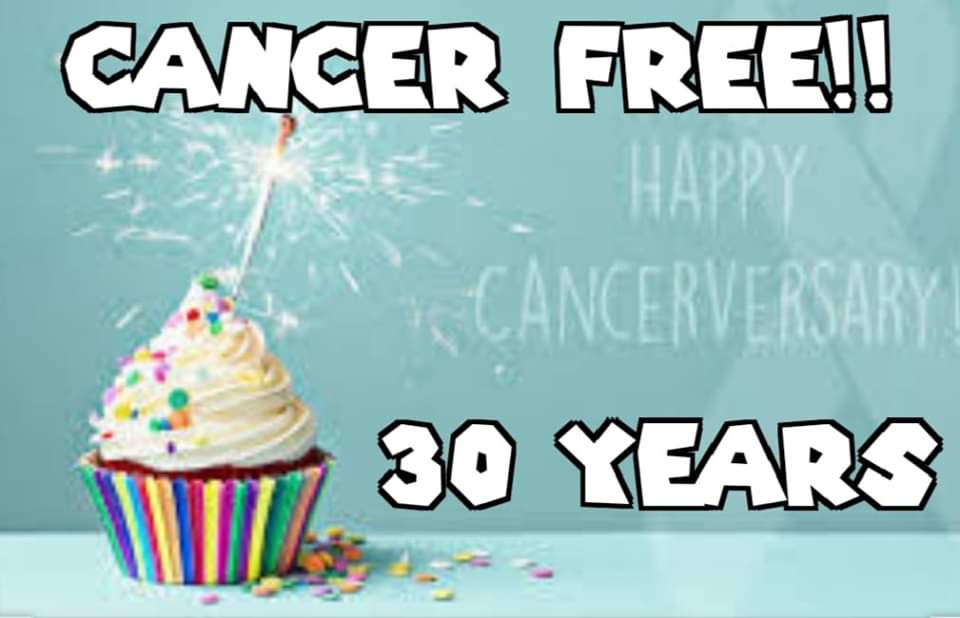
In November of 1988, I was diagnosed with Hodgkin’s Lymphoma, cancer.  The survival rate back then for this particular cancer was impressive, 85% based on a five year survival rate.  The question is, what would happen after that five years passed?  On March 3, 1990, declared in remission, I finished my last treatment.  That was 30 years ago today.  I am blessed to have found out that I have made it long passed that five year mark.

My daughters describe me as being “the strongest person” they know.  My doctors tell me that there is no one tougher on me, than myself.  However, for 30 years, I have not felt strong at all, and luck or “luck of the draw” was no excuse for me to have given myself a break.

My physical battle with cancer, Hodgkin’s Lymphoma, ended 30 years ago on this date.  But emotionally, and once again physically, thanks to the treatments used to save my life, I am still fighting that battle today.

My therapist 31 years ago felt that I did not take the gravity of dealing with cancer seriously enough, that my attitude, “this isn’t so bad, look at what they are dealing with,” pointing to other patients who had it worse than me, in some cases, crippling or permanent.

As every anniversary would pass, my casual attitude towards “another year down” even passing several unthinkable milestones, I have been unable to balance my appreciation, with the guilt that I suffer, in memory of those unable to reach these milestones themselves.

Today, I am forcing myself to recognize what today’s date really means, because 30 years of surviving cancer really is a big deal.  So is 25, so is 20, so is 5, so is hearing the words, “you are in remission.”  Today, I am telling myself that it is okay to recognize, and dammit… celebrate.  If I really need convincing, to prove to myself, that I am so appreciative for the life that I have been given, in spite of my sorrow, a challenge was issued to me by my therapist.

In honor of my 30 years of surviving Hodgkin’s Lymphoma, I am to list 30 things that I am grateful for during those years.  So, here goes, and in no particular order of importance or chronology, just as they are popping into my head.


30 Things That I Am Grateful For

  1. My Grandmother She did not just play a major role in raising me along with my mother, she was also the first survivor of cancer I had ever known.  Her selflessness during her own diagnosis and treatments to make sure that a new direction in my life that had been taking place, took place without any problems, all the while she was dealing with her own cancer.  And it was because of her battle with cancer, that led me to my oncologist, the one that saved her life, and eventually give me the life I have today.
  2. Jeff Wagner, former owner of Wagner Appliance Parts My first full time job, at the age of 22, after hearing concerns from me that my treatments would not be covered by the doctor that I wanted to treat me, Jeff made the decision to improve the health care coverage not just for me, but for all employees.  Jeff was the first person to find out about my diagnosis, and not just have to deal with my emotional breakdown that rainy evening in November of 1988, but deal with my fears, that the coverage that I currently had, might not have been good enough to get me the treatments that I needed.  And here I am, because of that decision, I am fortunate not to know if that was true.
  3. Pebbles, my chemo cat Pet therapy is amazing if you are able to experience it.  I would rush inside my apartment door, racing for the toilet, where my body would react in violent fashion to the toxic chemicals that had just been injected into my veins.  Pebbles, seeing me on the floor, in front of the toilet, clearly perplexed at the unusual position I was in, and the horrid noises I was making, stayed there until I was finished.  I would then crawl into bed for the next several hours, recovering from the exhausting episodes.  She kept me company every Friday I came home after chemotherapy and just laid by my side.
  4. John Flenner and Ilona Ennis My first two “therapists” or counselors.  From the beginning to the end, they were not just ears for me to vent to, or complain about how I was feeling, but they were also advocates for me, when I felt I was not being heard by my doctor, or things were not being explained clearly enough.  And as I fought my first battle of discrimination as a cancer survivor, John was standing by my side in front of the Labor Relations Board in Harrisburg, PA as I took on Nationwide Insurance for discrimination practices for employment, because they told me I needed to be in remission longer.  They were immediately introduced to the Americans With Disabilities Act (ADA) which had just been passed.
  5. My chemotherapy nurse, Brenda I was young enough to be her son.  She did not hide that fact from me.  And it was not just the skills of the trained nurse administering my treatments that got me where I am today, but a mother’s love that comforted me all those months in that chair.  We did not have a bell to ring like cancer patients have today.  But I will always remember the words that she said to me as the IV was removed from my arm for the final time.  “As you go down that hallway, just imagine a huge marching band playing for you in celebration.  You did it!  You did it!”
  6. Merck and The United Steelworker’s Union I know that this one looks a bit odd, but when I was hired in 1997, there was no Affordable Care Act, which meant I was not able to get health insurance anywhere for the prior six years, as I had changed employment.  But getting hired, into a collective bargaining unit, once I got passed the probationary period, which was never going to be an issue, I had to be approved for health insurance.  And it was not just health insurance, not just good health insurance, it was GREAT health insurance coverage.  I could no longer be discriminated against because I had cancer (as long as I remained employed there).
  7. Pollo There is nothing like coming home, day after day, to a smiling and happy golden retriever.  He was not there when I had my cancer, but he was there as I recovered from every episode related to the late side effects that I dealt with.  He gave me nearly 15 years as only a best friend could.  So many stories, so little time.  But he was always there for me when I needed him.
  8. Dr. Judy For the first two decades of my life, I was lucky to rarely see a doctor.  And up until Dr. Judy became my doctor, I had only had two others.  But she has been my doctor now for nearly three decades.  And the best thing about that, she literally knows me inside and out.  If I say something hurts, and it cannot be found, she will keep looking.  In April of 2008, she literally saved my life ordering a test on a 42 year-old that is not normally ordered.  And she did not just prescribe it, she arranged it.  As anyone knows, if the patient schedules with a specialist, it could be months before seen.  Within 36 hours of that appointment, I was diagnosed with a “widow maker” blockage of my heart.  The term does not need any further description.  Dr. Judy has been my doctor and a friend for so long.  She is my biggest blessing with my care as I would face other health issues because of my cancer past, just like the “widow maker.”  She has always been my biggest health advocate.
  9. Dr. Chris Another key player with my “widow maker.”  He had the most difficult job of convincing the stubborn jackass, me, that I could not wait to have my emergency heart surgery.  Death was certain without the surgical correction.  His words will always stick with me when he reminded me how lucky I was, “not a question if I was going to die, but when.”
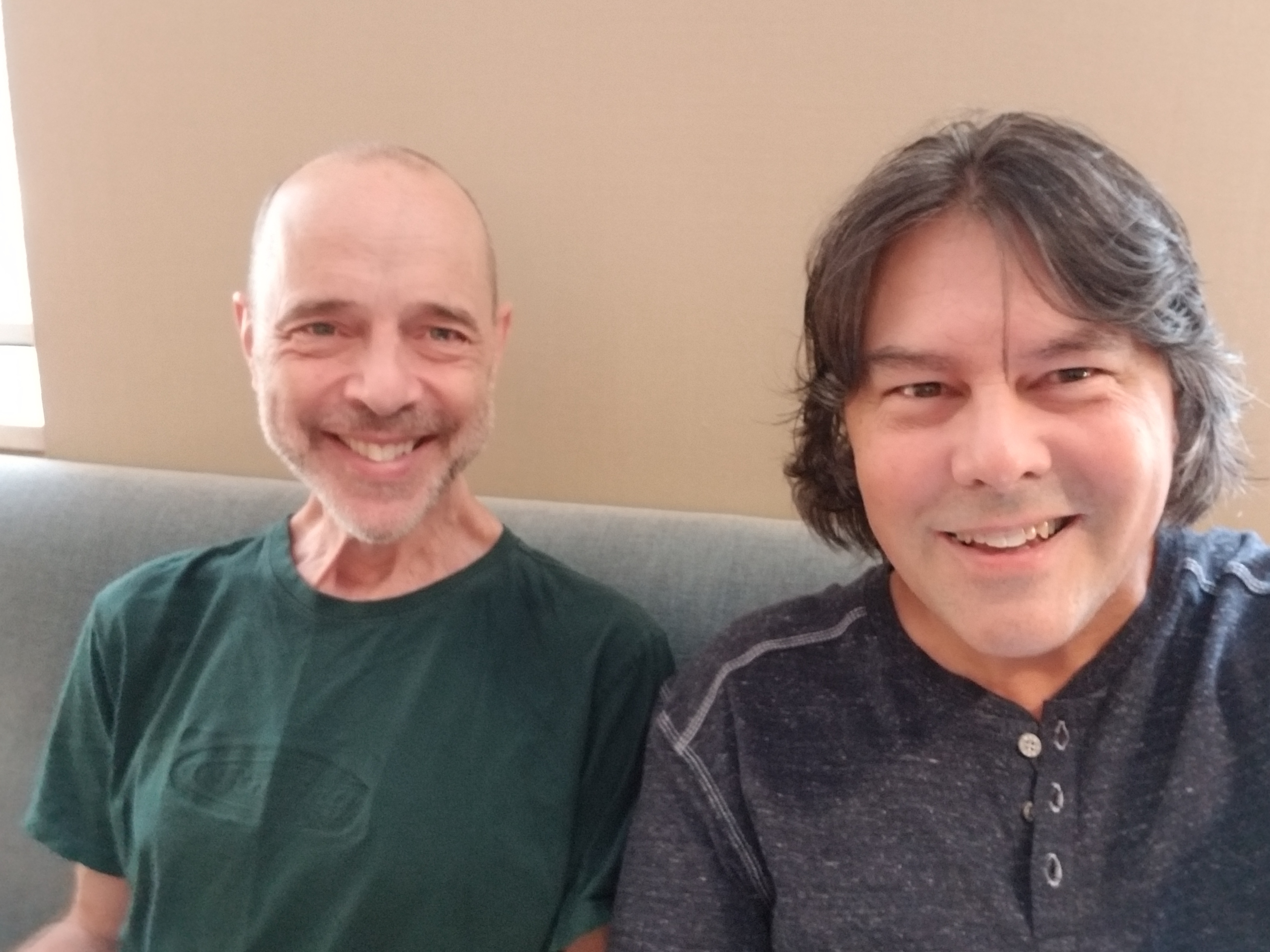
  10. Tammy, Lynn, Kathy, Judy, Jennifer, Stephanie, Ian  Either Hodgkin’s survivors or caregivers, you were the first that I met along my survivorship.  That was more than twenty years ago, and we all are still in contact, except for one.
  11. Jennifer (a different one)  After completing my chemo, I wanted to “give back” so I got certified by the American Cancer Society as a cancer counselor in a new program  that had just started called “Cansurmount.”  Jennifer, then 16 years old, was my first patient.  She also had Hodgkin’s just like me.  Sadly, she would not survive.  And after a year and a half of visits with her, barely saying a word to me, as she neared her end, I informed her that hospice would be taking over for me.  She asked if I would still visit her.  All that time I never thought I had made a difference to her.  Clearly I was wrong, and that is what drives me today to reach out and help as many other patients and survivors as I can.
  12. St. John’s YPO (Young Peoples Organization)  A long story how I came to be there, but a huge youth group of awesome kids, whose families and our church allowed me to be responsible for, many of which I still keep in contact with today, and now they have kids of their own.  Damn that makes me feel old.  I give them and their families the credit for all the things I want for my daughters as far as family and future is concerned.
  13. Linda Zame  With the discovery of the internet, I met a woman by the name of Linda Zame.  Also a Hodgkin’s survivor, she had other issues related to her treatments.  Like she did with others, she did her best to educate me on the need to be diligent on my survivorship care, which I did not feel I needed, because I did not have the health issues like everybody else was having.  And until 2008, I had no idea what she was talking about because there was nothing wrong with me, at least so I thought.  But with my heart surgery, it was discovered, I was like her and so many others.  And I needed special help to deal with these issues.  I found several long term survivor clinics, but they were all a distance away from me.  All she told me was, “do not let economics determine your care.  You get the best you can.”  I had the health insurance, there was no reason not to agree with her reason.
  14. Dr. Oeffinger, Dr. Stubblefield, Dr. Ford  My original members of my survivorship team from Memorial Sloan Kettering Cancer Center.  I was not treated there, but they had a program for long term survivors.  And I was the perfect patient for them.  Dr. O and Dr. S are pioneers in the studies of survivorship of Hodgkin’s and no one knows more than they do.  Dr. Ford was my therapist, specializing in dealing with my anxiety, PTSD, and my survivor’s guilt.  All three worked in conjunction with Dr. Judy which was critical as she was my local care.  Eventually, all three would leave MSKCC.  But to this day, I still see Dr. O.  Because he made a promise to me, that I would someday see my grandchildren, and I am holding him to it.
  15. Cathy P  My first ever appointment “buddy”.  She was already familiar with dealing with MSKCC as a Hodgkin’s survivor herself, and made arrangements with me to hang out with me, show me the surrounding area, and keep me company.  To this day, I consider her one of my closest friends.  She is also a 30 year survivor of Hodgkin’s.  Turns out, there are a lot of us.
  16. Michael  One of my younger fellow survivors, and one of my more inspirational and influential.  His outlook during his treatment, and his education of me of his experiences would actually play a crucial role when I was faced with dealing with my father’s cancer.  It had been so long since I had to actually deal with chemo and its effects, never having been in a chemo suite since my treatment days, but Michael taught me how to get my father through his cancer treatments.  Sadly, Michael lost his life after completing his chemo, due to side effects of his chemotherapy for the exact same cancer that I have been in remission for so long.
  17. Lawyers  Yes, I know that is an odd one, but important nonetheless.  I relied on one to help me with my disability status, trying to convince a judicial process what every doctor I dealt with already knew.  The other attorney, during my divorce, advocated for me with my rights as a father, dealing with my health history.
  18. My mom  Of course she is on this list, not so much for the first half of my life, but for the roles that she played once she found out me dealing with cancer was not bad enough.  She is one of the few family members who have stood by me, dealing with my health issues and everything else affected by it.
  19. My dad  Estranged from my father as a child, including during my time of dealing with my Hodgkin’s, a tragedy opened the door to us repairing the relationship.  The second half of the father-son relationship saw many challenges, but also an unbreakable bond, with me being his caregiver as he fought lung cancer.  Unable to “make up” for my lost childhood, I got to witness an awesome “pappy” in action with his grandchildren, two of which were my daughters.
  20. The gift of music  Music has always been an important part of my life.  I use it to relax, to rehabilitate (singing helps me to exercise my lungs which are greatly affected from my treatments), and to deal with the many issues that I face as they come up.  I share this love of music and appreciation with my daughters.  But over the last several years, playing an even more important role, one of my friends convinced me to keep at it.  Singing, playing, and even writing it.
  21. The gift of writing  “Paul’s Heart” is just one of the many things that I write, having had several things published, or speeches given.  Putting our feelings and frustrations into writing allows a release, and many times opens doors to solutions we had not realized.
  22. Friends  Cannot have enough of them.  Through social media or in person, I have been able to connect and reconnect with many.  Whether there from the first moment, or as I approached this milestone.  I am surrounded by friends.  In this, I am blessed.
  23. 9 lives… I may actually have them.  If you believe in reincarnation, and I may not have any choice, I have had to deal with death six times, three of them, coming way too close.  But as I stated, Dr. O made a deal with me.  He cannot reverse the progressive nature of the issues I deal with from my treatments for Hodgkin’s, but he can help me slow them down, and stick around for a long time, that I will not only see my children grow, but hopefully see grandchildren of my own.
  24. ACOR – American Cancer Online Resources.  This is how I met Linda Zame, Cathy, and so many other survivors.  I owe not only my life to this web site, but as media platforms have advanced, I am now connected to thousands of other survivors not just here in the US, but around the world.
  25. Each and every survivor, patient, or caregiver that has come into my life  There are so many photos to choose from, so many more I could have put here.  I want to name each and every one, but there are literally thousands.  No matter in person, or via the world wide web, you all have had an impact on me, my survivorship, and my outlook on life.  And too many, I miss you dearly.
  26. Clouds and skies  one of the many ways that I use to relax, and appreciate.  Every sunset, cloud formation, it reminds me that there is no control of them or their formations, and each one is different, and there is always going to be one tomorrow, that is how I have learned to get through life.
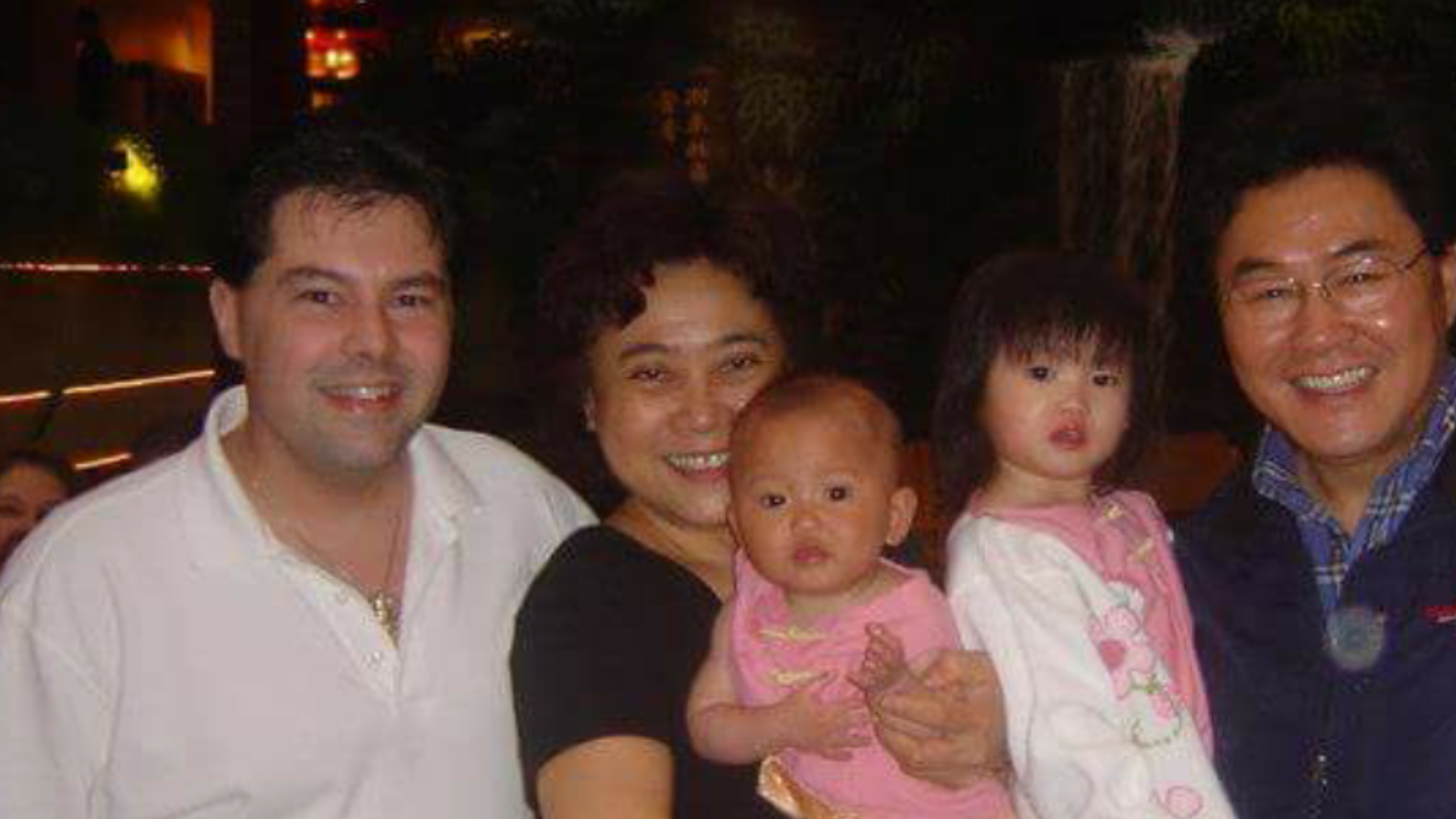
  27. My Asian “family”  Unable to biologically have children, my dream of having a family came through the country of China, blessing me with the adoption of two daughters.  With those precious “jewels”, came numerous families and friendships, in the United States, and several other countries around the world, including China, that serve as a bond and connection to where my daughters have come from.
  28. My drive  Again, my daughter describes me as one of the strongest people she has ever known.  I am grateful for not only the drive and internal fight I possess to live, but for every day I am given.  I am grateful for my intuition that guides me when I feel something is not right whether it be my health, or those in charge of it.  I am quite stubborn, but I am also a good listener.  And combining those two qualities, is how I make my decisions.
  29. My best friend  Besides my family, my friends are very important to me.  Though I have been married (and divorced) twice, it is my friends who played more of a supportive role in getting me through my health trials.  A diagnosis of cancer changes everything in a relationship, especially from what you originally planned with each other.  But just as my friends know and trust about me, I will always be there for them, I know and trust they will always be there for me.  But as I head into the third trimester of my life, quite a bit handicapped and disabled, but still chugging, I do it on my own now.  Instead of a spouse, I have my best friend who not only understands my issues are real, but knows they are real.  My best friend understands and knows how to deal with my stubbornness.  But for the first time in my life, this support is real, and it makes a difference.
  30. My daughters  My reason for being, my world.  I once made the comment that I would never go through my treatments again if my Hodgkin’s ever came back.  And even after I adopted my daughters, that attitude had not changed much.  But, with the confirmation that my body was dealing with late side effects from my treatments, in 2008, that all changed.  I never got to see my daughters prior to going into that emergency heart surgery.  No last chance to say “I love you.”  I don’t ever want to feel that again.  And now with them older, I don’t want them to feel loss because of me.  They are soon approaching the age where they will soon become my proxies for my care, to make the difficult decisions if I am unable to.  Like many things, these were not things they signed up for when they were born; being removed from the country they were born in, their parents divorcing, my health.  But my daughters mean everything to me, and I make sure that they know it every day.  I could not be more proud of both and my heart is filled with so many memories that they have given me.  And I look forward to so many more.

And there they are, 30 things I am grateful for.  I am not sure how many other health obstacles will stand in front of me, but my focus is clear.  I have expectations that must defy the betrayals by my body so that means I am planning to celebrate another milestone in ten years.  I have a favorite saying that I wish to extend to everyone who is battling their own cancer, or has finally heard the word, “remission.”  “As I continue down the road of remission, I will keep looking in my rear view mirror to see that you are still following me.  And if you are not on that highway yet, hurry up.  It’s a great ride.”

Post Navigation