Paul's Heart

Life As A Dad, And A Survivor

Archive for the tag “radiation therapy”

An Essay – A Hodgkin’s Hero


I write for a variety of resources and opportunities besides here on “Paul’s Heart.” Some make it to publication, and some do not. Regardless, if published or not, as soon as the decision has been made by the entity, I publish my work here on this page. This particular piece I wrote, was for a submission on “blood cancer heroes.” With September being “Blood Cancer Awareness” month, as well as “Hodgkin’s Lymphoma Awareness” month, I decided it was time to recognize a very important hero in the world of blood cancer, in particular, survivors. I try not to be cynical, but as time goes on, it is as hard today as it has been for decades, to give survivorship of cancer, as much of a spotlight, any spotlight, as the battle itself. My essay was on the role of one particular doctor, committed to finding answers and determining care needs for survivors of Hodgkin’s Lymphoma, something medicine really never paid attention to, because cancer survivors are not given anything other than a five year average of survival. If you have followed my page for any length of time, you know that many of us live much longer than that. And we do need help, which is where Dr. Oeffinger comes in. If anyone deserves to be recognized as a “blood cancer hero,” it should be him. The first part of this post will be the article I wrote, as it was submitted. The second part, will be “our” story. Alas, my essay was not chosen for that publication. Nonetheless, his story deserves to be told. So here, as was originally submitted, is…

Dr. Oeffinger – Hero Of The Long Term Blood Cancer Survivors

Dr. Kevin Oeffinger, MD has been involved in survivorship care of Hodgkin’s Lymphoma for over three decades from his beginning at the University of Texas, to his tenure heading Memorial Sloan Kettering Cancer Center’s LTFU (Long Term Follow Up) adult survivorship clinic, to his positions currently held at Duke University; Professor in the Department of Medicine, member of the Duke Cancer Institute, founding director of the DCI Center for Onco-Primary Care, and the DCI Supportive Care and Survivorship Center.  Dr. Oeffinger also has membership involvement with ASCO (American Society of Clinical Oncology), the American Cancer Society, and the American Academy of Family Physicians.  He is also an editor for the Journal of the National Cancer Institute.

Dr. Oeffinger has published and co-published countless medical journals in regard to late-developing side effects from cancer treatments promoting personalized health care between cancer specialists and primary care physicians.  He travels around the nation and the world educating medical professionals on long term follow up care so that the next generation of doctors, nurses, and technicians are prepared for the growing number of survivors living long after their cancer battles have ended.

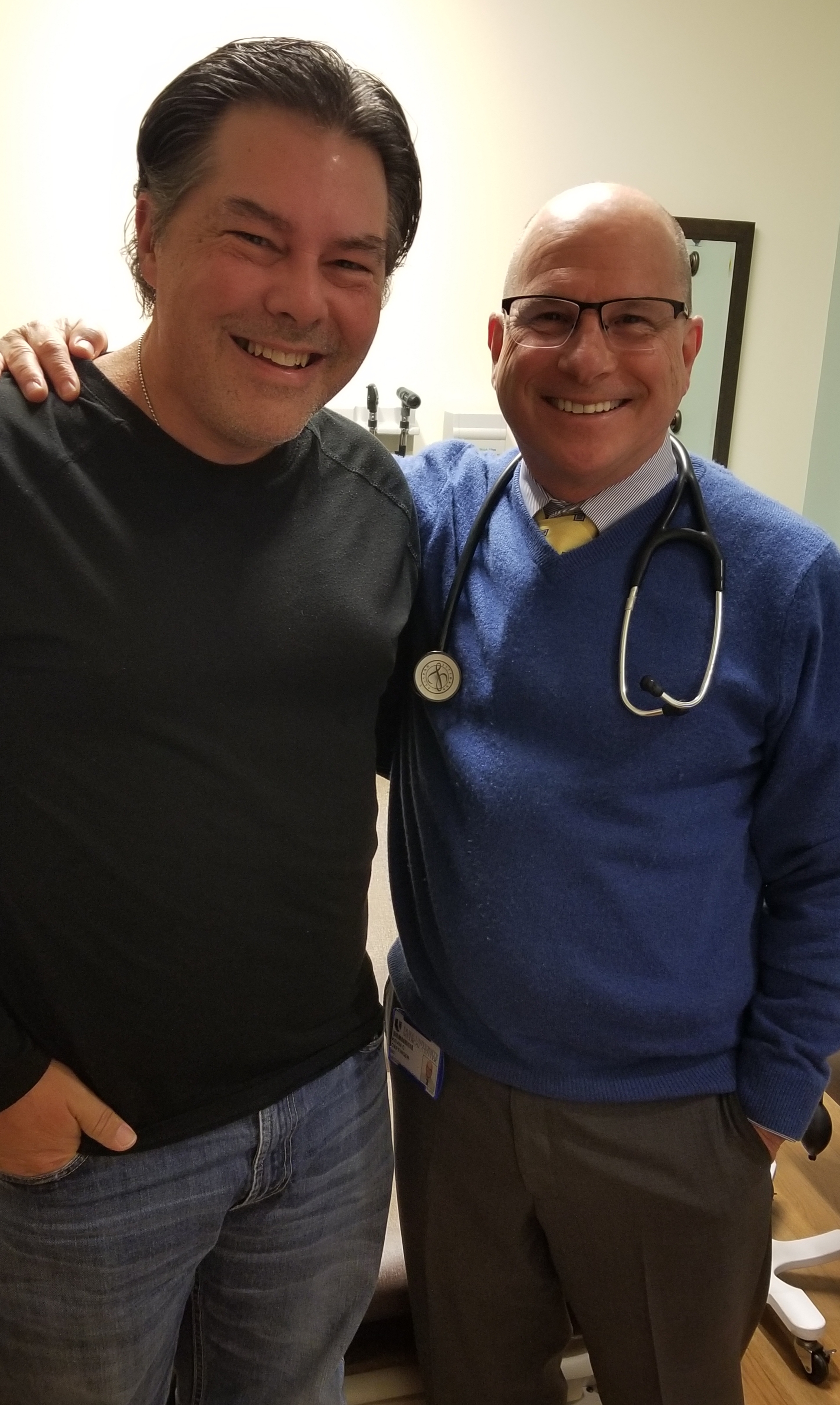
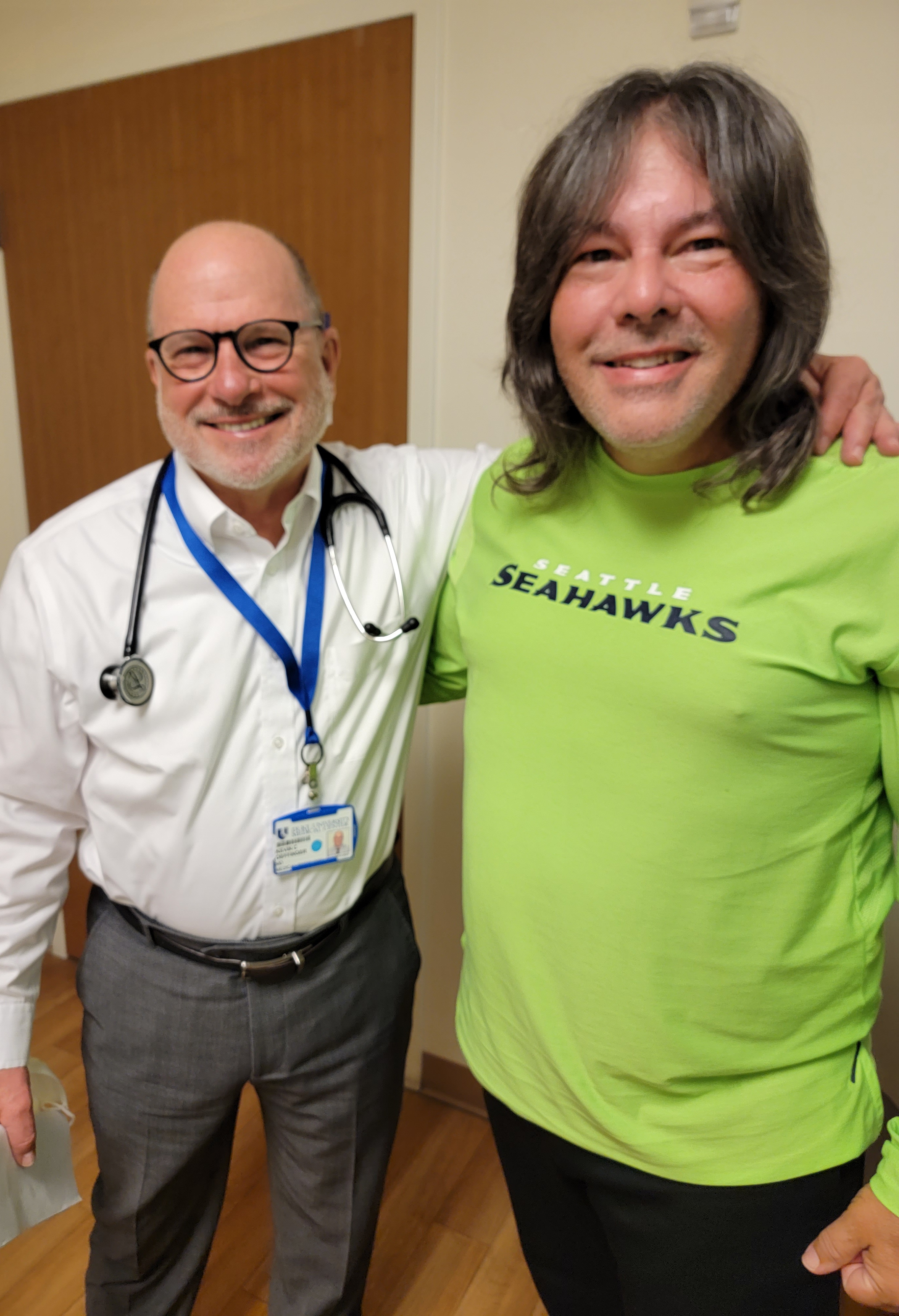
Then there are his countless patients that Dr. Oeffinger has provided “long term survivorship care” for, including myself for over fifteen years of my 35 years survivorship of Hodgkin’s Lymphoma.  I first met Dr. Oeffinger following emergency open heart surgery for a near-fatal “widow maker” level heart blockage, caused by progressive damage from my radiation treatments eighteen years earlier.  My regular doctors had no idea what they were working with, nor did I think what was happening was related to my Hodgkin’s Lymphoma.  His knowledge and experience of late-developing side effects from treatments provides answers to symptoms other doctors who do not understand what they are looking at, explains to them why, shows them how, and then come up with a survivorship plan to deal with those late side effects. 

Dr. Oeffinger once said, “I have received SO MUCH MORE from the Hodgkin’s community than I have given.”  I have no idea how many patients that he has cared for, but I have personally met many of them, as there are many of us who have survived Hodgkin’s Lymphoma for decades now, thirty, forty, fifty years, long enough to develop these late effects, I can safely speak for every patient that Dr. Oeffinger has cared for, without his knowledge, care, and advocacy, we would not have endured all the extra years he has given us.  His care has given us SO MUCH MORE than we could ever give back to him or our survivor community.

Always humble, kind, caring, and unknown to his patients an emotional toll he is likely carrying himself, I am honored to submit Dr. Oeffinger as a blood cancer hero.

And that, was the essay that I submitted, a small snippet, truly not doing justice what Dr. Oeffinger means to me and so many others. I only touched on a few of his credentials. He is literally world famous with his experience when it comes to Hodgkin’s Lymphoma and survivorship. But it is his care and his empathy, and he instills that same skill into all who learn under him from his nurses to his students to his peers.

In 2008, I set out to find a doctor who would not only understand what had happened to me, and was happening to my body, caused by my Hodgkin’s treatments nearly twenty years earlier. It made no sense to me, as I had been “cured” that whole time. Why would the treatments be doing damage to me? Through a peer-to-peer email list serve I participated in, I found Dr. Oeffinger who was working at Memorial Sloan Kettering Cancer Center in Manhattan. While I had other cancer centers closer in proximity, it was Dr. Oeffinger who was always at the front of our discussions and who I wanted to see.

I remember all of my appointments with Dr. Oeffinger. My first appointment was very telling, the level of care I was about to receive. I had removed my shirt, and he began relating to his nurse, his observations. As I listened to him describe my physical shell, as if he were some sort of human x-ray machine, he pointed out all of the muscle loss from my upper torso, damage from the extreme high dose radiation therapy I had undergone in 1989. He would explain a “pencil neck” and drooping appearance with my neck, and muscle loss in my shoulders that resulted in one shoulder hanging lower than the other. He was already aware of the damage to my heart prior to the appointment, but now he was getting an even clearer picture of what he would deal with. He reviewed the chemotherapy regimen I also underwent back in 1989, and then, with his knowledge and experience, he was able to come up with a surveillance or management plan for me.

Now if you notice something about that last sentence, “surveillance or management,” nothing is said about “cure” or as he put it, “we can’t reverse, stop, or undo what is happening to you, but we can do all that we can to slow the process down.” That was sobering. I know in the beginning, I did not comprehend exactly what that meant. I had just gone through an emergency double bypass because of my radiation therapy. I should have been good. I beat my cancer. I survived my heart surgery. On with my life! Right? Riiiigghhht?

Dr. Oeffinger continued, “in a perfect world, I would be able to order a full-body scan, to see everything that your body is dealing with, but as of now, that is not available.” Over the next couple of years, he would refer me to several, and I do mean several specialists who understand the impact of late side effects from the high dose radiation, and highly toxic chemotherapy that was used to treat my Hodgkin’s Lymphoma. Gastrointestinal, cardiology, pulmonary, cardio vascular, physiatry, psychology, endocrinology, and I am sure that I am missing a few, are all systems of my body impacted from my treatments. My body was now being watched for potential new developing cancers (I currently am at risk for esophogeal and lung cancer), as well as other potential events.

One of those such events, was a middle-of-the-night ambulance ride to the ER, with aspiration pneumonia and highly septic, my cancer history a contributing factor. And right at the beginning of the Covid pandemic, I would have to undergo three urgent surgeries, two more heart (a stent and a valve) and a carotid artery, all having reached a point of needing to be fixed. Treating or repairing a long term survivor exposed to the therapies like I was, is not a simple thing to do, with the procedures coming with their own risks themselves, which is what makes it critical, that I deal with doctors who understand my medical history and “why?”

While Dr. Oeffinger did not do those surgeries, he was there with me for each one. And while I cannot speak for his other patients, I would bet anything, he was there for all of them as well. In 2017, he even made a phone call to check up on me, after my area was smashed by Hurricane Irma. Long story short, Dr. Oeffinger truly cares about his patients.

I was told by another fellow survivor that I had no chance of getting to see him, because he was either too busy, not currently taking any patients, or whatever. To be honest, I have no idea what made that first visit happen with Dr. Oeffinger, but it did happen. He gave me this to look forward to, back then a 42-year old father of two daughters who had no idea what was happening to their Father, “it’s my goal, that we get you to watch your daughters grow, graduate, go to college, get married, and some day, make you a grandfather.” And I never looked back in my survivorship care, only forward to every milestone that I have gotten to witness since. I have had many severe health events pop up, and it was the knowledge he shared, that put me in the right direction to get the proper help, and to see another tomorrow. I am sixty percent of the way toward our goals with another huge milestone coming at the end of the year. And that makes Dr. Oeffinger a hero to me.

My Cancer Survivor Story


I would like to take an opportunity to explain, who it is exactly, that I feel will enjoy, appreciate, and be glad that they read my book, “Paul’s Heart – Life As A Dad And A   35-Year Cancer Survivor.” As I have had several discussions with those who have already read my book, I realized that this book is reaching so many in different expectations, and in one particular situation, something I had not even thought about.

First, let me get the obligatory plug out of the way. The book can be purchased on Amazon in either paperback ($15) or via E-book ($9.99).

The General Reader

This is a reader who is looking for something inspirational to read. I am not famous, not a professional athlete or actor or famous musician. I am just one of over 330 million people with a story to tell. I had cancer. I was treated for cancer. I survived cancer. I tell the story of this journey in a way that is not “sciency”, and you do not have had to have had cancer to understand the story. It was not an easy journey for me. But it is one that I hope provides inspiration and hope for anyone who reads the book.

Family Of Someone With Cancer

After reading my book, you will understand why this is a group that should read the book, at least in my situation. I was reclusive during my battle, even from my own parents. Other than the announcement of the diagnosis, that was all anyone in my family had been told until I was declared in remission. Whether or not it was fair to them, right or wrong on my part, depends on the person facing the cancer. To say my mother was shocked by what she read I had been through, is an understatement.

The Caregiver

No one usually comes into a cancer fight as a patient with any experience or training. The same goes for the patient’s caregiver. The benefit of my book to caregivers, again besides the inspirational journey, is understanding. One of the most difficult things for a caregiver to understand and prepare for, are the emotions and the multitudes of thoughts that can go through the mind of their loved one as they battle cancer. I do not hold back with my frustrations, my fears, and my joys, giving a caregiver who reads my book, some understanding of what can be expected.

The Cancer Patient

If there is one thing that has not changed in over 35 years, it is the whirlwind of uncertainty and fear, that someone just diagnosed with cancer experiences. There is the mental battle of the stigma and stereotypes of cancer patients and chemotherapy that stir up the most fear. In “Paul’s Heart – Life As A Dad And A 35-Year Cancer Survivor,” I give a glimpse of what it was like four decades ago to undergo diagnostic methods and treatments far worse than they can imagine, and express the hope with the progress and newer methods available today, producing better and safer results than when I was treated. As I have discussions with current patients, and I hear them express their fears and doubts, I remind them what I went through, including the fears and doubts. And then I encourage them, just as I got through it, so can they.

Survivors Of Cancer

Though clearly, this is the crux of what my book is about, surviving cancer. I soon found out, especially as survivors purchased my book, there were two different sub-groups of survivors, and even a sub-group of that one sub-group. Of course, I want those who are in treatment or having just finished treatments, to read my book, and see the life that is ahead of them, decade after decade of life.

But there are also “long term survivors”, also like me, decades out from treatments. Here is where I discovered something I had not thought about, of course unintentional, but also, because I lacked the personal experience. When I mention the diagnostic methods I went through for diagnosis and staging, these survivors could relate personally as they had gone through many of these things as well. And many of their paths followed similar trajectories to mine. So, for many of my fellow survivors, my book was about recognizing, they are not alone, especially emotionally with the things we have struggled with.

But Hodgkin’s Lymphoma, is referred to as a “pediatric” cancer. Even though I was 22-years old when I was diagnosed, I get described as having had a pediatric cancer. I believe there is a threshold somewhere into the thirties, that a person can be described that way when diagnosed. And of course, there are plenty in their 40’s, 50’s, 60’s, and 70’s diagnosed with Hodgkin’s Lymphoma.

There is this other group of survivors that I alluded to, and many of those survivors have more years in survivorship than I do, 40 and 50 years, one even 60 years. And for many of those, they are younger in age than me, and that of course means that they were diagnosed at a much younger age. These were true children by any definition of age as young as five years old to teenage. In fact, I wrote about one patient, Jennifer (see “Jennifer’s Story” on this blog https://pedelmanjr.com/jennifers-story/ ).

One thing I did not realize as I wrote this book, is that as some of those fellow survivors read this book, their memories and recollections of what they went through, actually triggered and revisited their trauma. Again, I was 22-years old, an adult, knowing full well what was happening to me. I saw two counselors who gave me the emotional support I needed to endure.

But as it turned out, these “younger” survivors had no emotional support. There were likely no explanations to them of what was happening and why? Why would their parents let these doctors do such horrible stuff to them? Why wouldn’t anyone help them? There likely were no counselors offered for them to talk to. And then, if you have followed my blog, later on in life, to develop late side effects from the treatments that put the cancer in remission, destroying the quality of life they thought they once had. Sadly, some of these survivors developed so much resentment towards their parents for having done this to them.

The point is, “Paul’s Heart” is very cathartic for me to write, whether in blog form or book. My diagnosis, treatment for, and survival of Hodgkin’s Lymphoma has been much more traumatic for me than I had let myself believe. I am actually stunned reading what I wrote, knowing it and having experienced it. But I have carried these feelings the rest of my life, never to be faced again, until now.

Of course I would never intentionally cause harm to my “younger” long term survivors. But if they are able to read my book, I would hope that the book would inspire them to learn to release the trauma that they have likely held on to their whole life as well.

A Carnival Of Cancers


I would like to dedicate this story to two young people that I talk to about their cancers.  One has just celebrated one year of remission, the other, is approximately a month away from completing his journey.  Both have faced their Hodgkin’s.  One has beaten it, the other is almost there.  I am happy for both of you.  Your experiences during your fight with Hodgkin’s that you have shared with me, are truly an inspiration.  The support that you had from your families, should serve as the example of the support that all patients need to get through their fight with cancer. 

Whether visiting the boardwalks of the shorelines, or local carnivals, it is not uncommon to hear some barker call out to passer-byes to step right up, and win a prize.  While the games are fairly easy to win, the prizes are awarded by some ladder scale from small to largest, and when played long enough to get the larger prizes, come with quite a price.

But imagine if the dialogue went something like this:

“Step right up, come on over, give it a shot, it’s real easy.  Everybody gets it.  Is it going to be small or large?  How lucky you feeling?  And we have a winner!  It’s cancer, but not just any cancer.  Hodgkin’s Lymphoma folks.  He’s got Hodgkin’s Lymphoma!  Who’s next to test their luck?”

Of course this is a ridiculous premise, but I challenge you to find one person, who did not hear these words from an oncologist, “You are really lucky.  If you are going to get a cancer, Hodgkin’s Lymphoma is the cancer to have.”  I will let the doctor off the hook in a second, but for now, imagine, you have just been told you are lucky and that you have cancer.  What would your reaction be?  You have a deadly disease, remission or cure is not certain, but for you, the news is good.

For myself, I was in an office of an oncologist / hematologist.  I had no idea what that even meant.  All of the prior doctors that I had seen had been looking for some sort of cold, or perhaps an injury when one of them decided to send me to this place.  I was not even placed in an exam room, but rather the office of the doctor.  He walked in to the office, around his desk, sat in his chair, and then rattled off an obviously often rehearsed speech.  I have no idea how, but with just the first two words from his mouth, “Hodgkin’s Lymphoma…”, it triggered an automatic response of something I should never have known what it meant.  By the time he finished that first sentence, ending in “rare form of cancer.”, I had already guessed that is what he was already talking about.  Then I heard the word from him, “cancer.”  I knew I was in the wrong place, the wrong patient, the wrong diagnosis.  But he kept on talking.

“Hodgkin’s is rare, but it is also highly curable, at 85%, if you are going to get a cancer, Hodgkin’s is the cancer you want to get.”  I “want to get?!?!”  Seriously?  I wanted to get cancer, so I pressed my luck and came up with Hodgkin’s?  People die from cancer, and he is telling me that I am lucky?  Pardon me, but are fucking kidding me?!?!  I did not want cancer!  Let me be clear, I did not want it.  I did not wake up that morning, and make a choice between buying a lottery ticket or getting Hodgkin’s.  Clearly, winning the lottery, that would have required luck.  Cancer kills.  How is that lucky.

Now as promised, I have to cut the doctor some slack, but hopefully those who are reading this, and have been in this situation, not just with cancer, but any serious crisis, print this, and give this to the doctor to read.  Like I said, I am not going to hammer the doctor.  Let’s face it, next to a cardiologist, the oncologist has to deal with one of the most grim disciplines of medicine.  And if they have been practicing long enough, the tended to plenty of patients, whose prognosis were definitely more grim than today.  So there may be an oncologist who may not have the best or happiest bedside manner.  But hopefully we can get it across, by passing this on, there is no such thing as luck with developing a certain cancer, or how advanced a cancer is compared to another.

I would rather have had the doctor say, “I am sorry to tell you, that you have cancer.  Here are the statistics, and here are the modes of treatments used to treat it.  I am going to do everything I can to put your cancer into remission.”  It is that simple.

I was not lucky.  I was diagnosed with cancer.  I was treated with chemicals and radiation that were toxic and difficult to go through.  I was left with some permanent after effects from those treatments, some serious, some not so much.  The last thing I consider myself today is lucky.  But what did happen?  I tolerated the treatments.  My body endured.  My physiology was able to handle the all-out assault of the chemotherapy and radiation therapy.  This was not luck either.  My body did what it had to.  The treatments did what they had to.

Please, do not get me wrong.  It is no minor accomplishment that I am here twenty three years later.  I often wonder how the other three kids who were treated with me turned out.  Progress in the diagnostic techniques and treatments of not just Hodgkin’s Lymphoma, but many cancers has advanced so far in the last two decades, and from the times before I was treated.  Survival rates for Hodgkin’s has increased from 85% to 95%.  And there are many cancers that have achieved 100% remission or cure.  In spite of the positive direction that cancer research has taken in two decades, I know better than to tell the many newly diagnosed patients or those currently in treatment that they are “lucky that they did not have to go through what I did, or those before me.”  Patients today are still being diagnosed with a deadly disease, high cure rate or not.  We are not lucky.  We simply hope that we have made the right decisions in the doctor, the treatments, and have the right support team with us.  this is not luck.  We simply count on everything to go as the books say to do.

Post Navigation