Paul's Heart

Life As A Dad, And A Survivor

Archive for the tag “long term survivor”

My Cancer Survivor Story
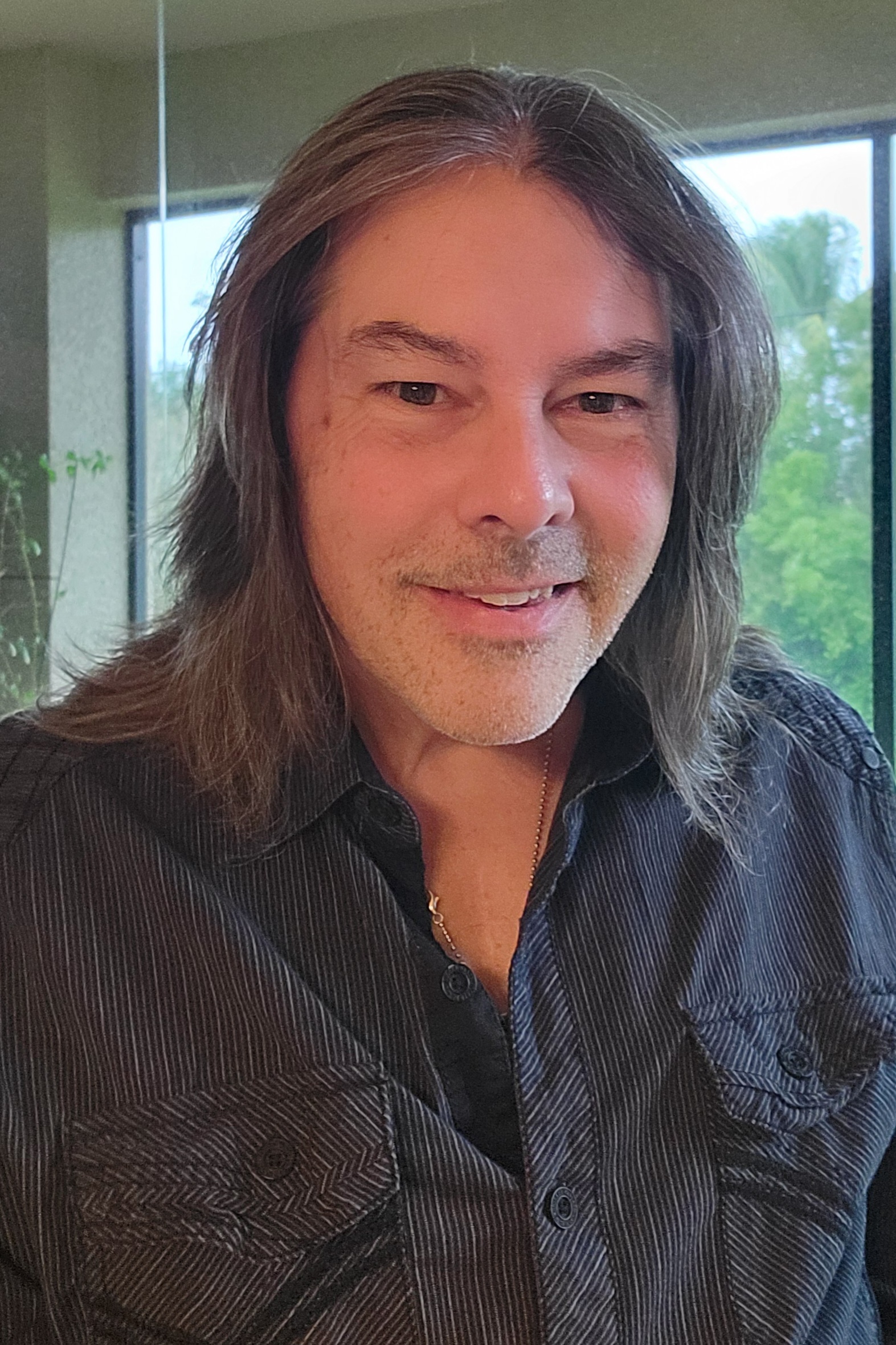

I would like to take an opportunity to explain, who it is exactly, that I feel will enjoy, appreciate, and be glad that they read my book, “Paul’s Heart – Life As A Dad And A   35-Year Cancer Survivor.” As I have had several discussions with those who have already read my book, I realized that this book is reaching so many in different expectations, and in one particular situation, something I had not even thought about.

First, let me get the obligatory plug out of the way. The book can be purchased on Amazon in either paperback ($15) or via E-book ($9.99).

The General Reader

This is a reader who is looking for something inspirational to read. I am not famous, not a professional athlete or actor or famous musician. I am just one of over 330 million people with a story to tell. I had cancer. I was treated for cancer. I survived cancer. I tell the story of this journey in a way that is not “sciency”, and you do not have had to have had cancer to understand the story. It was not an easy journey for me. But it is one that I hope provides inspiration and hope for anyone who reads the book.

Family Of Someone With Cancer

After reading my book, you will understand why this is a group that should read the book, at least in my situation. I was reclusive during my battle, even from my own parents. Other than the announcement of the diagnosis, that was all anyone in my family had been told until I was declared in remission. Whether or not it was fair to them, right or wrong on my part, depends on the person facing the cancer. To say my mother was shocked by what she read I had been through, is an understatement.

The Caregiver

No one usually comes into a cancer fight as a patient with any experience or training. The same goes for the patient’s caregiver. The benefit of my book to caregivers, again besides the inspirational journey, is understanding. One of the most difficult things for a caregiver to understand and prepare for, are the emotions and the multitudes of thoughts that can go through the mind of their loved one as they battle cancer. I do not hold back with my frustrations, my fears, and my joys, giving a caregiver who reads my book, some understanding of what can be expected.

The Cancer Patient

If there is one thing that has not changed in over 35 years, it is the whirlwind of uncertainty and fear, that someone just diagnosed with cancer experiences. There is the mental battle of the stigma and stereotypes of cancer patients and chemotherapy that stir up the most fear. In “Paul’s Heart – Life As A Dad And A 35-Year Cancer Survivor,” I give a glimpse of what it was like four decades ago to undergo diagnostic methods and treatments far worse than they can imagine, and express the hope with the progress and newer methods available today, producing better and safer results than when I was treated. As I have discussions with current patients, and I hear them express their fears and doubts, I remind them what I went through, including the fears and doubts. And then I encourage them, just as I got through it, so can they.

Survivors Of Cancer

Though clearly, this is the crux of what my book is about, surviving cancer. I soon found out, especially as survivors purchased my book, there were two different sub-groups of survivors, and even a sub-group of that one sub-group. Of course, I want those who are in treatment or having just finished treatments, to read my book, and see the life that is ahead of them, decade after decade of life.

But there are also “long term survivors”, also like me, decades out from treatments. Here is where I discovered something I had not thought about, of course unintentional, but also, because I lacked the personal experience. When I mention the diagnostic methods I went through for diagnosis and staging, these survivors could relate personally as they had gone through many of these things as well. And many of their paths followed similar trajectories to mine. So, for many of my fellow survivors, my book was about recognizing, they are not alone, especially emotionally with the things we have struggled with.

But Hodgkin’s Lymphoma, is referred to as a “pediatric” cancer. Even though I was 22-years old when I was diagnosed, I get described as having had a pediatric cancer. I believe there is a threshold somewhere into the thirties, that a person can be described that way when diagnosed. And of course, there are plenty in their 40’s, 50’s, 60’s, and 70’s diagnosed with Hodgkin’s Lymphoma.

There is this other group of survivors that I alluded to, and many of those survivors have more years in survivorship than I do, 40 and 50 years, one even 60 years. And for many of those, they are younger in age than me, and that of course means that they were diagnosed at a much younger age. These were true children by any definition of age as young as five years old to teenage. In fact, I wrote about one patient, Jennifer (see “Jennifer’s Story” on this blog https://pedelmanjr.com/jennifers-story/ ).

One thing I did not realize as I wrote this book, is that as some of those fellow survivors read this book, their memories and recollections of what they went through, actually triggered and revisited their trauma. Again, I was 22-years old, an adult, knowing full well what was happening to me. I saw two counselors who gave me the emotional support I needed to endure.

But as it turned out, these “younger” survivors had no emotional support. There were likely no explanations to them of what was happening and why? Why would their parents let these doctors do such horrible stuff to them? Why wouldn’t anyone help them? There likely were no counselors offered for them to talk to. And then, if you have followed my blog, later on in life, to develop late side effects from the treatments that put the cancer in remission, destroying the quality of life they thought they once had. Sadly, some of these survivors developed so much resentment towards their parents for having done this to them.

The point is, “Paul’s Heart” is very cathartic for me to write, whether in blog form or book. My diagnosis, treatment for, and survival of Hodgkin’s Lymphoma has been much more traumatic for me than I had let myself believe. I am actually stunned reading what I wrote, knowing it and having experienced it. But I have carried these feelings the rest of my life, never to be faced again, until now.

Of course I would never intentionally cause harm to my “younger” long term survivors. But if they are able to read my book, I would hope that the book would inspire them to learn to release the trauma that they have likely held on to their whole life as well.

Thoughts On My Back


This one is for you my friend.

As a long term survivor of Hodgkin’s Disease, cancer, I have learned alot medically, and about my survival.  I have learned about risks, protocols, and needs.  I have been through much worse in my life with radiation and chemotherapy.

If you have never been a patient before, there are a lot of things that go on in a patient’s mind, at various points of procedures.  The mind races as people hustle around you, roll you, and all of a sudden choose that moment in time to mass introduce everyone to you, which if you are going under anesthesia, will not remember them anyway.  Your mind is consumed with what to expect following your procedure.  Almost as in real life outside of the hospital, inside, I do not take the time to look around, notice my surroundings, relax, enjoy, appreciate.

This story is dedicated to my good friend who takes notice and appreciates her surroundings.  This is more than just a child laying in a grassy field looking up at puffy skies.  This is a grown woman, possibly with things of her own on her mind, but as she travels, she takes photos and speaks about the very details that she notices during her visits.  She slows down.  She enjoys.  She relaxes.  She appreciates.  And then she recalls, in vivid details.  So Cathy made the suggestion to me, as I have seen my share of ceilings, what do I see?  What do I think about?  Interesting that I had never really given it much thought until now.  But with a pair of procedures coming this Wednesday, I started thinking.  Hmmm…

So yesterday, I payed attention to my first ceiling.  I say the first ceiling because once I was rolled into the procedure room, all I noticed were the multiple monstrous digital flatscreens.  If my throat did not hurt right now, I would probably grunt like Tim “The Tool Man” Taylor.  (All together, I know you are doing that right now.)

But this is the first ceiling I looked at, my holding room.  Wendy looked at me funny because I was staring at the ceiling, and she asked me if I was counting ceiling tiles.  When I told her “no,” for some reason, she referred to the light grate which of course was about one and a half foot wide, and two feet long.  The argument, how many squares total were in the light grate.  If you have Facebook,  then you have seen this puzzle several times where you have to count how many squares actually exist.  Initially, it looks like sixteen or something, but then you look at the squares that are formed by the other squares and so on, the number comes out to be in the twentys.

We never did get to finish calculations because just then the techs came in to roll me to the procedure room where I would undergo my first colonoscopy and second endoscopy.  You would think that would have been on the forefront of my mind.  But thanks to my friend, the techs were now standing there, staring at the ceiling.  Counting.

Okay, seriously, I want to get this done and over with, the colonoscopy, not square counting.  I will do the math at home, or maybe I will not.  Maybe I will give it a shot for my next procedure.

For anyone wondering how many squares there were?  There were six across, and seven long.  So the answer is not 42.  You do the math.

My First Visit To Sloan Kettering Memorial Cancer Center


March 3, 1995 was a day that I had waited for five years to occur.  I was going to use the word “cured” with confidence that my Hodgkin’s Disease would be gone forever.  I had learned so much over those five years.  I had to watch if I got a high fever, keep an eye out for lumps and discolorations, all common sense stuff that I could do on my own without having to pay a co-pay for.  And in spite of statistics being based on five year survival rates, there was no evidence that I was going to comply with those odds.  Things were on my side for a long life.

I recently wrote a post on “big hospital vs. little hospital” so I won’t repeat my thoughts on that at this time.  As far as I was concerned, it was life as usual.  I would see my family doctor, whose practice is an hour away from my home, once a year, for a seasonal allergy shot.  I never thought about hospitalization, because prior to my Hodgkin’s Disease, I did not need to worry about hospitals.

But then I got the rude awakening when I dared to complain about a symtpom that I had ignored for nearly four months.  I was told that I needed open heart surgery at age 42, and it was due to radiation damage from my treatments eighteen years earlier.  I was at a hospital that I was more than familiar with for many reasons, of which is another post.  But the Lehigh Valley Hospital was one of the biggest networks in the area, so I felt in good hands.

One of the first things that I should have done when I got out of the hospital was head to Atlantic City or Las Vegas.  I was one of the luckiest people on the planet because I not only pre-empted my pending fatal heart attack, but I would come to find out, after getting my surgical report, that my surgery was based on the care for the average heart patient, not for someone exposed to four times the lifetime exposure of radiation and chemotheraputic drugs such as Bleomyacin,  Adriamyacin and other anthracycline drugs.  Decisions that were made then, could have had much different results.  Neither my doctors, nurses, or myself knew what was at risk.

In the past, I had been involved with an on-line support group for Long Term Survivors of cancer.  Up until now, I had never felt like I belonged there, because everyone that I had met on this list, were dealing with ailments blamed on their cancer treatments, cardiac, pulmonary, liver, secondary cancers, etc..  At worst, any issues that I had been dealing with from my cancer treatments were some hair that had not grown back, infertility issues, and thyroid issues.  Up until now.  So the first thing I did from the hospital was not visit a casino or play the lottery, I went back to those that I knew, would know best.

I am not qualified to define what exactly a “Long Term Cancer Survivor” is, or determine what criteria is to be met.  There is no committee collecting membership dues.  There is no ruler.  There are moderators, who are survivors themselves facing severe health issues related to their treatments, and they have the unpopular challenge of protecting each participant from common email attacks or personality clashes.  The fact is, we have enough to deal with.  And so it began, the journey to find doctors who specialize in long term cancer survivors.

Unfortunately, long term side effects are not widely studied by primary care physicians, specialists, and other caregivers.  Only in recent years does the discipline even have a recognizable heartbeat with an occasional article in the New England Journal or other publication.  Of course, the researchers and pharmacutical companies did not spend much time or money on late side effects, because we were not expected to survive a lifetime.  But we do.

Through the Childrens Oncology Group, I learned that there were two facilities that were within a decent day’s road trip, in Philadelphia at the University Of Pennsylvania and in Manhattan at Sloan Kettering Memorial Cancer Center.  From the internet support group, I knew a lot more about the program at MSKCC, but knew that both hospitals were some of the best in the country.

Scared, and running out of hope, I contacted the first name that I recognized from MSKCC, Dr. O.  In him, I struck gold.  He originally practiced in Texas.  For decades, this doctor studied Hodgkin’s Disease and survivorship of the late effects from treatments.  To get an appointment with him was the equivalent of winning the lottery.  I know of some other patients that see him, and knew that I was being cared for by the best, the leader, the example for survival care.  Through his leadership and mentorship, there are now many survivor clinics accross the United States, and the knowledge is now spreading across the world.  Survivors of cancer were not only being recognized, being represented, but being cared for.

Today, there are protocols for new patients when they reach the end of their treatments.  The medicines and procedures are less invasive, less toxic, and result in less severe side effects, but to be honest, the risks do still exist.  That is why there is the Relay For Life and Stand Up 2 Cancer.  Better ways of diagnosing and treating cancer need to, and can still be found.  With the follow-up protocol, the chances for picking up a late developing side effect, or secondary cancer, can now be found earlier and have the better success to survive, as if surviving cancer was not enough of a challenge.

My first trip to Manahattan since high school was overwhelming enough let alone to walk into one of the greatest medical facilities in the world.  I was greeted by Nick, also known as the “Ambassador” who gave me the instructions I needed to locate Dr. O’s office.  It was there that I met Beth, a nurse practitioner who had spent a long time with the cancer survivor program.  We spent close to an hour going over my health history.  She offered me compassion, empathy, and care as it was obvious, an entire new world was collapsing all around me.  I thought I was only going to be talking about cardiac issues.  But there was so much more.

Eventually, Dr. O came in and spent another hour with me, this time explaining all the things that had been discovered about cancer survivors like me, what had been done to me, and what would need to be done to care for me.  As he put it, “I want to make sure that your grandchildren get to know the great man you are and what you have been through.”  Okay, I was not really thinking about grandparenthood at 42, but I like his long term thinking.  Together we came up with a plan including retrieving my old records to find out exactly what I had been exposed to, and compare what they now know as far as what to look for in late developing side effects.  These are all things that are done now with current patients.

Nearly five years later, comparisons can now be made for me that show the progression of any of the side effects as there were no basline studies done on me 23 years ago.  I have a complete understanding of what my survival has meant to me, but also what it means to others, my family, my friends, and other survivors.  There are millions of us who have survived cancer.  Not all surivivors will develope side effects.  Not all survivors will know if what they may be dealing with may actually be attributed to their treatments.  That could be a good thing, take it from me.  It is a Pandora’s Box to know that more issues can occur, will occur, to know the increased risks at being proactive or letting things take their course.

This past week, it had been confirmed a symptom that I complained about two years ago, had returned, and why.  It is also suspected of causing a serious bout of “aspiration pneumonia” two months ago.  but this is just the beginning stages as further investigation will take place later this week to get an overall view from beginning to end, and then a new treatment plan will be determined as I continue to age towards grandparenthood.  Thankfully, because of Dr. O, and more than a dozen other caregivers that he has me deal with, I am going to get that chance.

Post Navigation