September is a busy month for raising awareness of certain cancers; blood cancer, ovarian cancer, prostate cancer, thyroid cancer, leukemia and lymphomas – often referred to as “childhood cancer” though clearly strike at any age.
If you have followed this page, followed me even before I began “Paul’s Heart,” I have been involved with the world of cancer over 36 years as a patient, survivor, and advocate. I was diagnosed with Hodgkin’s Lymphoma (actually called Hodgkin’s Disease) back in 1988. I was treated with levels of radation therapy and a chemotherapy cocktail I was not expected to survive, let alone barely tolerate.
Today, I deal with late side effects from both of those treatment regimens that were used to save my life, creating situations almost as fatal as the cancer itself. If you look at the list of “I know”s pictured above, I experience each and every one of them to this day, thirty-six years later. In fact, just today, I learned of a friend who passed from a different cancer, not even a year after diagnosis.
I continue to write, record TikToks and YouTube videos, give speeches, and my most important role as a survivor, advocate and be a voice for others who feel voiceless or without knowledge because it has been the only way for me to give back. My body is so damage from those treatments, I cannot give blood or donate my organs. The only way I can help others is with my experiences. And it is my plan to continue to do so, always with the mentality “if my posts help just one”, though I know my words have reached so many more, until I can do it no more.
I am at the point now, approaching a major milestone, the age of 60 at the end of the year, something I definitely never thought I would see. My survivor’s guilt never takes a break as I say goodbye to one survivor after another, from the same cancer as me, either from the cancer, or the late effects. And even harder for me to deal with, outliving those in my life who have not had to deal with health adversities, something I struggle with constantly.
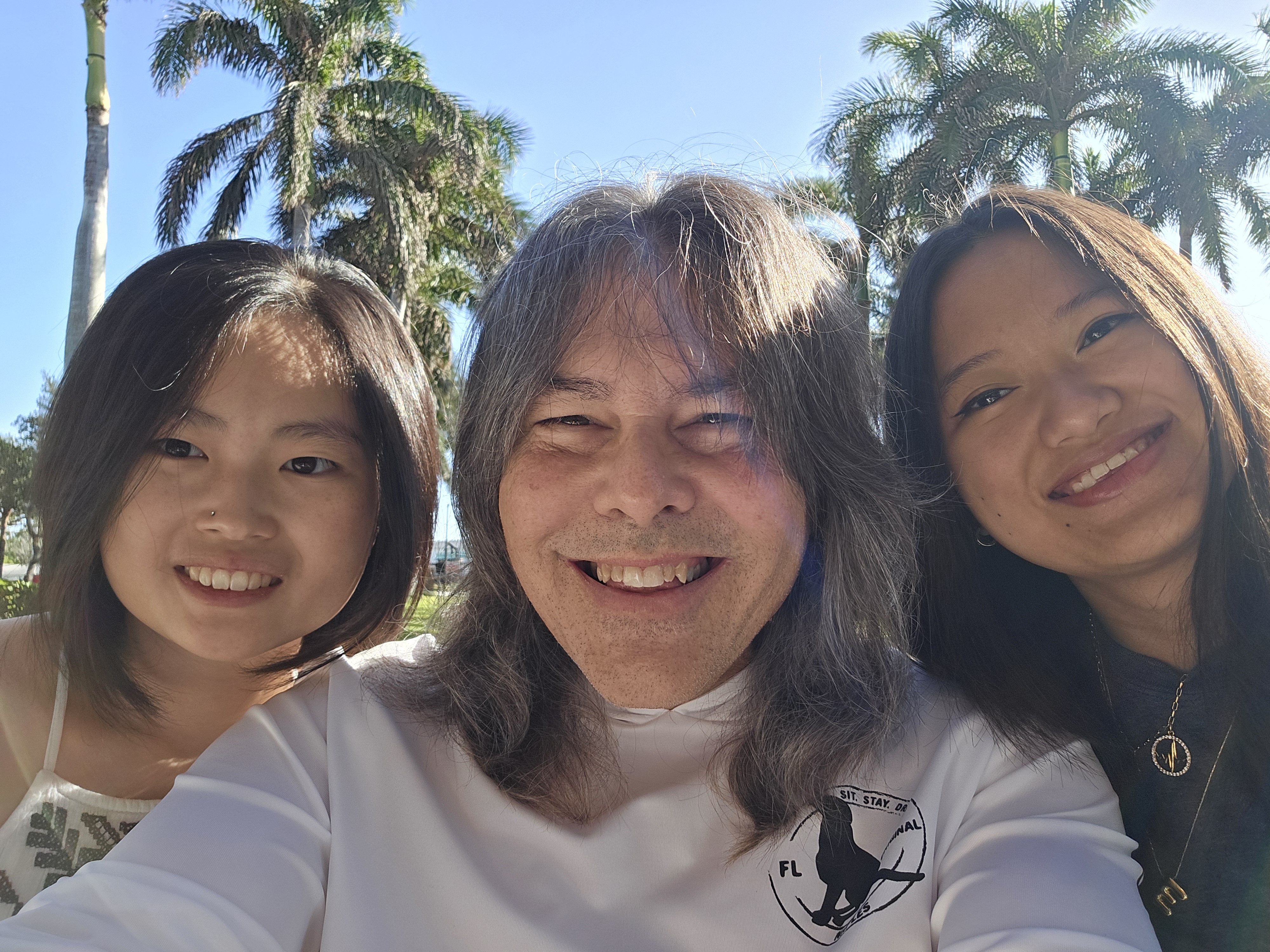
If I can attribute anything to my longevity, and though they were not yet born when I dealt with my Hodgkin’s, my daughters were there, and have been there, with every health issue from my treatments that I have faced, my inspiration to keep fighting. Yes I know, I cannot control when my body has had enough, as evident by my friends and fellow survivors before me, but there are so many more milestones I want with them, and that definitely drives me.
To my fellow survivors, celebrate this awareness. Any of us who have taken on cancer, knows how hard it was to get through. And for those who are no longer here, you are definitely not forgotten.
I would like to take an opportunity to explain, who it is exactly, that I feel will enjoy, appreciate, and be glad that they read my book, “Paul’s Heart – Life As A Dad And A 35-Year Cancer Survivor.” As I have had several discussions with those who have already read my book, I realized that this book is reaching so many in different expectations, and in one particular situation, something I had not even thought about.
First, let me get the obligatory plug out of the way. The book can be purchased on Amazon in either paperback ($15) or via E-book ($9.99).
The General Reader
This is a reader who is looking for something inspirational to read. I am not famous, not a professional athlete or actor or famous musician. I am just one of over 330 million people with a story to tell. I had cancer. I was treated for cancer. I survived cancer. I tell the story of this journey in a way that is not “sciency”, and you do not have had to have had cancer to understand the story. It was not an easy journey for me. But it is one that I hope provides inspiration and hope for anyone who reads the book.
Family Of Someone With Cancer
After reading my book, you will understand why this is a group that should read the book, at least in my situation. I was reclusive during my battle, even from my own parents. Other than the announcement of the diagnosis, that was all anyone in my family had been told until I was declared in remission. Whether or not it was fair to them, right or wrong on my part, depends on the person facing the cancer. To say my mother was shocked by what she read I had been through, is an understatement.
The Caregiver
No one usually comes into a cancer fight as a patient with any experience or training. The same goes for the patient’s caregiver. The benefit of my book to caregivers, again besides the inspirational journey, is understanding. One of the most difficult things for a caregiver to understand and prepare for, are the emotions and the multitudes of thoughts that can go through the mind of their loved one as they battle cancer. I do not hold back with my frustrations, my fears, and my joys, giving a caregiver who reads my book, some understanding of what can be expected.
The Cancer Patient
If there is one thing that has not changed in over 35 years, it is the whirlwind of uncertainty and fear, that someone just diagnosed with cancer experiences. There is the mental battle of the stigma and stereotypes of cancer patients and chemotherapy that stir up the most fear. In “Paul’s Heart – Life As A Dad And A 35-Year Cancer Survivor,” I give a glimpse of what it was like four decades ago to undergo diagnostic methods and treatments far worse than they can imagine, and express the hope with the progress and newer methods available today, producing better and safer results than when I was treated. As I have discussions with current patients, and I hear them express their fears and doubts, I remind them what I went through, including the fears and doubts. And then I encourage them, just as I got through it, so can they.
Survivors Of Cancer
Though clearly, this is the crux of what my book is about, surviving cancer. I soon found out, especially as survivors purchased my book, there were two different sub-groups of survivors, and even a sub-group of that one sub-group. Of course, I want those who are in treatment or having just finished treatments, to read my book, and see the life that is ahead of them, decade after decade of life.
But there are also “long term survivors”, also like me, decades out from treatments. Here is where I discovered something I had not thought about, of course unintentional, but also, because I lacked the personal experience. When I mention the diagnostic methods I went through for diagnosis and staging, these survivors could relate personally as they had gone through many of these things as well. And many of their paths followed similar trajectories to mine. So, for many of my fellow survivors, my book was about recognizing, they are not alone, especially emotionally with the things we have struggled with.
But Hodgkin’s Lymphoma, is referred to as a “pediatric” cancer. Even though I was 22-years old when I was diagnosed, I get described as having had a pediatric cancer. I believe there is a threshold somewhere into the thirties, that a person can be described that way when diagnosed. And of course, there are plenty in their 40’s, 50’s, 60’s, and 70’s diagnosed with Hodgkin’s Lymphoma.
There is this other group of survivors that I alluded to, and many of those survivors have more years in survivorship than I do, 40 and 50 years, one even 60 years. And for many of those, they are younger in age than me, and that of course means that they were diagnosed at a much younger age. These were true children by any definition of age as young as five years old to teenage. In fact, I wrote about one patient, Jennifer (see “Jennifer’s Story” on this blog https://pedelmanjr.com/jennifers-story/ ).
One thing I did not realize as I wrote this book, is that as some of those fellow survivors read this book, their memories and recollections of what they went through, actually triggered and revisited their trauma. Again, I was 22-years old, an adult, knowing full well what was happening to me. I saw two counselors who gave me the emotional support I needed to endure.
But as it turned out, these “younger” survivors had no emotional support. There were likely no explanations to them of what was happening and why? Why would their parents let these doctors do such horrible stuff to them? Why wouldn’t anyone help them? There likely were no counselors offered for them to talk to. And then, if you have followed my blog, later on in life, to develop late side effects from the treatments that put the cancer in remission, destroying the quality of life they thought they once had. Sadly, some of these survivors developed so much resentment towards their parents for having done this to them.
The point is, “Paul’s Heart” is very cathartic for me to write, whether in blog form or book. My diagnosis, treatment for, and survival of Hodgkin’s Lymphoma has been much more traumatic for me than I had let myself believe. I am actually stunned reading what I wrote, knowing it and having experienced it. But I have carried these feelings the rest of my life, never to be faced again, until now.
Of course I would never intentionally cause harm to my “younger” long term survivors. But if they are able to read my book, I would hope that the book would inspire them to learn to release the trauma that they have likely held on to their whole life as well.
Treating lymphoma has always been about timing. I cannot talk about treating non-Hodgkin’s Lymphoma as I did not have it, nor do I know anyone who has battled it. But as far as Hodgkin’s Lymphoma is concerned. I was diagnosed six months before my first wedding (that is another post) and as I begged my oncologist (cancer doctor) that I wanted to hold off on any treatments until after my wedding, he was having no parts of it. For a male patient, there really is no excuse for delaying treatment ever. However, for a female who happens to be pregnant, this is a whole other issue. For men, yes, sterility is an issue and for women as well, but when a woman is already pregnant, a hard decision has to be made whether to allow doctors to use toxic drugs to save her life, but also might adversely affect her baby’s life. There is no guarantee. I will talk about this type of decision in another post.
It has been over twenty five years since I underwent my first biopsy to diagnose my lymphoma. And I am amazed to hear, as well as quite glad, that newer patients have not had to be subjected to the barbaric methods that I was diagnosed with. But going back even forty and fifty and sixty years, cancer diagnostics have come a long way. As for my experiences, here are three of the diagnostics that I rarely hear used today:
1) bone marrow biopsy – taken from each side of my hip (felt like my ankles were being ripped up through my legs). One side note to this, I actually had to have a third sample taken. It seems that occurred after I heard my doctor say “oops” and claimed he had “lost” it.
2) lymphangiogram – a cool sounding test, if you do not mind your legs being propped in a bent position for the entire procedure. A slice is made into each foot, to all a doctor to use microscopic lenses to see lymph vessels (like blood vessels only much smaller) to inject a radioactive dye, that when subjected to an x-ray, lit my entire lymph system like a human Christmas tree to see where other possible affected lymph nodes might be located.
3) staging laparotomy – spleen removal, node biopsies, liver biopsy. Not pleasant and quite painful. An incision from sternum to belly button is made (any woman who has undergone a C-section will know this pain).
These three things were done to determine the staging of my disease, either 1, 2, 3, or 4. By the time all was said and done, I was diagnosed 3b. But in the decades since, a new kind of scan is now used to stage almost all cancers, a PET scan. I only know enough from a few friends and my father who have undergone those scans to know they are no big deal. In any case, I am glad that this new technology exists, however, it is still far from exact. There are still uncertainties that exist during the staging process, and this can delay treatments.
So let’s talk about treatments. Ask any radiation oncologist, and most will probably say they can cure Hodgkin’s Lymphoma with just radiation. As any of us who grew up near a nuclear reactor like Three Mile Island, or know World War history, radiation in large amounts is a bad, bad, thing. Side effects are brutal. But radiation could give remission to certain cancer patients, especially Hodgkin’s patients. Again, I will go more into side effects in detail in another post, but if you want to sneak a peak, I do have a link to the side effects from radiation I personally dealt with.
In the 1940’s, medicine discovered a drug, nitrogen mustard (a derivative of mustard gas, the same type dictator Sadaam Hussein used to kill his people), which had great results in giving people remission. Just like radiation, it too had its drawbacks. Besides being a deadly poison, it was also known to cause sterility in males during treatment. Unfortunately for me, that occurred. Shortly after that, a report came out that recommended that maximum treatments to reduce the possibility of sterility. Yep, the two extra months of chemotherapy are probably what caused my sterility.
Like many people before me, I was treated with both radiation, mustargen, but also a cocktail of six other drugs, all carrying various risks. And for survivors of Hodgkin’s from as far back as sixty years ago, yes, I know someone who has survived Hodgkin’s that long ago, these risks have become reality for us, and many quite critical to our health. But again, over the decades since my treatments, the doctors found out that they could treat Hodgkin’s with less drugs, and soon, my chemo cocktail had been cut in half. The hopes were to produce a remission more safely. But it cannot be understated that the drugs are still dangerous, the damage to the human body still exists.
The last sentence for me became a reality this past year. I met a young man who had done so well with his chemo therapy regimen, with the same drugs that I had been given. Yet weeks later, he would be one of the rare patients who would develop a very bad reaction within two months of being declared in remission. I did a post on Adriamyacin a couple of months ago, so you can find out the details there, and I will do another post later on. But the long short of it, this young man, still a kid as far as I am concerned, died less than six months from the time that he was told to go ahead and enjoy his life.
Like I said, treatments today, while better than they were when I was treated, are still bad today. We need better and safer treatments. We need better and safer diagnostics. We need better and safer follow-up guidelines. I have no doubt in my mind, that had the young man who died as a result of the damage from his treatment, had he been followed up more closely being given a drug that was proven to cause potential damage to the heart, he would still be alive today. A simple echocardiogram during the middle of the treatment, an inexpensive test when you put it in perspective that the lack of this test cost the man his life, could have given the doctors an opportunity to alter the treatment, or completely change the therapy regimen all together.
And so, during this month of September, National Lymphoma Month, I am going to inform you and educate why it is important to become aware of this rare disease that still needs a cure. I am not asking you to make a donation, though I know I would personally appreciate it if you would. But rather, I am about awareness. Please, share this article, and the many that follow. Share “Paul’s Heart.” Together we can make a difference.
American Cancer On-Line Resources
Internet support from peers, caregivers, survivors, and professionals in several hundred types of cancers and related issues
American Cancer On-Line Resources
Internet support from peers, caregivers, survivors, and professionals in several hundred types of cancers and related issues


 Paul's Heart