Paul's Heart

Life As A Dad, And A Survivor

Archive for the category “The Heart”

36 Years. How Is This Possible?
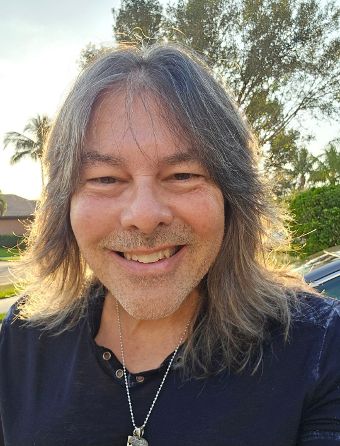

The year is 1988. Popular music back then was “Faith” by George Michael, “Dirty Diana” by Michael Jackson, “The Flame” by Cheap Trick, and “Nothing’s Gonna Change My Love For You” by Glenn Medeiros (whose daughter loves trolling him on Tik Tok). Chuckie scared the crap out of us in “Child’s Play” in the movies. “Cheers” was the television show to watch. The price of gas was $.90 per gallon and a bottle of Coke was $.35 for a 16 ounce bottle. I remember everything from back then, clear as day.

But there was something even more memorable that occurred thirty-six years ago this week, I was diagnosed with Hodgkin’s Lymphoma (back then it was called Hodgkin’s Disease). The week before Thanksgiving and the start of the Christmas holiday season, and in less than a month, my birthday, I was faced in the fight of my life, cancer. I will not rattle off the entire history as it is not pertinent to this post. I have written enough about what happened and how I got through it on this blog, as well as publishing my book, “Paul’s Heart – Life As A Dad And A 35-Year Cancer Survivor”, available on Amazon (see the link below).

https://a.co/d/2JRZsZ3

Instead, I want to focus on the progress that I have been fortunate enough to have witnessed over the last four decades. Cancer patients often are led to believe that there is nothing to really look forward to much beyond a magical five-year mark of remission. It is almost as if, once that 5th year hits, and the cancer patient gets “discharged” by the oncologist, the rest of survivorship is unknown. And until recently, it was.

I almost feel like a time traveller, having travelled into the future from the years 1988-1990. I have seen the progress of diagnosing one of the more treatable forms of cancer, with a remission rate well into the 90% range. Back in 1988 (and beyond), biopsies and barbaric surgeries and tests (the staging laparotomy and the lymphangiogram – look them up to see what is no longer done) were used to diagnose and stage the Hodgkin’s. Today, a scan or a combination of scans are used, no longer requiring recovery time.

With such a high treatment success rate, it may not make sense to work on better and safer treatment methods, since the success is already there. But the truth is, the extreme high dose level of radiation that I was exposed to, and the extremely toxic chemotherapy drugs that were used on me, as well as most patients during that time, and previously, were known to be just as lethal as allowing the Hodgkin’s to just run its course. So, we were given the treatments, as what did we have to lose? Medicine would learn over the decades, that they could have the same success rate of remission, if not better, by using less radiation, and lower dosages of certain drugs, and omitting other drugs. The treatment plan used on me, is no obsolete. And the treatment plans today, as I said, are producing similar or better results of remission, just with less toxicity and lethality.

Major changes in support have also occurred over the decades. When I went through my Hodgkin’s, there was no Facebook or social media. I was not able to connect with anyone else who had gone through Hodgkin’s. I had a therapist I was able to talk to, but that was it. Today, there is a world wide web, connecting people with Hodgkin’s all over the world, talking about topics not just Hodgkin’s directly, but all of the sub issues that arise because of the cancer, such as financial support, fertility, and employment. In spite of family and friend support, please do not take this the wrong way, it is often not enough, because there is no way for family and friends to truly understand what we are experiencing. Today, there is no reason for a cancer patient to feel alone.

And perhaps the biggest progress, and maybe even the most important progress, is since Hodgkin’s survivors are living longer (I am in remission 34 years), some into the 40th and 50th years even, medicine has learned that for some of us, survivorship has come at a price due to the extreme treatments that we underwent. Again, I have documented often on this blog and in my book, the various late side effects that I developed as a result of my treatments. And as I always stress, NOT EVERYONE DEVELOPS THESE ISSUES! But because there is no way to know who will and who will not develop late side effects, it means that a cancer patient’s health needs to be watched, even after hitting the five-year mark. An oncologist should remind a cancer patient to continue seeing their primary care giver at least annually, using a guideline established by the oncologist and the treatments undergone, to figure the surveillence needed and how often, first establishing a base line measure for body systems such as cardiac and pulmonary. Information on potential side effects can be found on the Children’s Oncology Group page at http://www.survivorshipguidelines.org/ and also at Hodgkin’s International at https://www.hodgkinsinternational.com/ . I am not sure what the statistics are, with how many of us are impacted by late effects, as medicine has never really studied survivorship in this detail. Many may never develop any issues. Some may never realize issues they have are related to their survivorship. The point is, progress, driven by my fellow survivors are doing what we can to get the word out, to take care, and follow up for these potential issues as I deal with.

These thirty-six years have not all been about cancer. Sure, as an advocate, I made an active choice to help and support patients and survivors, albeit on a micro level, one person at a time with issues such as information, support, comfort, and direction. But I have gotten to experience so much in my life, not only not having anything to do with cancer, but in spite of having had cancer. My life has not gone the path that it was headed back in 1988, and there is no way of knowing how it would be today had I not had Hodgkin’s. I can tell you, my life has gone the way that it was meant to. It has not been smooth by any means. I had a great career. Took two swings at marriage (both ended in divorce). I am blessed with the most wonderful daughters a father could ever ask for. My daughters missed my Hodgkin’s days, but have been there through all of my late side effect issues and are the main motivating reasons that I am still here today. I have so many memories over these thirty-six years, again, some not so good, but others… wow. I have been all over the United States and twice travelled to China. I had the best dog for nearly fourteen years, who also played a key role in my healing.

The only thing about survivorship that is scary, is not knowing how much longer. As I said, I know many survivors well into their 4th and 5th decades. I know many “newer” survivors having just reached remission or some hitting their early milestones, one year, five years, and ten years. The hardest thing about my survivorship, are the many survivors that I have had the blessing of meeting, some are no longer here today. I think of them as often as I do the other survivors that are still with me. No fault of their own, their bodies just could no longer take the trauma that was done to their bodies, whether undergoing corrective surgeries, or perhaps a spontaneous event, left to be handled by doctors without the knowledge of how to handle our unique medical histories and exposures.

As I mentioned, I have a birthday during this season, next month. And I expect to celebrate that birthday, with my daughters for the first time in eleven years (because of the divorce), and I hope to have many more. Longevity does not bode well on the paternal side of my family, my father passing at the age of 70. The late effects and their impacts on my body may effect my longevity. We do not know. But I do not take any day for granted. I go to bed each night, with plans for the next day. And when I wake up, I plan on taking care of everything I set out to do the night before. And if for some reason, it does not happen, then there is nothing I could have done about it.

But my plan is to reach not only my 35th year in remission milestone, but the 40th, and perhaps the 50th. And if I am able to do that, not only will have more progress to share in the world of Hodgkin’s Lymphoma, but I will have many more experiences to share of my life as a father, and perhaps grandfather.

Here’s to 36 years!

To Work Or Not To Work During Cancer Treatments, That Is The Question


If there is one word that I would use to describe myself as an employee, or at least I used to be able to in my healthier days, is reliable. In my nearly forty years of employment, many of those years I earned awards for “perfect attendance,” taking time off only that was granted for personal time or vacation time. But during the time that I was diagnosed with Hodgkin’s Lymphoma back in 1988, my reliability was put to the test. I was able to arrange most of my surgical appointments for biopsies and such not to take the entire day, with the exception of one. The challenge would be during my treatments.

For my radiation treatments, thirty of them over six weeks, would occur Monday through Friday and off the weekends, which took all of a total of five minutes on the table for the linear accelerator each appointment. I missed only the first half hour of work, which I made up at the end of the day. With my chemo treatments, it was a little more complicated because I did not know how my body would react to the treatments, but I was able to arrange my treatments to be given Friday afternoons. I would leave work a couple of hours early, have my injections, and have the weekends to recover. This would be a cycle of two weeks on treatment, two weeks off which I would work my normal hours. I missed no other time, something I know my boss appreciated.

Up until my cancer diagnosis, I would describe myself as someone who got along with everyone. I say “up until” because something changed and I do not think it was with me. I noticed some of my co-workers had begun grumbling around me, and it had gotten back to me. I felt confused, and quite hurt. After all, I was the one dealing with cancer, yet they were acting as if they were the ones being impacted. I was actually being accused of “getting favored treatment”, though no examples were ever given. Jealousy? Envy? These feelings would escalate throughout my treatments. I never understood why. I do know, it was an extra burden on me, dealing with cancer, as if I did not have enough to deal with.

A question that comes across my social media feeds often, is “do I work during my treatments?” Back in 1990, after ending my treatments I honestly believe, had I needed to do it all over again, I likely would have opted not to work rather than go through the stress and abuse I felt was thrown at me. Of course, there was one issue standing in my way of having that option, money. I was married then, and we had rent and bills to pay. Giving up my salary would have left us financially in such a hole. Not always practical in these days, I usually tell cancer patients asking the “work” question, unless you have five to six months savings stored away to rely on, you are going to need to do all you can to earn an income.

There are some other options available to enable at least some assistance. For instance, when it comes to Hodgkin’s Lymphoma, and any blood cancer, the Leukemia & Lymphoma Society has grants available to assist with direct expenses related to that cancer. And it is likely that other cancers have organizations that provide similar financial assistance. Social Security Disability is another possibility, though not as likely. There are restrictions, and unfortunately the process is time consuming, so, unless you started the process prior to even knowing you had cancer, you are likely to complete treatment before you even got an answer either way. Also, the definition and description of what keeps you unable to work are difficult to meet. I am unfamiliar with the option of coincidentally or conveniently being “laid off” from work, able to collect unemployment compensation, other than the need to have worked enough time prior.

For me personally, I wanted to work. If for nothing more, my work day would provide a much needed distraction that if I sat at home all day, my cancer would be all I would think about. Of course, I would much rather have preferred not having to constantly defend myself at work, for things said of me that were not only untrue, but for everything else I currently had no control over. My focus on having cancer actually ended up worse remaining at work. Would I do it that way again if I had to do it all over? I really do not know.

There are other factors to consider in whether to work during treatments. Radiation and chemotherapy will likely kick your tail with fatigue. There will be good days, and there will be bad days. Overdoing it on good days can lead to crushing bad days. Finding balance can be difficult. The important thing is to give yourself a break when fatigue hits, especially emtionally because your body is going through a lot.

Finally, and probably the most important factor to consider whether to work or not, is exposure risk. What does this mean? It is something you have no control over because you depend on others to make the right decisions, and often times they will not. I am talking about co-workers who come into work sick, or another example would be teaching a class with students who come into school sick. The Covid19 pandemic brought major attention to the ramifications of contracting an illness with an upcoming treatment. And it does not matter if it is Covid19, the flu, or strep throat, an infection, contatgious or not can be devastating mentally to a cancer patient when you are told you cannot receive your treatment as scheduled because blood counts are too low. This happened to me during my second to last treatment, delaying the date I had written on my calendar as my goal to finish treatments, and it did not happen. And if it were something to be contagious, the oncology office will not want to risk the other patients health by having you come in.

But it never fails, there is that one co-worker that comes in, nose-running, coughing all over the place and everyone. To a cancer patient, this creates the dilemma whether they themselves will have to leave work for their own protection due to the ignorance of the co-worker not staying home. I know this first hand. A co-worker had come in, announcing that she had strep throat, which is highly contagious. I protested to my boss about my risk and was told, “what do you want me to do? She doesn’t want to go home.” So I made the decision to go home, which ended up being without pay as I had already used up my sick pay at the beginning of my Hodgkin’s journey. But I did not come down with strep, which could have been very bad for me on several levels.

I would like to think that all of these negative behaviors would have improved over 34 years, but I can say that I at least have not seen that. When I had to have emergency open heart surgery back in 2008, initial concern by my co-workers soon turned to petty jealousy and envy by some of my co-workers, consumed that they felt I should have been returned back to work sooner than what my doctors were directing. So, I doubt there would be any mercy for cancer patients either.

I have given you a lot of factors to think about when it comes to working during treatments or not. Only you are going to know your personal situation, and even though you may know the potential for any co-worker conflict or not, it still may be unpredictable. But you need to do what is going to be best and safest for you, the goal to get through your treatments, and hear the word remission.

The “Ultimate” Validation


I have actually tried to write this post several different times over the last couple of years, each time prompted by an event, either in my personal life, local news, or spoken by an acquaintance. No matter the story or situation, the goal is, or in some cases the comment was, “doing what they enjoyed.” Yes, ultimately these situations that I am referring to will end, or will end sadly and tragically.

The first prompt I started was a couple of years ago, following a tragic car accident, which resulted in the death of a sixteen-year old. Something that could definitely have been prevented, the teenager’s death was somehow validated because the teenager was doing what they enjoyed, racing their car. Excessive speed was the cause of the accident and the loss of such a young life.

At that time, with two teenage daughters myself, I cannot say that I was shocked to hear the attitude, that at least the teenager died doing what they enjoyed. But I definitely was extremely saddened that such a young life was not valued more, or did not have the belief or hope that there was so much more ahead of this young person’s life.

This is not a behavior limited to the young. I have known several adults, younger than me, who died following medical events, but the sentiments were often similar, “at least they were doing what they enjoyed.” As someone who has issues reacting to health symptoms in a timely manner myself, there is a possibility that some of these deaths may have been preventable with even some minimal medical intervention. But then again, to seek out a doctor for something that does not feel right, might just interfere with pre-made plans that had been much anticipated. So that when something does happen, the loss gets validated if it occurred when the individual was having their enjoyment. And again, those I am referring to, were all younger than me.

But to give in to this concern, health over enjoyment, in recent years, a new stigma had developed, called living in fear. “Don’t live your life in fear” was something heard often during the Covid pandemic, when we were warned to follow simple and basic precautions to avoid infection or spread of the virus that killed millions of people. Many pushed back quite vocally, “I’m not living in fear.” And of course, while many came down with Covid and got through it, likely not acknowledging how much they would have preferred not getting Covid after the fact, there are some who got Covid, and died. Again, those that I know in this situation, were all younger than me, and for all purposes, were in better health than me. But they were doing what they enjoyed when they contracted Covid. I just struggle to understand that their lives were only worth that much, having nothing further to look forward to.

And then just the other morning, a social media post shared by a fellow cancer survivor, and I want to add, a very positive-minded survivor, was given some difficult news as is often the case for myself and other survivors. While the news is not what someone wants to hear, I believe that my friend will continue to live their life as they always have, for whatever they have left. The reason that I believe that, was along with their news, a story was shared about a 104 year-old woman who broke the record for skydiving. I had seen the video before, but to see the joy on her elderly face during the free-fall and landing was definitely inspiring.

My survivorship has kind of been like a Charles Dickens story, with “the best of times and the worst of times.” The first half of my survivorship, barely giving any reflection of my battle with cancer, even as I provided support and advocacy for other cancer survivors, I never thought anything of my own history. But that changed in 2008 with the introduction of my first late side effect from my treatments for Hodgkin’s Lymphoma eighteen years earlier. I was not doing anything spectacular, just doing what I wanted, and had been ignoring symptoms. And having two toddlers at that time, I had a long life I was expecting. That had almost been taken away from me, all because I was “doing what I enjoyed” instead of dealing with my health, a.k.a. “living in fear.” It turns out, that I had been diagnosed with a “widow maker” of the left anterior descending artery, the main artery to the heart. While doctors do not normally refer to this situation this casually or crudely, the description could not be any more literal. When a blockage to the LAD gets to this stage, you have a fatal heart attack, and as the name implies, you die, at least without immediate medical intervention.

If you have followed my blog, which I started back in 2012, I got involved in a cancer survivorship clinic at Memorial Sloan Kettering Cancer Center where a battery of tests had been performed, and it was determined that I had a lot more conditions to be concerned about, which I have documented often here on “Paul’s Heart.” With more than a dozen diagnosis, and being watched for at least three developing cancers, many around me have expressed their thoughts to me, how “awful” it must be for me to have to deal with doctors all of the time, seemingly forever. And in the beginning of this stage of my survivorship, yes, it sucked. But what sets me apart from the others in this story (besides the other survivor that I mentioned), I am living doing what I want to do, and not in fear. I do have physical limitations these days such as the picture above shows. I took my daughters parasailing and as they begged me to join them, and oh how I would have given anything to do so, I had my 3rd heart surgery coming up, and to be stuck 300 feet up in the air in the middle of a cardiac event was not a memory I wanted my daughters left with. But I was left with the best memory of that trip, the smiles as they were being pulled back onto the boat.

There is an advantage to my situation, seeing so many doctors so often. They are helping me to have more time. And if something were to happen tomorrow, yes, I will be doing what I enjoy. But I have so much more that I want to do. If that means not taking any unnecessary risks (at one point, my bucket list had bungee jumping and skydiving), I know for a fact my heart gets all out of whack and takes a long time for it to recover and settle down, it is not worth it, because of what is still ahead of me is more important to me, if I can get there; my daughters’ graduating from college, getting married if they choose, and maybe grandchildren. The bottom line is, I am doing what I enjoy while at the same time, keeping my chances of the goals ahead of me.

And there is a reality. The side effects that I deal with from my treatments are manageable to a point. I have had three heart surgeries, and the reality is all three will need to be addressed again some day, likely within the next 5-7 years and I will have a decision to make, because the risks of a second intervention are extremely high and it is possible I will not take that risk. I am in the process of being diagnosed with lung cancer from a nodule discovered years ago, now large enough to be of concern. And there are two other areas being watched for other cancers. This is why I am focused on doing all that I can to get to those goals, not taking risks. I am making memories that I want as time goes on. And clearly I have had many more than I could have imagined. Even Covid has not prevented that.

But for those of my friends that have passed so soon, I often wonder, had they done the “downer” thing, and perhaps gone to the doctor for check-ups, would they still be here today, enjoying the things they do, instead of that last act, being their final enjoyment.

Post Navigation