Paul's Heart

Life As A Dad, And A Survivor

Archive for the category “Side Effects”

15 Years…This Crept Up On Me Real Quick


If my story ended when I mention that I am a 33-year survivor of cancer, Hodgkin’s Lymphoma, that would be enough of a conversation about me, an impressive fact by itself, to live in my fourth decade after cancer. When I started that journey, I knew of only one other cancer survivor who had beaten it, albeit only by a few years before me, my grandmother.

But if you have followed “Paul’s Heart” long enough, you know I am about anniversaries and milestones. And boy do I have a lot of them.

If a conversation with me only talked about the fact that I had to have open heart surgery fifteen years ago, no mention of anything else, again, it would probably involve amazement, and shock at the age when it happened, forty-two years old. Unlike my cancer survivorship, I did not know anyone personally who had gone through this surgery.

This time of year hits me very differently than all of the others because this anniversary is what I call a “dark” anniversary. And this year, it seems to be hitting me a lot harder than I am prepared for.

Once a patient reaches remission, and in my case, as long as I have, your really do not expect to hear anything more about “cancer,” or at least the cancer originally dealt with. In my case, so far, that has been my situation. Sadly, many of my fellow long term Hodgkin’s survivors have been diagnosed with a secondary cancer, or even multiple cancers. In full disclosure, and I know I have shared this info before, back when I was treated, I was warned of the potential for a secondary cancer or maybe some “blip” pertaining to my heart. But the truth was, there were no long term studies done of the potential late side effects that could and would develop. Medicine would soon learn, through us survivors, there was a lot more to long term survivors of cancer, than just reaching remission.

As to how I ended up writing this post, please refer to the page “CABBAGE – Not Just A Green Leafy Vegetable,” which tells the beginning of my journey as a heart patient. It was at that time, that I began to learn, there was a lot more things that needed to be followed up on in my survivorship. And honestly, it answered a lot of questions as to why I felt certain ways, and not always good. But because of my age and conditioning, my complaints and symptoms just did not match my demographic. Again, the plethora of issues I have faced are well documented in “Paul’s Heart.” To be clear, the situations between all of us long term survivors are different, though we do share some similarities.

Fifteen years ago, I was told I was about to die. Shockingly, this would not be the first time I would hear this sentence, and it does not get easier hearing it again and again. My “widow maker” blockage, was caught on a hunch, only because I got tired of the way I felt over the prior four months of symptoms and ignored (I am not a complainer), but because my primary care doctor interceded on my behalf, getting me an appointment to have a particular test done sooner than if I had tried to schedule it on my own, not normally done on someone my age at the time. If either of us had not done our part, I was going to die. As my cardiologist put it, “not a question of if, but when.” So, as I call it, a “dark” anniversary, one of seven I have, this is one of my top three.

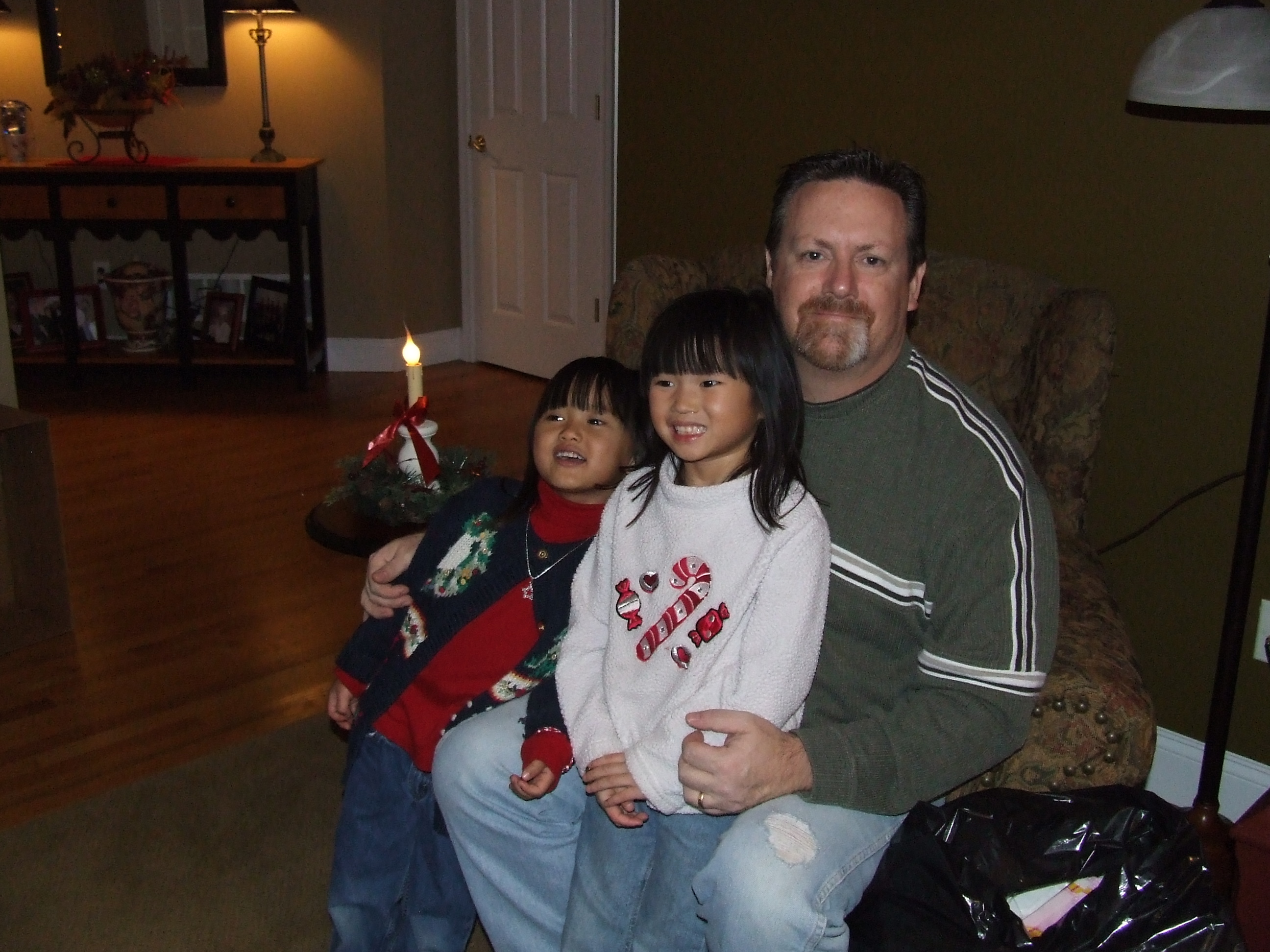
The picture shown, occurred a week later, upon arrival home from the hospital. My daughters, aged three and five at the time, were glad to have me home. Behind my younger daughter’s head, a heart-shaped pillow that I used normally to stabilize my chest area, if I had to sneeze or cough. But it also served as a barrier for comfort for my daughters to give me their healing love.

The procedure itself, while quite common, bypass surgery, is a bit more complicated when it comes to patients who have been exposed to radiation and chemotherapies. There is all kinds of internal issues such as scarring, calcifications, hardenings and more, that complicate not just the actual procedure, but the recovery and healing process as well. A long term survivor recovering from this surgery, is actually more difficult than the recovery from the cancer and treatments it was caused by.

It is hard for me to believe it has been fifteen years already. It is not a case of “time flying when you are having fun.” Time has definitely flown though, for sure. With the discovery of my heart blockage, and its cause, soon would reveal many other issues that would require interventions, including two more heart surgeries, and a surgery on one of my carotids, all related to my treatment past. Those surgeries all occurred in the last four years. On top of that, during these fifteen years, I lost my father to lung cancer, went through divorce, lost my job and the health coverage that covered me being able to see the doctors that I needed to be seen by. And this was all without the concerns for what a Covid infection had the potential to do to me if infected.

These fifteen years have definitely flown by and the reality is this. The surgeries that I have gone through are not permanent, they all have limited lifetime warranties. How long? It really depends on who you ask, but can range between 10 to 15 years. Having the surgery done, you need to be followed up, at least annually. And in cases like mine, it is not just for the patency of the bypass, but because the effects from my treatments also impact how long these repairs last. The other three repairs I had done, also have their time limits.

Now, if I did not have this Hodgkin’s treatment history, I would likely become a candidate for what actually needs to be done, a heart transplant. Just as my fellow survivors and I have waited for technology and medicine to catch up with the procedures we are now eligible for, the heart transplant is the one thing, none of us seem eligible for because of all the potential complications. I know of only one who had the closest of chances, only to pass away following complications during pre-op procedures.

At last look, my bypass is still holding up, well beyond the 10 year mark, but testing shows as of last year, it will loom in my future again. I do what I can to slow the process down from simple walks to limiting stress (something not easy to do during a divorce).

There is one factor in my survivorship, all-encompassing that drives me, and I believe protects me. And they are pictured with me.

I went from dying to getting to experience so much time with my daughters, that I otherwise would not have had. They are my world, my driving force, and there is just so much I want to experience with them yet. I do not have a say with my body and what it does, but I do know that my will and fight is as strong as it has ever been, definitely not to be underestimated. I have reached so many milestones since April of 2008. Their biggest events in life are yet to come, and I want to witness them.

My daughters were not around when I went through my cancer battle. And they were too young when I had my bypass. But they are both at the age now, where they understand my health is not the best and the issues I deal with are quite serious. They both have friends that have lost a parent from a health issue. I know many families of survivors who have endured losses at the passing of their parent from one of our issues. A parent always does what they can to protect their children from that kind of hurt, and I give all I can to never let my daughters feel that loss.

I know of other Hodgkin’s survivors who are in the 40’s and 50’s of years of survivorship. I hope to be included in those rare groups some day. But for now, I take my survivorship, just as I did my original cancer fight, one day at a time. I know my potential fate, but do not live in fear of it. I live in spite of it. I go to bed each night, with the plans of what I have in store for the next day. And that is how I have lived these last fifteen years, and hope to make another fifteen.

An Organization That Actually Makes An Impact


Over the last couple of weeks, I have shared two posts pertaining to cancer survivorship. One dealt with the acceptance of a shortened mortality. The other dealt with the realization that to survive cancer, and live after cancer, the survivor must learn to advocate for themselves. Well, here comes the third and final post in this series. And I want to stress, though the post clearly focuses on Hodgkin’s Lymphoma, as more and more cancers find cures, which will also mean new and different long term survivors, the strategies necessary to navigate the next several decades, are the same. So please, read on.

Several years ago, in 2016, an organization was created, to help Hodgkin’s patients survive, and live after cancer. Unlike the major cancer organizations, Hodgkin’s International focuses primarily on the Hodgkin’s Lymphoma community. However, like I said, in much of the information and guidance provided, it can be beneficial to other cancers as well. But for being one of the most successfully treated cancers, it hardly gets any attention or focus, and those who survive it, get even less. Which is where Hodgkin’s International comes in.

This meme is so powerful. Yes, it is from Michael J. Fox, who is courageously fighting Parkinson’s Disease, but the quote actually applies in many circumstances. When it comes to Hodgkin’s International, the organization is led 100% by the very experts who have survived Hodgkin’s Lymphoma. The seven board members and lone staff member, are all long term survivors of Hodgkin’s Lymphoma, like me, and like me, deal with various late developing side effects. Like me, at one time or another, there was struggle trying to find care and answers for unexplained health issues that were coming up. Like me, many face emotional struggles as the physical issues pile on. Who better to provide information and support, than those who have “BTDT” (been there, done that)?

Look, as I have said many times before, no one gets it more than someone who has dealt with cancer before, when you are told you are in remission, and you are declared in remission, and you complete enough follow-ups, you want to take off faster than the “roadrunner” racing off from Wile E. Coyote. While I understand this position, it does leave me concerned. I know, all anyone wants to do is get back to the life that they led before cancer. And you can for the most part, most likely. But there are things you have to realize, and though not guaranteed, the possibilities do exist, there could be things later in life that develop health-wise because of the treatments that gave you that “cure.”

So, regardless if you are a survivor who has had enough when you are given the “ok” sign, or someone who is already dealing with health issues, the point is, to be aware of, and remember, Hodgkin’s International. And for the record, why international? Because there are survivors of Hodgkin’s all over the world, and many of us are connected via social media peer groups. Many without the information that I want to share with you today.

So, without further adieu…

hodgkinsinternational.com

On this website, you will find a variety of resources. It should be noted, it is constantly being updated. The great thing about my fellow survivors, is we share information, whether it be diagnostics, late side effect information, which specialist to see, or how to find a survivorship clinic, because this part of survivorship is relatively unknown, it is taking those who know, those who have the personal experience, to build this website.

One of the unique things offered on the Hodgkin’s International website, are video presentations by patients, survivors, and medical professionals. There are personal testimonials of survivorship. There are explanations of the various health issues that are experienced, and many times, recommendations of what to do about them. Recently, in what was a “two for” presentation, we (survivors) got to hear from an oncologist who also happened to be a long term survivor of Hodgkin’s Lymphoma. Again, I want to stress, you can learn how to deal with other cancer treatments similarly by learning about the treatments used, and the need to understand how they can affect the body later on in life.

Then of course, there is the information that can be found on the website, from the various late effects possible, both physical and emotional, research articles, and other literature. The website continues to add the locations of known “survivorship clinics,” facilities that at least recognize late developing side effects from treatments. At the very least, you can find a “survivorship plan”, which includes research articles, and other helpful information for you to take to your primary care doctor, if that is your only option available. This is all verified and confirmed research information, by those who have studied late side effects as well as Hodgkin’s Lymphoma.

And Hodgkin’s International makes this all easy and convenient for you. You do not even have to just “bookmark” or save the website location. By signing up for the monthly email, you receive announcements about upcoming video conferences discussing topics like mentioned above. You will also be able to read stories from other survivors.

Again, like I said, if you are a patient of Hodgkin’s Lymphoma, any cancer really, and you are like I was, wanting just to move on, just remember, that if a time does come, and you find yourself, dealing with unexplained health issues, Hodgkin’s International is the place you want to begin looking for answers and support. I say this without reservation, there is no other organization out there, even the big ones, with the commitment to long term cancer survivorship as Hodgkin’s International. And why is that? “People living with the conditions are the experts.” Thank you Michael for pointing that out.

Dr. (Insert Your Name Here)


My last post, dealt with how long term survivors of cancer, in particular, Hodgkin’s Lymphoma, look at their survival longevity, or rather, the shortening of their mortality, due to the late developing side effects from the treatments that gave them remission. Though I would not normally like to do two “heavy” posts pertaining to survival in a row, I need to publish this post, while my memory is hot.

I was attending a Zoom conference yesterday, as I often do. The guest speaker was an oncologist who was going to speak about long term side effects. I must admit, I did not pay attention to the details of the speaker prior to the Zoom, just the topic. In just moments, I learned that I had a lot in common with the good doctor, most notable, he was a long term survivor of Hodgkin’s Lymphoma himself. Compared with other Zoom conferences I have attended, this was the first time in a long time that I can recall anyway, hearing of an oncologist speaking from personal experience. If I am being honest, I really do not know any doctors personally who have had to deal with cancer, or at least admit it. I was anxious to hear what he was going to say.

The doctor continued his introduction. Turned out, we had other factors in common with each other, especially when it came to Hodgkin’s Lymphoma. He was treated back in 1989, the same as me. He was a few years younger than I was, which would still make him a few years younger than me now (though you would not be able to tell that from looking at both of us). We were both survivors of over 33 years. Our treatments were similar in that we both had radiation treatments, but his chemotherapy regimen was partially different than mine, he getting only half of the chemo drugs that I got. There were other facts of similarity, but you get the idea. We had a lot in common.

About half-way through, the doctor finally got into long term survival issues. Again, he spoke of things that I was already aware of from particular body systems and the risks faced for complications and secondary issues. And then he dropped this bomb on all of us attending:

“You need to advocate for your own care.”

If you have followed “Paul’s Heart,” even just recently, you know my efforts to bring attention to the need for survivorship care for those of us treated twenty, thirty, forty, even fifty years ago. Some of us have been lucky enough to find doctors who have learned how to care for our particular issues, others sadly have not. But as each day passes, all of us hope that we get one step closer to a universal recognition of, and protocol for, dealing with late side effects caused by treatments, radiation and/or chemotherapy, for Hodgkin’s Lymphoma. And as one who has access to the specialized care necessary, I want to believe, that there will come a time, that oncologists all over, will finally be honest and open with their cancer patients, and tell them the truth, “yes, we can get you into remission, but you are going to need to be followed up for the rest of your life, not just to make sure that your cancer stays in remission, but should you develop any late side effect, it can be dealt with sooner than later.” Sure, not everyone develops these issues, but enough do so to warrant the protocol for lifetime follow-ups. There are enough of us long term survivors to prove this need.

As if stuck in a time loop, I “heard” in my head, the doctor repeat and repeat, “you need to advocate for your own care.”

Nope, even though it was just a phrase now stuck in my head, no matter how many times it played, it never got better hearing it.

Now, there are some in our survivor/patient peer social media groups who have been on the receiving end of me urging them to “advocate” for themselves in pushing for a more urgent response, or quicker scheduling, or to find an answer for what is creating a health issue, not typically found in someone of a certain age with no other attributing factors. Don’t let the doctor tell you they have no idea. Make them figure it out, or at least point you in a different direction to help you find an answer. Typically, I encourage fellow survivors, a primary care doctor is likely going to be a good advocate for their patient, as they know the patient best. And when it comes scheduling, you try to schedule a nuclear stress test versus having the doctor make the call instead. See who gets scheduled sooner. I will give you a hint. The only reason I am alive today, is because my primary doctor of now nearly forty years, made that call, fifteen years ago, second week of April, that three days later, surgeons were saving my life performing emergency open heart surgery, because of late effects I had no knowledge I had. If I were to have made that call, at the young age of 42, that test would not have been scheduled at best, until three months later, or longer if I had to go through the appeal process, because that test made no sense for someone my age. But you get the idea.

“You need to advocate for your own care.”

The doctor went on to explain what he meant, exactly what we survivors have been doing for decades. We, the patients, have had to learn the potential side effects that can come up on our own, and then push doctors to take our word for it, get the tests ordered that will discover the issue, and get it fixed if possible. The reality of the possibility of walking into a doctor’s office, complaining of shortness of breath, as an adult in their forties, and have a doctor only do an EKG in his office, and then tell you “everything seems okay” except for the fact, you don’t feel okay, is all too common. You need to advocate for yourself, especially after reading this post, and the next one to follow (likely in a week or so – I am waiting for news on a particular web site), and use the information that is available to you, and find a doctor who will listen to you.

But why is a patient being put in this position? If there are so many of us survivors dealing with these issues, and clearly there are some doctors and facilities out there who can take care of us, why isn’t this type of care more common? The doctor offered his answer.

“Because we are going backwards in our healthcare.” Whether it is because of meddling insurance companies (or as I refer to them as greedy pen pushers) or medicine being privatized or incorporated, there is either just no interest or not enough profit to care beyond the “cure” for cancer. Things get too complicated with our conditions, and answers are just too costly with all of the tests that often need to be run on us survivors. Though I have not run a tally for all of my surgeries and emergency room visits, and the dozens of tests I have gone through over the years, I know if I just take the big things I have gone through, those alone would total well over a million dollars spent caring for my medicine induced health issues. I would not be surprised if I were in the three million dollar range at this point.

That’s right. And we end up right back where we started, with the doctor’s quote, “you have to advocate for your own care.”

I heard from several survivors after my last post and this Zoom, all saying the same thing, “is our survivorship all in vain? Is being treated successfully for cancer the only objective only to be left with these late side effects, that no one understands or can figure out? The rest is on the patient?” I do and I do not believe that. I do think this is where we are at in medicine these days. Gone are the times when doctors took their own initiatives, followed their guts, cared more about their patients than profits and what higher-ups expected of them.

I am long enough in the tooth to remember times, when doctors were allowed to care about their patients, and did. I have had my current primary care doctor nearly forty years. I have watched her take over my prior doctor’s practice, then take on a couple of practicing partners (including her husband). Then came the big take over by a hospital network, and little by little every year, this incorporation has taken over more and more of her practice. It is barely recognizable anymore if you just casually walked in for the first time. But when I get to see her, I can still see the same doctor who has given me the best care she can possibly give, regardless if her hands now appeared tied by corporate (she is not even allowed to have her kids and grandchild’s photos and school artwork hanging anymore – talk about a sterile looking office). All this time, she has been my greatest advocate. Sadly, a time will come, she is a few years older than me, and she will step away, and I will have to continue to fight this battle on my own.

There is no reason not to want to be cured of cancer. There is no reason not to want to move on and live life after hearing the words, “you are in remission.” But it is a totally different thing, to be aware of the fact, that what treated you, has the potential, not guaranteed, but potential, to cause problems later down the road of remission. You have two choices, and both are the right ones. Go ahead, push onward, forget that cancer was ever a part of your life. Avoid doctors because you feel great, and you do not want the negativity, or the reminders, of your past. Forget that you know, the risks are there. You know they are there because you are either reading this, or you know someone else who has dealt with these late effects. If you choose this path, and you end up being an “unlucky” one who faces something unexplainable for your demographic, all I ask, is remember what you know, what you have been told. We will be here to help support you, guide you, and advocate for you, should you end up having a late effect.

To be honest, this is exactly what happened with me. Upon learning my main artery to my heart, and valves were impacted by radiation eighteen years after my treatments, and my current cardiologist and surgeon really not schooled on this issue, I remembered fellow survivors who had gone before me, and I went running to them, for help in finding the care for these treatment related issues that I was now going to need, the rest of my life.

Or, your second choice, you will have regular follow-ups with your oncologist. The appointments will likely be every three months for the first couple of years, then every four months, every six months, and then annual. And you will reach that five year magical mark you have heard everyone talk about. And your oncologist will likely tell you, there is nothing really more to do. But you have read this post, and other posts, and instead of waiting to be told you have a major condition that has been building for years, and you are about to die, you learn about the treatments that you have gone through, research the potential (not guaranteed) side effects, and encourage your primary care doctor, “just to keep a look out for these things.” Living your survivorship this way, does not mean you are still carrying the specter of cancer on your shoulders. Not at all. If nothing shows up during these long term follow-ups, then those appointments give you peace of mind that all is well. But if something is discovered, it is found sooner than later, giving the best chance for corrective actions. Seriously, who do you think has it better? Me, who has a regular cardiologist, constantly watching all my numbers, and making decisions when things progress? Or somebody who does not see a doctor regular, but is walking up steps at a baseball game, and collapses from a heart attack that he had no idea his heart was in that bad a shape?

I get it. The stigma of continuing to be cared for as if doing so will actually manifest issues, is real. But in the end…

“You need to advocate for your own care.”

There will be a final part to this unintended series. And it will benefit all cancer survivors, not just Hodgkin’s Lymphoma survivors. I am waiting on a particular announcement, but the post is ready to publish as soon as I hear it, hopefully in a week or two.

Post Navigation