Paul's Heart

Life As A Dad, And A Survivor

Archive for the category “Recreation”

Living Life After Cancer – Quantity Versus Quality


There are moments in life that divide everything into “before” and “after.” For many people, a cancer diagnosis is one of those moments. Cancer has a way of stripping life down to its most basic truths – what matters, what does not, and what we often take for granted. Life after cancer is not simply about survival. It is about transformation.

Before cancer, many of us just move through life, living on autopilot. We plan our futures, chase goals, have careers, buy “stuff”, and assume we have endless time – time to call friends, take trips, and time to say “I love you.” Cancer interrupts that allusion, taking it away from us. It forces us to confront something we all know intellectually but rarely feel deeply, time is not guaranteed. Once you truly understand that, everything begins to change.

One of the most profound shifts is how we thing about quantity of life versus quality of life. Before cancer, the focus is often on longevity, living longer, achieving more, adding years. But after cancer, the question becomes different. It becomes, “what are those years made of?” Is it a life filled with stress, rushing from one obligation to another? Or is it a life filled with meaning, connection, and presence?

Cancer has a way of teaching that more years do not automatically mean a better life. A shorter life filled with love, laughter, and purpose can be far richer than a longer life spend disconnected or distracted. It is not about how many days we are given. It is about how fully we live the days we have. This realization often leads to another powerful shift, the re-evaluation of what we value.

Before cancer, it is easy to place importance on material possessions, houses, cars, titles, and achievements. These things can feel like markers and measurements of success. But after cancer, their significance tends to fade, not because they are inherently bad, but because they are no longer enough. When you have faced your own mortality, you begin to ask, “will this matter in the end?” Rarely is the answer going to be a bigger house or a nicer car. Instead, what comes to the surface is something far more human; experiences, relationships, and memories.

You begin to value time spent with loved ones over times spent accumulating things. A quiet dinner with family becomes more meaningful than a busy schedule. A walk, a conversation, a shared laugh, these become the moments that define us. Cancer sharpens our awareness of presence. It teaches us to be where we are, fully. Not thinking about yesterday or worrying about tomorrow, but appreciating this moment, right now, because this moment is where life actually happens. And in that awareness, relationships often deepen.

You start to say the things you used to leave unsaid, You express gratitude more freely. You fortive more easily. You realize that the people in your life are not permanent fixtures, they are gifts. And like all gifts, they are meant to be appreciated while you have them.

Another important change is how you approach fear and priorities. Before cancer, fear held us back, fear of failure, fear of judgement, fear of stepping outside of our comfort zones. But after cancer, those fears often lose their power. When you have faced something as serious as your own health and survival, smaller fears seem, well, smaller. You become more willing to take chances. To pursue what truly matters, to let go of what does not matter.

You might choose to spend more time with family instead of chasing endless work hours. Or take that trip you’ve been putting off. You might finally do something you have always wanted to do, not because it is practical, but because it brings you happiness. In many ways, life after cancer becomes more intentional.

That does not mean it is always easy. There will be challenges, physical, emotional, and psychological. There may be lingering uncertainty, follow-up appointments, or moments of fear about the future. But alongside of those challenges is a deeper awareness, a clearer perspective, and often, a stronger appreciation for life itself. Gratitude becomes more than just a word, it becomes a daily mantra and practice. Gratitude for ordinary things; a sunrise, a meal, a conversation, a moment of peace. Things that once went unnoticed, now feel significant.

Perhaps one of the greatest lessons is this, life is not something to be postponed. We often live as if real life will begin later, after the next milestone, the next achievement, the next phase, But cancer teaches that life is happening right now.

So what does life after cancer ultimately teach us? It teaches us to choose quality over quantity, to choose people over possessions, experiences over accumulation. Cancer teaches us presence over distraction, and most importantly, to choose love, connection, and meaning over everything else. Because in the end, when we look back on our lives, it won’t be the things we owned that define us, it will be the lives we touched, the memories that we created, and the love that we shared.

Cancer changes us. It has to. But within that change, there is clarity, purpose. And there can be a deeper, richer way of living. Not just surviving, but truly living.

Root Forward, Don’t Scratch Backward


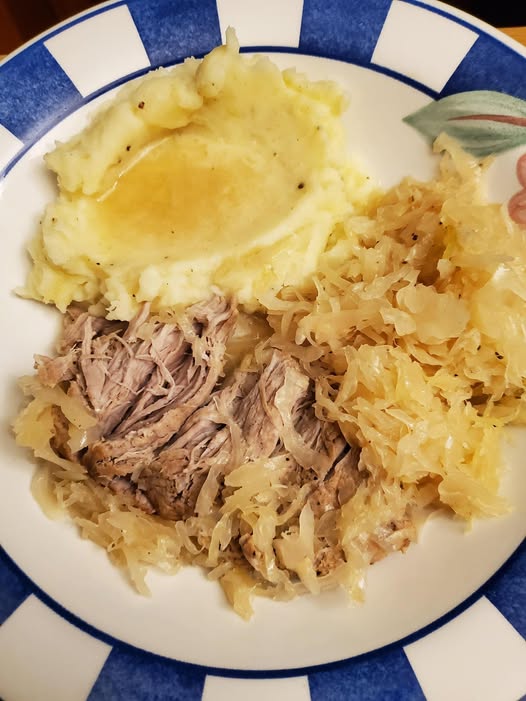
(photo courtesy of Facebook Pennsylvania German)

As someone with Pennsylvania Dutch (German) heritage, there is a custom in my family, that on New Year’s Day we eat pork. Of course, all the holidays seem to have their “meat” of the holiday, whether it be turkey on Thanksgiving, ham on Easter, and though I have never had a Christmas goose, we usually had some sort of fowl. But on New Year’s Day, the menu was pork and something called sauerkraut. Yes, the same condiment you put on hot dogs at a ball park during a baseball game.

If you like cabbage, chances are you will like sauerkraut, because that is all that it is, finely shredded cabbage. It is fermented with salt, and the smell is likely what turned me away from it as a child. My grandmother was notorious for fermenting and pickling (with vinegar) vegetables. The pungent smell in the house lasted for days.

The truth is, sauerkraut is actuall good for you, packed with vitamins and minerals, boosts gut health, the heart, and the immune system. And you would think this would be a convincing argument for me with my health history to make this a part of my daily diet. Nope. I am permanently against sauerkraut. Now to get all nerdy about the fermenting process, it is driven by lactic acid, which squeezes out the juices of the cabbage, then the cabbage sits in that juice and ferments.

Now for the super nerdy… isn’t lactic acid what is the cause of sepsis, a life threatening condition? I only know this because I was septic due to pneumonia back in 2012. So relax, there is no conspiracy against sauerkraut, but there is a difference between the lactic acids in suaerkraut and the lactic acid produced in the body, which I did not know about until I wrote this post. Simply, the lactic acid in the body is considered an L-lactic, while the lactic acid in sauerkraut is D-lactic, and there is a difference. I am not going into that science lesson on this post, just know there is a difference, and you are okay to eat sauerkraut if you can get passed the smell and bitter taste.

So, getting back to the pork on New Year’s Day and why. The Pennsylvania Dutch eat pork on New Year’s Day, because a pig roots forward, and fowl, like a chicken (we never had chicken on New Year’s Day), scratches backwards. So, you go forward into the new year and leave the old year behind. The picture above is exactly what our plates looked like at dinner on New Year’s Day, except mine was missing the sauerkraut.

Oh, one warning, if you were out the night before as many New Year’s Eve revelers do, and drank heavily, and still under the influence just now a hangover, you might want to skip the sauerkraut. Not a part of the custom, and definitely not the way you want to start the new year.

Second Christmas


(photo courtesy of Facebook, Scott Fair, Pennsylvania German page)

I would neither try to spell or pronounce this expression in the Pennsylvania dialect, though the last relative I knew who could speak PA Dutch (german) could have done so easily. It means “second Christmas.” Canadians have “Boxing Day,” the PA Dutch have “second Christmas.” It is a continuation of the Christmas holiday, but whereas Christmas is more known to be more chaotic, there are no gifts to exchange, no urgency to assemble for dinner, or get to a packed church. Second Christmas is all about spending time, and a bit more quietly, with friends and family. Sadly, there are not many who are aware of this tradition anymore, which has been replaced with mad dashes back to the stores for returns and after-Christmas deals.

The Christmas holidays can be seen as an end of year “check point,” a chance to look back on the past year as Christmas signals the end of the current year. New Year’s kicks off the new year, duh.

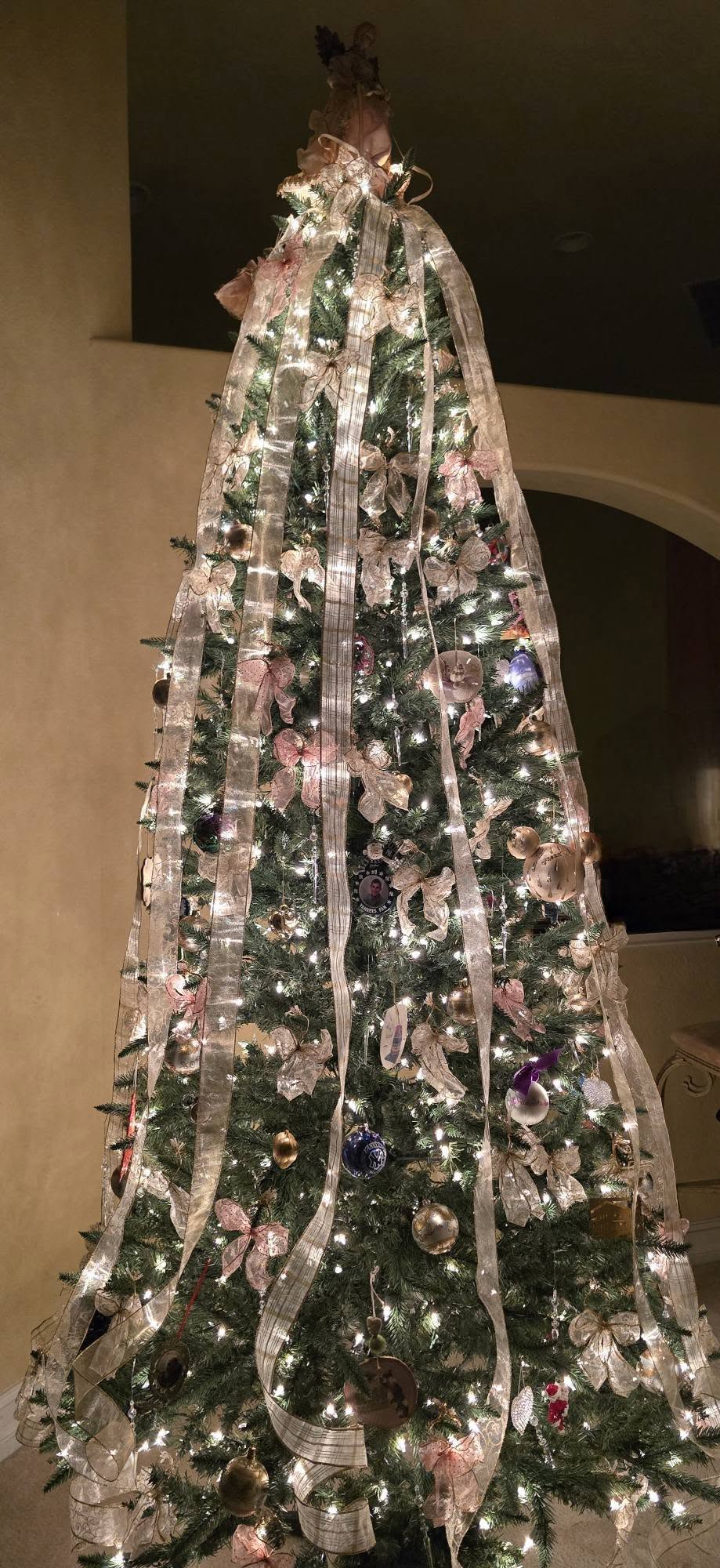
The one thing that remains constant for many, myself included, is the Christmas tree. Year after year, it holds the same decorations with one or two new ornaments, representing a place I have visited that year. My tree is filled with ornaments and all the places I have gone. The tree is the one thing I can count on during the holiday season, to not cause me heartache.

I have mentioned many times over the years, the emotional duress I feel during this holiday. Whether it be someone’s passing or a medical issue, I have rarely been allowed to enjoy, just the holiday, and this year has been no exception. Compound this with the memories that happened just this past year. As I have gotten older, that means there are less people in my life than there were last year, and I am more aware of who and what I have lost. It does get harder to fake the holiday happiness for the sakes of others putting more pressure on me. And I definitely contrast Christmas’s of past with today, quite clearly in fact, often grieving for those memories.

It was much easier to get through this holiday when my daughters came along, because it was no longer about me and the losses I kept experiencing. For my daughters, it was about experiencing magic, believing in good, and keeping in their hearts the kindness and empathy they had been taught. But just as it happened as I got older, my elder’s Christmas changed, just as mine has over these years. My daughters have their own tree to decorate instead of help with mine. There’s no more anticipation of gifts magically appearing under the tree if they slept through the night, or woken up before the sun came up.

Everything is just quieter now, only memories fill the air, wanting my daughters to be little again, or even myself. Reflections that could take me back to a time, when I did not have to deal with the adult losses that keep happening this time of year.

(photo courtesy of Fine Art Media)

I never expected my Christmas to be a Norman Rockwell painting or Hollywood movie, and my holidays over the last decade plus years have been far from traditional especially with my daughters. But we have made the most of those years, and we have plenty of memories from when they were younger.

Now it is my daughter’s turns, as adults, to start making their own Christmas memories and traditions, and I, along with the memories that I have to offer, will be a part of their holidays as well.

Post Navigation