Paul's Heart

Life As A Dad, And A Survivor

Archive for the category “Family and Friends”

Behind The Mask


I am going to share some information with you.  During the recent and large brush fires that we experienced here in southwest Florida, I heard several people speak about wearing “masks” to help deal with the smoke.  Of course, the masks that people refer to are nothing more than those used by doctors, surgical masks.
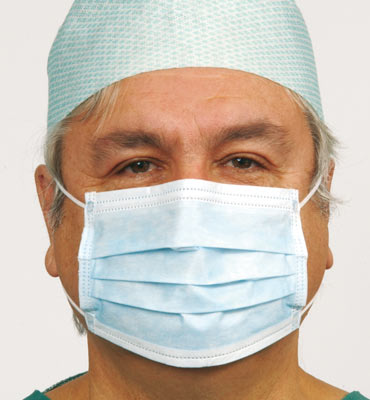
And we have seen these masks used in several different settings by common people in every day situations.  The masks are worn to prevent inhaling allergens or dust, perhaps with the belief that it will protect the person from inhaling a contagion such as the flu or cold.  People can be seen walking the streets, on airplanes, even in doctor waiting rooms, wearing these masks.

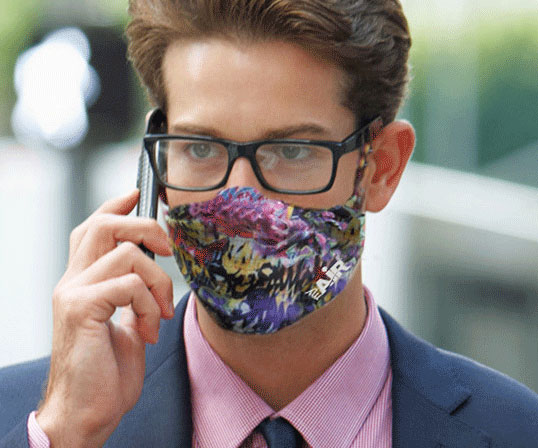
You are not as protected wearing these types of masks as you think you are.  In fact, if anything, to a certain degree you protect other people from you.

If you are going to wear a mask, you want to make sure it will serve the purpose you are wearing it.  But honestly, a plain surgical mask is nothing more than a sneeze/cough catcher, and possibly preventing a direct hit of the wearer’s bad breath.  The material is too thin, and it also does not “seal”, and that is the important word, seal around your mouth and nose.  The only way to prevent inhaling smoke, dust, allergens, or contagions, is wearing something called a respirator.

Respirators come in various styles.  What I have pictured is a common respirator.  I know this because at one time in my life, I worked in an environment that required “respirator training.”  In other words, learning and making sure you use the respirator properly.  A respirator when properly worn, will seal and prevent any outside hazards from being inhaled.  The mask has material built inside, to crimp around the contour of your jaw and nose, making a seal.  If you are wearing it properly, as you breath, you will feel the respirator almost “suck” to your face.  That means that there is a seal.  And if it does not, then you are basically wearing it as if it were a surgical mask, offering little if no protection at all.

Of course, in a professional setting, the training involved a lot more than just putting it on and seeing if it stuck to your face.  I actually wore a hood over top of my head, while wearing the respirator, while a mild scent was sprayed inside the hood.  If I could smell the material, then I did not have a seal.

When you are trying to prevent something from entering your lungs, you need to wear the correct mask, and a surgical mask is not it.  A surgical mask will not protect you from smoke inhalation, grass allergies, dust storms, or someone with a case of the flu.  The rule is quite simple, and you do not to be a professional, if you can smell it, you definitely are not protected from it.


When You Give A Girl A New Country


Today, I am welcoming a guest author today.  Though we have never met, we have a personal connection, which, when I saw her blog title, I knew that I wanted to share her thoughts with those in my personal circle.  You see… Haley is adopted from China.  I actually got to meet her parents when Haley’s family and I each adopted our second child (respectively) from China.  Haley’s younger sister, and my youngest daughter has a bond that will last forever.  Haley’s family and my family are connected forever.

There are already so many children who have been adopted from China, who have now reached adulthood.  As our children grow, because the majority of us in the adoption world are blended families culturally having those issues to deal with, there are also the needs, interests, and issues that the child will have to deal with themselves.  Well… who better than to reveal what goes on in the mind of someone who has been adopted, heading into adulthood, than someone who is there right now.

So, please allow me to introduce you to Haley, a senior in high school.

“When You Give A Girl A New Country”

In my family, we celebrate an extra holiday every year.

We call it my “Gotcha Day” because on September 12th, 1999, I met my parents for the first time. That day is the day we became a family.

I’m writing this article to answer some frequently asked questions about adoption that I have gotten over the years, currently get, and will continue to get throughout my life. I answer these questions on behalf of myself and many other adopted kids around the world; I’m sure they’ve received the same questions and can relate to my answers.

Growing up, being adopted has proven to be interesting. Some people try to avoid talking or asking about my adoption; many treat it like a sensitive topic. People view the notion of adoption as a tragedy—they treat talking about adoption like talking about a death. People tread very lightly when asking me about my adoption, and they always seem to be very uncomfortable and nervous.

The former has always confused me, because why should anyone feel uncomfortable to ask me about my loving family? Why is the very blessing that brought me to where I am today treated like a tragedy?

Probably the most frequent question I get asked is if I would want to meet my birth parents eventually. Being that the adoption was international and thus closed, we have very little information on either of my birth parents, so the idea of ever actually meeting them is very far out of reach. But even if I could, I don’t know why I’d want to. Meeting them wouldn’t be some magical moment like it would be in the movies. I wouldn’t feel any kind of special connection to them immediately or anything. Who’s to say I would even like them?

I think this is only a thing adopted kids truly understand, but having blood to blood relation doesn’t actually have anything to do with being a family. I have encountered the term “real” parents multiple times in my life, and I want to make it clear that my parents that I live with now are my real parents. They clothed me, fed me, cared for me, and raised me. They are the people that are responsible for the person that I am today, and they are the people that gave me the entire world. I don’t know about me, but it is them that deserve the title of “real” parents. They parented me, thus they are my real parents.

Another frequently asked question I receive is if I am upset or angry at my birth parents for giving me up.

Honestly, I’m not upset or angry at all, but instead, I am indescribably grateful for the decision that my birth parent(s) made to give me up for adoption. They chose the best option out of what I see was three: the first being adoption, the second being to kill me (wich is a common practice done to unwanted children in Asia), and the last being to keep me and try to raise me. Although I do not know the circumstances of my birth parent(s) situation, I can infer that because they indeed did give me up that they were not in the best position to keep me. If they tried to keep me, my life would’ve been a struggle.

I cannot express my gratitude towards my birth parent(s)’ knowledge of what my life would’ve been for me and instead of selfishly keeping me, deciding to give me up and give me opportunities they would’ve never been able to provide.

One of the most commonly asked questions that I’ve received throughout my life is if I believe my parents do not love me, or could not love me, as much as they would if I was their biological child. And this brings me back to a point that I made earlier: blood relationship does not define family.

My family has shown me more love and care than I could ever repay them for. They’ve given me the world and provided me with everything I could’ve wished for in the world. Without them, I would be nothing. They have loved and supported me as if I was their own, because honestly, I am their own.

Although I was not born of the two of them, they are still my parents and they will always be my parents. Biological relation is irrelevant in family. Family is about showing love, care, and support throughout a child’s entire life, and that’s what my family has given me.

 – Haley


Breaking Down The “New Normal”


I have written in the past, about getting back to life following treatment for cancer.  And as probably nearly every cancer survivor will tell you, there is nothing normal about getting back to life.  It is never the same.  Therefore, the phrase, “new normal” gets tossed around quite a bit.  On one of my support lists that I belong to, a post came through with a completely different explanation of what “new normal” meant to this individual writer.  And she did a great job probably explaining it in even more thorough detail.

I am always willing to share stories from other patients and survivors, especially when there is an opportunity to offer support and understanding.

I present to you, Brenda Denzler, from her daily personal journal, in her own words:

“Cancer treatment saves our lives-if we’re lucky.  But for those of us whose lives it saves, it doesn’t save ALL of our lives.  It saves bits and pieces of them.  The doctors call that partial life a happy, hopeful name: our “new normal.”

Most oncologists don’t pay a great deal of attention to this partial-life-left-to its quality or its features-among those of us (the majority) who are older when we get cancer. They are just beginning to pay real attention to it among those who were children when they got it.  Among the older set, they write off most of our comments and complaints about our
new limitations as the natural process of getting older, and they turn away without a thought given to the issue of how much older, how much faster. As if the only thing cancer treatment did to our bodies was rid them of cancer.
I just spent about 36 hours with my two grands.  It was a good visit.  I had prepared for it ahead of time, minimizing the amount of cooking and cleaning up of dishes I’d have to do. I took a nap with Sebastian on Saturday afternoon.  I propped my feet up and rested throughout.as much as having two small children around will allow.  And when they left, while I welcomed the chance to sit for 30 uninterrupted minutes, I was sad to see them go (as usual).
I quickly succumbed to a nap.  No surprise.  It lasted 4 hours.  That WAS a surprise.  I woke up from my nap feeling so fatigued I could hardly move, with that all-over body ache and tingling hands and feet that indicate I’ve overdone it big-time.  I oozed my way through the evening, trying hard to stay awake and not lapse into sleep again.  When a decent bedtime came, I allowed myself to succumb.  This time I slept for 11 more hours. And again, I have awoken feeling exhausted deep in every bone, every muscle fiber.
THIS is my “new normal.”
To hell with the “but you’re getting older” bromide.  I shouldn’t be THIS old, THIS soon.
Cancer treatment saves our lives, if we are lucky.  But not ALL of our lives.  It just saves bits and pieces of them.”

Post Navigation