
Paul's Heart

Life As A Dad, And A Survivor

Archive for the category “Education”

Five People I Met Without Going To Heaven


The following short story was published in Visible Ink Anthology 2017, my 5th publication of short stories.

One of my favorite books (and movies) is “The Five People You Meet In Heaven,” by author Mitch Albom. As inspirational a story as it is, my thoughts are, “why wait until getting to heaven to meet those who have influenced my life.”

I have survived Hodgkin’s Lymphoma for more than 26 years. But it was only in 2008, that I learned that I had developed late effects from the treatments that had saved my life. There are people that have come into my life, total strangers, who have made my survival possible, both physically and emotionally.

In 1997, I “met” Tammy on a Hodgkin’s internet listserve. My story is limited to 800 words. All the late side effects she has had to deal with alone would take 800 words. Many of those issues resulted in several near death incidents, either because her cure had betrayed her, or doctors, uneducated in late effects, had no idea how to treat her. Nearly twenty years later, we are still friends, she has proudly seen her children grow and get married, and has several grandchildren. Were it not for her will, she would never had this experience.

In 2008, just as there was no real protocol of follow up for cancer survivors back when I was treated, nor were there many doctors who knew how to diagnose and treat patients with these late effects. Linda was another listserve member who tried to get me to participate in a “long term survivor” support list, but at that time, I felt I did not belong, because people on that list, had many serious issues about their post care. Up until 2008, I was healthy. But following my heart surgery, caused by radiation therapy damage, it was clear that I was going to need support that had knowledge in late term side effects. There were not many facilities that had this skill.   I lived near Philadelphia at the time, but Linda encouraged me with a phrase that has stuck with me forever, “Don’t let economics determine your care.” In other words, if I had to travel to get the care I needed, it would make the difference.

Which in the Fall of 2008, I would be welcomed into the Survivorship program at Memorial Sloan Kettering. I was introduced to Dr. Oeffinger, who has an understated title of “primary care physician,” when clearly to those in his care are more than aware that the title does not do him justice. With his studies of Hodgkin’s Lymphoma and late effects from treatments spanning decades, Dr. Oeffinger ran all the tests necessary to see how my body had been affected over the years, and helped to assemble a great team of doctors, nurses, therapists, and techs that would not only help me manage my health issues, but Dr. Oeffinger made a statement to me that has stuck with me forever, as I do everything I can to work with him on this goal, “I cannot reverse what is happening to you, but I can help you slow it down. More importantly, I can help you see your daughters grow. You will see the time of being a grandfather.” My health and my emotions had been spinning out of control up until that moment.

In recent years, I met Kristi. Not just was she a teenager when she dealt with Hodgkin’s, not only was she dealing with late effects, but she was faced with a life-threatening challenge that would have been enough for even a healthy individual to overcome. With life-threatening injuries from a car accident, she came back stronger than ever both physically and spiritually, driven by the love and support of her family.

And finally, the last person is actually a group of people, and since I am not done meeting them, it will be a long time before I am ready to get to heaven. Any opportunity that I get, I reach out to meet any number of fellow cancer survivors. Each and every story, unique as their cancer journey was to them, tells an inspirational tale of perseverance, hope, triumph.   In actuality, it is our unquestioned support for each other, that we keep things in perspective while not discounting the severity of our own issues. Everything we are going through is very real to each and every one of us, and no one’s pain is any less real than another.

With Dr. Oeffinger’s help, it is going to be awhile before I get to heaven. I have a lot more people to meet.

Authors’s note – Following my composition of this story, a friend, fellow cancer survivor, and author of Visible Ink, passed away. I am dedicating this story, to Davina Klatsky, one of the many people I have met and will some day meet in Heaven.

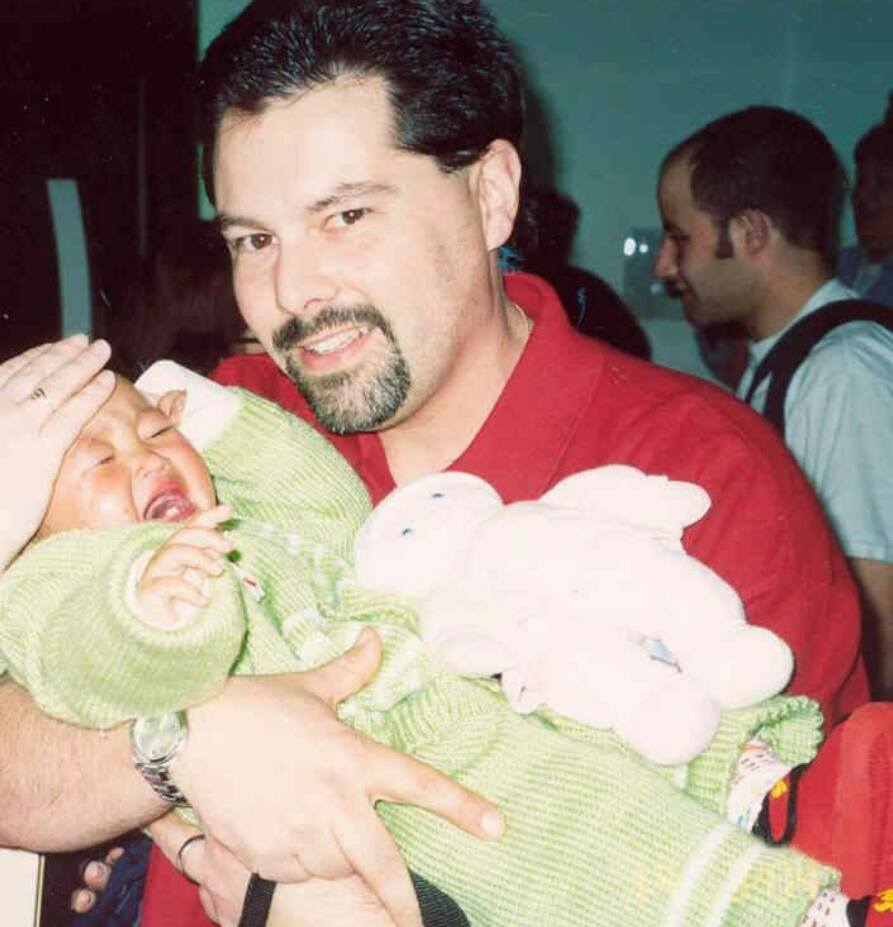
Family After Cancer – Never Give Up


March 14th is always an easy day for me to remember.  It is my late grandfather’s birthday.  Also, the birthday of my niece.  But it is also one of two important dates in my life, the first of two times I became a father.

I will not speak for other cancer patients or survivors, but for me, I had three concerns once I was diagnosed.  The first and most important, I did not want to die.  Second, I did not want to lose my hair.  And finally, I did not want to lose my ability to have children.

Speaking now as a Hodgkin’s Lymphoma survivor, back as late as the early 1990’s, mustragen was a popular component in a chemotherapy cocktail to give remission to Hodgkin’s patients.  Along with it being a deadly poison used by monsters such as Sadaam Hussein to kill his people, it was also very effective against Hodgkin’s.  Along with its toxicity, it was known to cause sterility in men.  In fact, just as I completed my 8th cycle, a study had been released stating that sterility was likely after the 6th cycle.  Dammit.  This study came out 3 months too late for me.

Hodgkin’s is a blood cancer, though considered rare, effects two groups of people more often than others, younger ages, and older ages.  Middle aged people can develop Hodgkin’s but it is more likely to be diagnosed in the other two groups.  And for the younger group, fertility is a real concern.  And for many women, the concern is even more dire, as some are often diagnosed when they are pregnant.  And just with any other cancer, decisions need to be made in the best interest of not just the patient, but the baby.

As I said, for me, pre-testing before I began my chemo, it was determined that any ability I had to get someone pregnant, was slim, most likely caused by the stress I was under, so I did not take the option of storing sperm before I began treatment.  And of course, once treatment was done, so were my chances of having a biological child.

I have written about my decisions since that discovery in past posts, and if you have any questions and do not wish to go through the archives, please feel free to ask or comment.  But the truth is, decades later, there are new opportunities to more accurately determine and often reverse sterility.

But in my case, adoption was the best option for me.  And as far as adoption was concerned, it was a matter of deciding open or closed, domestic or international.  In my case, and with my health history, international, China in particular, actually offered me the best opportunity of becoming a father.  China would not discriminate against me, as many agencies in the United States had done.

I completed all the paperwork.  I went through all the processes required by both China and the US.  And thirteen years ago, on this date, my oldest daughter was placed in my arms.  I will celebrate another anniversary for my younger daughter in a couple of months.

There is plenty of help out there to answer and guide cancer patients in all areas of care, during treatment and post treatment.  It is the hope of “Paul’s Heart”, that this blog is one of the tools that will inspire and inform that there is not only life after cancer, but a whole lot more.  Perhaps not the way we dreamed about, but it is still a good thing.

HR1313 Is A Bad Thing, And Not Just For Cancer Survivors


This is going to be a difficult story for me to post, because as my readers know, I do what I can to avoid talking politics and religion on this blog.  I do my best to navigate any advocacy issue without any bias towards left or right, religion or lack of.  But as a survivor of cancer, and a multi-victim of discrimination because of my health history, HR1313 is a topic I need to write about.

HR1313 is a new bill, called the Preserving Employee Wellness Programs Act, being introduced by our government representatives.  And while the name of the bill looks harmless enough, as the expression goes, “don’t judge a book by its cover.”

So let me start at the beginning, to state my qualifications and experience with the topic of this post.

After nearly two years of battling Hodgkin’s Lymphoma (1990), though I was not unhappy with my employer, I was still looking for opportunities to improve my life financially.  This meant investigating new job opportunities.  My stepfather had recommended that with my personality and charisma, I would be perfect to work in the insurance industry.  He was well known in his company and would do what he could to help me get hired.

I met with my stepfather’s boss, who outlined what the hiring process would involve.  There would be studying for licenses, other interviews, the application itself, and a medical exam.  I was confused as to the need for a medical exam, as any of the other jobs I had held previously, never required a physical.  Only school had required these at certain periods of my childhood.  The manager had said there would be things I could do to save time while I studied.  Getting the physical out of the way was one thing that could be done.

So the physical went as expected.  I was in remission from my cancer.  My body, other than being a little overweight yet from treatments, was in good shape.  A couple more weeks went by.  I continued my studies, doing well on all the exams I was taking.  I completed my application, and participated in an interview.  A couple of weeks later, I received a phone call from the manager.

“Hi Paul.  It’s Jim.  Listen, I was on the phone with the district office, discussing your application, and the home office feels that it we need you to be in remission from your cancer a bit longer.”  I asked, “how long is ‘much longer’?”  To which he responded, “well, it’s tough to say, you just finished your treatments recently.  But you can always try again.”I hung up the phone in shock.  I beat cancer, and I was being discriminated against for it.  Was it going to be like this for the rest of my life?  No one giving me a chance?

I took the manager, the district office, and the insurance company before the labor relations board for discrimination.  I was not even suing for money.  I wanted their practice of discrimination to be punished however.   With the help of my therapist, and a lawyer, this insurance company was in for a rude awakening.

In 1990, the American With Disabilities Act was signed.  It was a law created to prevent discrimination in all settings.  For the purpose of this post, I am referring to employment, specifically hiring practices.  The insurance company representatives were going to be some of the first introduced to the new law.  It was now illegal to have an applicant subjected to a physical without the intent being to hire.  In other words, the physical could only be demanded once the other requirements are met, and employment would then pend on passing the health physical.  It was at least a moral victory.

The lawyer for the insurance company then accused me of withdrawing my application so my complaint had no merit.  Of course I did not withdraw.  I know what I heard.  And it was awful.

The ADA is not perfect.  While on paper, it says it will protect people with disabilities from discrimination, but the reality is, if someone wanted to discriminate against you, there would always be a loophole.  Like saying someone changed their mind verbally about future employment.

Over the next many years, I would find myself fighting management repeatedly over challenging my ADA rights.  I would also watch others, not assert theirs.  Sure, they would complain about their treatment, and at times, allow their conditions to get worse, but they always kept their mouths shut.  Worried about retaliation from management.  At what cost?

Then in 2008, the Genetic Information Nondiscrimination Act was signed.  This was a bill that was intended to prevent discrimination based on genetic predispositions.  With technology developing, it should be a good thing that science has been able to find out who might have higher chances of developing a serious illness or physical condition.  But in the hands of an employer or insurance company, genetic testing would become a backdoor loophole to discriminate against employees or clients.  This law at least on paper, is meant to prevent that.

But now comes the Preserving Employee Wellness Programs Act, HR1313.  While it is unclear whether this bill being created is something that will allow employers to demand of its employees and applicants, or whether it will be voluntary, is nothing but a bad thing.  Back in 1990, I volunteered to a doctor, who I was sent to for a physical by the company – not my own personal physician – and volunteered that I just completed treatment for cancer.  Even if this is a voluntary effort, volunteering information to an employer that they have no legal right to know, is setting yourself up to discrimination.  Of course, they cannot tell you that you are not hired because your genes say you are more likely to have a heart attack or develop cancer.  But knowing your genetics in advance of employment or during your employment, gives the employer and opportunity to develop the loophole necessary to deny you, or terminate you.

It is shameful that this effort is under the guise of “enhancing” wellness programs at work, which are a good thing.  But knowing someone’s genetics, is clearly being used to discriminate in either hiring (which the employers will never admit), and also to discriminate employees’ insurance benefits.  Good genetics will get lower insurance rates.  Bad genetics will get higher rates.  DISCRIMINATION!!!  Anyone who has had to fight a serious disease such as cancer, should never have to fight so hard for something they need such as insurance.  Instead, efforts are underway to make it not only more difficult, but financially out of reach.

You want a real good “wellness” program?  Scheduled breaks.  Better pay.  Health insurance that encourages preventative visits.  Less stress in the workplace.  But knowing the genetics of an employee?  That is just a tool for discrimination that an employer should have no right to.

Once you open this door, like toothpaste, once it is out of the tube, you cannot put it back in.

Post Navigation