Do you remember the television commercial that tried to demonstrate the use of drugs and the effect on your brain? You know the one, with the egg and the frying pan. The egg represented the brain, and once cooked, that was the brain “on drugs.” I am going to demonstrate a different situation, using a similar method, but without eggs as they are too expensive to waste.
As I have often mentioned, I had my aortic valve replace, actually, that is not a correct way to state that.
I had an artificial aortic valve (replica pictured in my hand) inserted into my defective aortic valve. The reason that this needed to be done? Exposure to a ridiculously high amount of ionized radiation to treat my Hodgkin’s Lymphoma decades ago, caused progressive damage to various areas of my heart, the aortic valve included. Let me tell you how important that aortic valve is to the heart, besides the simple fact that it plays a major role in blood flow through the heart. But have a problem with the aortic valve, and you can be lucky to walk ten feet without being winded, gasping for air.
I unfortunately do not have a picture of what my aortic valve looked like prior to the surgery. I have some very cool looking scan photos that make absolutely no sense to me, with all kinds of notations how bad it was, but I cannot tell what I am even looking at. But it was bad. So, let me show you a different picture.
This is a severely damaged aortic valve. This came from a Zoom session that I just participated in, on aortic valve surgery presented by Penn Medicine and Heartvalvesurgery.com . In this particular photo, the aortic valve has damage from Rheumatic fever. If you are unfamiliar with Rheumatic fever, it is something that can develop fighting an infection, such as Strep Throat. I am pretty sure you have heard of that before, and how contagious it is. If you are the person with this pictured aortic valve, I am pretty sure life is not fun at this point, especially trying to breathe.
When I heard this explained during this session, I immediately flashed back in my memory, back before I became aware of all of my health issues, my only concern was that not having a spleen, I was extra susceptible to catching things, like the flu, pneumonia, strep throat, and that these things could kill me. But one incident, a co-worker came to work, with Strep throat. She bragged about having the highly contagious infection. When I informed my supervisor “either she goes home or I go home,” I, the healthy one, was the one who ended up going home.
Though I honestly thought it was from the sickness itself that would kill me, turns out, that is not the only risk. The damage that an infection inflicts on the heart is shocking. Because we do not really think about it. We get sick. We take some medicine. We move on. But all the while, over the years, damage to the heart occurs with each infection.
One other thing that I learned during the Zoom, was the dangers of infections on the replacement valves, seemingly more susceptible to the effects of the infections.
So what inspired this post today? Covid-19. We are at a point, where even the government is ready to surrender, remove the amount of attention to precautions and care, and just accept that Covid-19 is here to stay. And just like other diseases, will still have the ability to kill patients, just in a larger number.
But the fact is, Covid-19 wreaks much more havoc on the heart. My cardiologist, who I consider one of the best, did not mince words. “Covid-19 will kill you,” referring specifically to me. Now, it may have seemed like hyperbole by some at the time, just trying to scare me, but I never doubted by doctor’s sincerity. After all, he has boldly gone where no man had gone before (okay, a couple of other times before – a double bypass and a stent).
After seeing the photo slide of the damaged aortic valve from Rheumatic fever, and the listing of other infections, I am now totally convinced my cardiologist is correct in his warning.
I want to be clear. I am not living in fear. I am doing everything I want to do, yes, while wearing a mask and avoiding crowds. I have issues maintaining coverage from the vaccine, so as I wait for my next dose (I have gotten all of them), at this point, I am considered unvaccinated. But the reality is this. Covid-19 is still around, a lot, and is still killing people, so far, two people I knew this year alone.
Clearly, it is not just Covid-19 that needs to be avoided for the sake of the heart. If the picture of the damaged valve is any indication, we all really need to do better at avoiding getting sick in the first place, from any infection.
There were a couple events that occurred recently, which is prompting this post. Actually, I have written about the issue many times before. But this time, I am going to hand “spoon feed” you the information that will hopefully and finally convince you, protect you, and perhaps, save your life. If there is one post that I want SHARED SHARED SHARED, this will be the one.
There are many things that an oncologist will tell a cancer patient; survival chances for the particular cancer, options for treatments, and what your immediate future will entail. Hopefully, the cancer patient will hear the words, “you are in remission.” And the final thing that a cancer patient will “hear”, and that is in quotation marks on purpose, “you are considered ‘cured’ after five years without a relapse,” which a cancer patient hears as, “I am done with cancer.”
And this is where, even after my nearly 33 years as a survivor of Hodgkin’s Lymphoma, nearly all oncologists leave out the most important thing to tell a cancer patient. Although you may be in remission, or “cured,” a patient, or survivor, is never really done with cancer. And this is where too many oncologists fail their patients. The truth is, a patient, or survivor, even if considered “cured” after five years, still needs to be followed up for the possibility of the development of late term side effects from the treatments.
Please, read this statement very carefully. The one thing that every cancer patient cannot wait to happen, is to be “done” with cancer, put it behind them, never to think about again. It is understandable that we want to make it a goal to never set foot in a doctor’s office ever again, like other non-cancer people get to live their lives. And who can blame any of us for feeling this way? Going through a cancer experience sucks. But you know what sucks as bad, if not worse? Learning that while you were busy going through life, acting as if cancer had never happened, damage caused by the treatments that gave you that cure, have the potential to progressively develop serious health issues, many undetected, until it is too late. This is what happened in my case, and many other survivors, some who already knew their situations, and others, who never saw it coming, sometime with fatal results.
Listen, it is not a bad thing, to be followed up by a doctor. It gives early detection for something that at one time or another, had been unknown. For instance, those of us treated in the 50’s, 60’s, 70’s, and 80’s were literally experimented on with our treatments for Hodgkin’s Lymphoma. There were no studies on long term side effects. All that mattered was the current treatments worked for remission, no matter the physical cost.
Look carefully at this photo. It is the actual record from my radiation therapy back in 1989. In particular, look at “item 2, ” where it states “medicine is not an exact science and that no one can prevent all of the acute, sub acute, and chronic changes or injuries…” And then just below, it lists other potential complications: muscle, bone, neck, pericarditis (an inflammation of the heart) or other infection. That’s it. Why is that? Is it possible that it was just because, cancer patients were not expected to last longer than five years, even if in remission? Why is that? Did no one think to study the late effects of what exposures to high dose radiation therapies and chemotherapies that could develop, should someone actually live past the five year mark, spoiler alert, there are thousands of us living decades longer?
Thanks to a few pioneers in long term cancer survivorship studies, some of us have finally gotten the help we need. But the majority of survivors do not. They do not live near a major cancer network that might actually have a survivorship clinic. Insurance may not cover the unusual and unexplained health maladies being dealt with. And other than some peer to peer social media support, there really is nowhere for a long term survivor to turn to, if they can even figure out, that their health problems are even remotely related to their cancer treatments.
Which is what makes it so maddening to me, that just as a friend wants to, and rightly so, celebrate reaching their five year milestone, here I am unable to simply just say, “that’s great.” I have to follow my congratulations with “but…”. If I am going to rain on someone’s parade, I am going to back up and present what I know and have learned. One of those resources comes from the Children’s Oncology Group, which is committed to childhood cancers. But here is why this resource is important to you, because it has information that does not matter if you had a childhood cancer. Because the information inside the guidelines contains therapies often used with other adult cancers. And it demonstrates the necessity of having to be looked at, long after that magical five year mark.
This is the link to the survivorship guidelines: http://www.survivorshipguidelines.org/ . It lists information from the modes of treatment and the different medicines, information to gather to make better surveillance plans, diet issues, fitness issues, educational, emotional, affording health care, long term survivorship recommendations, dental, cardiac, endocrine, gastrointestinal, musculoskeletal, neurological, pulmonary, reproductive, sensory, other cancers, and urinary. Go back, and look at the picture of the potential concerns I was warned about. And if you have followed “Paul’s Heart” long enough, you know the extensive health issues I have to deal with, not just the few conditions listed on my picture. Yet this list is what is currently exists. And do not be fooled, Hodgkin’s may be a “childhood cancer” per se, but you can still be diagnosed with it, like I was at age 22, or in your 70’s. The concerns with the treatments will be the same.
I provided the link for a reason. The actual guide of treatments is over 200 pages long. If you do not have access to a survivorship clinic, and you are left to advocate for yourself with your primary care, help your doctor out. As I am about to show you, simply note the pages that affect you to spare your doctor’s time. Let them know, what needs to be looked at. They can and should be able to determine your care from there.
http://www.survivorshipguidelines.org/pdf/2018/COG_LTFU_Guidelines_v5.pdf . This is the link to the full document. The first few pages list the panel of experts that were included in creating these guidelines, and how to use these guidelines. Starting on page 31, references ANY cancer experience, and yes, that means not just childhood cancers. Concerns of psychological and quality of life concerns are listed here. On page 36, sleep issues and fatigue concerns are mentioned. The guidelines address if you were exposed to any blood products during your treatments on page 38. Then comes the big info starting on page 41, chemotherapy issues and continues through page 82. I would like to share just one page in particular as it applies to me, and perhaps those with different cancers, but got this same particular drug.
I received the chemotherapy drug, Adriamycin, listed on this chart as Doxorubicin. We cancer patients and survivors refer to this drug as the “red devil,” and for good reason. Reflect back on that page near the top with my possible risks. Do you see the difference between the years1988 and 2023? Like I said, this drug is not just used to treat childhood cancers, but adults as well with cancers such as breast cancer and stomach cancer and more, and is still one of the main drugs used today. But the toll it can take on the cardiac system, if not monitored closely, literally, can be fatal. This information matters to you as well! Allow me to show you another.
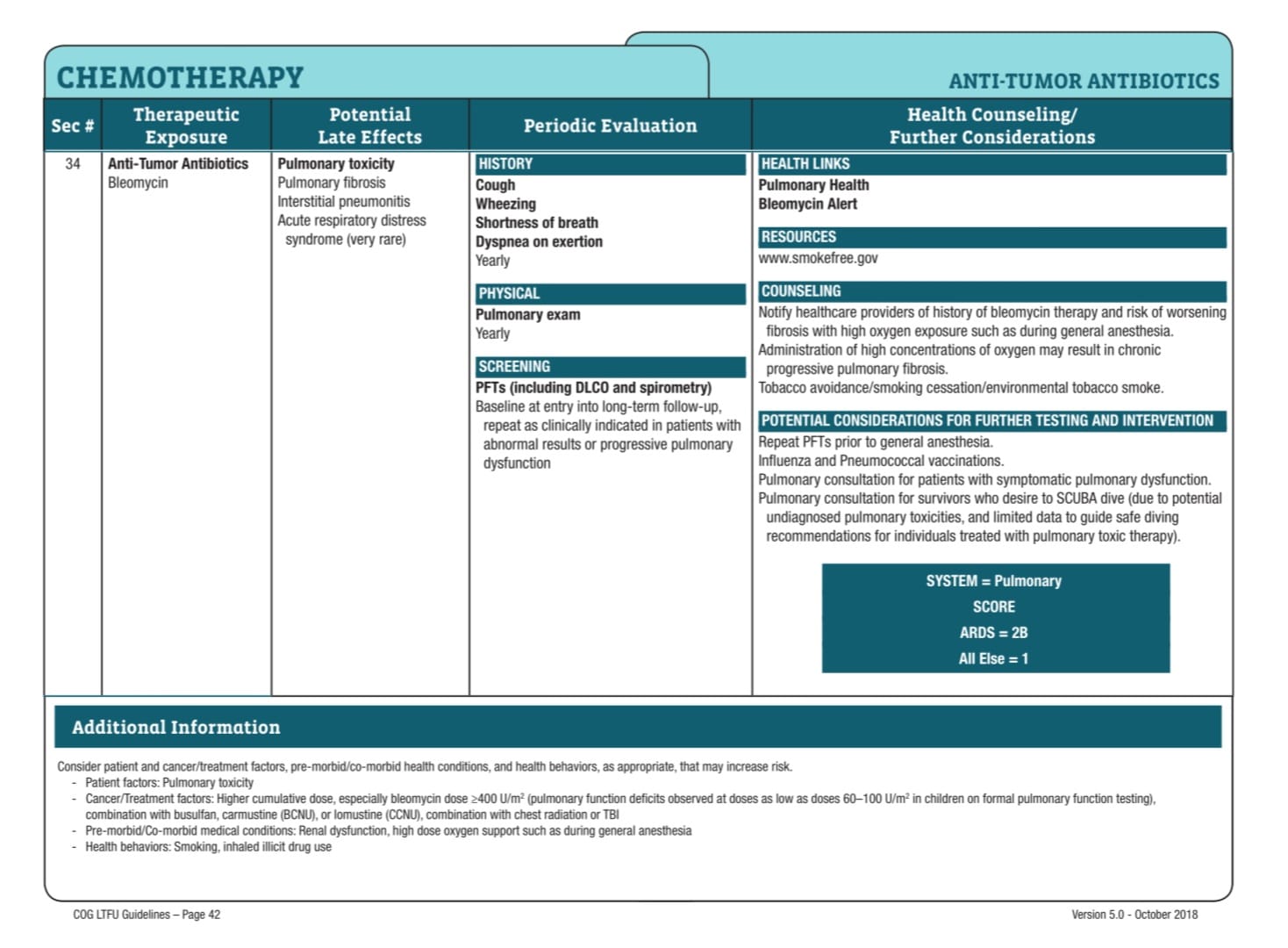
This is another drug I was given, and is still used today, Bleomycin. This has a huge impact on the lungs. Another?
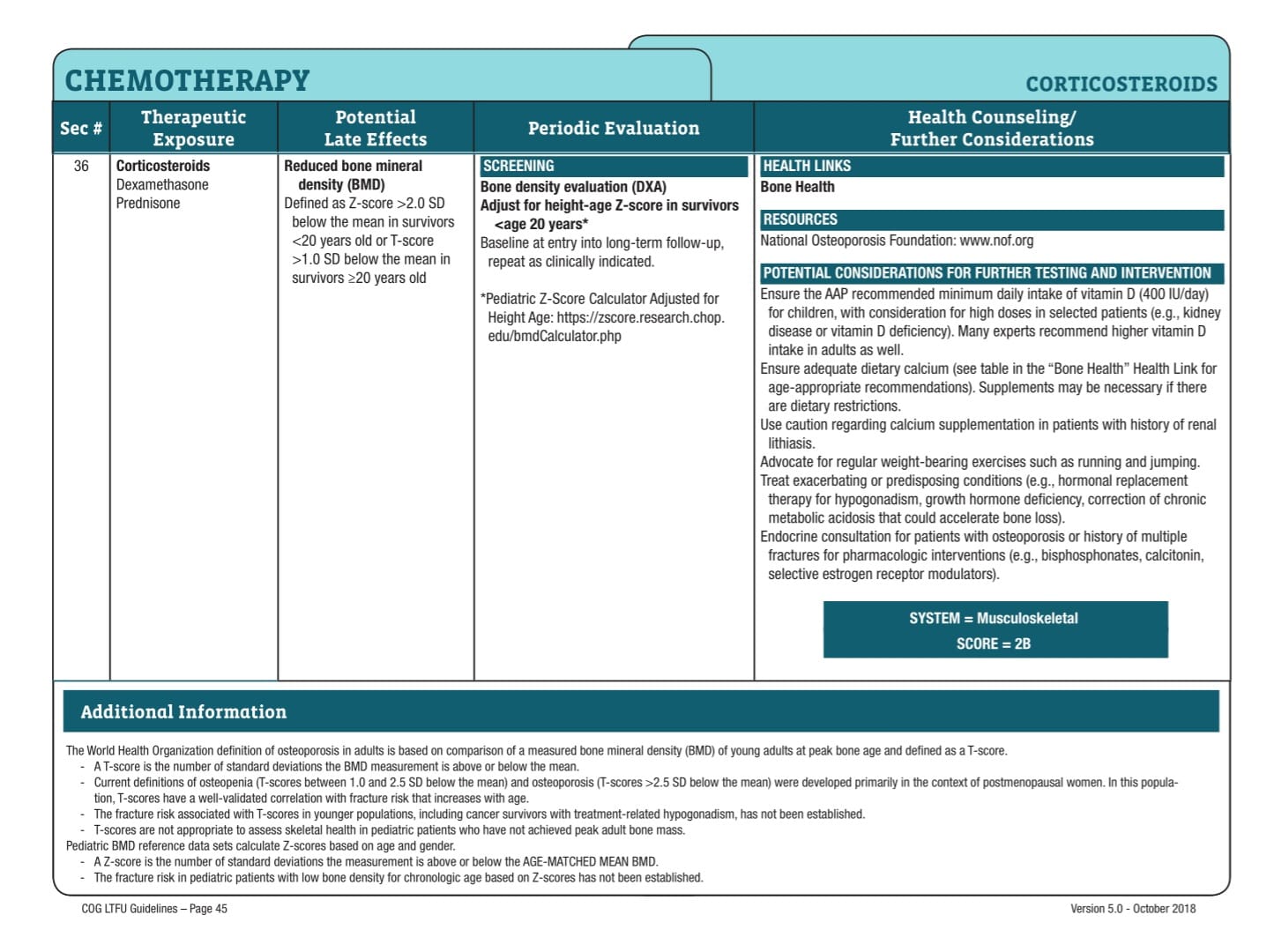
Anyone treated long term, with high dose steroids, including cancer patients, run the risks listed above. One final slide, and I think you will get the idea.
This page demonstrates the potential risks for radiation, and clearly is an issue with the higher doses used decades ago as was with my case. I just selected the cardiac page concerns, but I promise you, there are many more pages including for the lung, thyroid, and more. But again, reflect back to that page at the top, only a few concerns were listed, and there was no plan to follow me up after five years. Thirteen years later, eighteen years from my remission, I was diagnosed with a fatal issue, a blocked LAD, main artery to the heart. Blocked does not really describe the situation. Radiation, which remains in my body today, continued to scar that artery, until it was almost completely closed off. Again, NO ONE WAS MONITORING ME. Since that surgery, I have had two more heart surgeries, another main artery, and my aortic valve, all to the point, it needed to be done. They know this concern now.
So, why are not enough doctors and oncologists informing their patients, that while, YES, celebrate the five year mark, but we are still going to have to watch you, the rest of your life for the possibilities that these things could develop. Not definitely, but could. And it would be far better to catch the issues early on, instead of waiting until someone is ready to drop dead like in my case.
Please, I encourage you. Go through the rest of this guideline, save the pages that pertain to you. And if you cannot see a long term survivor clinic, take these pages to your family doctor or general practitioner. And if for some reason they will not hear your concerns, find another. These issues and concerns are very real, and I can literally back them up with the voices of over 1,000+ survivors who I know have gone or are going through these similar issues.
And finally, as I said in the beginning, share this post. Share it often. While there are many cancer conferences and other doctor gatherings, these concerns are still not being discussed enough. The medical community is not educated in these issues, how to look for them, or how to handle them. My fellow survivors and I are doing all we can, with just our small number, to inform everyone that we can. We even have an organization called Hodgkin’s International to help raise these concerns for those that look for the information. But as I said, this information can be helpful to cancer patients of all ages, regardless of what cancer you face.
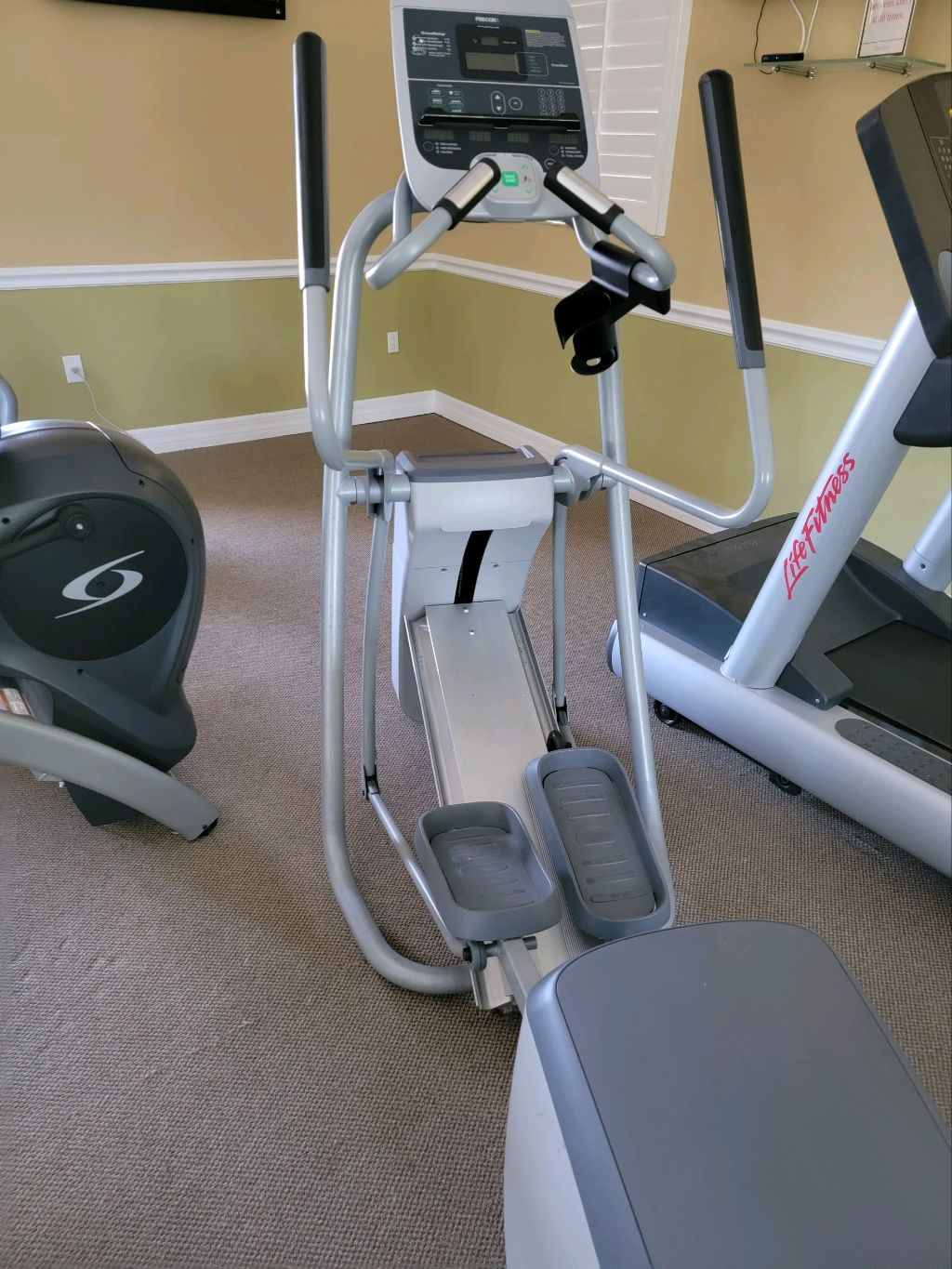
Before Mr. Big died of a heart attack while riding a Pelaton (a fictional situation for a very popular women’s television show, shocking viewers all over, and the reaction shocking Pelaton), there was another exercise machine that could have been a killer in real life for me. Yes, it was one of the two pictured above. I have used both in the past, and now, only one of those machines unless I am ordered to use the other.
Like many, the new year annually brought me to want to make a resolution to get/stay in shape. Crazy thing called life constantly interrupted that resolution, and it would be forgotten. In 2008, I made a promise to myself that “this is the year I am going to stick to it.” I had even bought a full year membership at the local gym. Surely I would not waste the money letting my membership sit idle.
And soon after the new year, I began my annual quest, the same as every year before it, gradually working my way up in repetitions, sets, and time. I really gave no thought to how I felt physically as I began each workout. But by the beginning of April, that’s right, I was now a full month longer than my exercise plan had lasted in previous years, I began to notice something nagging my body, a reminder that the last time something occurred during my workouts, I was diagnosed with Hodgkin’s Lymphoma. But this time, felt different, and it actually hurt.
I preferred the eliptical machine as it felt more of a workout than just going at it on a treadmill. I seemed to burn a lot more calories, and my endurance seemed to hold up pretty well. There was only one problem. As I grabbed the sensor paddles on the handles, and began to “step”, my heart rate registered on the screen. 80. 110. 135. 150. In less than 45 seconds, my heart rate had peaked at 152. I was out of breath, and had an extreme tightness in the left side of my chest. But as it was just tightness, and not pain, unimaginable pain (according to my later father who actually suffered an extreme heart attack), I was not panicking. I was just annoyed.
I slowed my pace down for a few seconds, my heartrate began to come down, and that tightness dissipated. And so I picked my pace back up, since I was comfortable again. Again, my heartrate also climbed back up above 150, where it remained for the remainder of my hour long routine. After that, it was over to the weights side of the gym for the strengthening.
Within two weeks, I would make a call to my family doctor, complaining about this daily situation with the chest tightness coming and going. Within 36 hours of that call, I was on a table having emergency bypass surgery. You can read the whole behind the scenes of that process, from beginning to end, on the page titled “CaBbaGE – Not Just A Green Leafy Vegetable.” But for this post, all you need to know is this. I had a 90% blockage of the main artery going to my heart. It had nothing to do with my age, or my diet (though many would like to say that did not help the situation). The treatments for my Hodgkin’s had progressively destroyed my body over the years, undetected, until I made that phone call. According to my cardiologist, and I quote, “it was not a question if you would die, but when.”
So, spoiler alert, I survived the surgery. The hardest part about the recovery, was that I expected my physical conditioning prior to the surgery, to have been a benefit in my recovery. Instead, in just a week since the surgery, no, less than two days in the hospital after the surgery, lying in the intensive care unit, I had lost all of my conditioning. But as time went on, and I would get cleared to begin cardiac therapy, and eventually physical therapy, I wanted to focus on getting back into shape.
Yep, that meant I went back to my annual resolutions, with the usual results. But now the interruptions were not just because of failure of commitment, but additional health issues that kept breaking up my routine. Plus, I really was not feeling well even as the years went on. There was still more damage to my heart that needed to be repaired.
My third and final heart surgery (final meaning for the time being as all the surgeries are likely going to need to be done again), an aortic valve replacement, occurred a little over a year ago. This surgery was completely different, as it was not invasive or as destructive as my original bypass surgery. The whole process of this surgery allowed for a quicker recovery as well. Of course, I went through cardiac rehab again, and as soon as I was cleared, I went back to strengthening.
If there was one thing that I credit to my survival of that original bypass surgery, was my conditioning at the time. I would not discover until years later, the risks, and the protocols that came with the surgery on a Hodgkin’s Lymphoma survivor. But I believe my body was able to handle the trauma of that surgery, giving me the chance to recover, and regain my fitness. And following this last surgery, having not lost any of my strength or stamina, I was ready to move forward. I know I needed to be smart about this. My heart has been operated on three times, and each time, becomes more of a risk.
January of 2021 was the perfect time for me to be cleared to exercise. No one can ever make an accusation of me ever becoming a bodybuilding champion, but I really wanted to be in a good condition. I know that there will come a time, when I need to have any or all of these surgeries again. If I am to have any chance of survival this time around, my body needs to be in the best condition I have ever had it in.
But unlike the other years, years in which my exercise regimens were driven under the guise of a “resolution,” I made this a lifestyle commitment. There has been only one obstacle to this commitment, Covid. Because we are at a point in this pandemic, people have their own ways of living with the pandemic, some with concern for others, some without, I knew that there were times that someone infected with Covid, chose to ignore the safety of others, using the gym. So, on multiple occasions I had to make the choice, to avoid the gym for a couple of weeks, assuming that these individuals were also of the mindset to not wipe down the equipment either. As I begin my second January of this continued routine, I do feel that my body is in a decent enough condition, should I face another major health challenge.
I would say that I have done all that I can. But those around me would argue that I should do the same with my diet, make that more healthy, which I have not been able to reconcile as being a benefit enough to make the commitment. Basically to do it now, would be nothing more than making a resolution. And I do not have decent track record with resolutions.
And while during cardiac rehab did “force” me to get back on the eliptical machine, the panic attacks, I was able to keep under control. But on my own, I do not have the intestinal fortitude to use that machine again, unsupervised. I won’t let that be my “Pelaton.”
American Cancer On-Line Resources
Internet support from peers, caregivers, survivors, and professionals in several hundred types of cancers and related issues





 Paul's Heart