This weekend is one of the biggest weekends in my life, but nothing compared to what it means to my daughters. I speak often of my milestones as a cancer survivor, reaching time periods and goals that at one point, could only have been hoped for, eventually reached.
Of course my daughters have had their share of milestones already in their youth, first steps, first words, first days of school, proms, and graduation days. Just as important as milestones, are turning points, that moment, when a decision is made or an action that is taken, makes an impact on the future, hopefully leading to the fulfillment of a dream or goal. I know that I can reflect upon my turning points in my life.
This weekend, both of my daughters have reached a turning point in their lives. Both have done well through their youth, in spite of the challenges that they have faced, especially with having to deal with my health issues. I have always been of the mindset, that I wanted my daughters to have it better than I did, to start their lives in better shape than I had the chance. And though the roadmap of that plan is not the way I had intended, I have done all that I can.
Both daughters are beginning their next semesters at college with different paths, though each path will have a major impact on the next step of who they become, and how, their turning point. When they look back in their lives, it will be this weekend that they can say, “this is when it happened.” One daughter has a labor-intense influence through career guidance this semester, where she will get a first hand taste of what her future career will be like before she even graduates college. The other daughter is embarking on a journey across the globe, for a worldly influence on her future career. She will return at the end of her semester with a viewpoint like no other.
Both daughters have immense turning points being established this weekend. What is even better, these turning points are all them, one hundred percent. This is what they wanted, and wanted to do. All I could do is fall back on what I have always said, “I wanted better for them,” and I would always support them in whatever they do, and do what I could to help them get there.
This may be their turning points, but they are also milestones for me that I had not realized. Perhaps I was reluctant to realize these milestones, as it meant that my daughters have grown up. And while I know my daughters will always know I am there, it is no longer to make decisions for them, but to remind them who they are, and the decisions that they make, are who they are.
Yes, my eyes are a bit moist this morning. But it is because I am so proud of my daughters.
In my newly released book (on Amazon for $15.00 paperback, $9.99 E-book), I mention a time period nearing the end of my chemotherapy, where my second to last treatment ended up being delayed a couple of weeks because my blood counts were too low. I had recently caught a cold, and this was enough to destroy me mentally. I had been watching the end date on my calendar for February from six months prior. This was going to drag on for another month longer than I had planned. Yes, I had plans for when I finished, and this cold screwed everything up. I compared this to a “speed bump” which of course, is something that slows you down.
I am a “goal oriented” type person. But one thing I actually try to do, is encourage patients to try not to focus on the end date of treatments, for the very reason I just mentioned. Again, I get it, that a patient wants to see the end, to drive their way through their battle with cancer. I also know however, the devastating emotional impact it has when your oncologist tells you that your treatment needs to be delayed because you got sick.
It was not my fault that I caught the cold. Someone had given it to me. And since I was only around others at work, and my co-workers often came to work sick, that is likely what happened. I am sure it was not intentional. But way back in the day, decades before Covid or SARS, there was no such thing as “mitigation” to prevent spread of illnesses other than staying home.
But Covid changed this thinking in a big way. For the last four years, oncologists and peer support groups all over, encouraged cancer patients to take extra caution, not to contract the other “big C”. And unlike in 1989, we were told what to do to help prevent the spread from masks (they do work when used and maintained properly), hand sanitation, avoiding indoor crowds, and of course the biggest, avoiding contact with someone contagious.
A cancer patient should want to do all possible to avoid getting sick, especially how prevalent Covid is still today, if not for the fear of increased susceptibility for complications, but at the least, DELAYING TREATMENTS! And honestly, at this point, especially during Covid, knowing how we can protect ourselves, it really has become about our own responsibility to do what we need to do, in order not to interfere with an important process like cancer treatments.
So it was disheartening to see a post come across my feed the other day, “I got Covid, I can’t get my treatment.” I am always one to give the benefit of the doubt, that someone testing positive for Covid-19 was not the fault of the person infected, that their positive test was through no fault of their own, someone had spread the infection to them. Having had this delay myself when I was treated for my Hodgkin’s, my heart was truly heavy for this person, because I knew what they were feeling at that moment, their chemotherapy plan being dragged out an additional month, possibly two.
When it comes to replying to posts that involve Covid-19, I generally prefer to respond back individually due to the divisive nature of the situation. I wanted my genuine reply to be seen for what it was, empathy, encouragement to realize the end was still within reach. I did not want any digital warrior out there stirring the pot. My intent was clear, while not great being diagnosed with Covid-19, the situation was not something long term. It was just going to be an additional month, maybe two at the longest. No, not what was originally planned, but the prognosis was still going to be, remission.
I do my best not to be judgmental, that people genuinely want to do the right thing, the things that must be done to get the results they want and need. And it is human nature for some to let their guard down, or slip up. But when I went to their main profile to send them a supportive reply, my heart sank, frustration set in. As I said, I know what it is like to put the end date for chemotherapy on a calendar, and have to scribble that date out, and move it further out because of a complication. It really is devastating. This was not a situation where the person let their guard down or slipped up. Their social media page was filled with all kinds of social activity and interactions.
Back in the day, four years ago to be exact, before Covid-19, it would have been considered inspiring to be doing all kinds of activities, especially socially while undergoing treatments for cancer. But these are different times. Besides a patient being positive for Covid-19 and delaying treatments, the doctor’s office/hospital does not want it spread among their other patients. So, I am not really sure why this person seemed shocked that they came down with Covid-19. Clearly there were plenty of opportunities to contract it. The pictures on the website showed this. So now, their treatment is delayed up to a month at least. It is more than just dealing with a positive test, but also blood counts and immunity while being giving treatments.
In my book, I wrote that I wanted to go skiing towards the end of my treatments. My oncologist said that I could, but warned that if I got sick from being all sweaty in the cold, or caught something from anyone in the ski lodge, I would risk a delay in my treatment. Of course, I chose not to ski because completion of my treatments was more important to me. I could not help that a co-worker who was sick came into work, and of naturally, passed it on to me.
While I am definitely sad to hear that this person’s treatments had to be delayed, I am hoping that others who saw the post, and might be reading this post as well, realize and come to terms with what is more important during one of the most challenging times of a person’s life, dealing with cancer. No one is saying at all to live in a plastic bubble until done, but at least recognize the situations that one exposes themselves to, and then decide if it is worth the risk. I am not sure if this person grasps that instead of shock and surprise, she should be encouraging others to be more careful. Nothing like personal experience to drive home a point.
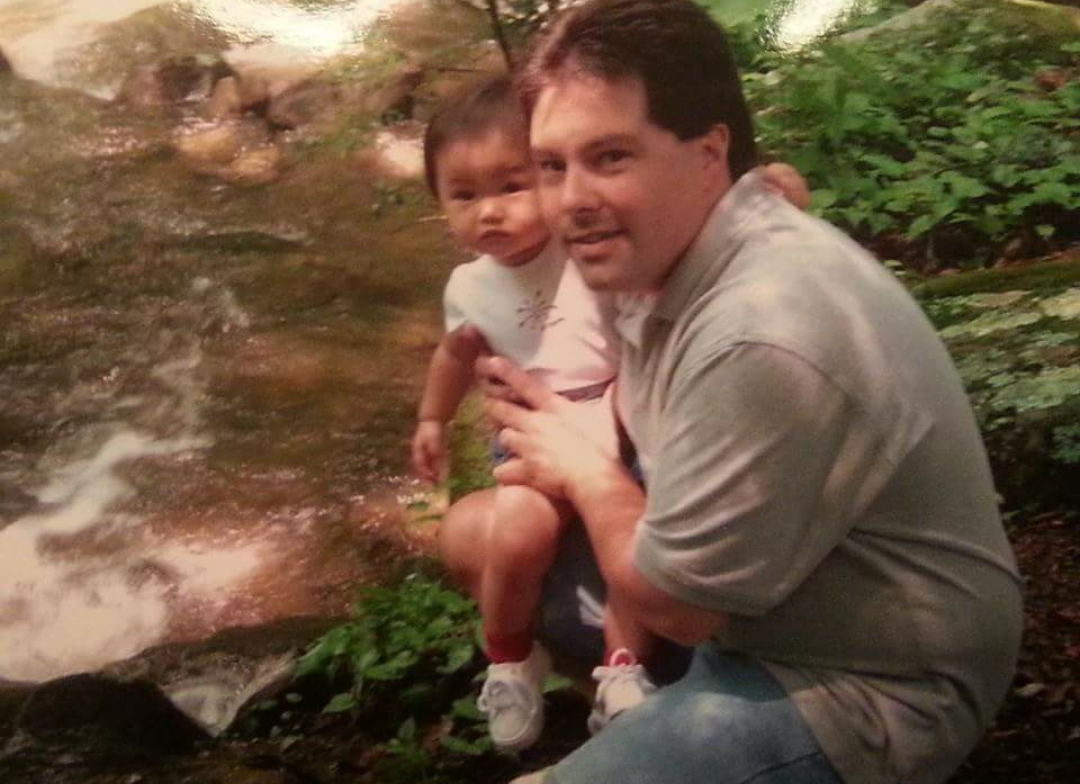
When I became a father, I wanted to make sure that I spent every possible moment with my daughters. We took every opportunity for any adventure that came our way. Of course, it also helped having daughters that had no problem asking, “can we Daddy?”
No regrets. Nothing left on the table. Nothing left unresolved. This was an attitude that I developed not after reaching remission for Hodgkin’s Lymphoma thirty-three years ago, though I wish I had. Instead, it was a tragic evening, just before Christmas, now decades ago, my stepmother had been hit by a car as she was crossing the street. Just prior, she and my father were having an argument. He, in a huff and aggravated, instead of walking out together with her, walked out of the house first, to wait for her in the car. He witnessed the entire accident.
My father tortured himself for decades, until he passed, now almost ten years ago. My stepmother is still alive. She has no memory of the accident, never has, yet my father continued to carry the guilt, feeling it was his fault for having the argument in the first place, that they did not stay and work it out. Or that had he walked out with her, he would have seen the car that she did not, and prevented the accident from happening.
Common sense tells us, we cannot change the past, what has happened. There for, we need to prevent regret and the need for remorse. Have you ever heard the expression, “don’t go to bed angry?” Do you know why that is? In case either you, or the person who was mad, does not wake up, permanently, never having had the chance to resolve that issue, like my father. Even though my stepmother had no memory of the accident, he could never resolve what happened.
My first experience with this situation personally came with the passing of my grandmother who was terminally ill from ovarian cancer. The last day that I saw her, just two days before she was to start chemo, we parted very akwardly, as my grandmother had been distracted clearly by the upcoming treatments. There was no hug or kiss goodbye. There was no “I love you Grandma.” She died the next day. I missed that last chance the day before. That has haunted me forever.
Several years later, when my survivorship world would get turned on its head, emergency heart surgery, I found myself helpless to resolve the one thing I needed most, a last hug from my young daughters, age 3 and 5 at the time. When I left them the prior morning, I was just going in for a simple procedure, one that would keep me overnight. But I told them that I would see them when they got home from school and daycare the next day, not to worry. That never happened.
The procedure that I had done was called a catheterization. It was supposed to be a simple, go up through the leg, through an artery, and place a couple of stents at my heart. When they got to the location, they realized my situation was much worse, near fatal, and I was scheduled for open heart surgery the next morning. I would not be allowed to go home, I would be admitted into the hospital. I could not see my daughters.
This devastated me. I was going to be undergoing a surgery there was a fairly decent chance I would not survive. I wanted just one chance to hold and hug them one more time, forever, in the event it would be my last time. With the hospital more than an hour away, my (then)wife was not willing to go pick them up to bring them to see me. At best, when my wife arrived home, she would call me and put the girls on the phone to talk to me. Spoiler alert, I did survive the surgery, and eventually got to see me daughters in person four days later.
Later on, this situation would happen again, three more times, where I would be unable to see my daughters prior to major surgeries I needed to have, related to my cancer treatment late side effects, because of Covid-19 risks. All three needed to be done as the risks of doing nothing were higher than the risks of the corrective surgeries. A Covid-19 exposure, would delay those surgeries, something time was not on my side. But different from my bypass surgery, I was at least able to see my daughters via video. Not the same as a hug, but at least I could see their eyes and expressions. More importantly, they could see that I was okay.
I am at one of those moments again. Though not for my health this time. My older daughter is travelling abroad for her next semester and will leave in less than a week. The plan was for her to visit me just before Christmas, for me to spend some time with her, as I will not see her again, likely until Father’s Day. But as I said, there is/was that need, I wanted to give her the biggest hug, tell her in person how proud I am of her, and to not only do well, but to have a great time, a great experience, perhaps a once in a lifetime experience. But two days before she was set to fly to visit with me, someone in her house tested positive for Covid, resulting in my daughters both having enough concern for me, to cancel this trip.
This time is much different for me. There is a very dark reality in the corner of my mind. It is an issue that most “healthy” people cannot understand, but it is a reality that I have accepted long ago. I have great doctors that handle all the issues I face in my survivorship, so it is not a concern, should something happen in that regard before my daughter returns. Currently I am not aware of anything imminent.
But… and this is a big BUT… as I am long into my survivorship, decades, a shortened lifespan really is anticipated because of the damages done through the years. So, if it is not one of the health issues that ends our story, it is likely going to be an unpredicted event, and/or complications from that event. For the next four months, I have to hope that this is not my fate until she returns.
I want to be clear, I do not spend my days thinking or worrying about dying. Not at all. I go to bed each night, with my plans actually written down on paper for the next day. I plan to wake up and get things done. But what does not help, is the common comment, “aw, come on man, you could get hit by a bus crossing the street tomorrow.” And while that may be correct, there is one difference. The average “healthy” person, does not have someone pushing them into the path of the bus. And that is what it is like for a cancer survivor with this late side effect issues. Yes, I could get hit by a bus, but there is a crowd of “people” waiting for the moment to give me that push.
I am doing all I can during this time, with our distance, to make sure she knows how proud I am of her, how excited I am for her with this opportunity, and how well I want her to do. I am hoping for tons of photos of her journey that she is sharing with several of her close friends travelling with her. I will be talking to her multiple times over the next few days before she gets on that airplane, and I will tell her I love her each time.
I just wish I could have one more hug before she goes.
American Cancer On-Line Resources
Internet support from peers, caregivers, survivors, and professionals in several hundred types of cancers and related issues