Paul's Heart

Life As A Dad, And A Survivor

Archive for the category “Cancer”

I Found Another “One”


“One person can make a difference” is probably the most commonly shrugged at phrase used in the English language.  One person so far has never made a difference in an election (though clearly, if enough “one person” voters showed up, who knows what the results might be.  When it comes to fundraisers, look at the overwhelming response to the “ice bucket challenge” for ALS, started by one person.

In the world of lymphoma, I have always been a believer that one person can make a difference.  That is one of my drivers behind “Paul’s Heart.”  Look, when it comes to cancer, breast and lung cancer get the majority of the attention, while lymphoma (and other blood cancers get very little).  September is National Lymphoma Month and National Blood Cancer Month.  And while the very well recognized Leukemia-Lymphoma Society is well known to me, as well as other blood cancer patients, the LLS does not have the notoriety of the American Cancer Society.  While the ACS holds events such as Making Strides For Breast Cancer and the Relay For Life, raising hundreds of millions of dollars, the LLS during its recent national Facebook campaign for the month of September, just passed the $300,000 goal, to me personally, a disappointing amount.  But again, not many people are familiar with the LLS and blood cancers.

It is hard to fathom, with all the attention towards the big things like ALS and more familiar cancers, that even the introduction of a rare cancer, and a simple fundraising drive, like, Light The Night, would be just as successful.  But the truth is, because Lymphoma is so rare, it does not get the attention that other cancers get.  Sure, plenty of celebrities have faced Lymphoma.  I will not mention them in this post as I have already listed many famous people earlier this month in a post titled “The Faces Of Lymphoma”.  And with all of those names listed, no one still seems to pay attention to the research needed to find better and safer treatments for Lymphoma.

But another aspect that I hoped to raise, as one person, was the need to recognize developing side effects, both short term, and in my case, late term.  Again, these things that have happened to me, and many others, are indeed rare, but without awareness that they exist, how will medicine ever realize more needs to be done for lymphoma survivors.

This morning I had the pleasure of having breakfast with someone who I consider another “one person trying to make a difference.”  As occasionally happens with lymphoma patients and survivors, cardiac symptoms are something that really need to be paid attention to.  But other than a few select late term clinics such as Memorial Sloan Kettering, MD Anderson, Cleveland Clinic to name a few, the average hospital and too many oncologists, while recognizing the side effects of anthracyclene drugs, in spite of their success in treating lymphoma, have a toxicity to the heart and its pumping ability.  I have been beating this drum for a long time, not just from my own experience, but also, as many of you have read, in “Meet Michael”, the young man who died at the too young age of 24 after successfully getting through treatments only to die from the side effect of the drug Adriamyacin, an anthracyclene.

But who am I to draw attention to this?  I am not a doctor.  I am just one person trying to make a difference to include a simple ultrasound, or some other screening, that when using a drug, that is known to have even a minimal low percentage chance of affecting a body organ, that some sort of surveillance is done on that body organ, not just for baseline at the beginning, and at the end of the treatment.  Because as was written about Michael, he had never even gotten to his post treatment surveillance.

So, one person, me, met another one person.  I must admit, I found myself choked up several times as he explained the technology that he has, is trying to get recognized, and used to follow the toxicity effects on the heart from the drug class of anthracyclenes.  He explained to me that with his technology, he is able, via 3D technology, be able to look at 90% of the heart, including the inner wall and its movement.  In other words, he has the ability to see damage to the heart, before it becomes too great.  In other words, there is the potential to modify or change treatments, and not only save the heart from possible permanent damage, but caught early enough, the opportunity to allow the heart to recover.

It is a lot more complicated than what I just described in the last paragraph.  But bottom line, I have found another “one person.”  One person trying to make a difference, and I believe he will.  He has the tools and the knowledge.  Now he needs the awareness and the support.  I want to be “one person” for him, to help him, which ultimately will help many cancer patients.

One person can make a difference.  One person will make a difference.

You Are Part Of Your Cure


I am now going to contradict myself from past posts, where I say “let the doctor be the doctor” and “the doctors know best”.  Treating cancer is not just about having the right doctor to make the right diagnosis and treatment plan, but it takes a team of qualified professionals.  And one of those professionals is you, the patient.

Like a professional sports team, one player does not make up the team.  Sure, every team has their superstar, their coach, but there still are more than a dozen more players that will make that team successful.  And under normal circumstances, they will be successful.

Your cancer team is no different.  Your superstar is obviously going to be your oncologist.  He is the one that will diagnose, stage, and treat the cancer.  He is the one you can count on when the seconds are winding down on the clock.  But unless you are aware of it, there are plenty of other players on your team that you should be aware of.

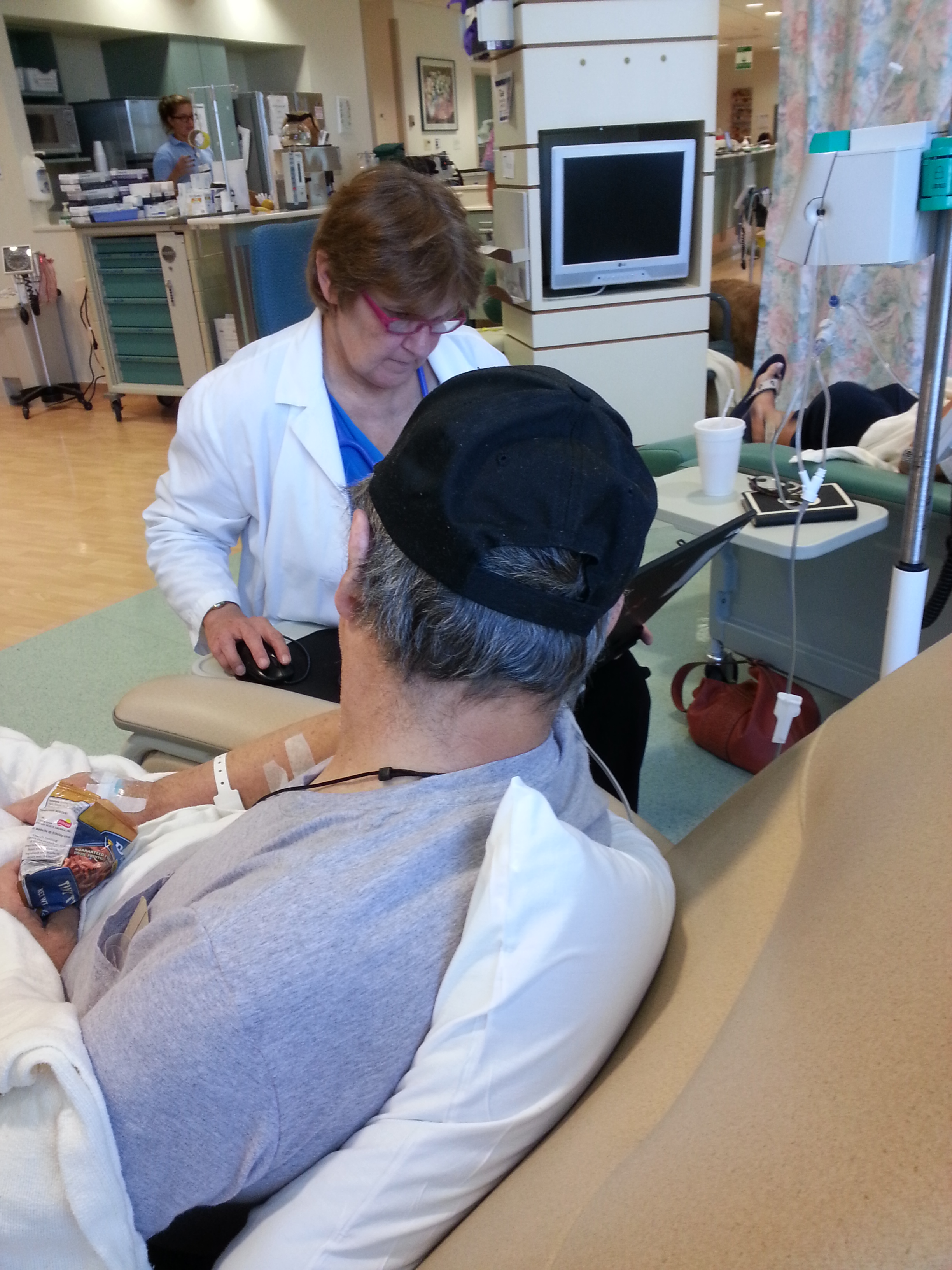
The Oncology Nurse = I would recognize the oncology nurse as a starting pitcher, number one in the rotation, or maybe the goalie in hockey.  You will probably spend the majority of time with this player from administration of meds, to observation, through treatments.  The oncology nurse is the one individual who will probably learn about you best and most likely will be the one who can help you understand and differentiate what feels normal during treatments, and what might be something to be concerned about.

Psychologist/Counselor = You are going to go through a lot of emotions on this journey.  Personally, I do not recommend just any therapist or social worker.  I feel it is important to have someone to listen who has knowledge personally, or has studied of dealing with cancer.  There is a big difference in dealing with someone you know who “gets it.”

Dietician = Your taste may change during treatment.  You may need to supplement nutrition due to foods you are restricted from.  Perhaps, like me, you just have bad diet habits to begin with.  A dietician affiliated with the cancer network is good support to make sure that you maintain a good diet and good diet habits.

Physical and Occupational Therapist = Treatments are most likely going to kick the crap out of you physically by the end of your treatments.  And if you are like me, who has exercised his whole life, there is a big difference to rehabilitating yourself once treatment has been completed.  Your body has been put through a ringer.  Any surgeries have actually physically altered your body.  Any treatments may have affected your body physiologically.  In any case, the last thing you need to do is cause any more issues for your body by exercising incorrectly or pushing yourself too hard and too fast.  And yes, in some cases, you may need to re-learn how to do some thing things.

Pastoral = Briefly, if you have faith, keep it, build it, use it.

Of course, for a team to be successful, it needs a coach or a manager.  No, they are not the ones who throw touchdowns, or hit homeruns, but without their decision making, the teams would not be successful.  And guess who the coach/manager is of your cancer care?  You are.  You have the say in the deciding the options that are available to you.  You are the one that has to evaluate your way body feels from any kind of side effect.  You are the one that makes the call.  The days are gone, where the doctor simply says, “take two aspirin and call me in the morning.”  Medicine is overwhelmed today and there are very few doctors anymore who spend enough time with you to get to know you.  Today, most doctors function out of clinics, so you are no longer even guaranteed to see the same doctor when you return.  Not being able to see the same doctor, who will know you every time you are in their office is a big deal.  I have had the same family practitioner for over 25 years.  I will wait an extra day if necessary to see her not only because she knows me so well as her patient, she also respects me as a member of my treatment team.  In fact, all doctors I deal with, know that I am a member of the treatment team.

No Need To Panic – The Difference Between Paranoia And Routine


There is always a moment when I cringe, the moment someone asks me the question, “how did you find out you had cancer?”  Unlike the more familiar cancers such as breast cancer (lump) or skin cancer (oddly shaped blemish or mole), a blood cancer such as lymphoma and leukemia do not give the obvious signs which accelerate the opportunity for diagnosis.  As I have mentioned in prior posts, my original family physician, who is not an oncologist, originally diagnosed my Hodgkin’s Lymphoma, as a common cold.  After all, he had seen plenty of patients over his career, who had a similar symptom, and that is all that it was.  But because lymphoma is rare, it makes it complicated to diagnose.  And with lymphoma, treating it, and curing it, time is something you do not have time to spare.

So getting back to “how did I find out?”  Unlike other symptoms that I have had later on in life after I became aware of my compromised health, as a healthy young 22-year old, I really do not recall any particular moment before discovering a swollen lymph node under my left ear.  I do not recall any other symptoms that would have allowed me to share with my doctor.  A simple “itch” at that one particular moment, led to me discovering the swollen lymph node.

Now, as you are reading this, there is a good chance that you have now begun feeling around your neck area for any signs of a swollen lymph node.  This is why I cringe when I am asked the discovery question.  Because it is rare that the swollen lymph node is anything more than the body doing what it is supposed to.

A cold is a foreign substance that needs the body to use its immune system to fight that substance.  Your immune system is your lymph system.  The lymph system consists of not just lymph nodes which are located throughout your entire body from head to feet, but also certain organs of your body like the spleen, thymus, and tonsils.  Of course, just as you have blood vessels, you also have lymph vessels to help in the process of dealing with most illnesses when your body is faced with them.  The system is much more complicated than I can put in a post, but just know that it is perfectly normal to have a swollen lymph node when dealing with common illnesses.  A swollen node is not an automatic diagnosis of cancer.

A normal working lymph system will produce antibodies to help your body fight what is ailing you.  We sometimes get vaccines to help in this process (like for the flu and pneumonia).  And other times we need prescription medicines.  And under normal circumstances, the body will do what it has always done.  But some times, the infection of the lymph node is just too great for the body to fight by itself.  One thing to keep in mind, a swollen lymph node does not always cause pain.  Like I said, mine was an itch.  I have heard stories from others about the pain being so great, and there is usually more involved to the diagnosis at that stage of the disease.

So here is how I follow up the question, “how did I find out?”, and it is common sense.  If you discover a lump or swollen node, do not panic.  Contact your doctor immediately.  I know.  I know.  My doctor misdiagnosed me.  But things are much different today.  Awareness has become just as much important as the cure.  Doctors have so many more tools at their disposal, and they are definitely the ones better to make the diagnosis, cold, infection, or something else.  But whatever you do, tell your doctor everything that is not normal with your body at that moment to accompany the obvious symptom, a swollen node.  Then let your doctor do their job.  Do not be surprised though, if you are told “it’s probably a cold or infection” and you are sent on your way with a prescription.  This is normal.  Believe me, you will know soon enough if it is more than that as the medication, although showing slight improvement, will not resolve the issue, then it could be something else.  Hopefully though, you have a doctor who is more involved with your care, and willing to take extra steps ahead of time, like perhaps bloodwork to check white cell counts to see if anything goofy is going on with your immune system.

Bottom line, if you find a swollen node, do not panic.  See a doctor.  Do not diagnose yourself.

Post Navigation