Paul's Heart

Life As A Dad, And A Survivor

Archive for the category “Cancer”

Thank A Survivor


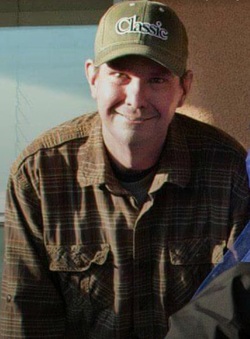
The following is a speech that I just gave at a local Relay For Life event where I was being recognized as their 2015 Honorary Cancer Survivor.  I want to thank fellow survivors who helped me prepare this speech with their input and feelings that they felt should be expressed to current patients and survivors.

11140338_1023832694308529_457527836403710987_n


I think we will all agree that 25 years of surviving cancer is a pretty big deal. But what you may find hard to believe, up until I hit this particular anniversary, I have never given myself credit for surviving cancer this long.

You see, I battle an issue called “survivor’s guilt.” Yes, that means exactly what it says. I have walked through these 25 years wondering why I have gotten to survive my cancer, while so many either do not, or face recurrences or new cancers. Do not mistake my gratitude, I have a lot to be grateful for, including two beautiful young daughters. But having gone through cancer in a time period when survival was based on a “five year survival rate” plan, I have wondered ever since “why me?”

Tonight, I finally give myself a break. And instead I ask myself, “why not me?”

It has been a long time coming to get to this realization, and it is because of our Naples Relay For Life Survivor Committee Chairwoman, Olyvia Eldridge, that I wrote this particular speech this evening. Olyvia, by showing this survivor what has been done for him, I realize that being a survivor is not just about being a visible statistic to other cancer patients and survivors. Being a survivor means supporting other patients and survivors.

So tonight, I want to draw your attention to the hundreds of cancer survivors here this evening, and by survivors, that also includes patients either just diagnosed or going through treatment. Now with a show of hands, how many have survived cancer since at least 2005?

Take a good look around you. No, take a long and lasting look. With the theme of this year’s Relay being “Wish Upon A Cure,” I have but one wish tonight. And even if you are not spending the entire night with us, you can make my wish tonight come true.

The Relay For Life is about raising funds to not only find cures for cancers, but to find better and safer treatments and follow up care. And while your role in this process is so very important, as is the scientists who look for those cures, it is the long term survivors like those of us here this evening that I would like you all to just take a few moments, and not only tell them that one day you hope to be a survivor like them, but to thank them for the care and treatments that are available to you today.

Our treatments just a couple of decades ago, were quite harsh. And as we have survived all these years later, medicine has realized something very important. That while every cancer patient just wants to be done with cancer with that final treatment, to survive cancer long term, you are not the only one who needs to take care of yourself, but doctors have recognized a need to follow patients for the rest of our lives, even for the slightest of late developing side effects, so that years after having beaten cancer, you no longer face the possibilities like myself and so many others have had to face.  Because of those of who have survived cancer for so long, protocols have been written, and rewritten, and rewritten, and doctors have expanded their medical orientation from cure to now what is going to be the quality of life for a patient in 10, 25, 50 years and beyond. Because of us, doctors will now take better care of you, following your treatment for cancer. Screenings for certain issues occur annually or longer if possible, but issues are dealt with sooner than later. And as any cancer patient knows all too well, the sooner and quicker dealt with, the better. And because we are now followed up more closely, and yes, for the rest of our lives, we actually have an advantage over the average healthy person because issues are discovered before they become symptomatic.

If you spend time with one of us this evening, getting to know what it has been like for us to live post-cancer, without the care that you will now be getting, and to understand just how important this new protocol is to you, and believe that you too, will someday be a long term cancer survivor like myself, and so many others.

This is the legacy my generations of survivors have left behind. And I have faith that you will further build upon that foundation and with the help of advances in drug and immunological research, we will all someday hear those words, “you are in remission.”

I began my life as a survivor 25 years ago. I began my support as a survivor and caregiver 25 years ago. I began my advocacy for cancer patients and survivors 7 years ago, when it became known to me, that long term survivors were having health issues that were not being followed up properly. And I became a patient advocate a little over a year ago, when a dear friend lost his life, for the lack of a simple protocol during cancer treatments with a drug known to have the potential for serious side effects.

Tonight, my team, “Michael’s March”, in memory of Michael Scheidemann will walk this year’s Relay. Each hour, I personally, will walk and dedicate an hour to a cancer patient or survivor who has had an impact on my survivorship, and will write their name on the front of this t-shirt. And I invite each and every one of you, to follow me throughout the night, and write your name on the shirt as well.

In closing, as I always do, I offer these words to you…

“As I go down the road of remission, I will keep looking in my rear view mirror to make sure that you are still following me. And if you are not on that highway, hurry up. Because once you get on that road, it’s a great ride.”

Two Reasons I Do Not Like Mid-April


I think it was Ben Franklin who stated, “only two things in life are guaranteed, death and taxes.”  Of course I am paraphrasing.  But in April of 2008,  I almost proved Ben correct.

I want to indulge this post, because I am preparing for our local Relay For Life, and will not be able to post this “anniversary” post.

On the day after the deadline to file income taxes, I underwent a nuclear stress test, which had nothing to do with the tax preparation or results for the record.  I was dealing with annoying chest tightness, and my family physician of nearly forever recommended the test based on my history of having had cancer as well as other biological health issues.

Now rather than repeat the entire story, you can check out the page “CABG – Not Just  A Green Leafy Vegetable” for everything that happened by the detail.  But long story short, 36 hours later I would end up having emergency heart bypass surgery.  The cause of the blood restriction to my heart was the real shock, because up until that point, there was no reason to be concerned about cardiac issues.

The main artery to my heart had been so badly scarred from radiation damage during the period I was treated for my Hodgin’s Disease.  That was just the first discovery of many, that would now become my current world of long term cancer survivorship.

20131109_200245

A week later, I was sent home, along with my “heart” pillow to help provide comfort for my very tender breast bone area.  I would make my first phone call to Memorial Sloan Kettering to begin what should have been done eighteen years earlier, post treatment care.

By now, almost every area of my body has been checked for late developing side effects caused by either my diagnostic methods, or chemo and radiation treatments.  The list of diagnosis of serious issues are more than a dozen long.  For now, doctors concentrate on the major and potential life-threatening issues:  cardiac, pulmonary, immunological, gastrointestinal, neurological, muscular, and orthopedic, and of course psychological.

It is one thing to have beaten cancer, but it is another to have to deal with permanent issues that medicine had no idea they would be dealing with, once cancer patients would begin to live regularly past the magical five year mark.

This post is not about dealing with all those issues.  No, I want this post to be positive.  This year marks the 7th anniversary since I had my double CABG.  And as I have pictured above, there are only two reasons I got through that procedure and the reason I am still around today.

Medical Proxies


proxi

I have been hospitalized several times over recent years.  And of course, one of the questions regularly asked is “do you have a living will or medical proxy?”  The purpose of either of these two acts, is to make sure that should a situation arise while in the hospital, that you are no longer able to make a medical decision on your own, for any reason, that your wishes are known before hand, and enforced.

I am not too familiar with each specifically, although I know in recent years, I have had to deal with both.  I do have a living will that was created a few years ago, which specifically stated my wishes as far as my care should I be unable to make the decisions on my own.  It is also expressed as an “advanced directive” such as artificial measures meant to prolong life or other extreme measures when there is no hope.  Note to self, I have since filed for divorce, so I should probably change some of the directives and who carries them out.

A medical proxy on the other hand, is a person who actually and legally makes the medical decisions on the behalf of the patient.  In most cases, the proxy will simply follow the living will, if that directive has been shared with the proxy.

One of the first things, and actually smartest things that my father did, when he was diagnosed with lung cancer, was to make sure that steps were in place, should anything happen to him, that his wife would be cared for, and what little assets he possessed would be protected.  My brother would be given all legal power through what is called a power of attorney, in other words, if my father were unable to make any decisions, or even pay bills, my brother had the legal authority to make those decisions.

The same decision making power medically is given through a medical proxy.  Again, the responsibility to make sure that all medical wishes are followed through.  In my case, my father asked me to take on this task, not jus because of the “what if’s”, but also, he knew that I would be his strongest advocate to explain to him, things that there happening, things that needed to be done, and to make sure that he got the best care.

Both power of attorney and medical proxy can be very frustrating positions.  Under normal circumstances, only one person is selected for either, and just as when only one family member is selected as an executer of a will, feelings can be hurt, and actually complicate the enforcement of important decisions.  Then there is still the time period, when the patient is still fairly in control of their mental faculties, and the patient either complicates efforts or even sabotage efforts.

But when a patient is in need of both a power of attorney and a medical proxy, unless it is a long term medical situation, the only other time that these positions will be in need, are during the stage of life, preparing for death.  Now I want to make sure that I am clear, any comments that I make in this post, are not a reflection of what happened with my father and I or any family members.  I am actually in communication with a couple of friends who are in the very situation right now.  And “Paul’s Heart” is about helping others and so, I decided to write this post.

Anyone who takes on the task of having power of attorney or medical proxy has to be counted on, by the patient, to carry out the wishes and legal needs no matter what.  Feelings of others are bound to be hurt, decisions are going to be questioned, but in the end, having followed what a POA or MP were charged to do is what matters most.  Those two titles are charged with a responsibility to do what the patient is not able to do, and wants met.

Once a patient’s status gets bad enough, that hospice gets involved, the two positions of power of attorney and medical proxy take on even more importance.  Emotions among family and friends are likely to escalate, as only the people involved in the decision making only know all of the facts involved in the care, and legally, this is important to protect the patient’s privacy rights.  Even though everyone could be related, protecting that privacy may have been important enough to the patient.  As the time drawers near, it is important for both of these legal representatives to understand just how important their roles are and that there will inevitably be conflict.

While my brother was my father’s power of attorney, I was my father’s medical proxy.  My father had his reasons for appointing us this way.  And I believe the two of us both agreed.  My father’s decision to ask me was based on the fact of my experience in the cancer world.  But as time went on, and his cancer got worse, my role went from just questions and information, to decisions.  Eventually the decision would have to be reached between my brother and I, to have my father placed with hospice.  With his mother, my stepmother involved, this was going to be the most important decision of all.  For the first time in nearly 40 years, our parents had the possibility of being separated for the rest of their lives unless we could locate a facility that could accommodate the levels of care necessary for each of them.

Once the nursing home was found, and yes, we were able to accommodate both of our parents, next came the hard part, filling out the paperwork, and agreeing with the new level of care that would be given to make our father as comfortable as possible in his final days.  And this would be the most difficult.  Because with hospice involved, and my father’s living directive, it was clear what my father wanted and did not want.  Again, my father knew I would be able to separate the role of proxy and son, emotionally this would be critical.

In a patient’s end of days, the suffering can be immense, and the person in the role of the proxy must do exactly as the patient wants.  There is no room to allow emotions to factor into any decisions for to do that would only increase suffering.  Family dealing with sorrow, in spite of recognizing that death is imminent, a grieving family member will do what is normal and expected, reach out for extraordinary measures to somehow, turn the condition around, from investigating a last minute attempt at a cure, to treating symptoms, which would only prolong the suffering and death.

Hospice gets involved when death is not only certain, but imminent.  There is no chance at cure.  There is no last second miracle coming, and to believe otherwise is cruel to both patient and family member.  And even when it is just comfort that is sought, decisions are actually made to remove medications that at one point were taken daily for daily health, trying to justify to other family members that there is no benefit to continue those medications.  But perhaps even more frustrating, is if a patient, in hospice, were to contract an infection or pneumonia.  There is the likelihood of family not understanding that treatment for the normally acute illness would not be administered because at this stage, there is no desire to draw out and extend the life.  Really no different than if he were to suffer a heart attack or stroke.  The orders are strict, there is to be no attempt to prolong the life which would definitely increase the likelihood of suffering.

The role of proxy is a difficult position to be put in.  I have been in the caregiver role for twenty-five years, but my father was the first time I had been placed in the role of a proxy.  I did what I had to do as I made sure my father’s wishes were honored.

Post Navigation