The Worst Thing You Can Say To Someone
Yesterday, news came across my FB feed, yet another long term survivor of Hodgkin’s Lymphoma passed away. While I plan to do a tribute to her on a future post, as I have done for others here, I need to express something that I just do not feel is appropriate to include in such an expression.
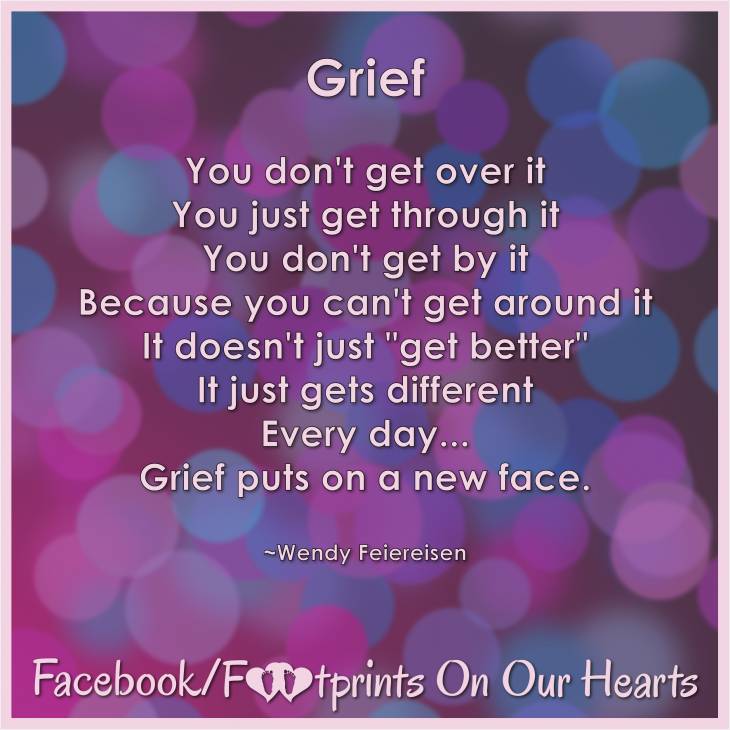
Before I get to the bulk of this post, I need to state clearly, without any doubt, I am a very positive person. But I am also someone who must deal with a harsh reality. At no time however, does this change my outlook in life. That said, there is no way for me, or many others to just “get over it.”
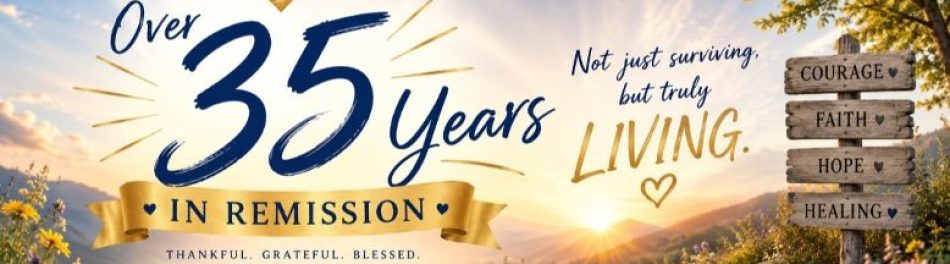
I am a long term survivor of Hodgkin’s Lymphoma. And when I say long term, I am approaching my 30th year as the countdown clock on this page displays. There is no set timeframe that declares you a long term survivor, though for the purposes of this post, I am basically going to refer to those of us who were treated prior to the turn of the century. During this time, the majority of us were treated with either radiation or chemotherapy, or a combination of both. I do not think there is any of us who would say it was a “cakewalk”. We may have had different attitudes of dealing with all of the side effects and the treatments themselves, but it most certainly was not easy to get through. And for those of us who did hear the word remission, we really were not expected to see past five years survivorship. So medicine never really bothered to study the possible late developing side effects once we passed that milestone of five years of survivorship. Instead, many of us were given very vague, and very minor possibilities of concern. In my case, I was told about the possibility of a secondary cancer or pericarditis (inflammation of the heart). But I was told, the chances were very slim.
This year, of the first 2 dozen survivors that I have personally met, the final survivor was diagnosed with a “widowmaker” heart blockage attributed directly to her cancer treatments (just as I dealt with in 2008). So much for a small percentage, because now 100% of this small, yet unscientific group, was dealing with some form of extreme late effect from the treatments that “cured” them of Hodgkin’s.
So, the good news is this, as a result, over the last couple of decades, medicine decided that patients like us, need to be followed. The problem was, most of us, once we hit our 5-year mark, disappeared from the care of the oncologist making communication and surveillance of health nearly impossible as no way to reach us… until… an event has occurred. We “guinea pigs” are the reason that patients today are followed up “forever” (as long as the patient does not disconnect). And for those of us who have had new events, if we are lucky, get enrolled into survivor clinics so that our new health issue is dealt with properly, but the rest of our health is also followed.
We do not just “get over it.” We cannot, physically or emotionally. And again, that does not make us negative thinking people. We need to stay aware of the way our bodies have changed, and the special needs and care we need when something comes up. This “Pandora’s Box” if you will is both a blessing and curse. Because while the average healthy person who does not need to see a doctor on a regular basis, may just have to see a doctor, when a serious issue arises, and by then, measures to treat or cure may be extreme or too late, but at least that person was not worried every day. In our case as survivors, this is our reality. Our late developing side effects cannot be reversed. They are progressive, and will continue, until the day we die. But being followed in a survivorship clinic, or at least dealing with a doctor who has knowledge of these late effects, monitoring patients with annual testing, can watch as the issues progress until they get to a point, that concern outweighs the risks. We can often get taken care of before an event takes place in other words.
Psychologically, this is Hell. We still do everything we can on a daily basis. We do not wake up wondering is today the day we drop dead. We are still grateful for being able to spend time with our family and friends. But in the back of our minds, we do know the reality. Is our next scan going to show enough progression to require surgery? Do the risks of doing nothing now outweigh the risks of correction?
Many of my fellow survivors who have passed away, nearly a dozen just over the last 3 years, died as a direct result from late effects caused by their treatments decades ago. Others, died from complications of corrective surgeries and lax follow up care due to doctors, nurses, PA’s assuming the procedure completion was routine. Most common complications are either perforations, ruptures, and infections. Our compromised physiologies cannot be treated like the average patient. Once the first dose was administered, and in some cases, even some of the diagnostics (like splenectomies – spleen removal), everything internal has changed for us. And for the rest, it is all of a sudden.
Except for you reading this post, the majority of my friends and family, 95%, have no idea what I am dealing with. And the same can probably said for my other fellow survivors. This is either by ignorance (do not want to know), or by protection (I do not feel you can handle knowing what I deal with). So, I do my best to make sure that my outer shell, shows no signs, so that it does no interrupt anyone’s positive auras. I cannot count the number of times I cringe when I hear “you look good,” especially by the doctors, because inside I feel like shit.
As I said in the beginning, I am a positive person. I have to be. I have two young daughters who want to spend a lot more time with me.
For the naysayers though who say, “yeah, well you didn’t seem to have any problem with your work assignments before until you were told you had all these other issues.” And that is true, to a point. I was raised with a mentality to give 100% to everything I do. Show up to work sick as a dog. Wait to go to a doctor until you pass out from the pain. But from January 2008 until April 16th of 2008, I went through daily episodes, multiple times a day, experiencing a chest tightness. The feeling would go away after a period and I would continue whatever I was doing. I cannot remember, but there is a likelihood, that this went on way before January. In any case, this tightness was actually a 90% blockage of the main artery to my heart, referred to as… drumroll… “a widowmaker.” And they call it a widowmaker for a reason. You do not survive the fatal heart attack. My cardiologist told me, it was not a matter of “if” I was going to die, but “when.” I had already worked over 120 days like this, how much longer could I have gone.
Anyhow, once the bypass was done, and revealed that I this damage due to radiation therapy, I was referred to a survivorship clinic. But I also noticed something else, I was feeling other issues that had been masked by the pain in my chest tightness now. And sure enough, I would be diagnosed with other issues as well, more than a dozen. I finally had an answer to why I was not feeling fully recovered. Once getting diagnosed, I needed either a treatment or management plan. For the most part, once everything was diagnosed, it was a matter of management for everything. Corrections to the diagnosis posed more of a risk for complications, so now I wait, year after year, watching the progression get worse until they have to do something. In other words, wait for another type of “widowmaker” to develop.
My doctors were adamant, I needed to change my lifestyle, “slow the fuck down” (their words not mine). I could no longer push myself the way that I had been doing, because while the issues could not be reversed, the progression process could be slowed down. But my pushing myself physically day after day was not going to accomplish that. I knew what they were getting at. And in spite of having the protections of the Americans With Disabilities Act, upon my return to work, I went right back to the way I had always been, work long, work hard. And I had gotten away with it too. I went to my doctor appointments, got all my tests done, and while there was progression, I did not feel there was any concern.
Until the time period of March 2012 through February 2013, when I would make 5 trips to the emergency room, one by ambulance in critical condition. My body could not take it anymore. And so, I leaned hard on the ADA to protect my right to earn a paycheck. I would still try to do what I could, but I definitely needed to change at this point. My body was starting to die, cardiac, pulmonary, muscular, spinal, endocrine, gastro, everything was being affected. My doctors continued to encourage me to retire on disability, I needed to change. But my mind was not prepared to have me feel “worthless”. Or as many often describe me today, as lazy.
Someone with my issues is a liability to an employer in several ways. I am more likely to get hurt on the job. God forbid I die on the company property, the insurance check that would come from them. Lost time became an issue as did work restrictions of what I was and was not allowed to do, based on the abilities of my body, determined by my doctors. But as long as I felt the guilt being aimed at me by both my co-workers and supervisors, I was always going to push myself, not accept what was happening to me. I was going to die.
Today, the changes in my life, some voluntary, others not, I believe I have slowed the progression, though I cannot confirm it as I no longer have health insurance, and am therefore cut off from my survivorship clinic. My body is a ticking time bomb waiting for its next event, and then it will be dealt with as I have done prior, as an emergency. I still only let people “see” what I want or feel they can handle, I do what I am able now within my limits and I do not force myself. But no longer having the pressure of meeting the expectations of anyone else, other than surviving, I feel I have the chance to experience what my doctors told me a long time ago. “I want you to see your daughters graduate high school, college, get married, and to see you become a grandfather.” I will never forget that reminder of just how close I have come, and the reality and fragility still exists as I am reminded when another fellow survivor passes away, of losing it all.
I do not care that my arms do not raise over my head. I do not care that I cannot walk up stairways. I do not care that I spend the majority of time indoors to deal with pulmonary issues. I do not care that I cannot do some of the things I used to enjoy doing like playing ball. I have learned to live with, accept, and adjust, what I need to do in my life.
Yes, I am a very positive person. And I am driven to make sure that my doctors words come true. And if family, friends, strangers want to refer to me as lazy, or because they cannot see with their own eyes the internal issues I deal with as “fake,” that is on them. I am not the only survivor out there dealing with this challenge. But I can make sure that I do what I can. But I definitely cannot just “get over it.”