Paul's Heart

Life As A Dad, And A Survivor

Archive for the tag “Hodgkin’s Lymphoma”

What Does Ai Have Against Cancer Survivors?


(image courtesy of SciTechDaily)

It was a simple and innocent enough question I entered. Given my personal status, and my knowledge, I thought for sure, asking Ai would give me at least a similar or more accurate response to my question. But might I actually know more than Ai? Or might I just have the one characteristic that Ai lacks, the ability to care about the impact of the question?

“What is the average lifespan of a Hodgkin’s Lymphoma survivor?” It is a simple enough question, and if you have followed “Paul’s Heart,” you know at least one Hodgkin’s survivor of at least 35 years. And you would think medicine and other advocacy groups would have some sort of statistic to reflect others like myself, and there are plenty more, at least a thousand more that I am personally aware of.

I do not chase after this statistic constantly. The last time I looked, still the only number when it came to cancer survival rates, was still being based on a 5-year average. Sure, it gets acknowledged that survivors of Hodgkin’s Lymphoma can live longer, but there still is not any kind of verfiable or concrete information, mainly because it has never been tracked. A patient hits the five year mark post treatment, and then gets released by their oncologist, in theory, never to be heard from again, alive or deceased.

So since medicine and society do not have any solid stance on my question, I put it to Ai. The response was based on twenty-one sources, including ASCO, City Of Hope, NIH, ACS, NCI, Blood Cancer United (formerly Leukemia And Lymphoma Association), Lymphoma Research Foundation, NHS, Cleveland Clinic, and more. “While there is no single “average lifespan” for a Hodgkin’s Lymphoma survivor, most patients have an excellent prognosis, with long-term survival rates approaching those of the general population” was the answer. I guess “general population” refers to those with no history of cancer. Ai also does not seem willing to commit to any kind of number, whether it be by years of survival, or by the percentage of those having long term survival. Ai does admit to several factors influencing survival from age of the patient, stage of the cancer, and of course, treatments administered. But I already knew that.

My Ai search went on then, with the usual “survival measured in five-year and ten-year” relative survival rates (an improvement from just five-year), based on data from 2015 to 2021. Again, keep in mind, data was not kept on those of us treated in the 20th century and at least the first decade of the 21st century. Ai does admit that many live decades beyond their diagnosis, and that is because of documention by the medical community of survivors like myself, but there still are no solid numbers other than what has been documented over the last ten years. And I know there are other Hodgkin’s survivors out there in the world.

Age is recognized as one of the factors that impact survivorship. It took a long time to give myself credit for survivorship longevity as long as I have, but I am still so inspired by those in their 40, 50, and 60 years of survivorship. And if you are saying “WOW!”, you bet WOW!!!. These survivors were more likely diagnosed in their early childhood or teen years. But that does not mean that those diagnosed as adults cannot have longevity. It just means that the trauma to their body is affected differently by the already aged and susceptible issues of an older human. I was 22 years old when I was diagnosed, turning 60 at the end of this year. And I know many who were diagnosed in their 30’s and 40’s, now in their 70’s. But why isn’t this information coming up in my searches, even with the assistance of Ai?

The other major factor recognized by AI impacting survivorship, treatment complications. For those of us treated prior to the mid to late 1990’s, it was possible we were not even expected to survive the toxicity of the treatments, let alone worry about survivorship. But as medicine continued to advance and find better and somewhat safer treatments, its toxicity still exists today, however with increased survivorship numbers.

Here is the problem, and Ai does not even seem to have a grip on this situation. What happens to those survivors who develop treatment-related complications such as secondary cancers, cardiovascular disease, pulmonary disease, as well as other issues? Ai’s answer for this is less than a hundred words, lifestyle and medical surveillance. And I would bet donuts to dollars, being monitored following the five-year mark is still not mainstream advice to Hodgkin’s survivors.

Science and medicine knows this monitoring is crucial to survivorship. Well at least those that treat survivors like me, impacted by our treatments. Thirty-five years out, my treatments have had a lifetime impact on my heart, my carotid arteries, my lungs, my thyroid, my esophagus, the muscles of my upper torso, my spine, my pancreas, fertility, and of course dealing with several emotional issues, one being survivor’s guilt. So I am quite lucky, I have been monitored since 2009 following the discovery of these late effects, but still, this was thirteen years after my “five-year graduation” from cancer, unsurveilled, and clearly lucky, with the first issue I developed was caught just as I was about to have a fatal heart attack. Had I been followed up sooner, the situation would not have been as dire.

And there are many others, as I have said, at least more than a thousand that I personally know who did not have the monitoring until it was either near too late or just oncoming. So does everyone develop these issues? According to Ai and its resources, that number is “not definitively established.” And figuring this out is as difficult for humans as it is for Ai. With evolving treatments, varying studies, and longer latency periods, a bigger factor impacting this is human, and that is the ability to connect the health history of a Hodgkin’s survivor to any particular issue that has come up. But without a Hodgkin’s patient being told about later risks, and many still are not, survivors simply go on with their life, after Hodgkin’s, never giving it a second thought. And unless you are dealing with a known issue, you do not seek out that help, and that can erroneously affect statistics, diagnosis that make no sense for demographics, like when I was diagnosed with a widow maker heart blockage at the age of 42, due to my radiation treatments. Even the operating room was shocked to see someone “so young”. Medicine and science knows to look out for these things, yet it is not common recommendations to follow up lifetime with every cancer survivor for these types of issues.

And then there are those survivors who will simply bury their heads in the sand, like ostriches, ignoring the potential for problems or pretending it does not exist. After all, if you cannot see it, does it really matter? All a cancer patient wants is to live a long life after cancer, without cancer. Why doesn’t society and medicine recognize and more importantly celebrate when survivorship does happen? I am talking going beyond “ringing the bell” at the completion of treatment(which I never got to ring back in 1990 as this was not a thing back then). Our society frequently announces those who are diagnosed or battling cancer, and of course there are those that do not survive. But think about it, how many “celebrities” can you name who have survived cancer, let alone those personally in your life? Why do we not celebrate and recognize those survivors, giving inspiration to those newly diagnosed or currently in treatment, looking for support that there is so much to look forward to?

When I was diagnosed in 1988 at the age of 22, besides the chances of me beating cancer, my next question was how long I could expect to live after that? Would I live a long life? I have been writing “Paul’s Heart” nearly fifteen years, so you have seen all of my milestones and achievements so far in my survivorship. And I still have many more that I want to reach. But I am just one survivor. I love being able to share stories of other survivors and I have done this many times on this page. If you would like to share your story of survivorship, I would like to post it here, so that others could see more than just one survivor story.

Even if medicine and science never catch up, I have hopes that maybe Ai will.

An Essay – A Hodgkin’s Hero


I write for a variety of resources and opportunities besides here on “Paul’s Heart.” Some make it to publication, and some do not. Regardless, if published or not, as soon as the decision has been made by the entity, I publish my work here on this page. This particular piece I wrote, was for a submission on “blood cancer heroes.” With September being “Blood Cancer Awareness” month, as well as “Hodgkin’s Lymphoma Awareness” month, I decided it was time to recognize a very important hero in the world of blood cancer, in particular, survivors. I try not to be cynical, but as time goes on, it is as hard today as it has been for decades, to give survivorship of cancer, as much of a spotlight, any spotlight, as the battle itself. My essay was on the role of one particular doctor, committed to finding answers and determining care needs for survivors of Hodgkin’s Lymphoma, something medicine really never paid attention to, because cancer survivors are not given anything other than a five year average of survival. If you have followed my page for any length of time, you know that many of us live much longer than that. And we do need help, which is where Dr. Oeffinger comes in. If anyone deserves to be recognized as a “blood cancer hero,” it should be him. The first part of this post will be the article I wrote, as it was submitted. The second part, will be “our” story. Alas, my essay was not chosen for that publication. Nonetheless, his story deserves to be told. So here, as was originally submitted, is…

Dr. Oeffinger – Hero Of The Long Term Blood Cancer Survivors

Dr. Kevin Oeffinger, MD has been involved in survivorship care of Hodgkin’s Lymphoma for over three decades from his beginning at the University of Texas, to his tenure heading Memorial Sloan Kettering Cancer Center’s LTFU (Long Term Follow Up) adult survivorship clinic, to his positions currently held at Duke University; Professor in the Department of Medicine, member of the Duke Cancer Institute, founding director of the DCI Center for Onco-Primary Care, and the DCI Supportive Care and Survivorship Center.  Dr. Oeffinger also has membership involvement with ASCO (American Society of Clinical Oncology), the American Cancer Society, and the American Academy of Family Physicians.  He is also an editor for the Journal of the National Cancer Institute.

Dr. Oeffinger has published and co-published countless medical journals in regard to late-developing side effects from cancer treatments promoting personalized health care between cancer specialists and primary care physicians.  He travels around the nation and the world educating medical professionals on long term follow up care so that the next generation of doctors, nurses, and technicians are prepared for the growing number of survivors living long after their cancer battles have ended.

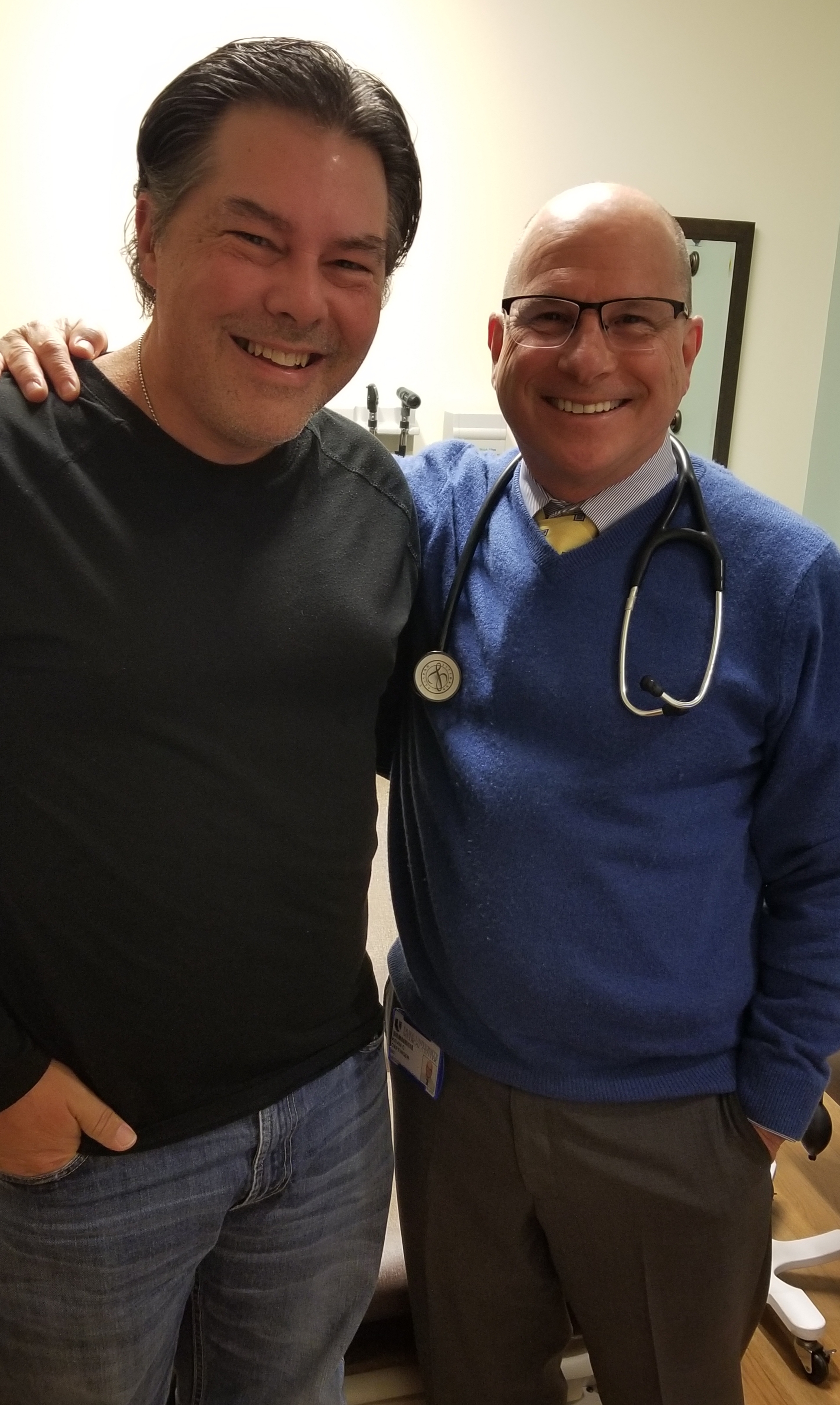
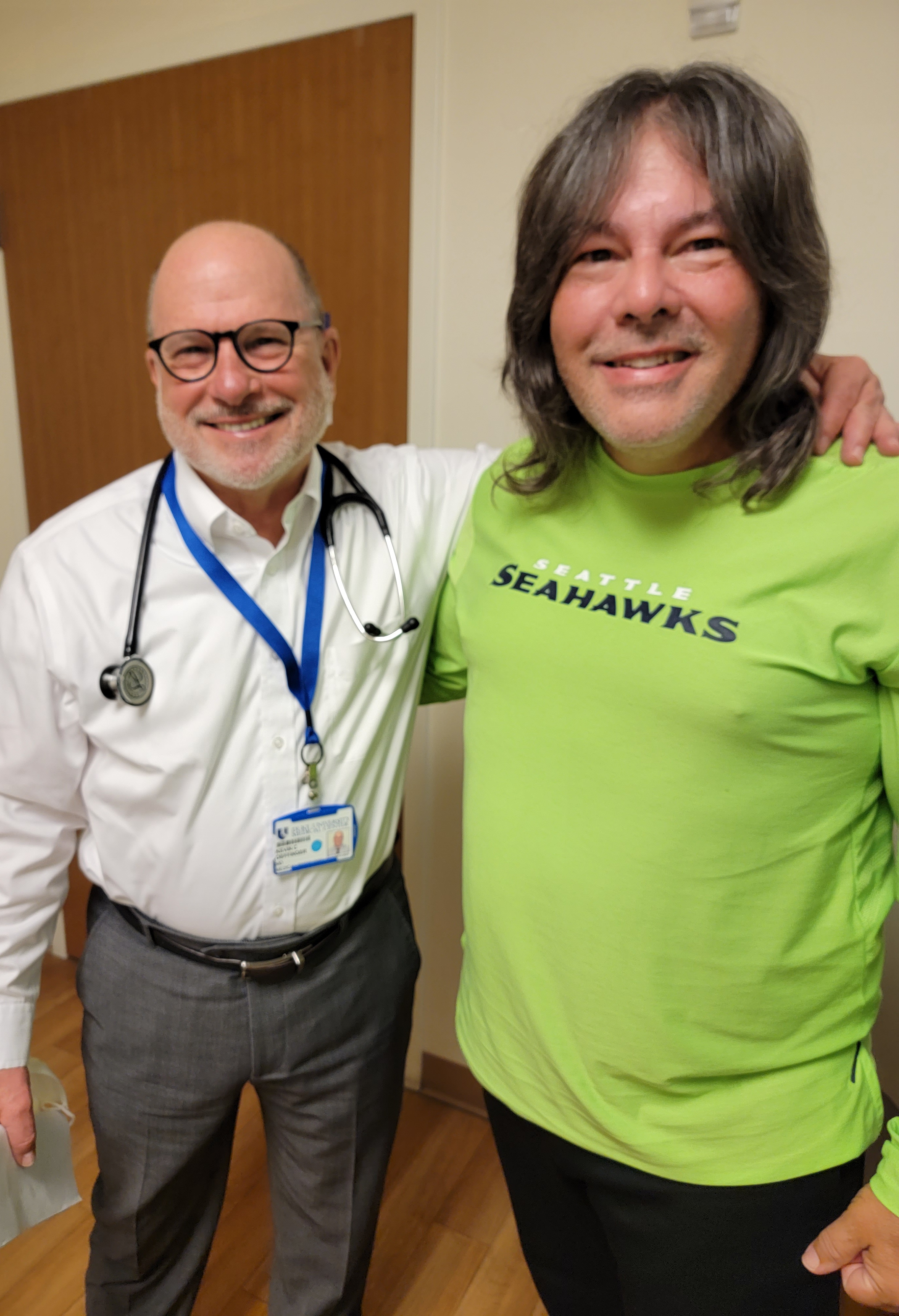
Then there are his countless patients that Dr. Oeffinger has provided “long term survivorship care” for, including myself for over fifteen years of my 35 years survivorship of Hodgkin’s Lymphoma.  I first met Dr. Oeffinger following emergency open heart surgery for a near-fatal “widow maker” level heart blockage, caused by progressive damage from my radiation treatments eighteen years earlier.  My regular doctors had no idea what they were working with, nor did I think what was happening was related to my Hodgkin’s Lymphoma.  His knowledge and experience of late-developing side effects from treatments provides answers to symptoms other doctors who do not understand what they are looking at, explains to them why, shows them how, and then come up with a survivorship plan to deal with those late side effects. 

Dr. Oeffinger once said, “I have received SO MUCH MORE from the Hodgkin’s community than I have given.”  I have no idea how many patients that he has cared for, but I have personally met many of them, as there are many of us who have survived Hodgkin’s Lymphoma for decades now, thirty, forty, fifty years, long enough to develop these late effects, I can safely speak for every patient that Dr. Oeffinger has cared for, without his knowledge, care, and advocacy, we would not have endured all the extra years he has given us.  His care has given us SO MUCH MORE than we could ever give back to him or our survivor community.

Always humble, kind, caring, and unknown to his patients an emotional toll he is likely carrying himself, I am honored to submit Dr. Oeffinger as a blood cancer hero.

And that, was the essay that I submitted, a small snippet, truly not doing justice what Dr. Oeffinger means to me and so many others. I only touched on a few of his credentials. He is literally world famous with his experience when it comes to Hodgkin’s Lymphoma and survivorship. But it is his care and his empathy, and he instills that same skill into all who learn under him from his nurses to his students to his peers.

In 2008, I set out to find a doctor who would not only understand what had happened to me, and was happening to my body, caused by my Hodgkin’s treatments nearly twenty years earlier. It made no sense to me, as I had been “cured” that whole time. Why would the treatments be doing damage to me? Through a peer-to-peer email list serve I participated in, I found Dr. Oeffinger who was working at Memorial Sloan Kettering Cancer Center in Manhattan. While I had other cancer centers closer in proximity, it was Dr. Oeffinger who was always at the front of our discussions and who I wanted to see.

I remember all of my appointments with Dr. Oeffinger. My first appointment was very telling, the level of care I was about to receive. I had removed my shirt, and he began relating to his nurse, his observations. As I listened to him describe my physical shell, as if he were some sort of human x-ray machine, he pointed out all of the muscle loss from my upper torso, damage from the extreme high dose radiation therapy I had undergone in 1989. He would explain a “pencil neck” and drooping appearance with my neck, and muscle loss in my shoulders that resulted in one shoulder hanging lower than the other. He was already aware of the damage to my heart prior to the appointment, but now he was getting an even clearer picture of what he would deal with. He reviewed the chemotherapy regimen I also underwent back in 1989, and then, with his knowledge and experience, he was able to come up with a surveillance or management plan for me.

Now if you notice something about that last sentence, “surveillance or management,” nothing is said about “cure” or as he put it, “we can’t reverse, stop, or undo what is happening to you, but we can do all that we can to slow the process down.” That was sobering. I know in the beginning, I did not comprehend exactly what that meant. I had just gone through an emergency double bypass because of my radiation therapy. I should have been good. I beat my cancer. I survived my heart surgery. On with my life! Right? Riiiigghhht?

Dr. Oeffinger continued, “in a perfect world, I would be able to order a full-body scan, to see everything that your body is dealing with, but as of now, that is not available.” Over the next couple of years, he would refer me to several, and I do mean several specialists who understand the impact of late side effects from the high dose radiation, and highly toxic chemotherapy that was used to treat my Hodgkin’s Lymphoma. Gastrointestinal, cardiology, pulmonary, cardio vascular, physiatry, psychology, endocrinology, and I am sure that I am missing a few, are all systems of my body impacted from my treatments. My body was now being watched for potential new developing cancers (I currently am at risk for esophogeal and lung cancer), as well as other potential events.

One of those such events, was a middle-of-the-night ambulance ride to the ER, with aspiration pneumonia and highly septic, my cancer history a contributing factor. And right at the beginning of the Covid pandemic, I would have to undergo three urgent surgeries, two more heart (a stent and a valve) and a carotid artery, all having reached a point of needing to be fixed. Treating or repairing a long term survivor exposed to the therapies like I was, is not a simple thing to do, with the procedures coming with their own risks themselves, which is what makes it critical, that I deal with doctors who understand my medical history and “why?”

While Dr. Oeffinger did not do those surgeries, he was there with me for each one. And while I cannot speak for his other patients, I would bet anything, he was there for all of them as well. In 2017, he even made a phone call to check up on me, after my area was smashed by Hurricane Irma. Long story short, Dr. Oeffinger truly cares about his patients.

I was told by another fellow survivor that I had no chance of getting to see him, because he was either too busy, not currently taking any patients, or whatever. To be honest, I have no idea what made that first visit happen with Dr. Oeffinger, but it did happen. He gave me this to look forward to, back then a 42-year old father of two daughters who had no idea what was happening to their Father, “it’s my goal, that we get you to watch your daughters grow, graduate, go to college, get married, and some day, make you a grandfather.” And I never looked back in my survivorship care, only forward to every milestone that I have gotten to witness since. I have had many severe health events pop up, and it was the knowledge he shared, that put me in the right direction to get the proper help, and to see another tomorrow. I am sixty percent of the way toward our goals with another huge milestone coming at the end of the year. And that makes Dr. Oeffinger a hero to me.

Another Year, Another September


September is a busy month for raising awareness of certain cancers; blood cancer, ovarian cancer, prostate cancer, thyroid cancer, leukemia and lymphomas – often referred to as “childhood cancer” though clearly strike at any age.

If you have followed this page, followed me even before I began “Paul’s Heart,” I have been involved with the world of cancer over 36 years as a patient, survivor, and advocate. I was diagnosed with Hodgkin’s Lymphoma (actually called Hodgkin’s Disease) back in 1988. I was treated with levels of radation therapy and a chemotherapy cocktail I was not expected to survive, let alone barely tolerate.

Today, I deal with late side effects from both of those treatment regimens that were used to save my life, creating situations almost as fatal as the cancer itself. If you look at the list of “I know”s pictured above, I experience each and every one of them to this day, thirty-six years later. In fact, just today, I learned of a friend who passed from a different cancer, not even a year after diagnosis.

I continue to write, record TikToks and YouTube videos, give speeches, and my most important role as a survivor, advocate and be a voice for others who feel voiceless or without knowledge because it has been the only way for me to give back. My body is so damage from those treatments, I cannot give blood or donate my organs. The only way I can help others is with my experiences. And it is my plan to continue to do so, always with the mentality “if my posts help just one”, though I know my words have reached so many more, until I can do it no more.

I am at the point now, approaching a major milestone, the age of 60 at the end of the year, something I definitely never thought I would see. My survivor’s guilt never takes a break as I say goodbye to one survivor after another, from the same cancer as me, either from the cancer, or the late effects. And even harder for me to deal with, outliving those in my life who have not had to deal with health adversities, something I struggle with constantly.

If I can attribute anything to my longevity, and though they were not yet born when I dealt with my Hodgkin’s, my daughters were there, and have been there, with every health issue from my treatments that I have faced, my inspiration to keep fighting. Yes I know, I cannot control when my body has had enough, as evident by my friends and fellow survivors before me, but there are so many more milestones I want with them, and that definitely drives me.

To my fellow survivors, celebrate this awareness. Any of us who have taken on cancer, knows how hard it was to get through. And for those who are no longer here, you are definitely not forgotten.

Post Navigation