
Paul's Heart

Life As A Dad, And A Survivor

Personal Judas


depeche mode

“Personal Jesus”, one of the great songs of the 1980’s by Depeche Mode.  And that is all it is, a song.  This post is not about a personal Jesus.

personal judas

Now I could have posted a picture of Lady Gaga for my personal Judas reference, but I do not think you would get the picture I am trying to paint.

Judas, is notorious as the disciple to betray Jesus for 30 coins.  Judas wanted, someone gave, and in return, he became one of the original examples of being a traitor.  Throughout history, we have examples of traitors.

Aldrich Ames, the Rosenbergs, Brutus, and one of the most referenced, even using his name to describe a personal “Judas”, Benedict Arnold, all surrendered the loyalties for personal gain, often times regretting what they had done.

But acts of treason do not need to happen on a national or historical level, to do major damage so an individual.  The best of friends and family members can all be torn apart, when the acts and desires of one, are deemed more valuable at the expense of another.  The reasons may differ, greed, knowledge, the claim to wanting to be bi-partisan, but the act is still an ultimate betrayal.

Of course in Christianity, Judas’ betrayal of Jesus led to a major religion having its “savior.”  So for many, what seemed like a bad idea at the time, is a good thing to many today, as it is for this event, that many believe in forgiveness.  In history, like the Rosenbergs and Ames, governmental secrets and accusations of spying could have had disastrous results with major fatalities.  No good could possibly be gotten from that.

But if you are dealing with a personal Judas, the feelings involved are just that, personal.  The traitor is still selfish, acting on only their own behalf, at the expense of another.  The acts continue to build resentment, and often, make the situation worse, and in the end, not at all what the perpetrator had originally intended.  But just as Jesus knew “the plan,” information that others were not privy to, so goes any act of betrayal.  In a selfish quest for personal gain, the result will always be the same, someone else getting hurt, not the perpetrator, and not the person the perpetrator is acting against.  And in the end, there will be no forgiveness.

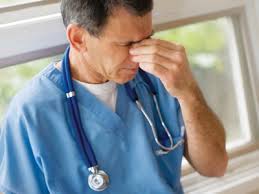
Health Care’s Worst Offense


nurse1 nurse2 nurse3 nurse4

I want to state a couple of things before I get to my post.  I 100% support my primary care doctor, and all of the specialists taking care of all of the late side effects I deal with, from my battle with cancer.  When I reach out to them, they not only hear me, they listen to me, and they take care of me, promptly, and most importantly, correctly.  And there is one reason that my care works.  Because I do not waste their times with issues that are clearly not a medical emergency, AND, when I have a situation, I explain the issues without drama, just facts.  When they are contacted by me, or about me, they know something is definitely wrong.

Next, the nurses that I interact with, are also top notch.  They are the initial contact that I have with my doctors, and are able to determine what needs immediate intervention, and what can be delayed upon first availability of the doctors.  And many times, situations can be dealt simply with just the patient/nurse communication.

Finally, for the most part, the emergency personnel that I have dealt with in hospitals, have done well by me.  I carry enough identification on me, to alert anyone who has to deal with my issues, that I am not an “average” person, but rather there are a lot of unique circumstances about me, that have to be recognized before the first procedure is performed on me.  You will not often hear about the good things that emergency personnel do for patients, often times just the bad.

Emergency personnel have so many personal concerns to deal with about their jobs, long hours, health hazards (especially contagious issues), and even unpredictable behavior of patients.  And to make matters worse, the majority of hospitals and clinics are just simply understaffed and overworked.

But there is absolutely no excuse for me to have read a Facebook post that I read this morning.  A fellow long term survivor posted that she went to the emergency room early Wednesday morning with a high fever and shortness of breath (SOB).  This kind of post gives me flashbacks to the times that I had to deal with septic pneumonia.  In any case, her struggles got only more bizarre, as “specialists” argued about who can do what as far as diagnostics, and then arguing who would be in charge.  The post was more complicated, but just imagine if you will, I imagine it to make less sense that following Dr. Howard, Dr. Fine, and Dr. Howard.  With her past treatment history, an urgency needs to be stressed because of the possibility of congestive heart failure (CHF).  A symptom of “wheezing” seems to restrict the care to being directed to a pulmonologist, but as many of us with long term issues know, CHF can produce the wheezing and shortness of breath.  Bottom line, for those of us who have had issues related to our past cancer history, we know how to argue for our care.  And this is the frustrating part, getting medical personnel to listen to us.  If the personnel have not been taught about us, they need to learn.  And if they are not getting any kind of training post residency, they have no choice but to listen to us, but in many cases they will not.

My last trip to an ER, got the following response.  My wrist pointed to my wallet, which had all of my issues documented, most importantly, the phone number to my doctors at Memorial Sloan Kettering.  I urged the triage nurse to contact MSKCC, and within 10 minutes, my health history as a long term survivor was faxed to the emergency room doctor, and I was treated appropriately.

Three days have gone by now, and the earliest it looks like the writer of the post will see any kind of relief, as far as either talking to a specialist, or testing for CHF may not occur for another three days as it is argued who will take charge.  And the frustration is understandable, as the patient goes to the RN to argue for her care.  But the shocking thing is the response by the nurse, as if the nurse was being bothered by the woman fearing for her life.  Like I said, I know hospitals are understaffed, especially when the majority of the care is left up to the nurses to provide.  And no one appreciates that more than someone who has had his share of hospital stays in recent years.  But there is no excuse whatsoever, to not have empathy for a patient who is scared, literally afraid of dying.

I have known my share of long term survivors who have suddenly lost their lives, with unsuspecting causes, only to be revealed that a raging infection had taken place, unbeknownst to the medical staff.  I know too many long term survivors who have had “routine” procedures done (that a normally healthy person could go through), only to suddenly die from unexpected complications.  But the fact is, cancer survivors who have been exposed to the extreme toxicities of chemotherapy and radiation, we know when our bodies do not feel right.  We know when something is going wrong.  And we will do our best to help any medical person to diagnose us, and save us.

But you have to start listening to us.

Pandora’s Box Of Cancer Survivorship


Pandoras box

As a long term survivor of cancer, Hodgkin’s Lymphoma, of over 25 years, my emotions of survivorship have run full circles, sometimes, many laps.  I have dealt with guilt, fear, being overwhelmed, but most of all, appreciation.

In just the last seven years alone, I have undergone over a hundred tests meant to “screen”, prevent, or discover any developing side effects as a result of the extreme treatments that I was exposed to many years ago.  Fortunately, most patients today are not exposed to the level of toxicity or radiation that I and so many others have been.

But while it may sound all “doom and gloom” to hear a survivor like me, talk about many health issues, there is an actual benefit for me, that most non-cancer patients do not have the luxury of.  I am going to call it the “oopsy”.

Because the average healthy person rarely sees a doctor, and why would you, many ailments are not revealed until the progression is so great, that physical symptoms mean you are dealing with something quite severe.  Just as effective however as cancer screening for prostate, colon, and breast cancers to catch the diseases in the earliest possible stage of diagnosis, the level of surveillance that I undergo is pretty much assured to catch anything early for me, as well as following the progression of issues currently diagnosed.

For instance, it was discovered following my open heart surgery, that I had valve issues, related to radiation damage, and will one day need to be addressed.  But the surveillance for that is simply to follow the progression, until the time comes that it is determined they need to be replaced.  In other words, in spite of knowing the damage now, the risk of surgery to correct the valves now is riskier than the eventual event if it were to occur.  So, every year, I go through an echocardiogram and chest CT scan.

Though it has not happened yet, let’s just hypothesize, something totally unrelated to my valve issue is discovered on my CT scan, like say for example, a blood clot.  If I were not being followed up, the diagnosis would never happen because I would otherwise have no reason to have the CT scan that picked up the issue.

While I of course would be relieved that my valve progression was not severe enough to require corrective action, I would also have to be glad that something had the chance to be caught and dealt with early.  For many, this could be a matter of life and death.

As I mentioned earlier, I could actually live my life all doom and gloom, consumed by all the health issues I deal with every day.  But over 25 years, I have learned to balance my concerns, my emotions, my fears.  And I have learned to trust in myself, that I can get through each event as it comes up.  No, they will not be pleasant, but they can be overcome.

I do not go to my appointments thinking, “okay, what will they find this time” or “how bad has my body gone.”  But having had “Pandora’s Box” of my health opened, what I have learned about my body, as well as how to handle the things I face, has been a good thing.  I would rather have a doctor discover something new while reviewing something I was already dealing with.  Because otherwise, I might just be describing something that did not make sense to a doctor, and they would not have known where to look.

Post Navigation