
Paul's Heart

Life As A Dad, And A Survivor

Too Candid Of A Camera?
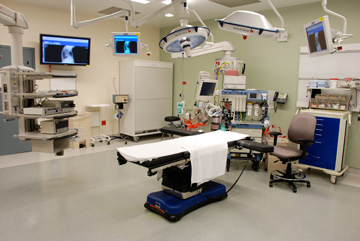

SurgicalSuite

You want to talk about tearing a wall down.

It was discussed on many news networks of a patient being awarded $500,000 because of a recording of the medical personnel involved in his care revealed that they were less than flattering about himself and the procedure he was undergoing.  To be honest, I am shaking my head at this one.  In fact, I am not really sure where to start.  So, I guess I will just give the summary.

The patient, who is never identified in the lawsuit, decided to use his smartphone to record post-op conversations for his release and any other needs.  What he got, quite honestly was more than his colon could take.

Anyone, myself included, who has ever had to undergo a colonoscopy, or any procedure that requires sedation or deeper anesthesia, expects there to be some cognitive issues, whether it be thinking or memory, as you come out of the fog.  And that is why it is normally required that you have some sort of guardian, a responsible party, to sign your release following the procedure.  Normally, that person is a family member, because if there is any “positive” news (the kind of thing that is actually negative to hear), that person is also there for support.  But when that option is not available, you have simply an “acquaintance”, who simply gets notified that you have recovered well enough to be released to someone who is not three sheets to the wind recovering from “la la land.”

Many times, it happens that the doctor will come by to the recovery area, and even though the patient is awake, will begin to discuss the preliminary results or finding even though the likelihood is that the patient will have no recollection.  So what is a patient to do?

Well, one patient had the idea to use his smartphone to record the conversation in just such a case.  In many cases, the patient actually puts their belongings inside of a plastic bag, which will actually accompany the patient to the procedural room.  But instead of hitting the record button during recovery, the patient actually hit “record” prior to heading for the colonoscopy.

We have all seen the television shows from M*A*S*H to ER, Emergency to Grey’s Anatomy.  We all expect there to be conversation inside of the surgery suite.  Topics ranged from entertainment to social status, to perhaps even actual conversation about the procedure itself.  I remember going in for my heart surgery, and the surgeon was actually listening to hard rock music before I was even anesthetized.

Intentional or not, this patient received more than an earful, for pressing “record” before he was expecting to.  Of course for that, he is $500,000 richer, and I am certain that those of us who regularly have procedures that we are anesthetized for, will be under scrutiny, and now having to answer to the question (have your turned your cell phone off) prior to the procedure.

Though my feelings are mixed about this lawsuit, my feelings are mixed about the situation itself.

It turns out the patient was actually humiliated verbally by the anesthesiologist and other personnel, prior to, and during the actual procedure.  The anesthesiologist expressed annoyance with the patient during sedation, enough to harass the sedated patient by saying to the sedated patient that he wanted to punch the patient in the face for the discussion during pre-op.  Comments were made about the way the patient had fears about the procedure, and then of course countless inappropriate insults.  Of course this behavior did not belong in this situation.  And had the patient not recorded the procedure, he… we would have been none the wiser.

I am sure that an incident like this does not happen often.  But seriously, as a patient myself, who has to plead, for the benefit of the person who has to try and put an IV into my chemotherapy destroyed veins, I do not expect to be ridiculed for being a baby for getting stressed out after the 7th or 8th attempt of getting the needle into my vein.  Or perhaps for making sure that doctors and nurses respect my knowledge of the delicate issues that revolve around my cancer survivorship, my life depends on it.  Because of my complicated immune system, if preventative antibiotics are not considered, my risk of not surviving even the most routine of a procedure are high.  There are certain things that can never be done to me because of chemo and radiation damage such as giving me pure oxygen.  I would be mortified knowing that my reward for trying to make sure that those involved in my care, took all the steps necessary, was to end up being mocked.

Should this incident have happened?  Absolutely not.  In fact, I even question the smartphone recording prior to the procedure.  After all, nearly everyone these days of Youtube and Instagram want 15 minutes of fame.  Was it worthy of a $500,000 award?  No.  Should those involved have been punished?  Absolutely.

Will it affect me, my confidence, as my annual testing for my long term cancer survivor issues will be coming around shortly?  I want to say not.  In fact, I cannot afford to think otherwise.  I have a lot of serious issues.  I need to have the confidence in my team that is treating me.  But if I am being honest, it will be at least a blip on my radar.

A Survivor – A Living Metaphor


Screenshot_2015-10-18-21-15-27

I think it is safe to say, no one, who has ever had to battle cancer, wants to have their life defined by cancer.  But the reality is, and doctors need to be more up front about this, cancer will always  be a part of our lives when it does happen.  But it is how you live your life in spite of cancer that makes the difference.

Sure, initially I spent my early days of remission worrying daily about the return of my Hodgkin’s Lymphoma.  And as time went by, the worrying faded.  Days became weeks, weeks became months, and then years.  But the fear of recurrence faded as the time went on.  Unfortunately, like many others who are in their decades of survivorship, we have had to face quite a bit more challenges in our survival, due to the late developing side effects from the highly toxic and destructive dosages of radiation and chemotherapies.

And with everything I have had to deal with health wise, I still do not live in the fear of my cancer, or its effects.  Quite the contrary.  I take what I have learned in my survival, and apply those lessons to anything negative or challenging in real life.

The Diagnosis

We are given the bad news, the challenge that we must face.  It is going to be difficult.  Statistics will not likely be on our side.  But from the moment we face the “cancer”, we must do all we can to not let that “cancer” beat us.  And I am not talking in the physical sense of loss, but the spiritual.  We cannot let any “cancer” take away who we really are.

The Prognosis

So, is it going to beat you?  Or are you going to do everything you can to get through it?  You know it will not be easy.  As the saying goes, “quitters never win, and winners never lose.”

The Team

Surround yourself with experts that know how to help you get through the ordeal.  Accept support from those that care.  Ignore those who think only negative or that it cannot be done.

1455434442621

The Treatment Plan

The next days, weeks, months, and in many cases, years may not be easy.  You may have a good day, and the next two or three days may be horrible.  This cycle will go back and forth the entire duration.  But as you get through the bad times, you not only become tougher, but you realize that you actually can endure.  You start to look to the future as a realistic goal.  Survivorship is at hand.

The Fight Concludes

It is done.  You have made it.  It was not easy.  There may have been times that you felt like giving up.  But it was not in you.  The truth is, it never has been in you.  And once you have the taste of what it takes to survive one fight, you know that you have what it takes to survive the next one, and the next one.  And every day, you know that what you are fighting for is worth it.

1459800853696


An Unexpected Face Of Sepsis


Patty 1

Many people my age grew up watching a lot of black and white television sitcoms.  And for many puberty stricken boys, some of our first hints at hormonal activity came courtesy of “Patty”, or “Cathy” depending on which twin she was playing on “The Patty Duke Show.”  Of course my preference was the more fun, “Patty.”  Later on in life, she would marry another television icon, “Gomez Addams”, actor John Astin.

Patty 2

Most of today’s youth know Patty’s son, Sean who has had many movie roles, including “Mommy’s Night Out”.

Patty 3

While Patty Duke always remained involved in acting her whole career, and at one point became Screen Actor Guild president, her most important role came as an advocate for mental health.  In 1982 she was diagnosed with being bipolar.  It was ironic because of her role as twins, she played both parts, and quite differently.  In hindsight, people involved with the show were always curious how the two “sisters” seemed to be so different.

Patty Duke passed away this week from a complication of a medical emergency.  The complication is relatively unknown to the majority of the public, yet it is probably more common than even a heart attack.  It was reported that she had died from a ruptured intestine, but it was the fatal condition, called sepsis that took her life.

What is sepsis?  Taken from the website Sepsis.org, “Sepsis is the body’s overwhelming and life-threatening response to infection which can lead to tissue damage, organ failure, and death.”  It is a chemical reaction within the body.  Your body basically poisons itself.  And it is so quick, that without immediate treatment of antibiotics, death can occur within hours of diagnosis.  Sepsis is taken from the Greek word “decay”.  This is no joke.  And unfortunately for so many patients, we are unaware when we develop this condition.  Worse yet, all too often, the condition is not looked for, until the situation is too late.  It is believed that many deaths, while attributed to other causes, may actually have been caused by sepsis.

Once sepsis occurs, the pathogens simply attack the body, the blood, organs until it is too late.

I know that up until the late 1990’s, I had never heard of sepsis until one of my fellow long term cancer survivors had informed me that she had recently had a bout, having gone as far as septic shock.  But even at that point, it was not a regular occurrence for me to hear, until my first case of pneumonia in 2012, a doozy of a case, that left me fighting for my life with sepsis levels indicating I was in danger of losing my life.  Initial blood tests revealed that my lactic acid levels were so high, I was dealing with sepsis as much as 24-48 hours earlier than when my body finally had enough.

Seriously, I had no cold or bronchitis issue.  No allergies or anything pulmonary.  Yet when I went to bed that evening at 11am, I felt completely fine, in spite of sepsis raging inside of my body.  Five hours later, I woke up violently vomiting, my body in extreme pain.  The only thing I remember about that moment, was being wheeled on an ambulance gurney in front of my then 5 and 3 year old daughters.  Still at that point, the paramedics, nor the emergency staff waiting at the ER had any idea what was coming.

I was heading into septic shock.

Of course, clearly I survived.  But this is a fear that I have and live with every day.  I never saw my case coming.  And the fact that my immune system is compromised from being asplenic, and having had my body challenged by chemo and radiation therapies, the odds are solid that I will face it again.

But there was no reason, as is many the case, of someone being treated for one obvious issue, that sepsis could be a contributing factor, and until recently as one of my survivor friends, who is a nurse pointed out, is finally getting the attention of medical personnel when patients come into the ER.

Yes, I had barely heard of sepsis.  And on my Facebook page, when I posted Duke’s death, attributed to sepsis, more than a dozen had related personal life stories affected by sepsis.

Patty Duke was an advocate for those with mental illness such as bi-polar conditions.  In her death, she now can be an advocate, much like Jim Henson of The Muppets fame when he passed away from pneumonia due to immunity issues, in bringing awareness to the frequency and dangers of dealing with sepsis.

As a friend of mine who is a paramedic once told me back in 2012, more people die of sepsis than what is actually realized.  It is up to us to be our own advocate.  Recognize at least these possible symptoms as pictured below, provided by Sepsis.org.

sepsis

Post Navigation