This photo of me with my grandmother comes from 1989, both of us cancer survivors at the time, she from breast cancer, me from Hodgkin’s Lymphoma. I had just completed six weeks of radiation therapy. My grandmother had been diagnosed in the Fall of 1985. Having undergone a double mastectomy, she joked with me, “I will be able to wear your shirts now.”
It was her bravery, her outlook, her stoicism that served as my first ever example of someone having faced cancer, and survived. Up until this point, all I ever knew about cancer was “everybody died” from it, a statement I would soon learn could be no further from the truth. Because of the way my grandmother handled her cancer fight, I cannot really go into details, as she did not discuss them, her way of protecting me from all of that “bad stuff”, yet at the same time denying me the ability to truly understand what she was going through.
It was her success in beating breast cancer that put me on the path to selecting my oncolgogist when I was diagnosed with Hodgkin’s in 1988 at the age of 22. My grandmother, small but mighty at a height of 4’11”, I considered one of the strongest people I knew. And if she could get through her cancer, so would I.
My experience was a bit more physically traumatic as far as surgeries go, and the toxicity of my treatments, unbeknownst to me, really posed the risk of killing me, instead of the cancer doing it. Mirroring her stamina and determination, I got through the next year and a half.
Our paths would take different turns a few years later, as she would pass at the age of 83 from her second battle with cancer, this time ovarian. I was crushed not by the fact that her not living forever after cancer did not happen and what that meant to me, but I lost one of the most influencial people in my life. Ten years later, I would begin a new chapter with my Hodgkin’s Lymphoma, not with a recurrence, but late side effects that would develop, caused by my treatments. But that is another post.
As I said, I am not very knowledgable when it comes to breast cancer. Sure, I know there are many types of breast cancers, staging, and a variety of treatment options, all similar to my experience with Hodgkin’s. And from what research I have done over the years, there is a similiarity to Hodgkin’s in that I saw that same “five year average” survival for breast cancer as we have for Hodgkin’s. Survival rates for both cancers do have one of the higher rates above 90% depending on the type and staging.
In fairness, my knowledge is still limited when it comes to breast cancer, though there are many in my personal circle who have been diagnosed, all with different situations, all with different treatment options. Regardless of their paths, all remain hopeful and positive in their battles.
Where my personal involvement comes in with breast cancer, is twofold, and actually has an impact on others as well. For anyone who has undergone “upper mantle” (the chest area) radiation therapy, there is an increased risk of developing breast cancer, even if a male, though it is not as common as females, it can happen, and self-screening is always recommended.
The second thing, and very important, because as Hodgkin’s survivors are all too aware of, the drug Adriamycin (also known as doxorubicin), is an anthracycline drug that damages cells to prevent them from growing and multiplying. This is good for destroying cancer cells, but bad for healthy normal cells. This drug is also notorious for being referred to as the “red devil,” noted for its color and the one truly evil and potential side effect, heart damage. And the bad thing is, despite the technology being available, and I know this personally as I have researched it and wrote about it here, to discover this damage before it becomes a problem. The bad thing is, it does not get used because it is “not cost effective.” So unless you complain about the symptoms, which by then the damage is likely quite bad already, you will never know until it is too late. A simple 2D echocardiogram after treatments can determine if any damage has begun, and if so, change treatment course before too late. But you need to advocate for yourself and demand this echo to be done. It will not be volunteered to you.
Here is the link to the interview I did with researcher Bill Shirkey to back this up:
Of course, I recommend reading the other three parts to that story for the full context and what it means to me and others.
Last month for me was personal about Hodgkin’s Lymphoma awareness. This month for breast cancer, it is also personal. And next month will be no different when it comes to lung cancer. More on that one later.
Playing the game “one of these is not like the other,” assuming you know the definition of the word “phobia”, meaning fear, all four words are in fact fear related. And I can admit, with no shame, that these are four fears that I do have. I actually have others, but these are my worst, because I am constantly confronted by them.
The first, arachnaphobia, you probably do recognize as a fear of spiders. HATE THEM! Ophidiophobia, is the fear of snakes. I am constantly crossing paths them living in the south. Acrophobia is a fear that I did not have through most of my life, until a couple of decades ago, the fear of heights. And this particular fear, I do not blame on myself, but was rather inflicted upon me. Driving through the Sierra Mountains in California, enjoying the beautiful views, my arm was suddenly grabbed tightly by a passenger followed by the loudest gasp I had ever heard, as if in a horror movie. When I asked what was wrong, my friend in her best “Shaggy from Scooby Doo” voice stuttered and pointed out, the straight drop down from the road, likely thousands of feet, and most noticably, no guardrail other than a six inch rim along the road. Until that moment, it was pure beauty, but to this day, heights are pure hell for me. This ruined me with roller coasters, ladders, even high rise buildings when I am secured by glass.
But the final term, especially given my medical history, is often a surprise to many when they hear this about me. I will go one step further, this fear for me is quite irrrational. As it could be the difference between life and death. Trypanophobia is the fear of needles. I am not talking about sewing or knitting needles, pine needles, actual medical syringes.
Between my Hodgkin’s Lymphoma days, and the last seventeen years of my survivorship esepcially, I have seen my share of needles from vaccines, to blood draws, chemotherapy, IV’s and worse. And while I have dealt with all of those, there is one thing I will not do, inject or poke myself. As a Type 2 diabetic, in a battle of wills, I am constantly being encouraged to do multiple daily sugar counts, by way of a quick finger stick (using a lancing device with a triggered needle causing the blood letting).
Here comes the irrational part. I have no problem if a nurse or tech does it to me. It is over as quickly as it is started. There is no hesitation on their part, they know their job and they are good at it. And honestly of all needle injections I face, if I have to have one done, it would be the finger stick. Ironically, techs and nurses find this thought odd. But with me, not only am I squeamish (in spite of all the surgeries I have been through), and I know I can handle the actual lancing, my hesitation with doing it myself is a deal breaker. Like I said, I have had finger sticks hundreds of times over the years, but never done them on myself. And I am not about to start, irrational as I know what my doctors are trying to accomplish, but this fear is that strong.
So, naive me, is now getting all these ads on my social pages for “glucose monitoring” devices, you know, the little button “thingys” stuck on peoples’ arms. Since I am 100% against finger sticking myself, sticking this monitor device on my arm seemed like a good option, after all, all you do is stick it to your arm, right? I have seen plenty of people walking around with these things. Unfortunately, these devices are quite expensive. So that became a deterrant for me. But my endocrinologist, undeterred, recommended a system of glucose monitoring, likely the lowest rung when it comes to reliability and accuracy, but affordable. I thought to myself, she is not giving up on me with this, regardless of my hesitation and insistance. The cost was definitely affordable to me, so there could be no excuse.
I received a small box, with two “sensors”, but it felt heavier than I felt two little discs should weigh. When I opened the box, I did not see sensors, but rather two containers approximately and inch and a half tall by an inch and a half in diameter. At first I thought they sent me the wrong thing. I don’t know why, but I decided to fast-forward, and went to YouTube to see how complicated putting this “sensor” on my arm should be, other than peeling off a cover for the “adhesive” to be exposed.
Cue the screaching tires coming to an immediate halt!
The YouTube tutorial explained that a needle from the container/sensor, would implant itself into the back of my arm. This was definitely not what I thought it was going to be. And this was going to be a problem, a deal breaker, once again, over a needle. The package has been sitting on my kitchen counter ever since.
It is clear that there has to have been some sort of trauma in my life that has caused this fear of needles, trypanophobia. The obvious fact pointed at me constantly, “Paul, you went through chemo! You’ve had so many surgeries!” And while that is true, having blood drawn or an IV being put into my arm is stressful for me, because my chemo-ravaged veins usually result in multiple attempts each time (we did not have ports back in 1988). I am good for one, maybe two attempts before I put the person sticking me on notice.
Okay, so if the solution is the lancer, why won’t I use it? And that is where I am stuck at this moment. Whatever this trauma is, I will not do it to myself. I have friends who are diabetics, and many friends who are survivors like me, all monitor their blood sugar as recommended by their doctors. Whether I “can’t” or “won’t”, it is not happening. I have several doctors trying to help me deal with this. I am so appreciative of all the outreach from my fellow survivors trying to offer tips. But as my one friend and fellow survivor found out, if she thought my aversion to vegetables was bad, this issue is a hundred times worse. And I am admitting that it makes no sense. And that is where I am as I write this.
So in the meantime, once again, I have restricted my diet to minimal sugar intake, no salt, low cholesterol, which I know will produce the results that the doctors are looking for, along with the medications that I currently take. And then, I will gently ease back into my regular eating habits which really are not that bad, and not far from what I am currently doing. I don’t smoke. I don’t do drugs. And I may have one or two beers a year. My picky diet (hardly any fruits and vegetables) is my only vice. I do not eat a lot of sweets, I do not even crave them. It was simply a time period with unusual circumstances that led to a lengthy term of bad eating habits that set of the alarms with my doctors.
Of course, with all that my body has gone through over the last seventeen years, and my cancer survivorship, my diet will not be the cause of my demise.
I write for a variety of resources and opportunities besides here on “Paul’s Heart.” Some make it to publication, and some do not. Regardless, if published or not, as soon as the decision has been made by the entity, I publish my work here on this page. This particular piece I wrote, was for a submission on “blood cancer heroes.” With September being “Blood Cancer Awareness” month, as well as “Hodgkin’s Lymphoma Awareness” month, I decided it was time to recognize a very important hero in the world of blood cancer, in particular, survivors. I try not to be cynical, but as time goes on, it is as hard today as it has been for decades, to give survivorship of cancer, as much of a spotlight, any spotlight, as the battle itself. My essay was on the role of one particular doctor, committed to finding answers and determining care needs for survivors of Hodgkin’s Lymphoma, something medicine really never paid attention to, because cancer survivors are not given anything other than a five year average of survival. If you have followed my page for any length of time, you know that many of us live much longer than that. And we do need help, which is where Dr. Oeffinger comes in. If anyone deserves to be recognized as a “blood cancer hero,” it should be him. The first part of this post will be the article I wrote, as it was submitted. The second part, will be “our” story. Alas, my essay was not chosen for that publication. Nonetheless, his story deserves to be told. So here, as was originally submitted, is…
Dr. Oeffinger – Hero Of The Long Term Blood Cancer Survivors
Dr. Kevin Oeffinger, MD has been involved in survivorship care of Hodgkin’s Lymphoma for over three decades from his beginning at the University of Texas, to his tenure heading Memorial Sloan Kettering Cancer Center’s LTFU (Long Term Follow Up) adult survivorship clinic, to his positions currently held at Duke University; Professor in the Department of Medicine, member of the Duke Cancer Institute, founding director of the DCI Center for Onco-Primary Care, and the DCI Supportive Care and Survivorship Center. Dr. Oeffinger also has membership involvement with ASCO (American Society of Clinical Oncology), the American Cancer Society, and the American Academy of Family Physicians. He is also an editor for the Journal of the National Cancer Institute.
Dr. Oeffinger has published and co-published countless medical journals in regard to late-developing side effects from cancer treatments promoting personalized health care between cancer specialists and primary care physicians. He travels around the nation and the world educating medical professionals on long term follow up care so that the next generation of doctors, nurses, and technicians are prepared for the growing number of survivors living long after their cancer battles have ended.
Then there are his countless patients that Dr. Oeffinger has provided “long term survivorship care” for, including myself for over fifteen years of my 35 years survivorship of Hodgkin’s Lymphoma. I first met Dr. Oeffinger following emergency open heart surgery for a near-fatal “widow maker” level heart blockage, caused by progressive damage from my radiation treatments eighteen years earlier. My regular doctors had no idea what they were working with, nor did I think what was happening was related to my Hodgkin’s Lymphoma. His knowledge and experience of late-developing side effects from treatments provides answers to symptoms other doctors who do not understand what they are looking at, explains to them why, shows them how, and then come up with a survivorship plan to deal with those late side effects.
Dr. Oeffinger once said, “I have received SO MUCH MORE from the Hodgkin’s community than I have given.” I have no idea how many patients that he has cared for, but I have personally met many of them, as there are many of us who have survived Hodgkin’s Lymphoma for decades now, thirty, forty, fifty years, long enough to develop these late effects, I can safely speak for every patient that Dr. Oeffinger has cared for, without his knowledge, care, and advocacy, we would not have endured all the extra years he has given us. His care has given us SO MUCH MORE than we could ever give back to him or our survivor community.
Always humble, kind, caring, and unknown to his patients an emotional toll he is likely carrying himself, I am honored to submit Dr. Oeffinger as a blood cancer hero.
And that, was the essay that I submitted, a small snippet, truly not doing justice what Dr. Oeffinger means to me and so many others. I only touched on a few of his credentials. He is literally world famous with his experience when it comes to Hodgkin’s Lymphoma and survivorship. But it is his care and his empathy, and he instills that same skill into all who learn under him from his nurses to his students to his peers.
In 2008, I set out to find a doctor who would not only understand what had happened to me, and was happening to my body, caused by my Hodgkin’s treatments nearly twenty years earlier. It made no sense to me, as I had been “cured” that whole time. Why would the treatments be doing damage to me? Through a peer-to-peer email list serve I participated in, I found Dr. Oeffinger who was working at Memorial Sloan Kettering Cancer Center in Manhattan. While I had other cancer centers closer in proximity, it was Dr. Oeffinger who was always at the front of our discussions and who I wanted to see.
I remember all of my appointments with Dr. Oeffinger. My first appointment was very telling, the level of care I was about to receive. I had removed my shirt, and he began relating to his nurse, his observations. As I listened to him describe my physical shell, as if he were some sort of human x-ray machine, he pointed out all of the muscle loss from my upper torso, damage from the extreme high dose radiation therapy I had undergone in 1989. He would explain a “pencil neck” and drooping appearance with my neck, and muscle loss in my shoulders that resulted in one shoulder hanging lower than the other. He was already aware of the damage to my heart prior to the appointment, but now he was getting an even clearer picture of what he would deal with. He reviewed the chemotherapy regimen I also underwent back in 1989, and then, with his knowledge and experience, he was able to come up with a surveillance or management plan for me.
Now if you notice something about that last sentence, “surveillance or management,” nothing is said about “cure” or as he put it, “we can’t reverse, stop, or undo what is happening to you, but we can do all that we can to slow the process down.” That was sobering. I know in the beginning, I did not comprehend exactly what that meant. I had just gone through an emergency double bypass because of my radiation therapy. I should have been good. I beat my cancer. I survived my heart surgery. On with my life! Right? Riiiigghhht?
Dr. Oeffinger continued, “in a perfect world, I would be able to order a full-body scan, to see everything that your body is dealing with, but as of now, that is not available.” Over the next couple of years, he would refer me to several, and I do mean several specialists who understand the impact of late side effects from the high dose radiation, and highly toxic chemotherapy that was used to treat my Hodgkin’s Lymphoma. Gastrointestinal, cardiology, pulmonary, cardio vascular, physiatry, psychology, endocrinology, and I am sure that I am missing a few, are all systems of my body impacted from my treatments. My body was now being watched for potential new developing cancers (I currently am at risk for esophogeal and lung cancer), as well as other potential events.
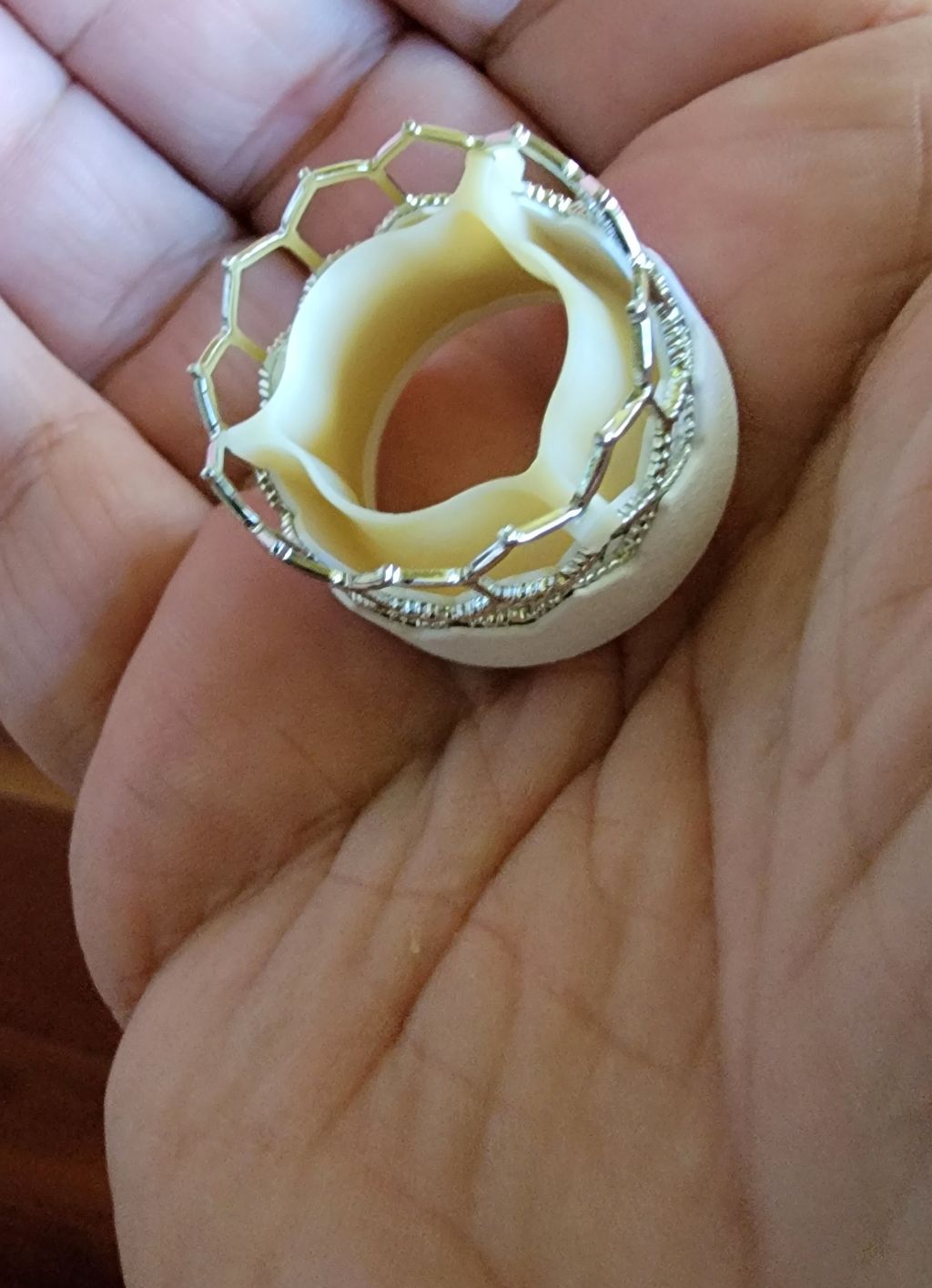
One of those such events, was a middle-of-the-night ambulance ride to the ER, with aspiration pneumonia and highly septic, my cancer history a contributing factor. And right at the beginning of the Covid pandemic, I would have to undergo three urgent surgeries, two more heart (a stent and a valve) and a carotid artery, all having reached a point of needing to be fixed. Treating or repairing a long term survivor exposed to the therapies like I was, is not a simple thing to do, with the procedures coming with their own risks themselves, which is what makes it critical, that I deal with doctors who understand my medical history and “why?”
While Dr. Oeffinger did not do those surgeries, he was there with me for each one. And while I cannot speak for his other patients, I would bet anything, he was there for all of them as well. In 2017, he even made a phone call to check up on me, after my area was smashed by Hurricane Irma. Long story short, Dr. Oeffinger truly cares about his patients.
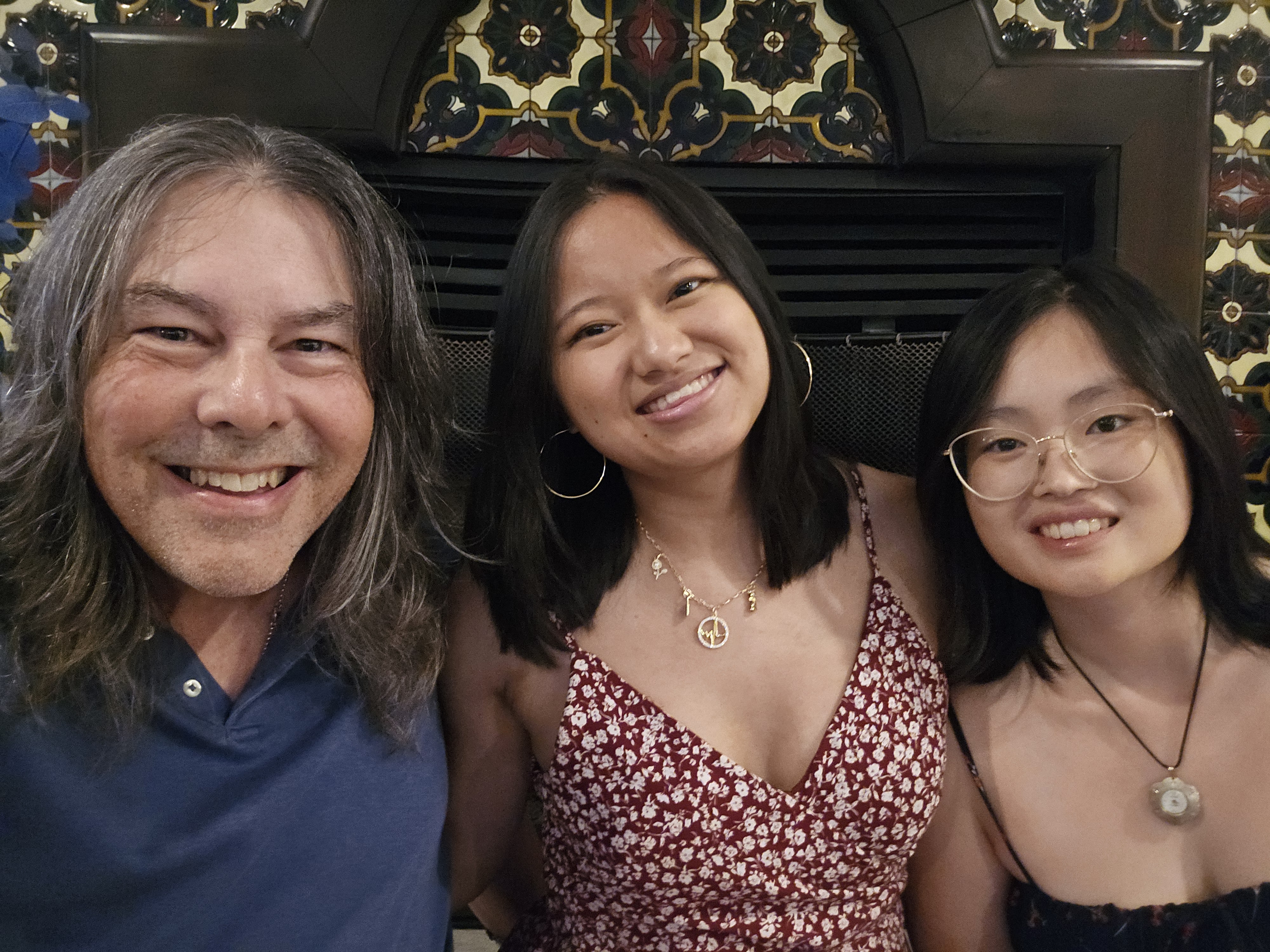
I was told by another fellow survivor that I had no chance of getting to see him, because he was either too busy, not currently taking any patients, or whatever. To be honest, I have no idea what made that first visit happen with Dr. Oeffinger, but it did happen. He gave me this to look forward to, back then a 42-year old father of two daughters who had no idea what was happening to their Father, “it’s my goal, that we get you to watch your daughters grow, graduate, go to college, get married, and some day, make you a grandfather.” And I never looked back in my survivorship care, only forward to every milestone that I have gotten to witness since. I have had many severe health events pop up, and it was the knowledge he shared, that put me in the right direction to get the proper help, and to see another tomorrow. I am sixty percent of the way toward our goals with another huge milestone coming at the end of the year. And that makes Dr. Oeffinger a hero to me.
American Cancer On-Line Resources
Internet support from peers, caregivers, survivors, and professionals in several hundred types of cancers and related issues
American Cancer On-Line Resources
Internet support from peers, caregivers, survivors, and professionals in several hundred types of cancers and related issues
Radiation Exposure
Information about radiation exposure, limits, and risks