Paul's Heart

Life As A Dad, And A Survivor

The Observation


Something strange has been happening with me this year.  I do not know why just this year.  I am not doing anything differently than I have for fifty-three years.  It is not something I publicly talk about, unlike other topics about myself.  And if it only happened one time, I would probably just think it was a coincidence.  But since February, it has now happened four times.

Around President’s weekend, I had been visiting with a friend with my daughters.  We were inside a small shop when a complete stranger came up to me.

Stranger:  Excuse me.  But are you Native American?

Yep.  Not even a “hello”, just jumped right into it.  Now a little known secret up until now, yes I am, or at least partially.  But the question caught me off guard.  I do not really discuss my heritage with anyone, just my daughters, who happen to be Asian.  So I have the discussion with them to teach them the importance of knowing your culture.  I believe the conversation came up once when I was in elementary school, and of course the kids in school relentlessly mocked me, which became why I never discussed it publicly again.

Stranger:  I didn’t mean to offend you.  I was just curious.  I study indigenous cultures.  And I just noticed your strong features.  Do you know if you are of Native American background?

Me:  Yes I am.  (I intentionally gave a short answer, being totally weirded out).

Stranger:  By any chance, are you of Cherokee background?

Now I was totally baffled.  My great grandmother was Cherokee.  I have known this my whole life.  I have just never publicly acknowledged it, or made any kind of issue out of it.  As far as anyone was concerned, I identified as a Caucasian.  Sure, my skin color is slightly darker.  But if I am being honest, I really never saw any particular characteristics that would point out a Native American background.

Well, at least until I started growing my hair back out again.  For a long time, I kept it very short.  The last time I kept my hair long, no one ever mentioned or inquired about my background.  But I suppose I can see some Native American in my photos.

So, more of a curiosity, how did my great grandfather meet, get involved with, and marry a Cherokee Indian woman?  I am not well versed on racism, other than the blatant examples we see on the news every day, but I do know in the late 1800’s and early 1900’s, racism still existed.

First, you need to understand the history of the Cherokee woman.  Cherokee women were considered equal to Cherokee men in all aspects of life.  Something that American women of today still do not have that right.  Financially, spiritually, sexually, Cherokee women were respected as equals to men.  Crimes against Cherokee women by Cherokee men were rare, especially rape.  Family ancestry actually was guided by the women.  Because of land owned by the Cherokee, it was profitable for white men to marry Cherokee women, as it was the Cherokee women who owned and were in charge of the land in most cases.  I have only recently begun to study more of the interesting history.

I am enjoying the research I have now given myself to do.  And out of the four people who approached me, I have an uneasy feeling that three out of the four had other issues other than genuine curiosity about me, with the fourth actually stating she had an educational background.  It is a fact that bigotry and racism are escalating again, and I would like to hope, that I was not experiencing it because of my background.  As I mentioned to a classmate of mine, still friends after all these years, “you finding out that I have a Native American background does not affect or change how you know me, does it?”  The obvious answer was, “of course not.”

Preparation For Chemo – Part 2


So the first pre-chemo testing I underwent was for my future life after cancer.  The next set of testing was to determine my body’s ability to tolerate two particular drugs in the chemo cocktail.  Newbies will likely recognize the drugs, Bleomyacin, and the other, Adriamyacin.  I would be given seven total drugs, four at one appointment, the other three the following week.  Both of these two particular drugs would be administered in the second week of the cycle.  Blood tests would be done weekly for the duration of my treatment schedule, eight months, or “cycles” in the cancer world.  Any delay makes it longer than the months, so that is why “cycle” is used.

As far as the drugs and what they do, what they cause and such, that will be in an upcoming post very shortly.  But in preparation for the chemo, what you have read here, is basically all the knowledge that I had at the time.  All that was explained to me, was that the two drugs mentioned above were known to potentially cause issues to the body.  Adriamyacin could have an impact on the heart, and Bleomyacin could affect the lungs.

Now here is where progress has changed from 1989.  In 1989, the tests that would be administered to me, would be for the purpose of seeing if my heart and my lungs would be strong enough to take the pounding from the drugs.

A MUGA scan would reveal the blood flow in my heart.  A pulmonary function test would determine how strong my lungs were.  Again, it was this simple.  With both tests completed, and results negative, chemotherapy would begin as soon as scheduled.  As expected, I had no issues with either test.  My heart was strong and so were my lungs.  Chemotherapy would begin in days.  I was handed several pamphlets with information on the drugs I was going to be given and my appointment was made.

And that is what I knew then.

This is what I know now.  One of the few times I will spoil my story (you already know my long term health issues from my treatments), this is what these tests now provide.  Yes, they still confirm that your body is strong enough to take these drugs, but they also serve as a “base-line.”  In other words, the numbers on these tests, will be compared following future cycles, and if anything comes up like complications.

You see, the Adriamyacin, though critical in the standard treatment regimen, has the potential for damaging the heart so badly, you could end up with CHF, congenital heart failure.  The drug damages the heart so badly, that if left undiscovered, a heart transplant is necessary.  And you cannot get a heart transplant for up to five years post-chemo.  Unfortunately for me, and for those not considered “newbies,” we were not followed up this way.  Whatever happened at the end of our treatments happened.

But I reported on an earlier post a long time ago, technology available, that can discover this damage after the first or second treatment, before it gets too bad.  This would allow either a modification of the dose, or use of a different drug.  A simple ultrasound after each cycle can keep track of this progress.  To be fair, this issue affects only roughly 5% of the patients, so until recently, it was not considered that big of a concern.  That is, unless you are one of the ones facing CHF.

Both tests are easy to go through.  They are non-invasive, and over in minutes.  But the information that they provide prior to, and now during, and after, is critical.

In part 3 of this series, an epic showdown with my oncologist that almost stopped my treatments.  One of the few times I have been able to prove… there is an “I” in “team.”


Preparation For Chemo – Part 1


So, I am a little behind in my “30th anniversary” journal, because by September, I was already in my second round of chemotherapy.  I was happily engaged with the Summer visit with my daughters.

To recap, diagnosed with Hodgkin’s Lymphoma in November of 1988.  I underwent all kinds of tests and procedures to determine how bad it was.  I opted for 30 treatments of a ridiculous amount of radiation therapy which by the end of March 1989, I got to hear the news that I was in remission.  Got married in May of 1989.  I went on my honeymoon.  Followed up with my oncologist in June of 1989, only to find out that I had evidence of new Hodgkin’s.  The decision was out of my hands.  I was going to undergo chemotherapy.

And so begins Part 1 of this post.  Chemotherapy.  If there is one word in the English language that scares the shit out of anyone who has ever heard of the word, without even having to go through it, is “chemotherapy.”  We all have the similar immediate thought when we think of chemotherapy, violent sickness.  We can thank movies and television for this, because that is how it is portrayed.  There is no entertainment value in explaining the importance of chemo, what it does and how, and how it can be managed.  The truth is, there is a lot to be aware of before chemotherapy can even begin.

At this point, I want to stress, the chemotherapy plan that I underwent, is hardly, if ever used anymore, except possibly as a last resort.  Progress and newer methods of treatment have resulted in safer and better results.

I was 22 when I was diagnosed, and by the time I was to begin chemotherapy, I was 23.  A young male.  I was not really thinking about anything other than beating this thing once and for all.  But as it is explained to every cancer patient, chemotherapy works by destroying cancer cells.  However, it not only destroys cancer cells, but it also affects good cells.  For men, that includes sperm cells.

I can tell you, that after 30 years in this world of cancer, and the many people I have met or talked to, fertility is a major concern, but oddly only for one gender.  In fact, the younger generations, those in their 20’s and 30’s, women’s top two concerns are being able to have a child and losing their hair.  Men do not really think about it.  But the doctors do think about it.  And because of the risk of infertility, the doctors recommend taking measures to preserve the ability to have children, no matter what.

I have a long time friend whose son went through Hodgkin’s treatments, different than mine.  He was 19 at the time, so as an adult he could decide what he wanted to do.  Much to his mother’s horror, who had one day dreamed of being a grandmother, he stated that preserving his ability was not important to him, because he was not going to have children.  While he may have felt that way at the time, we all know that at the age of 19, recognized as an adult, we do not have all the life experiences yet to be able to determine what is best for us, and a long time to go in our lives, unable to change our mind.

Amongst the chaos, I was still able to understand the importance of what my oncologist was trying to get across to me, that a particular chemotherapy drug in my cocktail, had the likelihood of rendering me unable to get anyone pregnant.  Being a newlywed, not the thing either I or my wife wanted to hear.  But the directions were clear, I needed to preserve sperm prior to beginning chemo, if I wanted any chance of having biological children.

There was a company in East Orange, New Jersey that dealt with storing sperm.  This would be different than just going to a lab, and taking care of business to have motility (the ability of the sperm as well as availability) determined.  The process was simple.  The company shipped out a special insulated container, do the deed, and ship it back.  Results would determine if I was able to have children or if it would even be worth pursuing.

disclaimer – AND YES I AM USING ALL CAPS… THAT IS NOT ME IN THE PICTURE.  Just so we have that clear.

As a teen, as a young adult, who am I kidding, I have never had a problem with rising to the occasion.  Except for one time.  The one time when I needed “it” to work, it would not.

Having tried to manage the situation on my own and having no success, I asked my wife for some assistance.  In a crushing blow to her self-esteem, the effort resulted in the same situation, unable to complete the task at hand, or rather… in hand.

All kidding aside, the pressure on me at that very moment, that the future of any further generations was at that crossroad, but also, I was dealing with the fact that I was facing cancer and could die, and at the least, chemotherapy was going to be the most challenging thing I would ever endure.

Several hours later, and no longer trying, my wife had surprised me with an attack, my mind no longer focused on what needed to get done, but at that moment what I wanted done, the pressure was off, and with the lid on the container closed, so the sample would be off to East Orange to determine my fate.

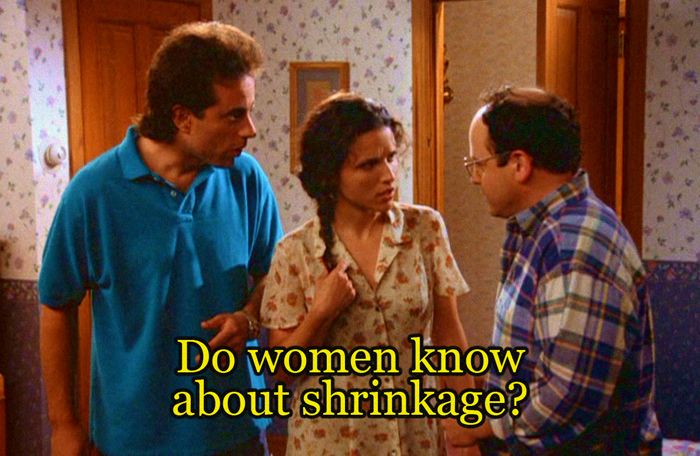
Only one thing left to do, and as if a page out of Seinfeld itself, I faced public humiliation over what came next.

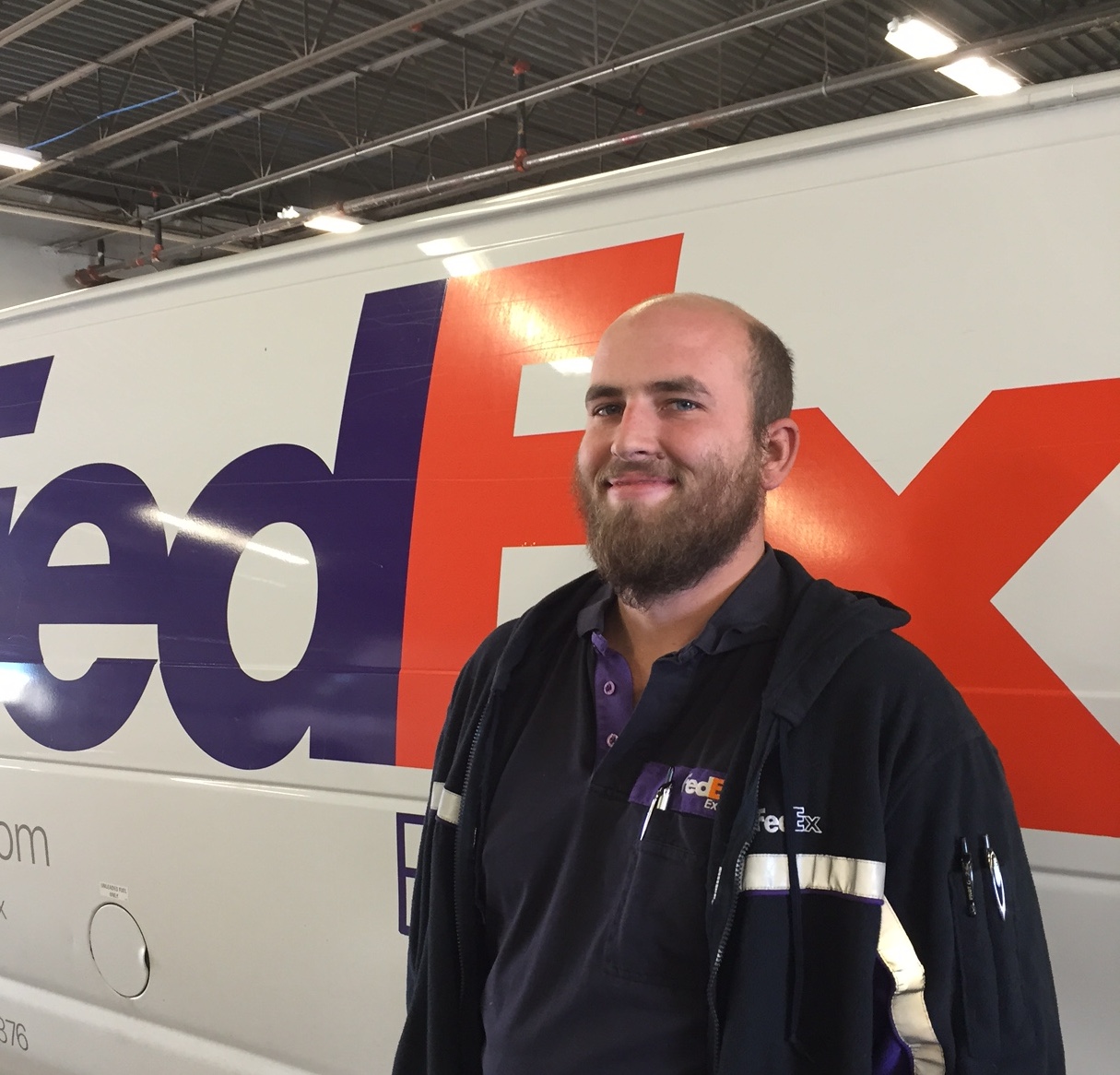
My “package” had been sealed properly, and placed inside the medical container to be shipped.  The Fed Ex driver knocked on my apartment door, to pick up that package.  Even though shipping concerns were not that big of a deal back in the late 1980’s, that did not prevent what happened next.

Fed Ex Guy:  Mr. Edelman?

Me:   Yes

Fed Ex Guy:  You have a package for pick up?

Me:  Yes I do.  Here it is.

Fed Ex Guy:  What’s in it?

Huh?  That was kind of rude.  What the hell business is it of his what is in there?

Me:  Just something that has to go to East Orange.

Fed Ex Guy:  It is in a biohazard medical container.  I need to know what’s in there.

At that point, I am thinking, “biohazard?”  My sperm is equivalent to nuclear waste or botchulism?  Trying to find the least embarrassing way to answer his demand, which in spite of me feeling he had no right to ask me, we were at a stalemate if I did not.

Me:  IT’S SPERM!  ALRIGHT?!?  YOU HAPPY NOW?

I think he definitely regretted asking me as his head lowered to the floor.  The box was clearly labelled.  And he knew how to handle packages like that.  In the end, he left grossed out, and I embarrassed.  The he left, and I closed my apartment door.

The results had come back.  I did not have enough sperm in the sample to recommend “storage”.  I would not be able to have biological children if my fertility did not survive the chemotherapy.  Upon hearing the news, my oncologist still insisted that I store whatever I had, even if only one.  I explained to him that the facility would not do it.  And once again, I heard the “time” speech.  I did not have time to seek out another facility.  Treatment needed to begin, and soon if I wanted my best chance at success.

Next up… Part 2… more tests.  Then a major fight with my oncologist just before treatment begins.  Followed by Chemotherapy Mixology 101.

Post Navigation