Paul's Heart

Life As A Dad, And A Survivor

Archive for the category “The Heart”

Hodgkin’s Lymphoma Awareness Month… #33 For Me


September is National Hodgkin’s Lymphoma Awareness Month. Here are some facts. This coming November, will have been 34 years since I was first diagnosed with the rare form of cancer, called Hodgkin’s Disease at the time (I guess someone felt it was less scary to drop the “disease” and put “lymphoma” in its place). Hodgkin’s Lymphoma is also considered one of the most curable forms of cancer for decades, with a remission rate of up to 94% according to the American Cancer Society. The barbaric diagnostic methods done to me back in 1988 are rarely used anymore, such as the staging laparotomy and lymphangiogram, because of advances in technology. It would be awesome if I could end this post right here. But there are two other facts pertaining to Hodgkin’s Lymphoma that need awareness, and get next to nothing.

As mentioned, Hodgkin’s Lymphoma has a high remission rate (if you like to use the word “cure”, you are free to do so). That means, you should be expected to live a long life. Well, cancer treatments way back when I was treated and beyond, were not studied for “long term” or “late term” side effects, because the priority was to put you into remission and honestly, probably never expected survivors to live long enough to develop any other issues. And here is the kicker, there was no plan to follow up Hodgkin’s survivors beyond five years (I am limiting this comment to Hodgkin’s as I must admit to not knowing follow up guidelines for other cancers, but the cynic in me wants to say it is likely the same.).

Well, as a reader of “Paul’s Heart,” you know that survivors of Hodgkin’s Lymphoma can live a long time, decades long. And that means that I have lived long enough, to discover the late developing effects of both the chemotherapy and radiation therapy that were used to treat me.

If you have ever gotten a vaccine, you have likely received an information statement about potential side effects. Before my treatments began, I was given a similar warning, as written in my chart, the potential for a secondary cancer (such as leukemia) and pericarditis (a swelling of the heart muscle). And that would be all well and good, but remember, this was based on using five years as a survival statistic. This is what they knew could happen within five years.

Boy did medicine miss that mark. Here is the list of just my diagnosed late developing side effects, attributed to my treatments (in no particular order of importance):

  • left anterior artery damaged (one of the main arteries of the heart) – open heart surgery
  • right coronary artery damaged (another main artery of the heart) – stent placed
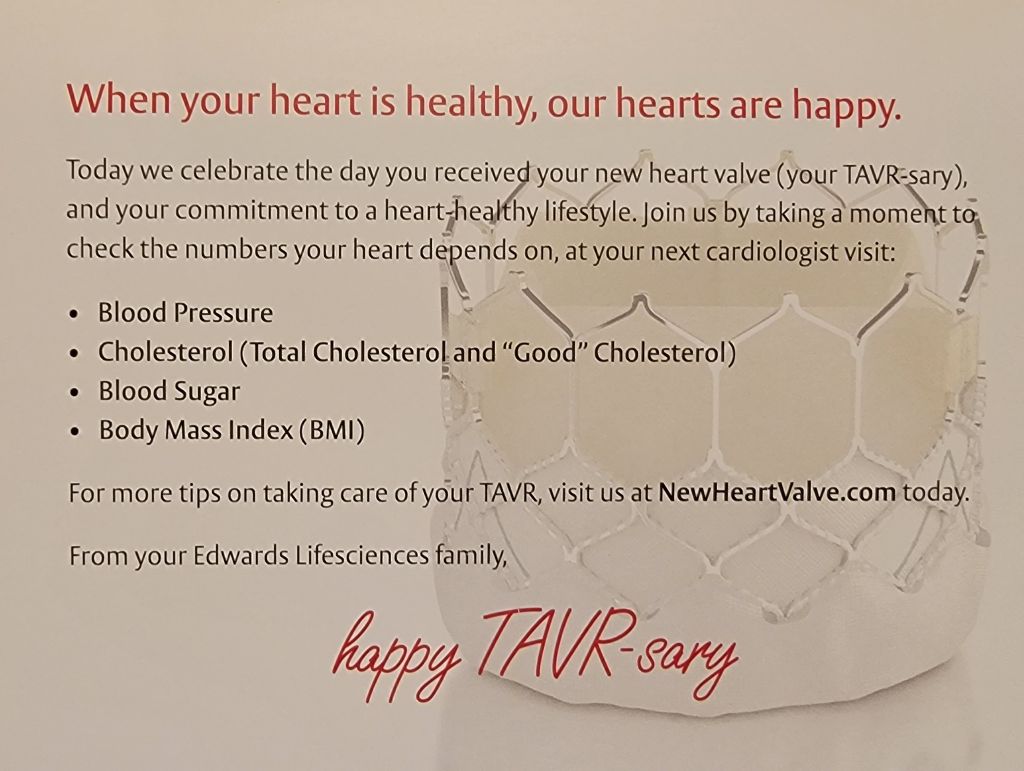
  • aortic valve damaged – artificial valve placed
  • mitral valve damaged – waiting for correction
  • diagnosis of congestive heart failure
  • restrictive lung disease (no treatment available)
  • multiple unidentified spots on my lungs (watching for development to cancer)
  • lower left lobe of lung described as “dead”
  • Barrett’s Esophagus (pre cancer of the esophagus)
  • Zenker’s Diverticulum (an issue with my throat that causes other problems with my digestive tract)
  • carotid artery damage – stent placed
  • radiation fibrosis and muscle loss/atrophy in my upper torso
  • osteopenia
  • facet joint arthritis in my lower five vertebrae of my spine
  • and multiple health events and immunity issues caused by these conditions and being asplenic (no spleen) from my diagnostic days)

Wow, did medicine miss the mark in 1988 with what could happen to Hodgkin’s survivors. Surely medicine has learned that survivors need care beyond five years, hasn’t it? Nope, well not really, or not good enough. In 1988, I had no internet, hence no support groups to navigate my way through treatments and survivorship. In the late 1990’s, I learned of the internet, and something called a “list serve” (an email list), that had me in communication with other survivors, only a couple of hundred of them, who seemed to be dealing with unexplainable issues, that could only be attributed to their treatments for Hodgkin’s Lymphoma. In 2008, with my first heart surgery, caused by radiation damage to my heart, I learned of so many others who had similar health problems, yet nowhere near the potential numbers of survivors who have no idea why they are experiencing what they are. And worse, dealing with a doctor who does not know the treatment past of their patient or ignorant to believe the relationship between the treatment past and the current malady, or because the patient does not know it is relevant.

Okay, here comes another fact. According to the American Society of Hematology as of 2011, there were 31,500 Hodgkin’s survivors in the United States. I personally question that number’s accuracy since again, there is not any real lifetime follow up plan as there should be. But even go with that number, why seemingly, is it likely that less than a thousand Hodgkin’s survivors are even aware of this potential, or worse, actually experiencing issues? That’s right, on one particular peer group of survivors I belong to, there are 934 of us, out of at least 45,000 survivors. Web sites of cancer organizations now at least list possibilities about late effects, but THERE IS NO PLAN FOR SURVIVORS!

As one friend and fellow long term Hodgkin’s survivor named Gloria put it, “I remain beyond words appreciative that Dolly (another long term Hodgkin’s survivor who passed away several years ago) connected me with this well established resourceful tribe of folks, who like me had “successful cures” for our bouts with childhood or young adult Hodgkin’s Disease but now 20-40 years later, found ourselves having subsequent cancers, heart & lung diseases, radiation fibrosis and other not do so fun conditions that no one could’ve seen coming nor expected.

According to oncologists, due to advances in treatment, our treatment related maladies should be a blip in medical history as what screwed us up, cobalt radiation, isn’t used anymore.

While I fail to agree, what this really means is for our tribe of first generation long term survivors, there are no predecessors nor history to consult. Our tribe has had to figure out for ourselves what tests we need and what conditions to watch out for as we navigate our way into old age. The Hodgkin’s long term survivor FB groups and Hodgkin’s International, which grew out of the online organizing, have literally saved my life by publishing guidelines and recommendations that appear nowhere in the conventional oncological world where they stay so busy with the newly diagnosed they have no time for long term survivors.”

Gloria could not be more spot on, which is why I asked if I could use her quote from another online post. Some of us are fortunate to have found doctors that do “get it” as far as our issues. But out of the less than a thousand of the dozens of thousands of long term Hodgkin’s survivors, an even smaller number have access to those doctors. Our “tribe” as Gloria refers to, actually spans the globe, whose survivors actually learn from us, only to get frustrated with the lack of care and knowledge in their countries, whether it be England, Taiwan, New Zealand or elsewhere.

Gloria is also correct, and again with due respect to the doctors that do care about us, there are too many who are just too busy treating newly diagnosed, or refuse to be told by their patients, information that can possibly save their lives. The fact that our bodies are so compromised from this damage, shortening our lifespans considerably (as in averaging my age for mortality), we are to be grateful enough for having lasted 30, 40, even 50 years. So why bother medicine to make things better, right?

Before I go, there is one more thing that I must bring up, again, another fact. As mentioned at the beginning, the success rate of 94%, that means 6% do not survive. This is a frustrating statistic. Because having a successful cure rate, has caused an apathy to find any new treatments that could push to a 100% cure. Why is this such a big deal? Because while the toxic treatments I was exposed to are no longer used, treatments today still are toxic and still occasionally cause life threatening side effects. And in spite of this, oncologists do not use the tools or protocol to at least prevent the progression and development of these issues. And this is known and documented (in my series back in January of 2017 the links posted below, YOU WANT TO READ THIS REGARDLESS IF YOU ARE A LONG TERM SURVIVOR OR A CURRENT HODGKIN’S PATIENT):

As Gloria pointed out, we survivors finally have an organization established to help, support, and guide fellow survivors in Hodgkin’s International, ( https://www.hodgkinsinternational.com/ ). Unfortunately for the most part, only if you are part of our “tribe” are you likely to even know about it. And this is why September is so important to Hodgkin’s Lymphoma survivors. We do not get the attention that breast cancer gets, or lung cancer gets, or colon cancer gets. But our issues of survivorship are real nonetheless and need the awareness.

Play Me A Song…


Music has always been a functional part of my life, at least from the age of five years old. Whether I play it, sing it, “spin it” (as a disc jockey), or just listen to it, there will always be a song that has made a permanent impact on my life and memory for me.

Chicago’s “Wishing You Were Here” featuring the Beach Boys, was probably the first contemporary song I ever heard, back in the early 1970’s. I was a child at our local amusement park, Dorney Park, and the song was blaring from a speaker located atop a pole near the Thunderhawk wooden roller coaster, that I was about to ride, also a first in my childhood.

As an untethered passenger in my mother’s red Ford Galaxy, Queen’s “Bohemian Rhapsody” played on the “AM radio” in the dashboard of the car. I would scream, “turn it up Mom!” every time it was on.

Somehow, April Wine’s most popular song, “Just Between You And Me” was our senior class prom theme song, in spite of the song being a few years old at that point.

The introduction to Madonna’s “Like A Prayer” had just come on to my car radio, as I pulled into the parking lot of my oncologist, to begin my chemotherapy treatments for Hodgkin’s Lymphoma. This song would instantly trigger the visual of Madonna’s music video for the song, causing a reaction in my mind and heart, with the conflict that I was having with my “higher power” during this difficult time in my life.

You get my point. This list goes on and on. My hour-long drive to work and home, I actually enjoyed, because it meant that I would get to listen to music. At work, probably 90% of the time, you would find me with some form of headphones/ear buds on, listening to whatever current media player I had.

Recovery from the various health crisis I have faced, as well as convalescing in the hospitals, you would always hear music, as I combined the tunes with the concept of “positive imaging” (thank you author Norman Vincent Peale), a method of imagining a time in the future, healed of what I was facing. And of course, plenty of performances singing, DJing, and other various forms of entertainment I did, rounded out the musical involvement.

The past two and half years of the Covid pandemic, I have gotten to spend quite a bit more time, in my personal and private concert hall, not the travelling road show that is my car. I would concentrate on improving myself on the guitar and keyboard. It was not unexpected, to be walking by the house, and hear me belting out vocals to many songs in my wheelhouse.

But recently, I noticed a new purpose for at least one facet of my world of music. It was an accidental discovery for sure, a blessing and a curse actually. One thing I take pride in, however I perform, is giving the best effort I can, as perfectly as I can. It turns out music is going to be making a bigger difference in my life than I could have expected.

Approximately twelve years ago, I noticed something odd. I went to check my voicemail, I had forgotten my passcode, a number I had used for years. As someone with nerd and OCD tendencies, there was no way for this to have happened, but it did. This “block” lasted about five minutes. Further incidents included “blind” events while driving. By this, I mean pulling my car into traffic, where I “saw” none, and there were. The final straw, was an incident at the kitchen table, when a cup of water was spilled, causing me to irrationally get upset.

I had enough wits about me to realize, something was not right. And I recall an incident with my first father-in-law, suffering unexplainable cognitive issues, to eventually be determined to be caused by unmonitored medicines. This cost him four years of his life being kept in assisted living with my mother-in-law unable to handle this issue.

Something had changed with me. Something had to have changed. But what? My doctor sent me for neurological testing which came up inconclusive. Still, something was not right, and it was getting worse, and I felt it was going to be up to me to figure it out, as long as I had the time. Several prescriptions had been changed following my emergency heart bypass in 2008. There was a change in one drug in the drug itself, as well as a steep increase in the dosage, protocol the doctor said. I looked at the side effects listed for the drug, and nowhere did it list “cognitive issues.” Yet, the drug was all I could think of that could be causing this issue.

A search of the internet, I came across a doctor at the University of California, San Diego, Dr. Beatrice Golomb, who did a study on statins and cognitive effects. Long story short, here was my answer. Evidently, if side effects do not meet a certain percentage in appearance in the studies, it does not get listed on the warnings. That does not mean it does not occur. Dr. Golomb had run studies that confirmed unreported side effects from cognitive impairments to rage as a result of statin usage. I was certain this had to be it.

I notified my doctor I was going to stop taking the drug all completely, even at the risk of my cholesterol rising to dangerous highs again. He would either have to find something different, or go back to the dosage I was already on, which after several months of figuring, I ended up on my original dose, and the cognitive symptoms had disappeared, actually within a few days of stopping the other dose.

It is not uncommon for cancer patients to complain of “chemo brain” or a brain fog, and for some of us long timers, this issue can carry on for a long time, if not permanently. Because health complications from our treatments for Hodgkin’s Lymphoma are progressive in nature, we should be constantly surveilled, though sadly, so many do not even know this history. As doctors watch for cardiac, pulmonary, and other issues as they advance, cognitive is something that often gets overlooked. It just sneaks up on you.

I have always had an issue with my memory since my chemo days, but the change in my prescription caused a separate issue. But years later, yes, I have noticed my memory slide, and with no rhyme or reason how often, or how short the distance between the moment and when I forget. I now have a way personally of being able to tell if and when it gets worse. And it is the thing I credit with getting me through life, music.

I already know that I only retain about 90% of the lyrics that I have ever sung, and no song is likely in its entirety. And though guitar and keyboard both require “muscle memory,” mental memory is still needed to know which notes to play. Though I try to practice every day, I commit one song for each, vocal, guitar, and keyboard, that I rely on to get perfectly each time. And if I cannot, I immediately try to figure if it is a “muscle memory” issue, or a cognitive. As often as I play or sing, it should not be a “muscle memory” issue. It then will become a matter of how often and how bad the errors I make are, and if determined to be a memory issue, how bad it is getting.

A couple of years ago, Lady Gaga performed with Tony Bennett, who is living with Alzheimer’s Disease. Even at his age and his stage of the disease, the one thing his mind has not been able to take away from him, is his ability to recall every song, every note and every word of them, and perform them just as he did when he first wrote them. Sadly, he cannot remember much else.

These days, I try not to keep too much on my plate, because there really are only a few things on my plate that are so important to remember, not to forget. I am hoping this helps at least keep my sliding memory to a minimum. And if it does not, hopefully someone hears me, and reminds me. I will either be singing or playing. It will be hard to miss.

Aimie


This has been a difficult year amongst my fellow long term survivors, and mourning the loss of yet another, that I got to know along our journeys.

It is hard to believe that someone with such a positive and visibly obvious pleasantry about her was forced to deal with something so horrible, not just one time, but several times, and many other difficult issues with her health. It is a cliche said all too often, and meant every time, “it just isn’t fair that she had to face what she did.”

I never got to meet Aimie, but over the years, we exchanged support for each other, depending what health crisis either of us was dealing with. But what she was better at than I, was overflowing with a positive outlook, no matter what she faced. She would constantly share photos of tasty treats and cuddly fur friends. Aimie would post inspirational quotes and memes. And living in the south, she shared some of the most beautiful sunsets.

I am envious of those who actually got to meet Aimie in person. Because while a picture may be worth a thousand words, her stories were likely much better from her herself. But I am sure, those that got to know her in person, are feeling an even deeper loss today. And it is clear from our peers, that she had an impact on so many of us.

I would like to share some of the thoughts some of her fellow survivors have expressed about Aimie:

“She was such an inspiration to all who knew her!”

“Seeing Aimee’s picture above though reminds me that she indeed was a survivor and that we need to celebrate those “wins” while we can.”

” She was such a warrior. Wonderful friend, coworker, and spirit. A person who will be truly missed.”

“A wonderful person.”

“Another amazingly strong being!”

And finally, from a fellow survivor who got to know her better than many of us, and a friendship that gave both support to each other along their survivorship, “SHE FOUGHT SO HARD!” Yes, she did. And that is what we will all remember about Aimie. This friend is one of the lucky ones bless to have gotten to know her so much better as they spent much time with each other, sharing laughs, sharing gifts (Aimie loved painting rocks, her friend making this beautiful wreath with all four colors representing the four battles with cancer that Aimie had faced), and supporting each other. Because that is what survivors do.

Post Navigation