Paul's Heart

Life As A Dad, And A Survivor

Archive for the category “The Heart”

Survivor’s Guilt… Not What You Think


Any time that I have brought up the issue of “survivor’s guilt” in regard to one of the many lasting effects of my survivorship from Hodgkin’s Lymphoma, there is always at least one person, who will make the comment, “why would you feel bad about living? What an ingrate after all the efforts to save your life!” Now, to qualify that statement, it has typically been made by someone to the best of my knowledge, who has never had to deal with a potential tragedy. So, I will make it quite clear, in this post, I am not ungrateful for the thirty-two plus years I have experienced after my fight with Hodgkin’s Lymphoma. The last eighteen years have been my best years so far, years that I did not think I would ever see because of my health complications from my treatments for my Hodgkin’s.

So, now that I have cleared up what “survivor’s guilt” is not, what actually is survivor’s guilt? According to Centerstone.org, “survivor’s guilt is a response to an event in which someone else experienced loss, but you did not.” Though it can be assumed to refer to life, it can also refer to property, health, or anything else important to someone.

To keep things simple, I am only going to refer to my own issue with survivor’s guilt. I know plenty of other cancer survivors who deal with this, and I know others who fight this demon for other reasons, such as fires, car accidents, earthquakes, tornados, hurricanes, and a lone survivor of a small plane crash. This is how survivor’s guilt has affected me, and still does.

I did not always have survivor’s guilt. I completed my treatments in March of 1990 (so that is 33 years next March). Life was good. I had gotten married. Job was going well. I was in the market to buy my first house.

But one thing that oncologists (cancer doctors) do not tell you, is that you are never really done with cancer once your treatments end and you are in remission. There will be follow up appointments including blood tests and scans and the awful anxiety that comes with each approaching appointment. The frequency of these appointments gets less as the years go by until you are lulled into a false sense of security that you do not need to be seen after five years. Spoiler alert. You do need to be seen beyond five years, and you can actually thank long term survivors like me for making medicine recognize that need. But that is a different post.

My first ex-wife, yes the one that I got married to during my cancer, could not have been happier to put cancer behind us once my treatments were done. As I was re-acclimated back into social settings (you know, that no one was going to catch anything from me, cancer or related to my treatments), she saw our lives getting back to normal. Actually, it was going to be what she considered normal.

I however, had developed this need to “give back” for my second chance at life. I had heard of a pilot program called “Cansurmount” being started by the American Cancer Society. This was a peer-to-peer trained counselor program, that would match survivors of a particular cancer, with a patient currently going through a similar diagnosis. It was a lengthy process, but one that would cover nearly every potential scenario and pitfall that could be run into, and things to avoid. Having struggled through my own Hodgkin’s journey emotionally, I really could have used this program.

No time was wasted upon completion of my training. I was immediately matched to a fourteen year old girl, who had Hodgkin’s Lymphoma also. Her story can be found at this link:

Spoiler alert, if you did not read the story first, Jennifer passed away prior to graduating high school. I had spent a number of years visiting her and her family, even as she entered hospice. But if you remember, my post a few days ago… “Could There Be Such A Thing?” referring to the “good” cancer of Hodgkin’s Lymphoma, as Jennifer was dying, and she was not my only patient I was working with as I had three others who all had better prognosis, I began to experience something that was not covered in my training. And honestly, I don’t think the American Cancer Society had thought about either.

I could not help, sitting across from Jennifer’s mother, wondering about her thoughts if they were similar to mine, “how is it that I am getting to live, free of my Hodgkin’s Lymphoma, and Jennifer will die? What is so special about me that I got to remission, and she will die? Why can’t someone do for this child what was done for me?” Go back to the definition, an event that causes a loss for someone else, but not for you, survivor’s guilt.

While I believe I was quite effective in helping so many other patients, the death of Jennifer, not only my first patient, but my first patient to die, I was devastated. I did not feel that I could look any other patient in the eyes and wonder too, will they be the next to die or what different circumstances will they experience. I decided to take some time off which actually ended up being approximately a year. I had finally been able to put this feeling (it had no name back then) behind me, and I was ready to take on new patients again. And I did. I was one of the more active volunteer counselors. I seemed to have overcome the guilty feelings of my surviving cancer.

In the mid-1990’s, I learned about the internet and through the internet, there were email support groups where patients could share their similar and different situations about their particular cancer. I had found a group for Hodgkin’s Lymphoma, two of them actually. I felt that I could be of support for those in this group as I could relate to the many situations from diagnosis to treatment, and just like I did in person, I could do so only on a larger scale, all over the country.

There was one fellow survivor, named Linda, like me, she was also in remission for Hodgkin’s. But she had a different reason for being in this group, which I would learn about later on. She had often referred me to join this other email list, for “long term survivors.” At four or five years of survivorship, I felt that I did not meet the qualifications to earn the title of “long term survivor.” After about a year of her pushing, I ended up joining that email list, soon leading to another issue for me. The “survivors” on this list, actually of different cancers, but many Hodgkin’s, had health issues following their treatments, some, very extreme. I immediately felt overwhelmed, and felt that I did not belong on this list, because except for a few issues (certain permanent hair loss, a thyroid issue, and infertility), I definitely had nothing in common with these survivors. And then it hit me, if I went through similar treatments for the same cancer, why I am I not having those issues? What is so special about me? Remember the definition, an event happening to someone else, but not to you. Again, I was having this overwhelming guilt by having a fairly normal life post-cancer, this for yet a second reason. Just like before, I found myself having to remove myself from this email list, because I really felt out of place, and felt that my good health, was unfair to share with those who were suffering. And just like before, I found myself coming back to this email list. But this email list could get so overwhelming, I would actually cycle, on and off, several times, to allow myself to gather my thoughts. But that guilt just would not go away.

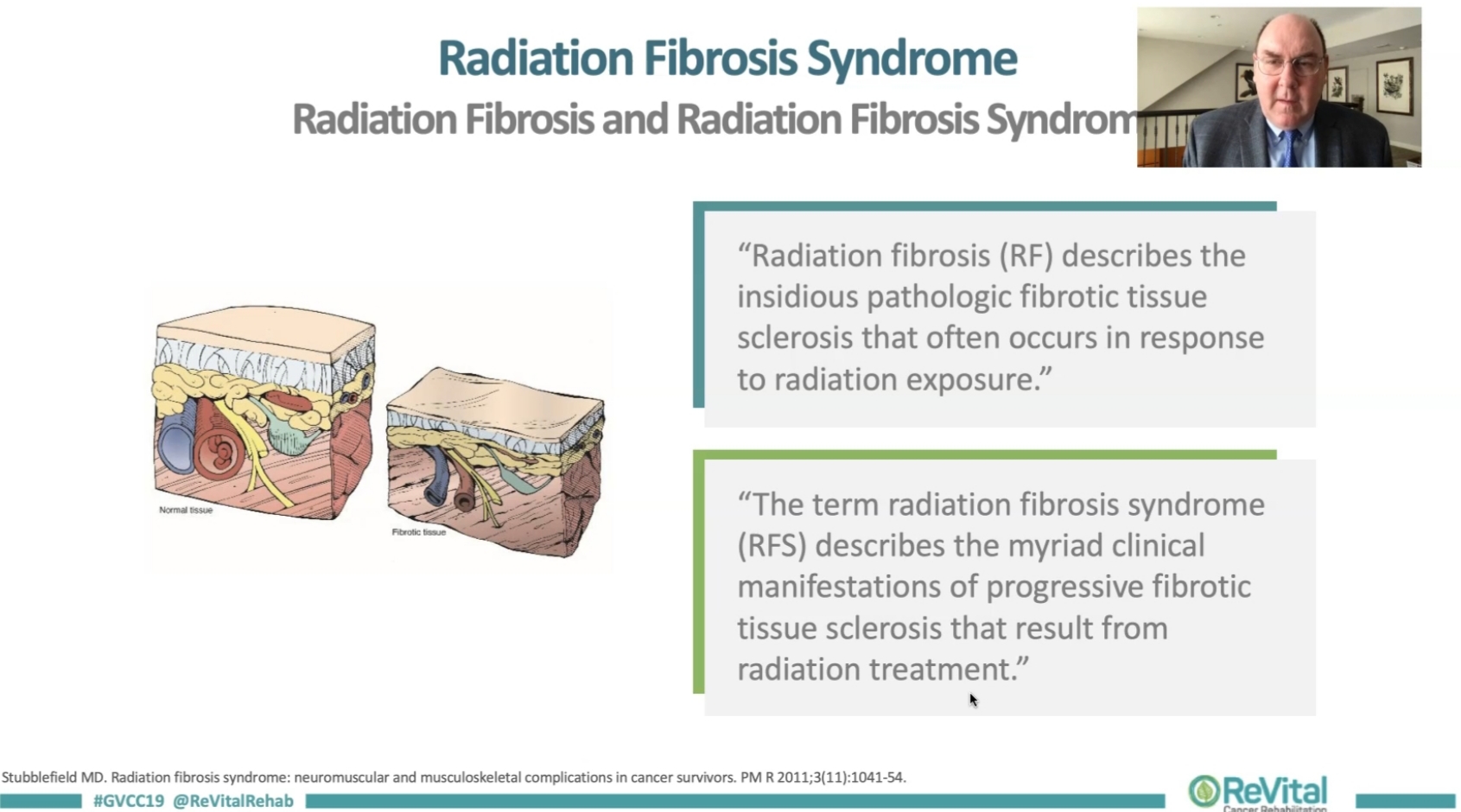
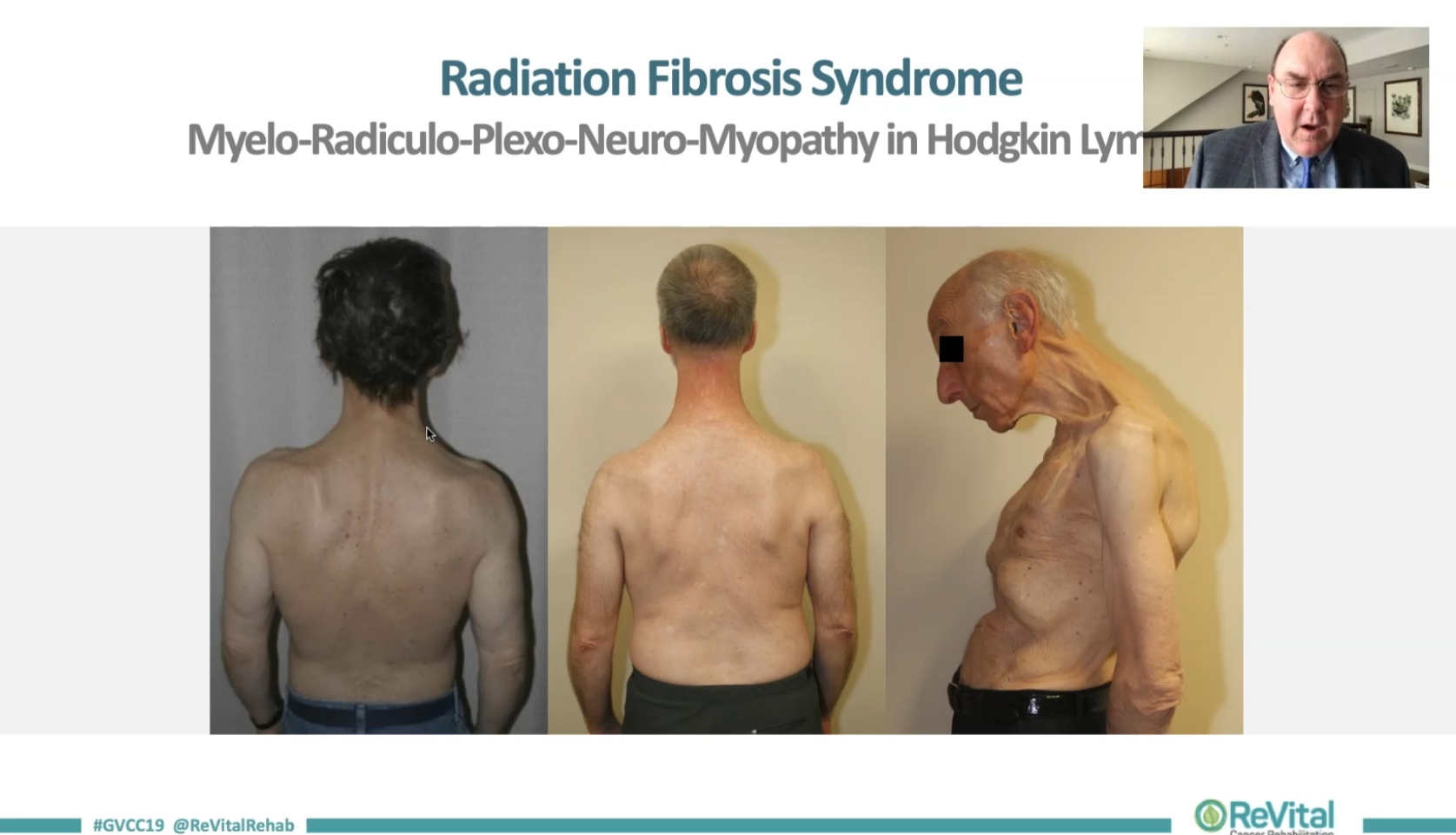
Then, in 2008, my life changed even more so dramatically than it did with my Hodgkin’s Lymphoma. The radiation treatment back in 1989 (I also underwent chemotherapy) used such a high dose (no longer used), not only did my body retain the radiation, but actually developed progressive damage to various parts of my body, especially my heart. Again, you can read about that story at:

Once I learned that an imminent fatal heart attack was about to happen, and what was the cause of the condition, I soon became a life-long member of that “long term survivor” email list. This list was where other survivors could find answers to questions doctors were completely unaware of, because long term cancer survival had never been taught in medical school. These survivors, were teaching its members, the questions that needed to be asked, the recommendations that needed to be made for treatment, and offered support, that no matter what, we were not alone in this struggle. Eventually, we would discover some major medical involvement with several key doctors, but nowhere near the number of doctors that were necessary.

But, just as what happened occasionally in the treatment stage, the passing of a Hodgkin’s patient, so would happen occasionally to a long term survivor and one of the issues that they were dealing with. And it could happen as part of a procedure or complication, something totally unknown and undiagnosed, or the result of something spontaneous, combined with the compromised health. This was an important group of people to each other, and many of us would actually get the opportunity to meet up with each other in person (we did not have Facebook or Facetime). So when a fellow long term survivor would pass, again I would get hit with that wave of guilt, whey them, why not me?

I would actually spend many years in therapy over this issue (spoiler alert – I still have this issue). Again, I want to be clear. I am not ungrateful for the time I have been given all these decades later. And I accept the many diagnosis I have faced over the years related to the treatments I went through.

But towards the turn of the century, I found Facebook. And I found a group that dealt with similar issues as the email list that I belong to. And this group did not just cover the US, but reached world wide. And there were photos. We could actually see each other, and we were actually able to communicate a lot more efficiently and often. Over the years, this group has grown and grown, now with members nearing a thousand. We members would also take the opportunity to meet each other as we travelled whether medically or recreationally. This created a huge bond for us to the point, that today, many of our members refer to our group as a “tribe.” And we are a very tight and supportive group. Each and every one of us, makes caring for each other, offering support, and personal experience, to help anyone in need of such.

As our numbers in membership have grown, two things have also grown. We can actually see the longevity of Hodgkin’s survivors, living 30 years later like me, 40 and many living 50 years later. And do not be fooled. With Hodgkin’s often looked at as a pediatric cancer (even though I was 22 when I was diagnosed), many of these 50 year survivors were not even teenagers yet when they were diagnosed. But the toll taken on our bodies from decades ago, has left us with bodies seemingly aged decades older inside. And just like with the email list, members of our group also pass, from either their late effects, complications, undiagnosed, or complications from spontaneous non-related events. I would say, we lose probably an average of five members each year.

This is when it really gets hard. Because now we have a name to go with these feelings that I, and many others have, “survivor’s guilt.” Fellow survivors that I haver personally known for almost as long as I have been in remission are now gone. Why am I still here? Why have I not gone through all of the long list of other things that my deceased fellow survivors went through? And that is really the odd thing, not one of us survivors is like another. We all have different issues. Some of us have access to care with doctors who have the knowledge today of our issues, too many do not. Some do not have any health coverage at all. And holy shit! It wasn’t enough to deal with what we do, and along comes Covid19? Don’t worry, not expanding on that. My point is, I am now at the point, where so many survivors I have known, are gone, and I am one of the more “senior” survivors. I cannot help but feel my mortality creeping up on me, no matter how hard I fight it.

I don’t feel guilt for surviving my 32 years of Hodgkin’s Lymphoma. But I am dramatically affected by those who have not survived, experienced multiple relapses, developed other cancers because of their treatments, or, as in my case, developed other health maladies, some quite serious. I have lived with this “survivor’s guilt” as it turns out for my entire survivorship, and will probably never be over it.

This does not mean that I do not enjoy life. Quite the contrary. I am able to focus on my daughters, who almost lost me back in 2008. I have goals that I want to reach, and though I know I am not guaranteed to reach them, I am only thinking about doing just that. I have watched both of my daughters grow, one has graduated, now in college, and my younger will be in college next year. And then there will be the next stages in their lives that I want to experience. And with each milestone reached, I believe I will see the next one, and the next one.

I will not let “survivor’s guilt” take that away from me.

The Impact Of Support


One knock on me, that I have had my entire life, at least once I hit my teen years, is that I make myself the last of priorities. Sure, you will hear me give the “airplane lecture… ‘put your mask on first'” frequently, but I rarely if ever do that myself. In school, friends constantly found that they could come and talk to me, and I would listen, just listen. Anything said to me, was kept in confidence, because if someone was confiding me, it was likely because there was some level of emotional hurt that they were dealing with and I did not want it made worse. But I wanted to make sure that they knew they were not alone.

I did not give any advice back to my friends. To be honest, I did not know how. An odd thing about how I was raised, rather the environment I was raised, we did not talk about our emotions. We did not show our emotions. I was taught to care about others before myself, empathy, the ability to care about others and what they may be going through.

This may seem like a good quality to have, but there is a huge difference between having empathy, and being an empath. Understanding a struggle that someone is going through is different from actually feeling that struggle. An empath will likely not set any boundaries, actually putting their own mental health in strain. What makes being an empath real bad, is not knowing when or how to turn “it” off.

As a kid, I was perhaps a lot more sensitive to others and with others. It really comes quite naturally to me to want to help, and to be there for others. It is what I have been taught.

But what happens when the table gets turned? The shoe is placed on the other foot? Readers of “Paul’s Heart” and so many of my closest friends have never seen or heard a “Paul” that has been private, keeping everything to himself. You have to go way back into my teen years, and early 20’s to see that at one time, I was quite private.

And then came the diagnosis of Hodgkin’s Lymphoma.

I went to my appointments alone, including the one when the doctor told me I had cancer. I went to my treatments alone. I could not lean on my family, because that is not what we did. Even the one I considered closest to me, my fiance, barely acknowledged what I was going through. In the beginning, I actually offered her an opportunity to leave, instead of getting married, as I knew our married life would be much different than she had dreamt. I did not even hear from my father, with whom I was estranged, later to discover, he could not muster the strength to see me perhaps face the same fate as his mother, who died from cancer of the gallbladder.

Back in 1988, there was no internet. Hell, I did not even own a computer. Some, with well intentions, tried to inspire me with “someone they knew” or knew of, that had Hodgkin’s Lymphoma and had beaten it. My uncle had mentioned someone back in the 1970’s, and I had discovered a former football player for the New York Giants, Carl Nelson, had beaten Hodgkin’s. This was going to have to be enough. It wasn’t.

I broke down. Wandering through the hospital, I came across an office that provided emotional support to cancer patients. Once inside the office, I was greeted by John. As he came out to greet me, I could see he was tall (everyone is typically taller than me), but he barely cleared the doorway. I have no idea how long I spent with him that first visit, but I know it was a long time, and for the first time in my life, I reached out for help, and not only did it make it matter, it made a huge difference. Between John, and my oncology nurse, Brenda, I would rely on them for all of the emotional support that I needed to get me through my treatments.

Are you ready for the coolest thing? I got to reconnect with both of them, after 32 years. And not only that, my daughters, who were not even born during the time I battled Hodgkin’s Lymphoma, having only heard of that part of my life, got to travel back in time, and meet two of the most important people I consider the reason I am still here today. Both of my daughters knew I had cancer. But meeting John and Brenda made it very real to them to meet two who saved my life.

I think I can speak for both John and Brenda, this was a joyful reunion. As I have mentioned previously, there are many endings that do not end happily ever after that I am sure both of them have experienced. I am one of their happily ever after stories, though not perfect (two divorces and a slew of health issues).

Relationships are the one support we expect to have when we face our darkest challenge. I am not the only one to experience this either. And times have not changed. But that is not to say, that it cannot happen. One of my biggest inspirations of cancer survivorship actually comes from someone who only has 1/4 the survivorship that I do, and has one of the brightest futures ahead of her.

You can read about Stephanie’s amazing journey which I have written about many times on “Paul’s Heart” over her brief survivorship. One of the biggest factors of her survivorship, is the amazing support that she had in her battle. Stephanie will not shy away from speaking how difficult it was physically and emotionally, but she was surrounded by family and friends in large numbers. But it was someone who had come into her life, following her diagnosis, that would be her strongest supporter. Now married several years, and a super-handsome and super-happy young son, Stephanie, along with her family and friends, has an amazing support network in her survivorship.

Unlike my days, where all we had was electricity, today there are countless resources for support. You can still find face-to-face support in the form of trained counselors and other therapists, or via the internet. I myself was trained as a certified peer-to-peer counselor by the American Cancer Society soon after I was done being treated. Who better to relate to the cancer experience than someone who has actually gone through cancer?

Though I did not have access to the personal support like so many patients and survivors do today, in my survivorship, I have personally met so many, not just online, but in person who have had to face some of the unique health issues attributed to our treatments, something that not even medicine is on the same page.

It is not always easy to rely on others, especially strangers. You might have a spouse or significant other who might feel threatened or unappreciated with you having outside support, “why aren’t I good enough?” It has nothing to do with someone personal being good enough for that particular need. I wish there was a way to convey that it is the personal correlation of the experience that can only be appreciated by someone else who has gone through it.

But another complication with close relationships, resentment. It can be a relatively new relationship, or a marriage of forty years. While Stephanie has admitted how strong the relationship is with her husband, like everyone else, they have had some challenges, but, they are strong enough, and open enough to face everything together. This is not always the case for others. There could be resentment, or an attitude of “I didn’t sign up for this,” or even fatigue of being the caregiver. I have seen relationships endure in spite of these struggles and I have seen the occasional horrific dissolution of marriages, nasty enough, that the caregiver filing for the end of the marriage actually resorts to using the very health issues against their spouse, that they felt they could no longer support.

Peer support does not come without its pitfalls either, though for the most part, it is without the daily domestic issues faced by couples. As I mentioned earlier, I have met so many other survivors and patients. This means that I have said goodbye to so many as well over the years, either from the Hodgkin’s itself, or issues related to the late effects. Every person that I have met, whether online or in person, we have that personal connection. We know that we “get it” when it comes to understanding the things that we face. And our lives are always touched in such a positive way for whatever amount of time we got to know them. Many times, it is those memories that push us, to push each other when we need the emotional kick in the pants, or just someone to listen.

Much to the chagrin of many in my life, I have made the decision to make my life public. I have been this way since my diagnosis. I want others to know that cancer can be taken on. I want others to know that there is help for whatever part of the cancer journey is being faced. I want people to know, that others experience similar situations, that while your brother, mother, next door neighbor, co-worker may not understand, there are those that do. The help does not have to be the internet, it can be in person. Most importantly, and I cannot stress it enough, the most important thing you can do, when faced with a trial such as cancer, is lean on others. Sure, there will be times that you feel alone, maybe because that is how you may be being treated. But it doesn’t have to be that way. Find some, lean on someone. It makes a difference.

Could There Be Such A Thing?


What kind of response are you having right now, after just seeing those three words, “the ‘good’ cancer?” For context, the picture underneath the words, is a slide showing what “Hodgkin’s Lymphoma” looks like under a microscope. While a lot of my readers are fellow Hodgkin’s survivors, many are not. In fact, it is likely that many have not had anyone more than a relative having to deal with cancer. Perhaps, some may have been lucky enough not to have been exposed to the world of cancer at all.

I think it is a safe bet, that I know no one who would ever call cancer “good.” Wait, let me re-phrase that, I know very few who are doctors that would ever call cancer “good.” Now you are probably wondering, “why would a doctor call cancer ‘good?’ If anyone should know cancer is bad, it should be doctors!”

Yet, as a Hodgkin’s survivor myself, I actually heard this sentence myself from my oncologist back in 1988, “if you were going to get a cancer, this is a good cancer to get.” Put yourself in my position, sitting on the exam table, and I am being told, at the age of 22, that I have cancer. Back in 1988, all I knew of cancer, was that people died from from it. I was in shock, unable to speak, yet I wanted to scream back at him, “good cancer? Are you fucking kidding me? How about no cancer? That would be great to hear. Not that I have a ‘good’ cancer!”

In fairness to doctors, especially oncologists, most have to deal with death, a lot. In some instances, they can become numb to having to deliver bad news, because if they emotionally attach themselves, they likely would not have long careers. Some doctors, like mine, had the personality and delivery of a metal bed pan. Again, you can only relate to the shock if you have ever had to use one. It was shocking enough to be told I had cancer. But sugar coating it for me, made my blood boil.

I know that I am not the only one who fought Hodgkin’s to be told this, most of my fellow survivors that I communicate with have been told the same thing in one form or another.

Once emotions settle down, one can understand why they call Hodgkin’s a “good cancer.” It has one of the higher remission rates in the low to mid 90’s (percent). And there are other cancers that get referred to as “good cancers” as well. Chronic Lymphocytic Leukemia (CLL) has what is considered a low death rate, with treatment often delayed under a “watch and wait” situation resulting in the “good cancer” label. Thyroid cancer is also considered highly treatable, hence a “good cancer.” I cannot speak for survivors of CLL or thyroid cancer, in regard if they had been ever told they had a “good cancer.” It is likely there are other cancers considered “good” for various reasons.

But should a cancer patient be told that they have a “good cancer?” Does it matter whether it has a high remission rate or low death rate? While I have survived Hodgkin’s 32 years now, the treatments used to give me that remission, have left me feeling as if I were treated like a lab rat, having left me with over a dozen issues that medicine was unaware of that could develop decades ago, and in some cases, not correctable or the risk too great to attempt. And not every survivor develops the same issues. Some relapse, even multiple times or develop a second, third, or fourth cancer. Some, pass away before completing treatment or soon after, such as “Michael”:

Michael

No, if you have ever been diagnosed with cancer, regardless which type, there is no “good cancer” that has zero side effects from treatments and 100% remission. And there is no way to know if you will be the lucky one that faces either situation. “Good cancer” means nothing to us other than making us feel like we should minimize our situation if not as dire as facing a terminal diagnosis. Nothing will make a cancer patient feel worse, than our emotional fears not being taken seriously because our feelings have been invalidated by the words “good cancer.”

If I could offer this to current and up and coming medical professionals, do not use the words “good cancer.” Instead, offer the encouragement of the statistics that show the remission potential. Let us, the patient, determine that the information is good for us. Instead, learn the resources for support, medical and emotional, that are available today that were not available decades ago and share them with us. This would be a huge help, a good help for cancer patients. Lastly, tell us that you will do everything you can to get us through our diagnosis, with the best knowledge, the best efforts, and the best support. We know not everyone will survive. We can determine from the statistics that numbers may be on our side, but it is the doctors and nurses that take care of us, that we need to be good, not the cancer.

Post Navigation